Défis de développement dans l’écosystème IA en expansion
Avec l’évolution de la technologie d’intelligence artificielle, de nombreux modèles apparaissent rapidement dans différents secteurs. Les scénarios d’application se diversifient, allant de la génération de contenu à des raisonnements complexes, et la multiplication des modèles accroît fortement la complexité d’intégration.
Pour les développeurs, les spécifications API et les méthodes d’intégration diffèrent selon les services, ce qui impose souvent la gestion de plusieurs systèmes et mécanismes de gestion des clés. Lorsque les applications reposent sur plusieurs modèles à la fois, les coûts de basculement et de coordination augmentent, affectant l’efficacité du développement et l’allocation des ressources.
Approche centrale de GateRouter : point d’entrée unifié
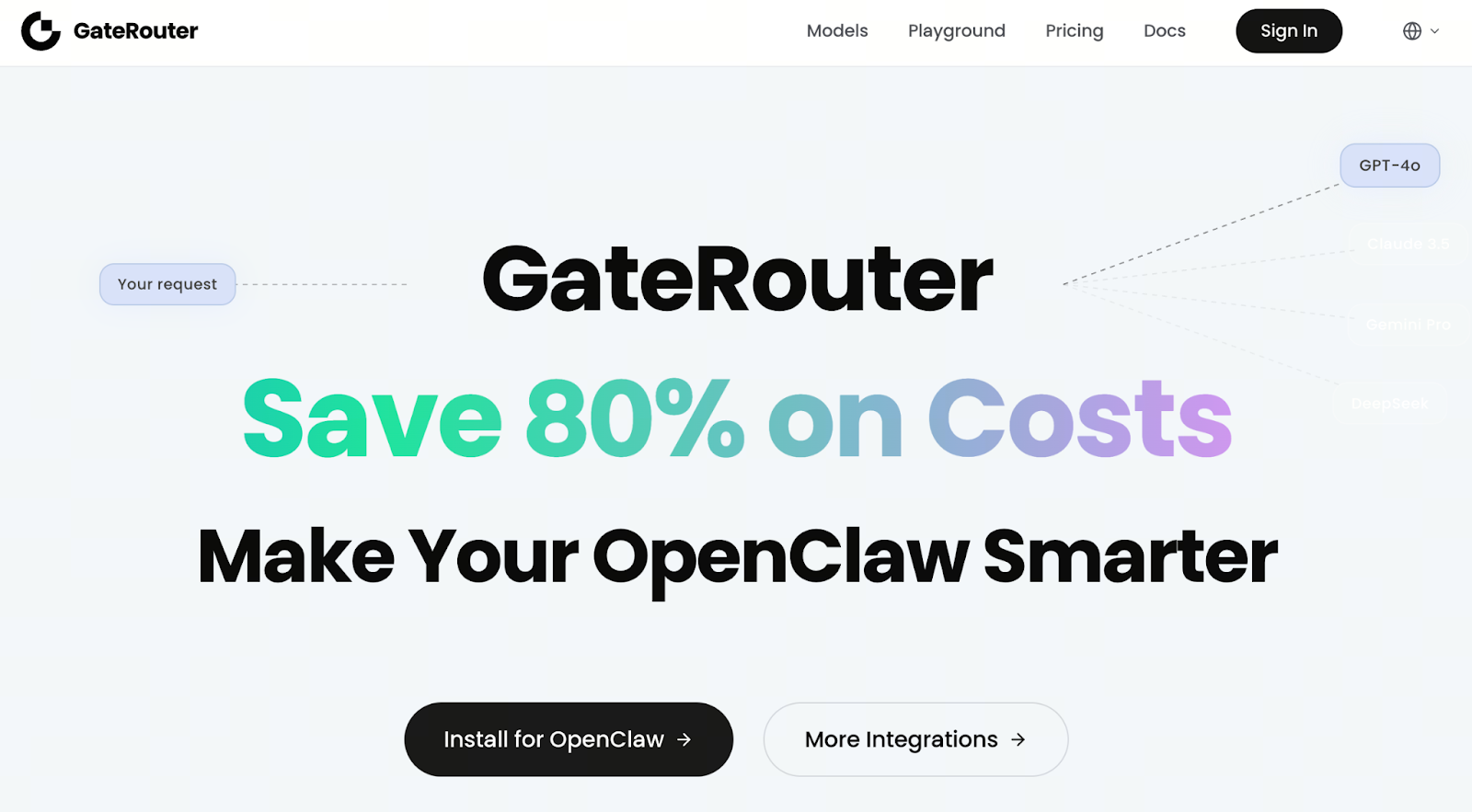
Pour simplifier l’intégration de modèles multiples, GateRouter adopte une architecture à interface unique. Les développeurs accèdent à divers services de modèles IA via un ensemble d’API.
Cette approche offre plusieurs avantages majeurs :
-
Réduction des efforts d’intégration répétitifs sur différentes plateformes
-
Activation de capacités multi-modèles dans un système unifié
-
Diminution des coûts de maintenance et de basculement à long terme
Qu’il s’agisse de génération de texte ou d’analyse sémantique avancée, les développeurs peuvent réaliser leurs tâches dans un environnement unifié, ce qui fluidifie le processus de développement.
Afficher plus sur GateRouter : https://www.gaterouter.ai/
Dans les applications multi-modèles, toutes les tâches ne requièrent pas le modèle le plus performant. GateRouter intègre une logique d’orchestration automatisée, permettant au système de sélectionner le modèle le plus approprié selon les exigences de la tâche.
Le système fonctionne ainsi :
Cette stratégie d’allocation garantit une qualité de sortie tout en maîtrisant la consommation de ressources. Pour les scénarios à haute fréquence ou à grande échelle, cette conception optimise considérablement la structure des coûts.
Expérience de développement et de gestion simplifiée
Au-delà de l’intégration simplifiée, GateRouter améliore aussi l’efficacité de la gestion quotidienne. La plateforme propose des outils centralisés, offrant aux développeurs une visibilité claire sur les opérations du système.
Les fonctionnalités principales comprennent :
-
Surveillance du statut des appels API
-
Suivi des historiques d’utilisation et des données
-
Analyse des coûts et revue de la répartition
Un environnement de test intégré permet de comparer l’efficacité et le coût des différents modèles, facilitant la prise de décision optimale.
Sécurité des données et protection de la vie privée
Avec l’essor des applications IA, la sécurité des données devient une préoccupation majeure. L’architecture de GateRouter intègre des mécanismes de protection multicouches pour limiter les risques potentiels.
Les éléments clés incluent :
-
Transmission chiffrée de bout en bout pour garantir la sécurité des données
-
Paramètre par défaut pour ne pas stocker le contenu des conversations
-
Options flexibles de configuration des logs
Ces dispositifs permettent aux développeurs d’ajuster les méthodes d’enregistrement des données selon leurs besoins, conciliant efficacité du débogage et protection de la vie privée.
Large couverture d’applications
GateRouter est conçu pour répondre aux besoins de divers groupes d’utilisateurs :
- Développeurs et créateurs d’Agents IA
Intégration rapide de capacités multi-modèles pour concevoir des workflows automatisés et des applications intelligentes.
- Utilisateurs entreprise et institutionnels
Idéal pour le traitement et l’analyse de données à grande échelle, tout en optimisant l’allocation des ressources et les coûts.
- Développeurs Web3
Prise en charge des paiements en actifs numériques, facilitant l’intégration de fonctionnalités IA dans les applications blockchain.
Facturation flexible : utilisation précise des ressources
GateRouter propose un modèle de facturation à l’usage, permettant aux développeurs d’ajuster leurs dépenses à l’utilisation réelle.
Ce modèle présente plusieurs avantages :
-
Pas de pression de coûts fixes
-
Dépenses alignées sur l’usage
-
Adapté aux environnements de développement rapides et itératifs
La plateforme prend en charge plusieurs modes de paiement, assurant une intégration fluide avec les actifs numériques et les outils de paiement traditionnels.
Intégration IA et Web3 : une tendance émergente
À l’avenir, GateRouter sera bien plus qu’un simple outil de développement : il constituera un élément clé de l’infrastructure liant l’IA et les actifs numériques. À mesure que les Agents IA deviennent courants dans le trading, la prise de décision automatisée et d’autres scénarios, la connexion efficace entre les capacités des modèles et les ressources on-chain s’avérera essentielle pour le développement futur. Les plateformes d’intégration comme GateRouter jouent un rôle majeur dans le rapprochement de ces couches technologiques.
Conclusion
Dans le paysage multi-modèles actuel, les développeurs doivent considérer non seulement la performance des modèles, mais aussi l’efficacité globale de l’intégration et la gestion des coûts. Grâce à un accès unifié, une orchestration intelligente et une gestion centralisée, GateRouter propose une solution plus efficace. Cette approche simplifie le développement et offre une utilisation flexible des ressources. À mesure que l’écosystème IA se développe, les plateformes intégrées comme GateRouter s’imposeront comme la base du déploiement et de la montée en charge des applications IA.