Compared with building positions stock by stock in the U.S. market, ETFs typically achieve diversification through a basket of assets, making them a common choice for investors entering the U.S. equity market. For users who want exposure to the U.S. technology sector without actively managing multiple stock positions, Nasdaq-100 ETFs have become a representative option.
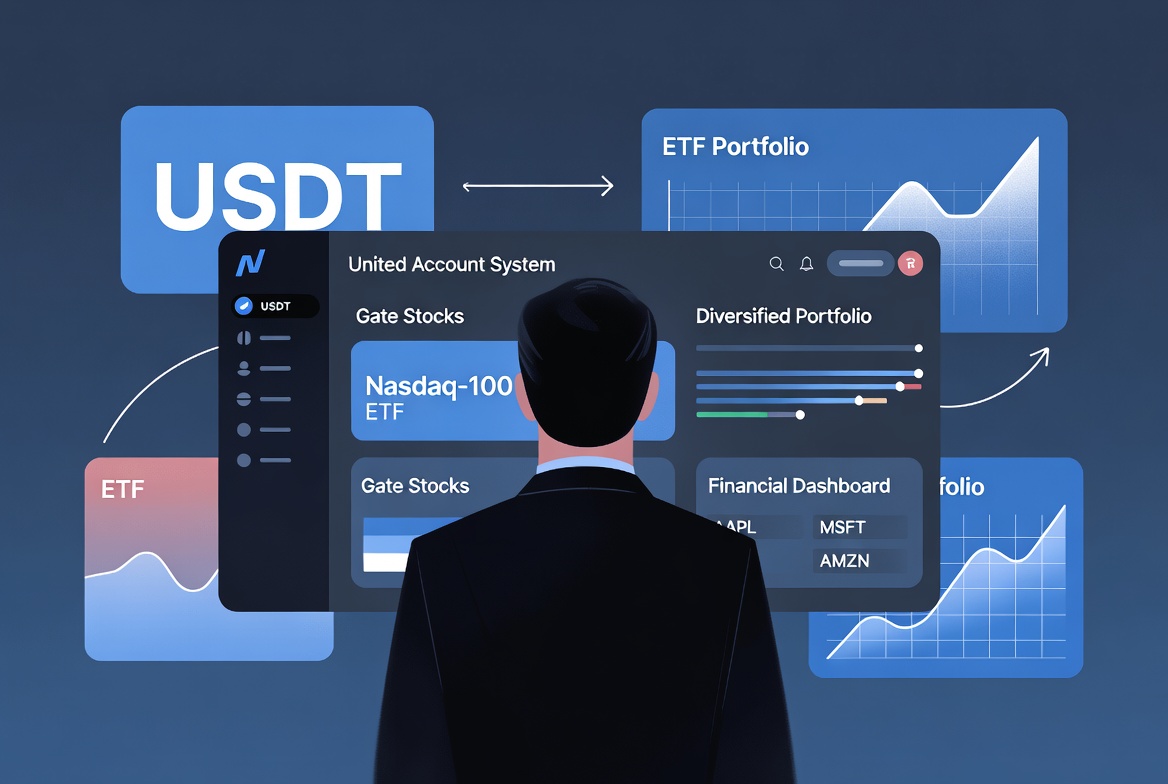
As stock trading pathways continue to evolve, investing in U.S. stock ETFs is no longer limited to traditional brokerage accounts. Through Gate Stocks, users can participate in stock and ETF trading using USDT and manage fund transfers, positions, and assets within a unified account system.
What Is a Nasdaq-100 ETF
A Nasdaq-100 ETF is an index fund designed to track the performance of the Nasdaq-100 Index, enabling investors to gain market exposure to a portfolio of large U.S. growth companies by purchasing a single tradable asset. The Nasdaq-100 Index primarily includes large-cap, highly liquid non-financial companies listed on Nasdaq and has long been viewed as an important benchmark for tracking U.S. technology and innovation sectors.
Unlike traditional active stock selection strategies, the core logic behind a Nasdaq-100 ETF is not to identify which company will outperform in the future but to build exposure through index methodology. These ETFs typically operate by holding index constituents or replicating index performance, allowing investors to capture returns that closely reflect the overall index without constructing positions stock by stock.
Compared with purchasing multiple technology stocks directly, Nasdaq-100 ETFs emphasize portfolio allocation and diversification. Through a single transaction, investors gain exposure to multiple industry-leading companies while reducing the complexity of portfolio maintenance and rebalancing. As a result, Nasdaq-100 ETFs have become a widely adopted option for users seeking exposure to U.S. technology and growth sectors without frequently adjusting individual stock positions.
Why Use ETFs to Participate in the U.S. Stock Market
The biggest difference between ETFs and buying individual stocks lies in investment logic and risk structure. Purchasing a stock means focusing on a single company’s operations, financial performance, and competitive position, while ETFs emphasize capturing the overall performance of a group of assets and reducing the impact of individual company volatility through index-based diversification.
For investors focused on long-term exposure to U.S. markets, ETFs provide a more standardized allocation tool. Investors do not need to continuously research large numbers of companies or frequently adjust positions, but instead can gain market exposure through an index structure. This approach is particularly suitable for users seeking lower management complexity and higher allocation efficiency.
ETFs also benefit from mature trading mechanisms and relatively high market liquidity. Most ETFs trade similarly to ordinary stocks while maintaining the advantages of index investing. As a result, ETFs have become a widely adopted tool connecting long-term allocation goals with trading convenience across global stock markets.
How to Buy Nasdaq-100 ETFs with USDT Through Gate Stocks
By participating in Nasdaq-100 ETF trading through Gate Stocks, users can complete account setup, fund transfers, trade execution, and asset management within a unified account system—without opening an overseas brokerage account or converting funds into USD. Compared with traditional cross-border investing methods, this approach simplifies access to U.S. markets.
Step 1: Download or update the Gate App to a version that supports stock trading and complete account registration and KYC verification. Once account preparation is complete, users can access the stock trading section and browse supported stocks and ETFs. The unified account structure removes the need to maintain a separate brokerage account.
Step 2: Transfer USDT into the stock account as trading capital. Once funds arrive, enter the TradFi section and select Stocks, search for the target Nasdaq-100 ETF, confirm the order quantity, and place the trade.
After execution, users can centrally manage positions, review order history, monitor asset changes, and handle ongoing portfolio management within the same account environment.
What Are the Characteristics of Participating in U.S. Stock ETFs with USDT
Traditional participation in U.S. stock ETFs often requires opening brokerage accounts, preparing USD funding, and completing deposits and currency conversion. For cross-market investing, more accounts and longer capital pathways generally increase management complexity. By using USDT through Gate Stocks, users can reduce additional steps associated with currency exchange and account switching.
Using USDT does not alter the ETF’s underlying market structure. Nasdaq-100 ETFs continue to trade according to market pricing, while their asset composition, index methodology, and pricing mechanisms remain unchanged. USDT primarily changes the funding experience and account workflow, making capital management more centralized.
For users already familiar with digital asset account structures, this model expands the use cases of USDT. Rather than being limited to digital asset trading, USDT can also connect stock and ETF investing while enabling centralized position tracking, trade management, and asset allocation.
Which Allocation Needs Are Better Suited for Nasdaq-100 ETFs
Nasdaq-100 ETFs are generally suitable for investors seeking exposure to U.S. technology and growth sectors without building portfolios stock by stock. Compared with purchasing individual equities, ETFs combine multiple constituents into a single investment vehicle, enabling broader market exposure while reducing research and maintenance complexity.
For investors focused on long-term asset allocation, Nasdaq-100 ETFs provide a portfolio-oriented approach. Index products generally emphasize tracking broader market changes rather than depending on short-term performance from individual companies, making them suitable for monitoring long-term trends across innovation, technology, and growth sectors.
From a capital efficiency perspective, ETFs are also attractive for users seeking simplified asset allocation. Compared with building stock portfolios manually, ETFs reduce trading frequency and portfolio adjustment requirements, streamlining asset management.
However, different Nasdaq-100 ETF products may vary in tracking methodology, portfolio composition, management fees, liquidity, and trading rules. Even ETFs tracking the same index may differ in performance characteristics and user experience. Investors should understand specific ETF structures, applicable scenarios, and trading rules before participating.
Conclusion
Using USDT through Gate Stocks to invest in Nasdaq-100 ETFs essentially creates a connection between digital assets and U.S. equity markets within a unified account system. Users do not need to open overseas brokerage accounts or prepare USD separately to complete fund transfers, execute trades, and manage assets within one platform.
Compared with traditional investing pathways, this model reduces complexity associated with account switching and currency conversion while maintaining access to stocks and ETFs. For users already managing capital through digital assets, participating through a unified account further improves continuity and efficiency in cross-market asset allocation.
Nasdaq-100 ETFs themselves provide exposure to a portfolio of large U.S. growth companies rather than the performance of a single stock. Understanding index composition, product structure, and personal allocation goals is often more important than simply choosing a trading channel. Through clearer account structures and simplified funding paths, investors can participate in global equity markets in a more centralized and efficient way.
FAQ
What is the difference between a Nasdaq-100 ETF and buying individual stocks?
ETFs provide portfolio exposure through a basket of assets, while individual stocks reflect the performance of a single company.
Do I need to convert USDT into USD before buying ETFs?
No. Users can prepare for trading directly with USDT.
Does Gate Stocks support ETFs?
Yes. Users can participate in both stock and ETF trading.
Can ETFs be held long term?
Rules vary by ETF product and should be reviewed individually.
Can I buy fractional shares?
If fractional trading is supported, users can invest by amount without purchasing full shares.