USWR (United States Water Reserve) is a Narrative Token built around the intersection of AI infrastructure and water resource constraints. Its core mechanism uses the "Water Narrative" to translate the real-world relationship between water scarcity and the expansion of AI data centers into an on-chain asset representation model, creating a digital asset pricing structure driven by expectations and market narrative.
As AI hashrate continues to scale, data center operations increasingly depend on cooling systems, and water — as an efficient cooling medium — is becoming a critical infrastructure variable. This shift elevates water beyond a mere natural resource, embedding it into the foundational input structure of the AI economy.
From a broader digital asset perspective, USWR does not represent traditional asset tokenization but rather an attempt at "resource narrative financialization." It converts real-world resource constraints — which cannot be directly traded — into on-chain pricing logic through market consensus and data structure. This framework is becoming an important extension of the AI × RWA narrative ecosystem.
Core Functions and Positioning of USWR
USWR is positioned as a "macro resource narrative-driven token." Its value does not derive from cash flow models or collateralized assets but is constructed around the structural relationship between AI infrastructure and water consumption.
Its functions can be broken into three layers:
- Narrative bearing function: Establishing the connection between AI infrastructure and water resources through the Water Narrative.
- Market expression function: Reflecting changes in resource scarcity expectations through token price.
- Thematic trading function: Providing investors with targeted risk exposure to the AI × water sector.
Unlike traditional DeFi or RWA projects, USWR does not rely on yield distribution mechanisms. Its core value comes from market perception of narrative intensity.
USWR Token Issuance and Supply Mechanism
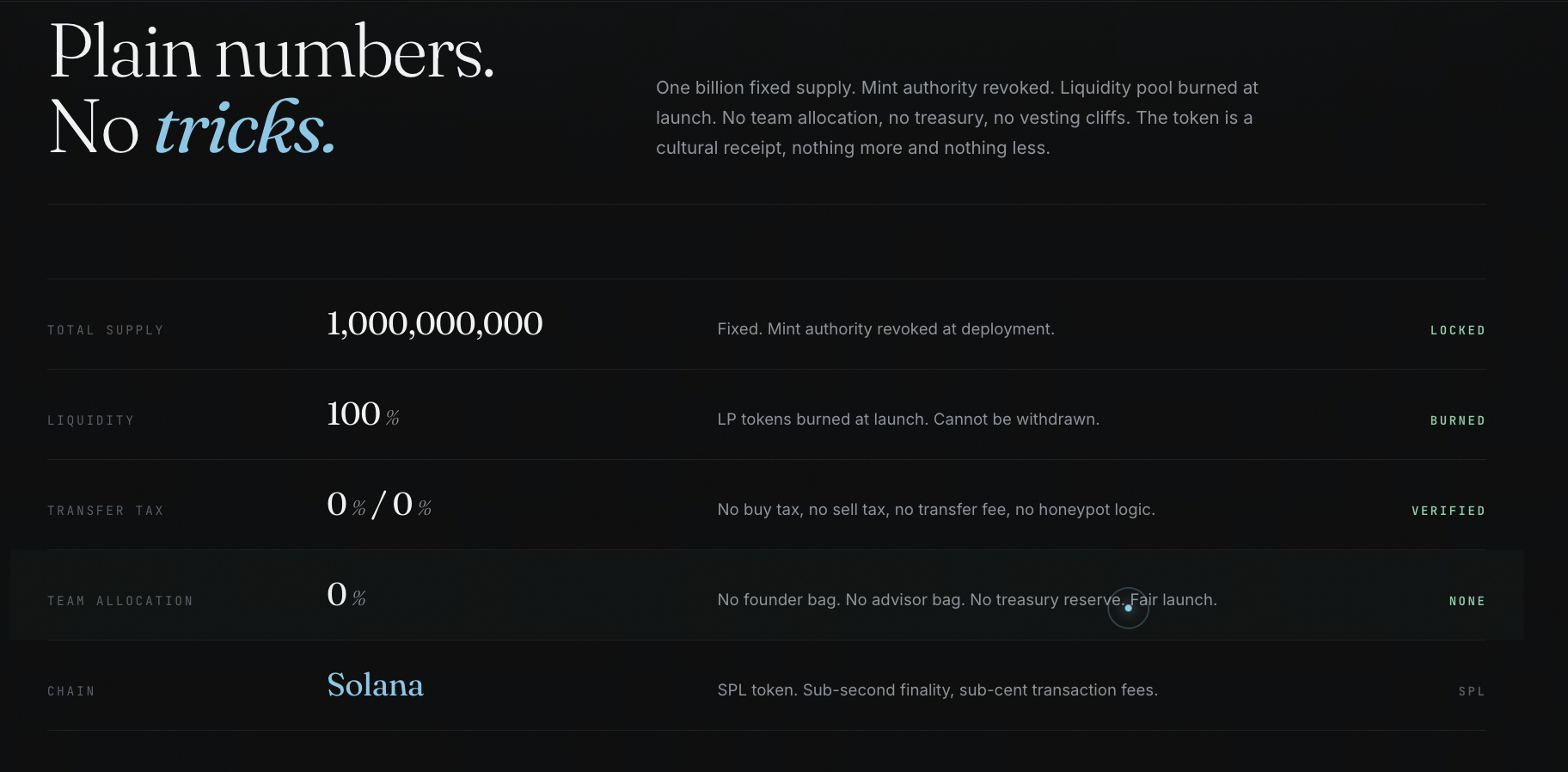
USWR typically adopts a fixed or capped total supply model to reinforce the scarcity narrative and reduce inflation's dilution of market consensus.
The overall structure consists of three parts:
- Initial circulating supply: To establish market trading depth.
- Ecosystem incentive allocation: For community growth and participation rewards.
- Long-term locked portion: To stabilize market expectations and control sell pressure.
The core purpose of this design is not to optimize yield but to strengthen the "resource scarcity narrative" through supply control, making the token price more reflective of market sentiment and macro trends. Under this mechanism, USWR functions more as a "narrative-anchored asset" than a yield-bearing asset under traditional financial models.
What Is a Narrative Token?
A Narrative Token is a crypto asset whose value is driven by market narratives and thematic consensus. Its core is not cash flow but the speed of narrative propagation and market attention. USWR is a typical Narrative Token, with its value determined by three factors: macro narrative strength (AI × water), market attention (information dissemination and sentiment diffusion), and cycle position (crypto market risk appetite). Unlike traditional assets, the price formation mechanism of Narrative Tokens follows an "attention economy model," where price is determined by the speed of information diffusion and consensus formation.
What Are the Differences Between USWR and RWA Tokens?
USWR and RWA (Real World Assets) tokens differ fundamentally in structural logic.
RWA typically relies on mapping real-world assets — such as treasury bonds, real estate, or commodities — and achieves yield or rights distribution through on-chain mechanisms, thus providing clear cash flow or asset anchoring.
In contrast, USWR does not directly anchor water ownership. Its core is "resource narrative modeling," a second-order abstract asset structure.
The distinction can be summarized as:
- RWA = Asset-backed (on-chain)
- USWR = Resource narrative-backed (on-chain)
This difference means USWR's price volatility depends more on market sentiment than on underlying asset returns.
As a Narrative Token, USWR's price performance is highly correlated with market sentiment, and its volatility structure is distinctly different from traditional assets. When the AI industry enters an expansion cycle, the market intensifies its focus on infrastructure resources (energy, water, hashrate), driving the Water Narrative's momentum.
During risk asset pullbacks, narrative-based assets often exhibit higher volatility and liquidity contraction. The main sentiment variables affecting USWR's price include:
- AI industry news and hashrate expansion expectations
- Changes in macro market risk appetite
- Social media dissemination and KOL discussion intensity
- Resource narrative cycle rotation
These factors together form USWR's short-term price drivers, positioning it closer to a "sentiment asset."
What Are the Potential Risks of USWR?
USWR's risk structure is reflected in three main areas:
- Narrative dependency risk: Its value depends heavily on sustained attention to the Water Narrative; if narrative heat declines, price support weakens significantly.
- Lack of fundamental risk: Without cash flow or asset anchoring mechanisms, its valuation model cannot rely on traditional financial analysis frameworks.
- High volatility risk: Narrative Tokens typically exhibit strong sentiment amplification effects and are highly sensitive to market cycles.
In addition, changes in AI infrastructure, energy structure, and policy environment may indirectly affect the market performance of such assets.
How to Assess the Investment Value of a Narrative Token?
Evaluating a Narrative Token like USWR requires a different analytical framework from traditional assets, with greater emphasis on narrative structure and market dissemination capabilities.
Key evaluation dimensions include:
- Narrative strength: Whether it is highly correlated with macro trends like AI.
- Dissemination ability: Whether it has potential for community diffusion and media reach.
- Liquidity depth: Market trading activity and capital capacity.
- Cycle position: Whether it is in a narrative expansion or contraction phase.
The essence of a Narrative Token is a "consensus accelerator," where value comes from the speed of market perception diffusion, not financial metrics.
Development Prospects of the AI and Resource Narrative Track
The ongoing expansion of AI technology is reshaping global resource demand, making energy, water, and hashrate the three core variables of new infrastructure. Under this trend, the resource narrative track is moving from the fringe into the mainstream market, with energy tokens, hashrate tokens, and water narrative assets leading the way.
This track may develop along two paths in the future: converging with the RWA system to form real resource mapping structures, or continuing as macro narrative assets for thematic rotation trading within crypto cycles.
USWR currently leans toward the second path — as a narrative-driven early-stage asset structure.
Summary
The core of the USWR token economic model lies in the Water Narrative. By converting the water consumption issue in AI infrastructure into an on-chain asset expression, it builds a value system grounded in expectations and consensus.
This structure reflects the crypto market's shift from "asset financialization" toward "resource narrative financialization," but its long-term stability still depends on narrative persistence, market attention, and the evolution of macro technology cycles.







