Users don't need complex production workflows to create, engage with, and share content—making for a much lighter content network. Unlike traditional social products, which revolve around platform-driven recommendations and user time spent on-site, Jelly-My-Jelly prioritizes efficiency in both expression and user-to-user connection.
Content is no longer just about the act of posting; it becomes a key medium for forming interactive relationships and community growth. This shift transforms SocialFi from a pure community concept into a product model powered by real-world usage.
Core Capabilities of Jelly-My-Jelly
Jelly-My-Jelly's feature set is built around content creation, organization, and social distribution. The platform cuts out repetitive steps in traditional workflows, allowing users to express themselves faster and move into the interaction phase sooner.
On the content creation side, users input information through video recording, and the system helps structure that raw material into a more understandable and shareable form. This reduces reliance on professional editing skills and minimizes upfront preparation work.
When it comes to organization, the platform weaves content processing together with distribution logic—going far beyond just offering a publishing tool. Well-structured content is more likely to sustain ongoing interaction, letting users focus on what they want to say rather than juggling formatting tasks.
From a social perspective, Jelly-My-Jelly doesn't emphasize one-way content consumption. Instead, it fosters continuous relationships between users. Content plays a dual role: it's both an expression and a connector, helping the platform evolve into a content-driven social network.
How to Share Content on Jelly-My-Jelly
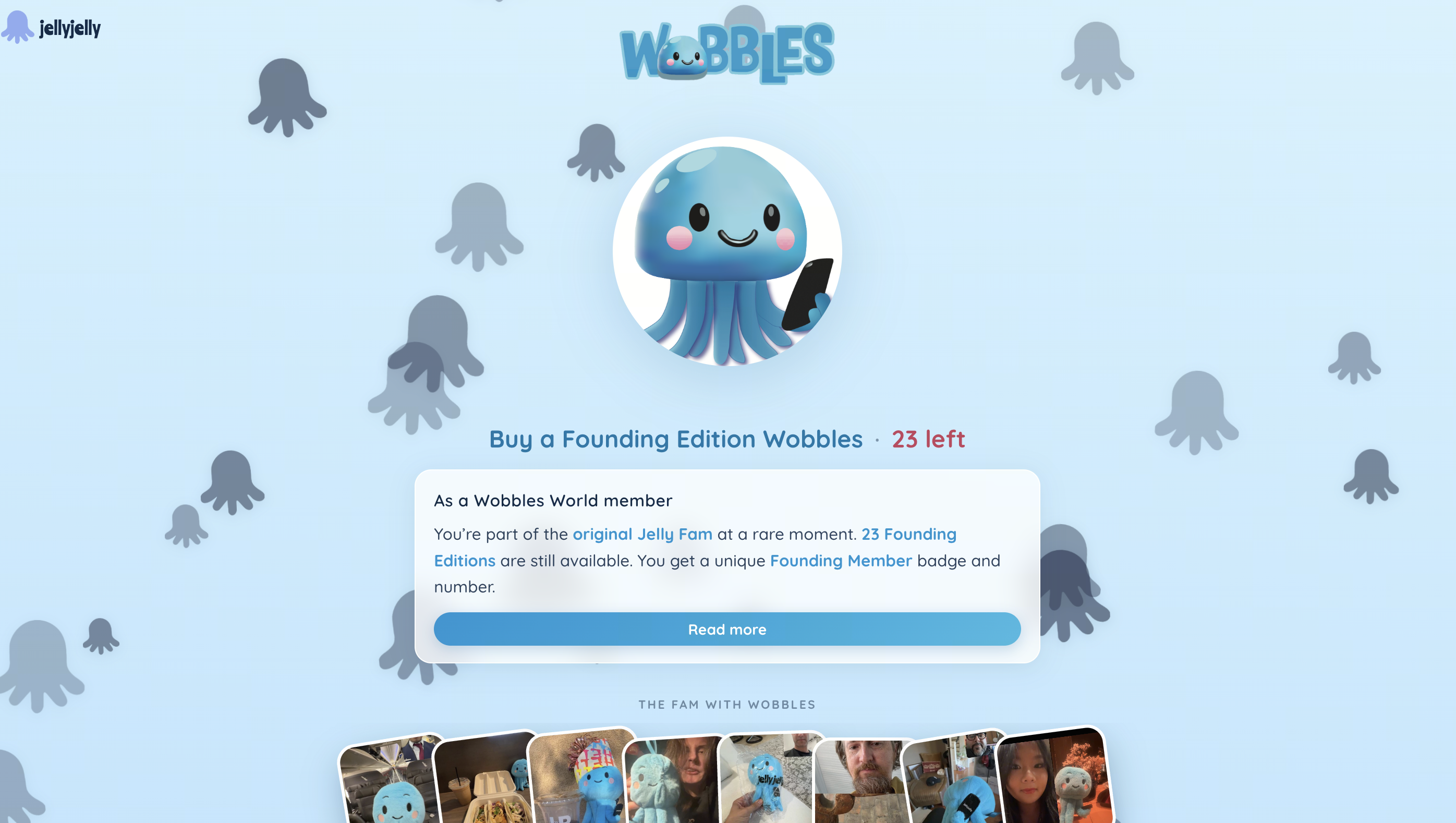
Jelly-My-Jelly's sharing model is fundamentally different from traditional social platforms. Those platforms typically demand a full production cycle—shooting, editing, titling, and ongoing management. Jelly-My-Jelly, by contrast, focuses on shortening the path from creation to distribution.
Once users generate content, it's immediately ready for sharing and social interaction. This design cuts the conversion cost between expression and distribution, making it easier for users to produce content consistently rather than posting sporadically.
For everyday expression, this model covers plenty of lightweight use cases. Whether it's recording an opinion, sharing an observation, talking within a community, or engaging around a shared interest—all can be distributed with minimal effort.
The real value of content sharing isn't speed of posting; it's about helping users build a habit of regular expression. As posting frequency goes up, the likelihood of forming interactive bonds between users also rises, fueling the content network's continued growth.
Source: jellyjelly.com
How AI Boosts Content Distribution Efficiency
In Jelly-My-Jelly, AI plays a supportive and optimization role for content and distribution—not just a recommendation engine. The platform deploys AI at two key stages (before and after content generation) to reduce the number of steps users need to get their message out.
Traditional platforms push recommendations after a piece of content is published. Jelly-My-Jelly, however, focuses on helping users shape their content in the first place. By automatically structuring content, improving readability, and lowering production complexity, AI lets users output with a far lower barrier to entry.
This model changes the logic of content production. Before, users had to learn how to make content and then learn how to distribute it. With AI, the gap between expression and distribution shrinks, enabling more everyday users to become content creators.
For SocialFi products, better distribution efficiency means more users can generate ongoing interactions—not just a small group of professional creators. That's a critical foundation for scaling a content network.
Typical Use Cases for the Social Network
Jelly-My-Jelly is designed for lightweight relationship networks, not the traditional follower-based social graph. Connections form through continuous interaction rather than long-term "following" relationships.
The first typical use case is interest-based expression. Users produce content around shared topics and build stable networks through repeated interaction. It's quality of content that matters here, not the size of someone's following.
The second scenario is community collaboration. Content becomes a discussion starter, helping users form new social bonds through ongoing conversation. This approach makes community interaction feel more organic and also lowers operational overhead.
The third scenario is daily logging and opinion sharing. Users don't need to invest heavily in maintaining an account; they can quickly share a thought and let it enter the distribution flow. Compared to traditional content platforms, this kind of relationship network is far more dynamic.
As interactions accumulate, content begins to serve as a relationship-building tool, and the social network shifts from a "who you follow" model to a "what content connects you" model.
Who Is Jelly-My-Jelly For
Jelly-My-Jelly is best suited for users who want a lower barrier to content expression—not professional production outfits. The platform's positioning emphasizes frequency of use and efficiency of expression.
For lightweight creators, it strips away the production overhead, making it easier to create consistently. For socially active users, it offers a more direct way to interact.
For those following SocialFi and new social products, Jelly-My-Jelly provides a fresh lens to watch how content networks evolve. By actually using the product, users can see how content, community, and value work together.
That said, for scenarios that demand professional production skills, commercial distribution capabilities, or complex operational systems, traditional content platforms still hold a clear edge. Different platforms for different goals.
What to Watch Out For
Even with better content generation and distribution efficiency, users should be aware of the content network's inherent limitations.
First, faster distribution doesn't equal higher content value. Quick posts can boost interaction frequency, but they don't guarantee lasting community bonds.
Second, the content ecosystem needs sustained activity. If user interaction drops off, the content network may never reach true growth momentum.
Third, AI can boost production efficiency, but content expression still depends on genuine human involvement. Over-reliance on automation risks weakening content quality and user relationships.
For SocialFi products, long-term competitiveness comes from real interaction, not short-term distribution spikes. Sustained participation matters more than any single viral moment.
Conclusion
Jelly-My-Jelly isn't just another publishing tool—it's a SocialFi usage model built around AI, content expression, and social distribution.
By lowering the content creation barrier, improving distribution efficiency, and strengthening user interaction, the platform aims to build a new kind of content network where more people can express themselves and connect.
This model won't replace traditional social platforms overnight. But it's showing a new direction for social products: shifting from platform-driven to user-driven evolution.
FAQ
What can you do with Jelly-My-Jelly?
Jelly-My-Jelly enables content creation, sharing, social interaction, and lightweight distribution—helping users participate in the content network with a lower barrier.
Why is Jelly-My-Jelly considered SocialFi?
Because it combines content expression, community interaction, and ecosystem synergy—making user activity a core driver of network growth.
What role does AI play in Jelly-My-Jelly?
AI helps users process content, improve expression efficiency, and lower the distribution threshold.
Who is Jelly-My-Jelly best suited for?
Lightweight content creators, social participants, and anyone curious about new social products.
How is Jelly-My-Jelly different from traditional social platforms?
Traditional platforms focus on recommendations and traffic. Jelly-My-Jelly focuses on content creation efficiency and user interaction relationships.