
#分享美股交易赢英伟达股票 Basing on Nvidia’s surge: the logic behind U.S. tech investment—AI computing power remains the market’s most core storyline
On June 1, at the GTC Taipei 2026 conference, Nvidia CEO Huang Renxun announced its official entry into the personal computer chip market, launching the RTX Spark super chip jointly developed with MediaTek. This AI PC chip integrates dozens of CPU, GPU, and high-speed storage chips, enabling local execution of large AI models and intelligent agents, and is expected to drive computing-power demand to expand from centralized cloud services to personal consumer end devices. After the news broke, Nvidia’s share price jumped 6.26% that day, and its market capitalization surged by $319 billion overnight to $5.43 trillion.
Nvidia’s strong performance is not an isolated case. On the same day, Broadcom rose 6% before the open, and Marvell Technology skyrocketed 22%. The two catalysts point in the same direction: Alphabet announced $80 billion in equity financing for AI infrastructure, and Huang Renxun also publicly predicted that Marvell’s future market value could reach $1 trillion. In fiscal 2026 first-quarter results, Broadcom’s AI semiconductor business revenue grew 106% year over year to $8.4 billion. These signals clearly show that capital expenditures in the AI computing infrastructure sector are still accelerating in expansion, and the ability of related companies to deliver performance is being repeatedly validated.
Now look at Apple. In its latest quarter, Apple reported revenue of $111.18 billion, up 16.6% year over year, and iPhone revenue reached a record high of $56.99 billion. But the market seems to focus more on Apple’s future AI narrative. A Morgan Stanley analyst noted that the upcoming WWDC 2026 could become a crucial turning point for Apple to reposition itself as an “AI winner”; a mature AI platform and a clear AI agent vision are enough to support its valuation.
The current semiconductor industry is in the strongest upward cycle in nearly a decade. WSTS forecasts that the global semiconductor market size in 2026 will reach $975 billion, nearing the $1 trillion threshold. On the funding side, data from Goldman Sachs shows that semiconductor holdings in defensive fund long portfolios have risen to the highest level on record, and 73% of global fund managers view “going long semiconductors” as the most crowded trade at present. AI is moving from a “model capability-driven” phase into a new stage of “computing organization and efficiency-driven,” and AI computing-power hardware will continue to benefit.
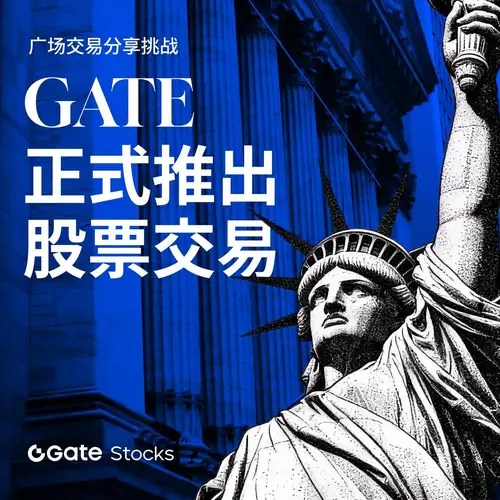
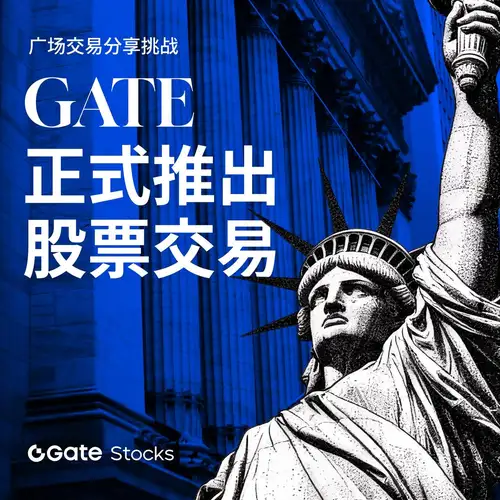
For ordinary investors, Gate’s recently launched stock trading service provides a new entry point worth paying attention to. Users can directly trade over 10,000 stocks and ETF assets from major exchanges such as Nasdaq and NYSE using USDT, connecting with compliant brokers. Real dividends are credited automatically, and there are no funding fees or overnight position-holding charges involved—making it suitable for long-term allocation of U.S. stock assets. Whether it’s capturing the medium- to long-term growth of AI leaders such as Nvidia and Broadcom, or participating in Apple’s upcoming AI narrative turnaround, this tool significantly lowers the barrier for crypto asset users to build positions in U.S. stocks. Currently, participating in the Gate Plaza “Stock Trading Sharing Challenge” by sharing U.S.-stock content on a topic-based basis also gives you a chance to win Nvidia stock rewards.
Of course, signs of market overheating are also emerging: 73% of fund managers are heavily betting on semiconductors. If fundamentals or the interest-rate environment changes, short-term volatility could be amplified sharply. While AI hardware demand is a long-term trend, short-term timing and position management remain key. The essence of tech investing is investing in frontline trends, not chasing sentiment. Only by maintaining independent thinking can you move steadily forward amid the AI wave.
On June 1, at the GTC Taipei 2026 conference, Nvidia CEO Huang Renxun announced its official entry into the personal computer chip market, launching the RTX Spark super chip jointly developed with MediaTek. This AI PC chip integrates dozens of CPU, GPU, and high-speed storage chips, enabling local execution of large AI models and intelligent agents, and is expected to drive computing-power demand to expand from centralized cloud services to personal consumer end devices. After the news broke, Nvidia’s share price jumped 6.26% that day, and its market capitalization surged by $319 billion overnight to $5.43 trillion.
Nvidia’s strong performance is not an isolated case. On the same day, Broadcom rose 6% before the open, and Marvell Technology skyrocketed 22%. The two catalysts point in the same direction: Alphabet announced $80 billion in equity financing for AI infrastructure, and Huang Renxun also publicly predicted that Marvell’s future market value could reach $1 trillion. In fiscal 2026 first-quarter results, Broadcom’s AI semiconductor business revenue grew 106% year over year to $8.4 billion. These signals clearly show that capital expenditures in the AI computing infrastructure sector are still accelerating in expansion, and the ability of related companies to deliver performance is being repeatedly validated.
Now look at Apple. In its latest quarter, Apple reported revenue of $111.18 billion, up 16.6% year over year, and iPhone revenue reached a record high of $56.99 billion. But the market seems to focus more on Apple’s future AI narrative. A Morgan Stanley analyst noted that the upcoming WWDC 2026 could become a crucial turning point for Apple to reposition itself as an “AI winner”; a mature AI platform and a clear AI agent vision are enough to support its valuation.
The current semiconductor industry is in the strongest upward cycle in nearly a decade. WSTS forecasts that the global semiconductor market size in 2026 will reach $975 billion, nearing the $1 trillion threshold. On the funding side, data from Goldman Sachs shows that semiconductor holdings in defensive fund long portfolios have risen to the highest level on record, and 73% of global fund managers view “going long semiconductors” as the most crowded trade at present. AI is moving from a “model capability-driven” phase into a new stage of “computing organization and efficiency-driven,” and AI computing-power hardware will continue to benefit.
For ordinary investors, Gate’s recently launched stock trading service provides a new entry point worth paying attention to. Users can directly trade over 10,000 stocks and ETF assets from major exchanges such as Nasdaq and NYSE using USDT, connecting with compliant brokers. Real dividends are credited automatically, and there are no funding fees or overnight position-holding charges involved—making it suitable for long-term allocation of U.S. stock assets. Whether it’s capturing the medium- to long-term growth of AI leaders such as Nvidia and Broadcom, or participating in Apple’s upcoming AI narrative turnaround, this tool significantly lowers the barrier for crypto asset users to build positions in U.S. stocks. Currently, participating in the Gate Plaza “Stock Trading Sharing Challenge” by sharing U.S.-stock content on a topic-based basis also gives you a chance to win Nvidia stock rewards.
Of course, signs of market overheating are also emerging: 73% of fund managers are heavily betting on semiconductors. If fundamentals or the interest-rate environment changes, short-term volatility could be amplified sharply. While AI hardware demand is a long-term trend, short-term timing and position management remain key. The essence of tech investing is investing in frontline trends, not chasing sentiment. Only by maintaining independent thinking can you move steadily forward amid the AI wave.