米国株と暗号資産——両者はなぜ連動し、そしてなぜ時に乖離するのか?
本レッスンでは、Nasdaq、金利、米ドル、BTCの間に見られる一般的な相関関係と周期的な乖離について、リスク選好とマクロ経済の波及経路の観点から解説します。観察結果を各ツールにどのように対応付けるかを説明し、Gate TradFi CFDとGate Stocksがマクロ見解を表現するうえで果たす役割を明確にします。
1. ナスダック指数:グローバルなリスク選好の重要な指標
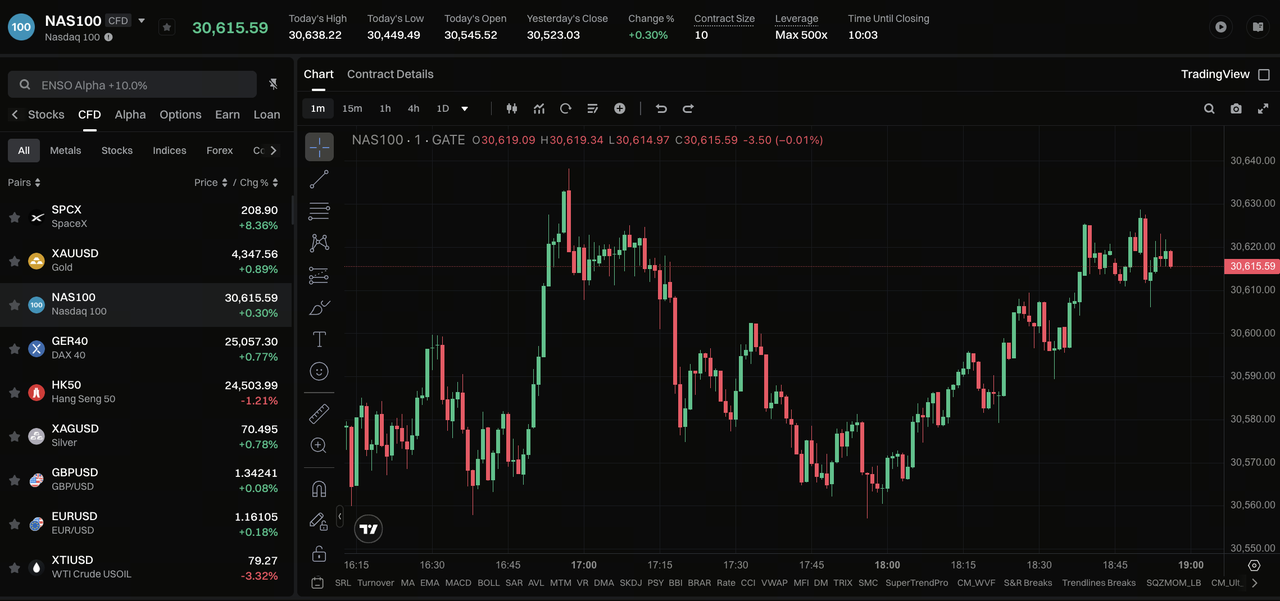 Source: Gate CFD page
ナスダック100指数は主要な米国ハイテク企業で構成されており、グローバルなリスク選好の重要な指標と見なされています。市場資本がより高いリスクを取る用意がある場合、ハイテク株が一般的に好まれ、BTCのような高ボラティリティ資産も同時に恩恵を受ける可能性があります。
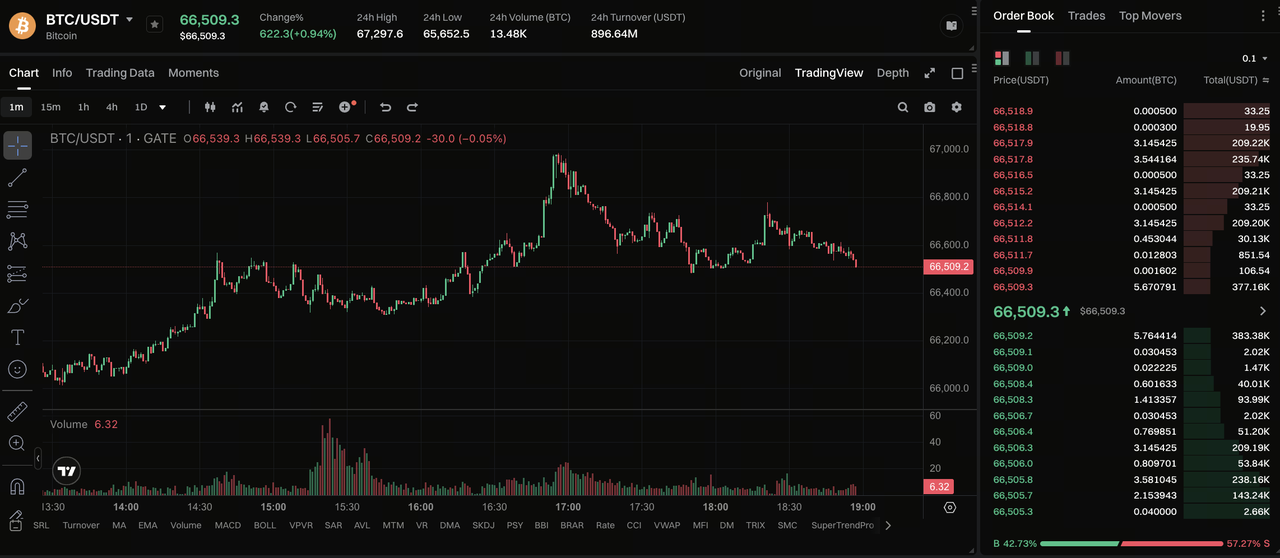 Source: Gate Market page
Conversely, when the market worries about economic growth, tightening liquidity, or rising interest rates, risk assets tend to be under pressure, and both BTC and Nasdaq may decline together.
Therefore, market software often tracks BTC and the Nasdaq Index side by side. The Nasdaq reflects earnings and growth expectations of US tech companies, while BTC has its own supply mechanism, on-chain ecosystem, and market narrative.
They are connected, but should not be treated as identical investment targets.
2. Why Do Interest Rate Changes Affect Both BTC and US Stocks?
Interest rates are a major factor influencing global risk assets. When rates rise, capital tends to become more cautious, growth asset valuations may be suppressed, and both tech stocks and BTC can face adjustment pressure. Conversely, when the market anticipates rate cuts or improved liquidity conditions, risk assets generally perform better.
However, their reaction speeds to interest rate changes are not exactly the same. BTC trades 24/7 and can respond to market news at any time; US stocks only trade during market hours, so there may be brief differences in price movements.
This timing gap is a key reason why BTC and US stocks often show 'sequential reactions.'
3. The US Dollar and Global Liquidity
Besides interest rates, the movement of the US dollar is also worth watching.
Generally:
- When the dollar strengthens, global risk assets come under pressure;
- When the dollar weakens, risk appetite may increase;
- When global liquidity improves, growth assets tend to attract more capital.
Thus, when observing BTC and Nasdaq, attention is also often given to:
- The US Dollar Index (米ドル指数(DXY));
- US Treasury yields;
- S&P 500 implied volatility index;
- Changes in global liquidity.
These indicators do not directly determine market ups or downs but help understand shifts in market sentiment.
4. Why Do They Sometimes Rise Together – and Sometimes Decouple?
The correlation between BTC and Nasdaq is not fixed. During periods of ample liquidity and optimistic sentiment, they often move closely together.
However, when the following factors dominate the market, correlation may decrease significantly:
- BTC halving cycles;
- Changes in crypto ETF capital flows;
- Adjustments in crypto regulatory policies;
- Shifts in on-chain ecosystem and market hotspots;
- Exchange risk events.
At such times, even if Nasdaq remains strong, BTC may follow a completely different trend.
Therefore, linkage should be seen as a market state – not as a permanent rule.
5. Same Viewpoints – Different Products Play Different Roles
Within the Gate ecosystem, even if you are bullish on risk assets, different products have distinct roles.
Image:
Linkage can be observed, but risks should not be simply combined
Although these products may all be related to Nasdaq trends, their trading mechanisms, risk structures, and fund management methods are not the same. Therefore, you should not treat different products as the same asset class just because you are optimistic about technology growth.
Market linkage helps you understand the relationships between assets. However, in actual investing, it is more important to identify whether risks are being repeatedly exposed.
For example:
- Holding a technology ETF;
- Going long on Nasdaq CFD at the same time;
- Also holding BTC or ETH;
Although these appear to be different assets, when market risk appetite decreases, they may all decline simultaneously. Therefore, when allocating across markets, fund division and risk management are often more important than simply predicting market trends.
Summary of this lesson
There is a connection between BTC and Nasdaq, but this connection is not fixed. Risk appetite, interest rates, USD trends, and global liquidity all affect both types of assets; meanwhile, BTC also has its own independent factors like halving cycles, on-chain ecosystem, and regulatory environment.
Thus, linkage is a market phenomenon, not a long-term rule. Through Gate's diverse product lineup, BTC Perpetuals, TradeFi CFDs, and Gate Stocks can meet different investment needs, but their trading mechanisms, risk structures, and fund management methods are not the same. Understanding these differences is more important than merely focusing on the degree of correlation.
The next lesson will further discuss risk management in cross-market investments: When USDT is simultaneously involved in spot, derivatives, Stocks, and CFDs, how should funds be allocated, and why risk isolation is more important than seeking the next upward opportunity.
関連コース

TradFiリスク価格付けとデリバティブの論理:伝統的な財務が暗号資産市場で新たに生まれ変わる仕組み

デリバティブ市場構造の分析:資本フローとリスクの価格決定メカニズム

資金調達率と無期限先物市場のミクロ構造:ベーシス、混雑した取引、極端な市場状況

CFD取引入門:メカニズム・コストからリスク管理、実務ワークフローまで

トークン化株式:TradFi資産をオンチェーン化する現実的な道筋とリスクの境界