Airbnb co-founder and CEO Brian Chesky’s X account was hacked on July 14, when the attacker posted a series of bullish “real-world asset (RWA) tokenization” tweets in his name. After Fortune magazine used the AI detection tool Pangram to analyze the posts, the system flagged them as 100% generated by AI; users said the posts lacked typical AI writing signals such as commas.
Timeline of the Brian Chesky X account hack
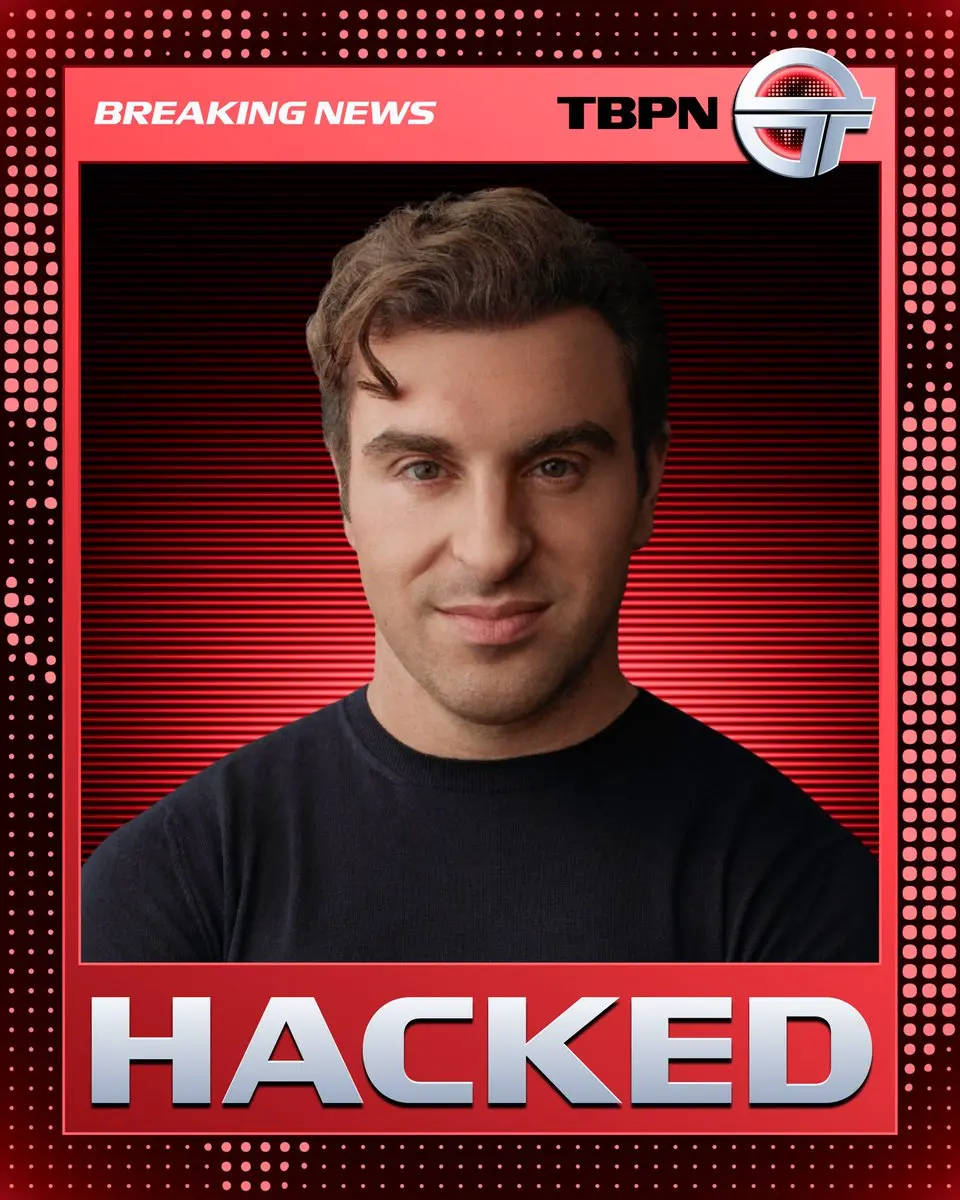 (Source: Brian Chesky)
According to Fortune magazine’s report and the Airbnb and X employee communications it reviewed, the timeline is as follows: On Monday (July 14), Brian Chesky’s X account published a series of posts about RWA tokenization. The posts took an optimistic stance on topics in the crypto space, including phrases such as “I’ve been silently keeping an eye on real-world asset tokenization,” among others. Insiders said Chesky’s account appeared to have been targeted in a cyberattack.
On Tuesday evening, after receiving reports, X’s security team logged the incident as a “highly notable security vulnerability” and completed the account takeover reversal; Chesky later regained access permissions. All related posts were deleted, and Airbnb declined to comment publicly.
AI-generated hallmarks in the hacker’s posts
Fortune magazine used the AI detection tool Pangram to analyze the tweets posted by the hacker; the system flagged them as 100% generated by AI. Users on X also pointed out that the posts show typical signs of AI writing. Bloomberg reporter Joe Weisenthal noted: “One notable characteristic of AI writing is the lack of commas.”
Rostra founder and strategy expert Lulu Cheng Meservey warned that, “Unfiltered remarks from CEOs can harm trust,” with commentary pointing to the potential impact such incidents could have on corporate leaders’ credibility.
Chesky previously said in a CNBC interview in February 2026 that AI “is the best thing that has happened to Airbnb,” and, according to a Bloomberg report, he is preparing to launch an AI lab focused on building a new model.
Scale data on AI spam content
Pangram’s latest analysis shows that, currently, about one-fourth of long-form social media posts are generated by AI, and nearly half of long-form articles on the X platform include AI-written content. A Sprout Social report found that 56% of respondents said they frequently or very frequently encounter “AI spam content” on social media, 83% said they encounter it at least sometimes, and 50% said that if content feels like AI spam, they will unfollow or block the related accounts.
Public responses from industry leaders to this issue include:
Substack CEO Chris Best: In September, he warned that AI could cause already crowded information feeds to be filled with low-quality content, intensifying competition in the attention economy
YouTube CEO Neal Mohan: He discussed “How to manage AI spam content” in an independent section of his annual letter to shareholders, listing it as a top priority for 2026
Academy Award-winning director Christopher Nolan: This week, he told The Daily Telegraph that Gen Z is “fully rejecting” AI spam content, adding that it is “much easier for them to identify because it comes from the very familiar internet world they’re used to”
The Merriam-Webster Dictionary has rated “slop” as its Word of the Year for 2025.
Security track record of Fortune 500 CEOs’ accounts
Brian Chesky is not the first Fortune 500 CEO whose social media account was hacked. In 2016, the Twitter, LinkedIn, and Pinterest accounts of Meta founder Mark Zuckerberg were briefly compromised by an organization called “OurMine Team.” In posts that were later deleted by the attackers, they wrote: “We got access to your account, we’re just testing your security measures.”
In 2019, the account of Twitter founder Jack Dorsey was briefly taken over for about 20 minutes. The incident directly led to X permanently disabling its “SMS repost” feature.
FAQ
What types of content did the hacker publish in the Chesky X account hack?
The hacker posted a series of bullish items in Chesky’s name about “real-world asset (RWA) tokenization.” RWA tokenization is a term in the cryptocurrency space, referring to converting traditional assets such as stocks into digital tokens. After Fortune magazine analyzed the posts using Pangram, they were flagged as 100% generated by AI and have since been deleted entirely.
How did X’s security team handle the Chesky account hack?
According to the Airbnb and X employee communications Fortune reviewed, after the hacked posts were flagged, X’s security team reported and handled the incident as a “highly notable security vulnerability.” By Tuesday evening, it restored control of the account, and Chesky subsequently regained access permissions.
What is Pangram, and what do its analysis results indicate?
Pangram is an AI content detection tool. Fortune magazine used it to analyze the posts published by Chesky’s account, and the system flagged them as 100% generated by AI. Pangram’s independent analysis data shows that currently, about one-fourth of long-form social media posts are generated by AI, and nearly half of long-form articles on the X platform include AI-written content.


