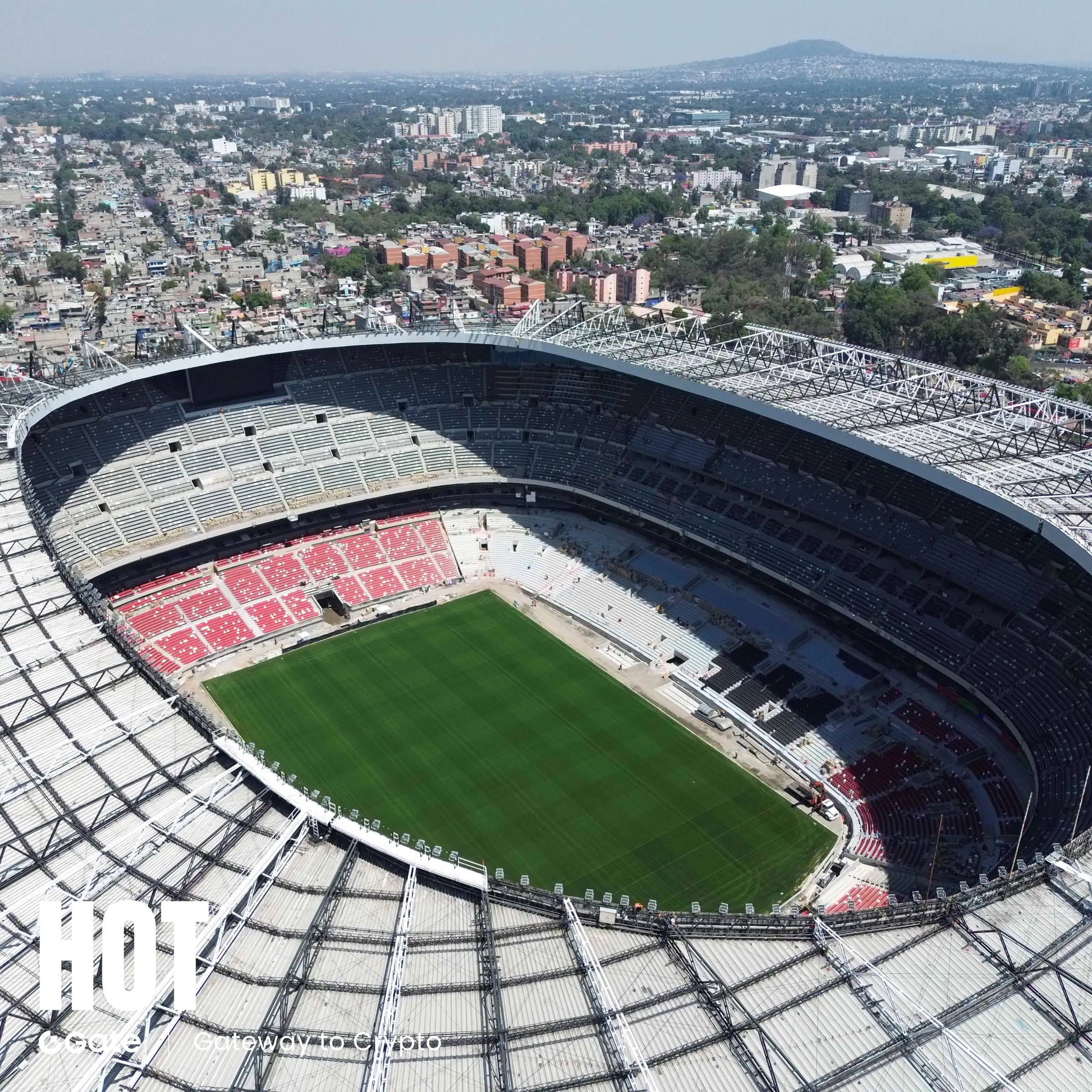
Within the 24 hours before kickoff, both teams had already finalized their starting frameworks. Mexico is nearly fully fit; only midfielder Marcel Ruiz was confirmed to miss the match this March due to injury. Experienced head coach Aguirre has set the starting lineup: goalkeeper 26-year-old Raúl Lánghel—main goalkeeper Malagón is ruled out due to a torn Achilles tendon; 40-year-old legendary goalkeeper Ochoa has been selected with the squad for his sixth World Cup appearance but is currently listed as a substitute. The back line pairs César Montes and John Bascas in central defense; the midfield core Edson Álvarez runs the setup; up front, Raúl Jiménez leads the line, with Alexis Vega and Roberto Alvarado splitting the wings. This midfield/central spine, mixed with starters from Major League Soccer and Europe-based players from the top five leagues, clearly outperforms the opponent in match experience and physical duels.
At a pre-match press conference on June 10, Mexico’s head coach Aguirre said the team would try to break the “curse” of never winning the opening match. Mexico has participated in World Cup opening matches seven times, yet none ended in a win (5 losses, 2 draws). “We have to break this slump,” Aguirre said. “I’ll go over past records with the players—this is a good reason, telling them we must win the match.”
South Africa returned to the World Cup stage after 16 years. In the history of the team, they have only appeared in the tournament 4 times and have never advanced from the group stage. The team showed strong resilience in the African qualifying rounds for the World Cup, finishing above traditional powerhouse Nigeria to qualify for the finals as group winners. Of the 26-man squad, only one player plays in Europe’s top five leagues—Premier League Burnley forward Lyle Foster; most of the rest come from domestic competitions. In the warm-ups ahead of the World Cup, South Africa’s form has fluctuated noticeably—before this, they had failed to win any match across five games of all competitions.
The altitude home-field factor remains a key variable in this matchup. Azteca Stadium sits at an elevation of over 2,200 meters, with oxygen levels 20% to 25% lower than on the plains—an especially harsh fitness test for any visiting team. Mexico players have trained on high-altitude since childhood, while South Africa arrived with insufficient time to adapt; the fitness disadvantage is expected to be sharply amplified in the second half. In a pre-match press conference, South Africa’s head coach Hugo Bros admitted that what he worries about most is not the gap in strength, but the deafening roar in the stadium and the pressure of playing at home.
Why does the market assign a 70% probability to Mexico’s win?
In Gate’s prediction market, as of June 11, 2026, market capital is pricing Mexico’s win probability at 70%, draw probability at 21%, and South Africa’s win probability at 11%. In essence, this data is an integrated valuation of pre-match fundamental information—not pure guesswork or emotion. In other words, within the framework of crypto prediction markets, each user can express their view on the match outcome directly with USDT, while the market’s collective pricing is reflected in real time through ongoing fluctuations in share prices.
This probability formation is based on four core logics. First, Mexico has a clear advantage over South Africa in the world ranking, squad value, and recent competitive form. Second, the natural geographic conditions of the high-altitude home ground give Mexico an edge. Third, historically, hosts in the World Cup often have a stronger psychological advantage in opening matches. Fourth, Mexico head coach Aguirre is coaching the national team for the third time; he has led the team at the 2002 and 2010 World Cups and brings rich experience in major tournaments. From the perspective of prediction markets, historical data also suggests that because opening matches often involve tactically conservative play, draw probabilities tend to be higher. In 2010, the two teams drew 1-1 in the opening match—this reference also leaves narrative space for a draw.
With a 21% draw probability and an 11% South Africa win probability, how is the market judgment broken down?
The distribution of a 21% draw probability and an 11% South Africa win probability is also a price signal formed after market capital integrates multiple factors. The draw probability of 21% is slightly higher than what you’d expect in a pure strength-versus-strength scenario, reflecting the market’s cautious expectation that there could be an upset or a tightly contested match. The 1-1 draw in the two teams’ opening match in 2010 is one of the reference points. In addition, Mexico has never won in World Cup opening matches in their 7 appearances so far; Aguirre also explicitly listed “breaking the curse” as a top goal in the pre-match press conference. Even though South Africa’s overall strength is weaker, their organizational resilience shown in African qualifiers should not be ignored.
South Africa’s win probability of only 11% represents a typical low-probability scenario. The market’s core logic for pricing this low probability is: South Africa’s attacking system relies heavily on single-point explosiveness from the forward line. Once Lyle Foster is specifically contained, the team’s attacking firepower will drop significantly. The only path to an upset requires the goalkeeper, Ron Williams, to perform at an extraordinary level while Foster finds the net in the extremely limited opportunities on counters. South Africa’s coach Bros also acknowledged in an interview that Mexico is the strongest team in the group. The likelihood of this kind of “best-case scenario” is inherently low; the market pricing of 11% basically reflects capital’s cautious assessment of this path.
From the perspective of capital games, the 49-percentage-point gap between the favorite-win probability and the draw probability means most traders believe Mexico’s chance of winning is far higher than its chance of not winning. This degree of deviation itself is an important market signal and a reference point for traders when deciding whether to participate in prediction market trades.
What activities does Gate’s prediction market World Cup campaign offer? How should beginners participate in opening match predictions?
Around the 2026 World Cup, Gate’s prediction market launched a multi-layer activity system covering the full schedule from the opening match to the crowning of the champion. The flagship theme event “Pitch Oracle, World Cup Guessing Carnival Season” has a total prize pool exceeding 500,000 USDT. The campaign runs from June 4, 2026 16:00 to July 21, 2026 16:00 (UTC+8), spanning the entire World Cup. Participation is extremely convenient: users upgrade Gate App to v8.22 or later, enter the Polymarket page in the Alpha section, and can use USDT in their account to directly participate in event predictions—no external wallet or on-chain transfer needed.
For users who want to join opening match predictions, the system offers a clear entry path. After signing up for the “Pitch Oracle” campaign, users enter the World Cup专区 and can view the three core sections: schedule, standings, and events. For each World Cup match, you can participate in predicting the result. For the featured opening match Mexico vs. South Africa, Gate also sets a dedicated 1,000 USDT prize pool in the daily challenge event. After users register and participate in predicting this event with trading volume not less than 50 USDT, they can earn a 10 USDT reward. Whether the prediction result is correct has no impact on reward eligibility (only the first 100 users each day, first come first served; one person can earn up to 200 USDT in total rewards). In addition, first-time users of the Gate prediction market can obtain a 10 USDT new-user reward after completing predictions for any World Cup featured event with trading volume not less than 20 USDT—limited to the first 1,000 users. The first-order loss compensation campaign further reduces new users’ concerns—after the initial participation in the prediction market, even if results aren’t as expected, they may still receive corresponding compensation.
The entire campaign covers all 104 World Cup matches, and users can participate throughout the event period. Leaderboard points are calculated based on prediction accuracy and cumulative points; the top-ranked participants will receive rewards of up to 6,000 USDT as well as limited-edition World Cup jersey gift boxes. Users who correctly predict this World Cup’s champion can also share a prize pool exclusively for the champion prediction.
How do the World Cup专区 and intelligent tools help users make more rational predictions?
Compared with traditional prediction markets that only provide a trading entry, the World Cup专区 recently launched by Gate places greater emphasis on combining event information with market depth. The专区 integrates three core modules around the schedule, standings, and events. After users enter the page, they can directly view that day’s match schedule, the实时 standings of each group, and the corresponding prediction-market events. The schedule calendar is presented in a timeline format, where users can also set reminders for matches they follow; 10 minutes before kickoff, the system pushes match notifications through in-app messages and App Push.
In terms of product experience, the World Cup专区 provides two trading modes: beginners can place intuitive orders using a “Yes/No” probability display mode, while professional traders can perform more precise operations using an order book. The platform also supports both market orders and limit orders. In addition, Gate has already launched multiple intelligent monitoring and analysis tools, including a Smart Money monitoring feature—tracking position changes of high-win-rate traders and popular market opportunities; and an AI event analysis feature, providing automatic match summaries, key factor breakdowns, news roundups, and risk alerts. The common goal of these tools is to help users understand how market logic evolves—not just to provide a trading venue.
From a broader industry perspective, the World Cup专区 behind it reflects an important trend in the evolution of prediction market products. In the past, platforms were more like trading venues; now platforms are beginning to take on the role of information platforms. After users enter a prediction market, what they want is not only price data, but also the schedule, standings, news, market analysis, and the ability to track hotspots. As user scale continues to expand, competition among prediction markets is no longer just competition over the number of events—it’s also competition over information service capability and user experience.
Why is the industry value of crypto prediction markets expanding from just one opening match?
The opening match betting data appears, on the surface, to only reflect the probability distribution of a single game. But from the industry level, it reveals a deeper change: crypto prediction markets are expanding from a niche application for crypto-native users into a new kind of market tool that combines information interpretation, data analysis, and trading strategies.
Since the beginning of 2026, the prediction market sector has seen explosive growth. Nominal trading volume has surpassed $20 billion for four straight months. In April 2026 alone, nominal trading volume nearly reached the historical high of $30 billion on a single-month basis. Bernstein, the Wall Street investment bank, said that the 2026 World Cup expanding to 48 teams and 104 matches will become the largest single-trade catalyst in the history of prediction markets.
Unlike traditional sports betting and guessing models, the core value of crypto prediction markets lies in transparency, auditability, and liquidity. Contract prices continuously fluctuate between $0 and $1. Any user can adjust their position based on real-time information. For new users just getting into prediction markets, Gate uses a series of activities such as daily challenges and first-order loss compensation to effectively lower participation barriers and reduce the psychological concerns of losing money on the first try—helping more users learn about this emerging field with lower trial-and-error costs.
These data and campaign activities together point to a trend: crypto prediction markets are becoming a unique window to observe capital flows into global focus events. And the World Cup opening match is only the starting point of this trend.
Summary
The World Cup opening match between Mexico and South Africa is not only a conversation at the football competition level, but also a real-world exercise for the crypto prediction market. The triple probabilities of 70%, 21%, and 11% are not just a numbers game; they are price signals formed from market capital integrating each team’s strength, the high-altitude home advantage, historical data, and recent form. Meanwhile, taking advantage of the World Cup, Gate is also launching the World Cup专区 and a guessing carnival season campaign with a total prize pool exceeding 500,000 USDT—helping more users access prediction markets with lower barriers. Daily challenges, first-order loss compensation, and smart money monitoring tools form a complete closed loop from “information acquisition” to “market participation” to “strategy iteration.” The real value of prediction markets is not to provide “the correct answer,” but to help users view probabilities more rationally and analyze uncertainty more systematically—and the World Cup is one of the most persuasive application scenarios for this way of thinking.
Frequently Asked Questions (FAQ)
Q: How long does the Gate World Cup Guessing Carnival Season campaign last?
The campaign runs from June 4, 2026 16:00 to July 21, 2026 16:00 (UTC+8), covering the full schedule from the opening match to the crowning of the champion across the entire World Cup. The total prize pool exceeds 500,000 USDT and includes multiple reward types such as prediction-market vouchers, USDT rewards, trading rebates, and limited football-themed merchandise.
Q: Do I need to predict correctly to get rewards for the opening match?
No. In the daily challenge, users can earn a 10 USDT reward by participating in that day’s featured match prediction with trading volume not less than 50 USDT; whether the prediction result is correct has no impact on reward eligibility. Daily participation is limited to the first 100 users, first come first served.
Q: What risk-reduction safeguards are there for first-time prediction market users?
Gate provides three-tier protection mechanisms for new users. First-time users who complete a prediction for any World Cup featured event with trading volume not less than 20 USDT can receive a 10 USDT new-user reward. In addition, if the first-order loss compensation campaign’s result is not as expected after a user’s first participation in the prediction market, they may have the opportunity to receive corresponding compensation. Users can also use the experience vouchers they receive for prediction market use to try first; the profit generated from the experience vouchers can be withdrawn, while the principal part does not directly affect the user’s own funds.
Q: How do I get access to the Gate World Cup专区?
Users need to upgrade Gate App to v8.22 or later, and enter the Polymarket page via the Alpha entry on the app home page to view the World Cup专区. The专区 integrates three core modules—schedule, standings, and events—allowing users to directly use the USDT in their account to participate in prediction trades without an external wallet or on-chain transfers.
Q: Do the probability data in prediction markets represent the final outcome?
A probability of 70% does not constitute a definite judgment of the match outcome. It reflects collective expectations formed by market capital based on existing information—out of every 100 similar scenarios, about 70 times Mexico wins, about 21 times it ends in a draw, and about 11 times South Africa wins. Football matches involve many uncontrollable variables; from in-game tactical adjustments to the real-time condition of key players, all of them can affect the final outcome.
Q: As of what time are the prediction market probability data in this article?
The probability data cited in this article is as of June 11, 2026. Information changes within the 24 hours before kickoff (such as confirmation of starting lineups, in-game tactical adjustments, etc.) may cause probabilities to fluctuate in real time. Users are advised to rely on the latest data on the Gate platform.