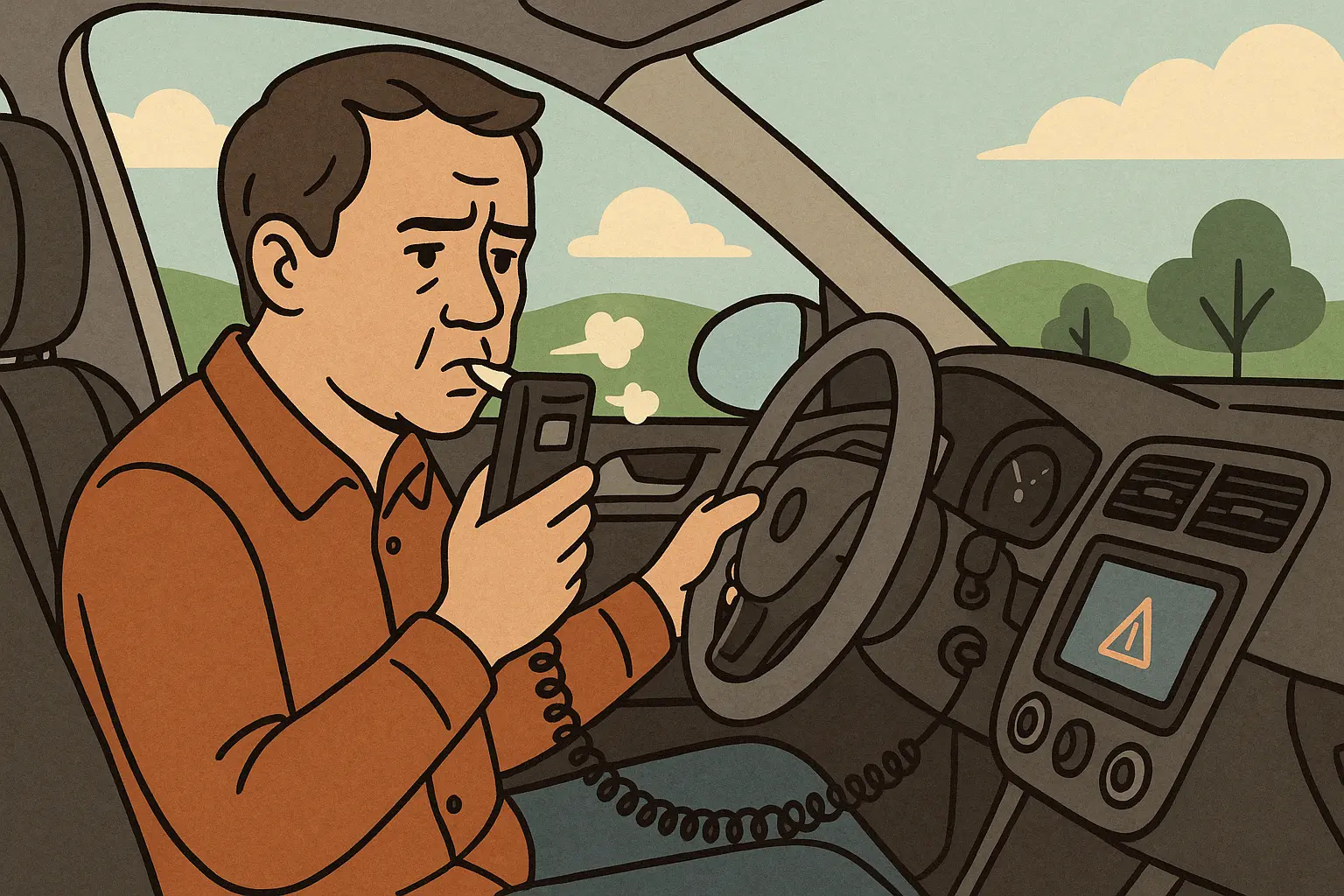
Under Section 24220 of the U.S. Infrastructure Investment and Jobs Act (IIJA), all new passenger vehicles sold in the United States must have built-in “advanced drunk driving and impaired driving prevention technologies” by September 2027. The legislation requires that the system design be for “passive monitoring of driver performance.” As of early 2026, it is still under review, and the industry has not yet produced any mass-market solution that meets the NHTSA requirement of 99.9% accuracy.
Legislative Requirements and Current Implementation Status of IIJA Section 24220
According to the provisions of IIJA Section 24220, the bill requires the use of a passive monitoring design, and the driver does not need to actively cooperate with any operation. NHTSA is the implementing agency for this provision and is responsible for developing the final technical specifications.
Based on publicly available information from NHTSA, the agency missed the final rule deadline in November 2024. As of early 2026, the relevant rules are still in the review phase. According to the current timeline, related technology would begin being installed on new vehicles no earlier than the end of 2026, and September 2027 is the mandatory compliance deadline for all newly sold passenger vehicles in the United States.
On April 25, 2026, the X platform account @pubity described the relevant requirements as “constant surveillance.” According to public data, the post received more than 13 million views, sparking large-scale public discussion.
Two Technical Approaches and the 99.9% Accuracy Requirement
According to NHTSA’s publicly available guidance, the two major technical approaches currently competing in the industry are as follows:
Breath-based: Sensors embedded within the steering-column capture the concentration of alcohol exhaled by the driver passively, without requiring the driver to actively cooperate
Touch-based: Infrared sensors are installed in the start button or on the steering wheel, measuring blood alcohol concentration (BAC) during driver operation startup through the skin’s optical characteristics
NHTSA requires the system’s accuracy to reach 99.9% before it is allowed on the road. Based on estimates of the annual U.S. new-vehicle sales volume, even if 99.9% accuracy is achieved, tens of millions of false detections may still occur each year—leading to cases where sober drivers are mistakenly locked out by the system or forced to shut off. As of early 2026, the industry has no mass-market solution that has passed this threshold.
Some automakers have lobbied regarding product liability risk, asking for a postponement of the mandatory date or adjustments to the standards for joint legal liability in cases of misclassification. The main concern is the potential lawsuits that could be triggered when sober drivers are mistakenly locked out; the associated legal risk is higher than the cost of developing the technology itself.
Legal Protection Gap for Biometric Data
Under the provisions of IIJA Section 24220, the bill explicitly does not require automakers to share drivers’ biometric data, but it also does not prohibit automakers from sharing it. The United States currently has no federal law that governs biometric data collected by vehicles while in operation—regulating both ownership and use restrictions.
Under the current legal framework, automakers may hold, sell, or license the breath data, skin optical characteristics, and blood alcohol concentration estimates collected through the above technologies, provided that such information is disclosed in the privacy policy. As of the publication of this report, Congress has not yet voted on federal protection legislation for in-vehicle biometric data.
Frequently Asked Questions
What is the accuracy requirement for in-vehicle drunk driving detection technology under IIJA Section 24220, and is there currently a compliant solution?
According to NHTSA’s publicly available guidance, the system’s accuracy must reach 99.9% before it is allowed on the road. As of early 2026, the industry has no mass-market solution that passes this threshold, and both the breath-based and touch-based main technical approaches are still under development.
What is the mandatory implementation deadline for the IIJA, and what is the status of NHTSA’s enforcement rule progress?
Under IIJA Section 24220, all new passenger vehicles sold in the United States must meet the requirement by September 2027. NHTSA missed the final rule deadline in November 2024. As of early 2026, it is still in the review phase, and the earliest new vehicles are expected to begin being equipped with the technology by the end of 2026.
Does the IIJA regulate how automakers may use collected biometric data?
Under the provisions of IIJA Section 24220, the bill does not require automakers to share biometric data, but it also does not prohibit automakers from sharing it. The United States currently has no federal law governing the ownership and use restrictions of biometric data collected by vehicles while in operation.


