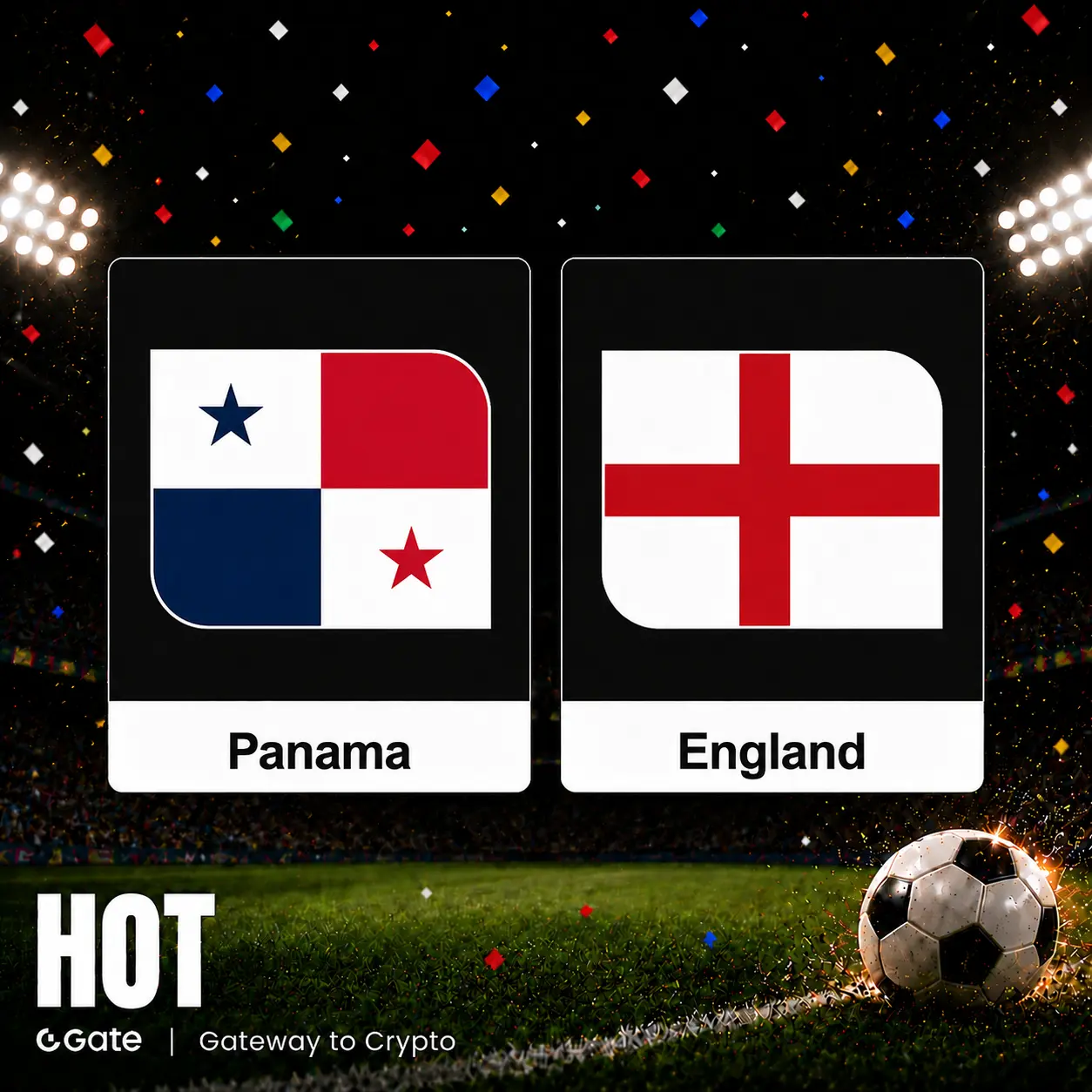
Where Do the Prediction Market's Win Probabilities Come From
The core mechanism of prediction markets is "money voting" — each participant uses their own funds to bet, expressing their judgment on a particular outcome. When a large number of users make buying and selling decisions based on their own information and analysis, the market aggregates these dispersed judgments through the price mechanism, ultimately forming implied probabilities.
The set of numbers — England 85%, Draw 11%, Panama 6% — is essentially the collective pricing formed by market participants after digesting all available information: team form, injuries, tactical setup, qualification scenarios, historical matchups, etc. It is not the prediction of a single institution or an expert, but the product of thousands or even tens of thousands of independent decision-makers competing under profit incentives.
How Are Strength Gaps Quantified and Priced by Capital
Prediction market pricing of win rates first relies on a quantitative assessment of the two teams' overall strength.
England is currently ranked 4th in the world, with a total squad value of approximately €1.31 billion, ranking second among the 48 World Cup teams. The starting lineup is almost entirely from top European leagues — Bellingham is Real Madrid's midfield core, Rice is Arsenal's midfield pillar, Kane is Bayern Munich's frontline ace, and Foden is Manchester City's attacking core.
In contrast, Panama's total squad value is not in the same league as England's. As a representative team from the CONCACAF region, Panama has a significant gap compared to top teams in dimensions such as individual player ability, big-game experience, and tactical system maturity. In the prediction market's pricing framework, fundamental factors like squad value differences, league level disparities, and big-game experience together form the underlying support for England's high win probability.
How Did the First Two Rounds Affect Market Expectations
Beyond fundamentals, the actual match content from the first two rounds of this World Cup is a key variable for market pricing adjustments.
In their first round, England beat Croatia 4-2, with Kane scoring a brace, Bellingham and substitute Rashford each scoring one. In the second round, although they drew 0-0 with Ghana, they still dominated possession control.
Panama lost both of their first two matches 0-1, to Ghana and Croatia respectively. In both games, they kept a 0-0 first half but conceded in the second half, exposing issues with defensive concentration and physical distribution in the latter stages. More critically: Panama has 0 points and 0 goals after two matches and has already been eliminated.
The market's pricing of a team is not solely based on win-loss results, but also on the sustained ability demonstrated during the matches. England showed control and offensive threat in both games, while Panama showed defensive resilience but lack of attacking power. This difference in process further widens the win probability gap given by the market.
How Does the Qualification Scenario Change the Game's Strategic Structure
The points situation in Group L provides a strategic perspective for understanding market pricing.
Currently, England and Ghana each have 3 points, while Panama and Croatia have 0. England leads the group on goal difference. For England, winning this match secures first place in the group and qualification. However, because they were held to a draw by Ghana in the second round, they failed to secure top spot early, so they still need to go all out for victory in the final round.
Panama has already been eliminated, so the strategic significance of this match is limited to a fight for honor. A team with no hope of advancing, facing a top-tier team that must win — the difference in motivation and tactical commitment is an important factor the prediction market must incorporate. The market gives Panama only a 6% win probability partly because of this: when a team lacks a clear strategic goal, capital prices its upset potential very conservatively.
What Reference Does Historical Matchup Provide
The only meeting between the two teams in a major tournament was at the 2018 World Cup, where England beat Panama 6-1. In that match, England showed overwhelming attacking efficiency, while Panama exposed the fragility of its defensive system against the high-intensity pressure of a top team.
Although historical matchups are not a sufficient condition for predicting future results, they provide an important reference coordinate for the market. The 6-1 scoreline in 2018 indicates that when these two teams meet in a major tournament, the strength gap is enough to produce a large-margin result. This historical imprint to some extent influences the market's expectations for this match — not just the probability of England winning, but also the expected margin of victory.
What Does One-Sided Capital Betting Mean
The 85% win probability pricing represents a very high confidence level in the prediction market. Comparing this with the 83% win probability the market gave England against Ghana, and related pricing against Croatia, it shows that market confidence in England remains persistently high.
This highly consistent direction of capital reflects both England's market appeal as a traditional powerhouse and the reality that Panama currently struggles to gain capital trust. From the prediction market's operational logic, when the win probability gap reaches such an extreme, the market's focus shifts from "who wins" to "by how much" — that is, more granular prediction dimensions like exact score, total goals, or whether a specific player scores.
It should be noted that a high win probability in the prediction market does not equal certainty of the match result. Although mathematically low, the 6% upset probability is not a negligible small-probability event in single-elimination football matches. The value of prediction markets is not in absolute predictive accuracy, but in revealing market consensus through capital flows, identifying pricing deviations, and providing participants with a transparent information aggregation and betting platform.
Frequently Asked Questions (FAQ)
Q1: How are win probabilities in prediction markets calculated?
Prediction market win probabilities are not calculated by algorithms or models, but determined by the buying and selling behavior of market participants. When users buy shares of a certain outcome, the price of that outcome rises, and the corresponding implied probability increases. England's 85% win probability means the market equilibrium price points to this probability level.
Q2: Does the 85% win probability mean England will definitely win?
No. The 85% win probability indicates the market believes England has an 85% chance of winning, but there is still a 15% chance of a draw or a Panama win. Prediction markets express probability judgments, not deterministic assertions.
Q3: Panama has already been eliminated; is this match still meaningful?
For Panama, this match is a fight for honor and the team's last game of the World Cup. For England, they need to win to secure top spot in the group. The different strategic goals of the two teams are also important considerations in prediction market pricing.
Q4: Can prediction market data be viewed in real time?
Yes. The Gate platform provides real-time data display for prediction markets. Users can check the latest win probabilities, capital flows, market depth, and other information for each match at any time.
Q5: Why is Panama's win probability only 6%?
The 6% win probability is the market's pricing after comprehensively assessing factors such as the strength gap between the two teams, performances in the first two rounds, and the qualification scenario. Panama's reality of 0 points and 0 goals in two matches, having already been eliminated, combined with the significant gap compared to England in player value and big-game experience, jointly lead to this extremely low win probability pricing.