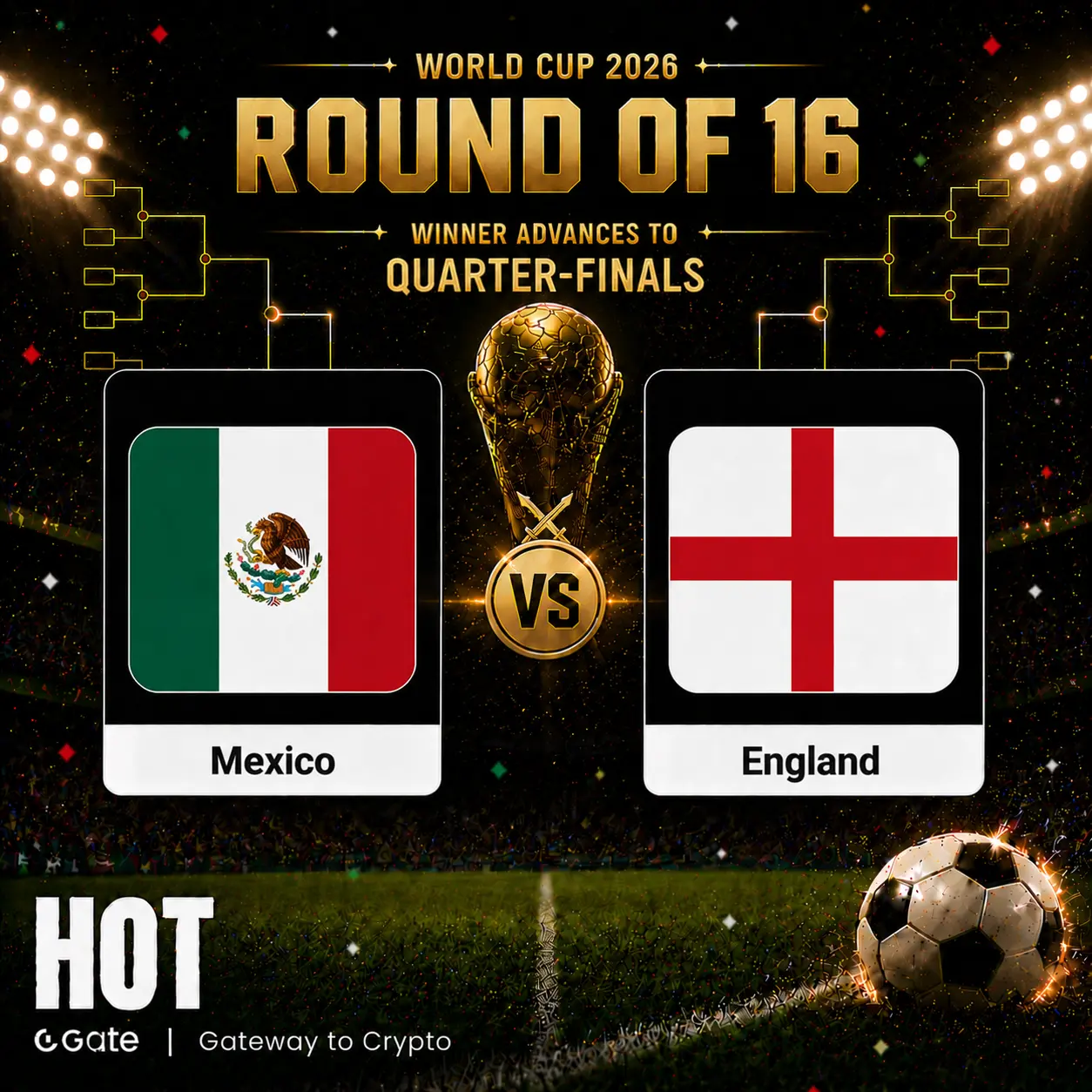
This pricing structure is closely tied to the special nature of the match itself. Mexico, as the host, has shown astonishing form in this World Cup – four wins out of four, scoring eight goals and conceding none. They are the only team among the 48 teams in this tournament to maintain a clean sheet. Meanwhile, England, despite having a stronger squad on paper and greater bench depth, must face the host nation's passionate fans at the Estadio Azteca, which sits at an altitude of 2,240 meters.
The market has incorporated two opposing forces – the host's home advantage and England's squad talent – into the same price system, ultimately resulting in a near-equal pricing.
The Host's Unbeaten Record and True Weight of the High-Altitude Home
The Estadio Azteca is more than just a venue for Mexico. In the 1970, 1986, and this World Cup, Mexico has played 10 matches at this stadium to date, maintaining a strong record of 8 wins and 2 draws. Mexico coach Aguirre has described the stadium as "Mexico's 12th man."
England's challenge goes far beyond the 11 opponents on the pitch. Moving from low-altitude zones to a high-altitude stadium over 2,200 meters presents a major test of players' fitness and adaptability. More notably, Mexican media have revealed the hotel where the England team is staying and called on fans to disrupt the visitors before the match. England has been allocated only 3,000 tickets for this game, meaning over 90% of the crowd in the stadium will be Mexican supporters.
Historical head-to-head data is also worth noting. The two teams have met nine times in history, with England leading 6 wins, 1 draw, and 2 losses. However, England has never won away against Mexico. Their only World Cup meeting dates back to 1966, when England won 2-0 at home – that was 60 years ago.
These factors together form the realistic basis of Mexico's home advantage, and they are the key reasons the prediction market gives the host a 30% win probability.
England's Squad Depth and Tactical Uncertainty
Despite facing away disadvantages, England still holds a slight edge in the prediction market at 40% win probability. This judgment has clear logical support.
England possesses one of the strongest and most balanced squads in this World Cup. Players like Kane, Bellingham, Saka, and Rice have accumulated extensive experience in top leagues and international competitions. England advanced from the group stage as group winners with 2 wins and 1 draw, then defeated DR Congo 2-1 in the Round of 32.
However, England is not without concerns. The right-back position is a headache for coach Tuchel – Livramento has withdrawn, and Reece James is out indefinitely. Meanwhile, Mexico's left flank is anchored by Quiñones, who has scored three goals in this tournament. England's expected goals against over the four matches is 2.3, and the defense's stability under high pressure has yet to face a true test.
More critical is the midfield battle. Bellingham is the core fulcrum of England's attacking system, but if he is neutralized by Mexico's midfield shield, England's offensive flow will be obstructed. Set pieces are also a key weapon for England – 38% of their goals come from set pieces, while Mexico has shown weakness in defending corners.
These tactical details form the micro-foundation of market pricing, explaining why England, despite being superior on paper, cannot secure an overwhelming win probability in the prediction market.
How the Prediction Market Price Discovery Mechanism Works
The pricing structure of Mexico vs. England is essentially a real-world test of the prediction market's price discovery mechanism.
The basic mechanism of a prediction market is to break a future event into tradable contracts. Users buy "Yes" or "No" shares, with contract prices fluctuating between $0 and $1, interpreted as the market's pricing of the probability of a given outcome. Since the start of the 2026 World Cup, prediction markets have suddenly become one of the most intensively discussed topics in the crypto industry. Judgments that previously resided in social media, forums, and traditional odds are being transformed into tradable, observable, real-time market prices.
As of early June 2026, the total trading volume for the "2026 World Cup Winner" prediction event on Polymarket has exceeded $908 million. During the World Cup, prediction markets are not only appearing on standalone platforms but are also entering the ecosystem entry points of centralized exchanges. Gate has integrated Polymarket services, providing users with channels to directly participate in prediction trading using USDT.
This trend indicates that prediction markets are evolving from trading tools centered on hot events into a probability pricing layer for real-world events. The pricing of Mexico vs. England is a microcosmic demonstration of this evolution.
Why the 31% Draw Probability Becomes a Key Market Signal
In this match, the draw probability reaches 31%, just 9 percentage points lower than England's win probability and 1 point higher than Mexico's. This data conveys an important signal: market participants believe this match will most likely be a cautious stalemate.
A high draw probability in the knockout stage carries special tactical implications. It means the market expects both teams to avoid taking risks in regular time – Mexico does not want to make mistakes at home, and England is unwilling to recklessly push forward in a high-altitude away match. Both sides are likely to adopt relatively conservative tactics, waiting for the opponent to err.
This assessment aligns with the actual performance of both teams. Mexico's expected goals are approximately 1.6 per game – solid but not top-tier. England's expected goals are 1.9, but their expected goals against is also 1.2. In other words, England can score but can also concede. This relative balance between offense and defense provides logical support for a draw outcome.
Set pieces may be the key variable to break the balance. Mexico's weakness in defending set pieces could be a breakthrough for England. But even if England scores first, Mexico, armed with home momentum and quick counter-attacking ability, could also equalize.
Prediction Market Liquidity Characteristics in the Knockout Stage
After the World Cup entered the knockout stage, the trading structure of prediction markets changed significantly.
In June 2026, the global prediction market monthly trading volume reached approximately $44.8 billion, up 75% month-over-month. World Cup-related trading accounted for $5.4 billion. Trading volumes for individual matches are also notable – a Round of 16 match between Canada and Morocco saw combined trading volume on two major platforms exceeding $74 million.
The Mexico vs. England match recorded a 24-hour trading volume of $8.85 million, a high level among comparable events. This volume not only reflects the market's intense focus on this match but also indicates that prediction markets are becoming important liquidity hubs during the World Cup.
However, the sustainability of prediction markets still faces challenges. After the World Cup ends, trading volume is likely to drop sharply. User retention after the 2024 election was not ideal. Whether prediction markets can transform from "event-driven" to "platform stickiness" will be a core proposition for the next phase of the industry.
For the crypto industry, the rise of prediction markets means that event contracts, as a new asset class, are gaining institutional-grade liquidity. This is not just growth in volume, but an extension of crypto financial infrastructure toward "non-price risk transfer."
FAQ
Q: How are the win probabilities on the Gate prediction market derived?
The win probabilities on the prediction market come from actual trading behavior of market participants. Users buy "Yes" shares for a certain outcome, and the contract price fluctuates between $0 and $1, interpreted as the market's collective pricing of the probability of that outcome. The data of Mexico win 30%, draw 31%, England win 40% reflects the overall judgment of current market capital.
Q: Why does England have a stronger squad on paper but only a 40% win probability?
Although England has a stronger squad and deeper bench, they face multiple disadvantages: an away match at a high altitude of 2,240 meters, the massive vocal support of Mexican home fans, and the host's form of four wins with zero goals conceded. After the market incorporates these factors, England's win probability is suppressed to 40%.
Q: What does the 31% draw probability mean?
A relatively high draw probability means the market expects this match to most likely be a cautious stalemate. In the knockout stage, both teams are unwilling to take risks and make mistakes, likely adopting relatively conservative tactics. Details like set pieces could become the key variable to break the balance.
Q: What is the difference between prediction markets and traditional sports betting?
Prediction markets are based on a mechanism of trading event contracts, where prices are determined by the buying and selling behavior of participants, interpreted as real-time pricing of event probabilities. In contrast, odds in traditional sports betting are set by the house, with profit margins and risk control considerations for the bookmaker. The price discovery process in prediction markets is more decentralized and transparent.
Q: Can the heat of prediction markets continue after the World Cup ends?
This is the core challenge facing the industry. User retention after the 2024 election was not ideal, and trading volume is likely to drop sharply after the World Cup. Whether prediction markets can transform from "event-driven" to "platform stickiness" will determine the long-term development potential of this track.