# TrumpVisitsChina

17.72K

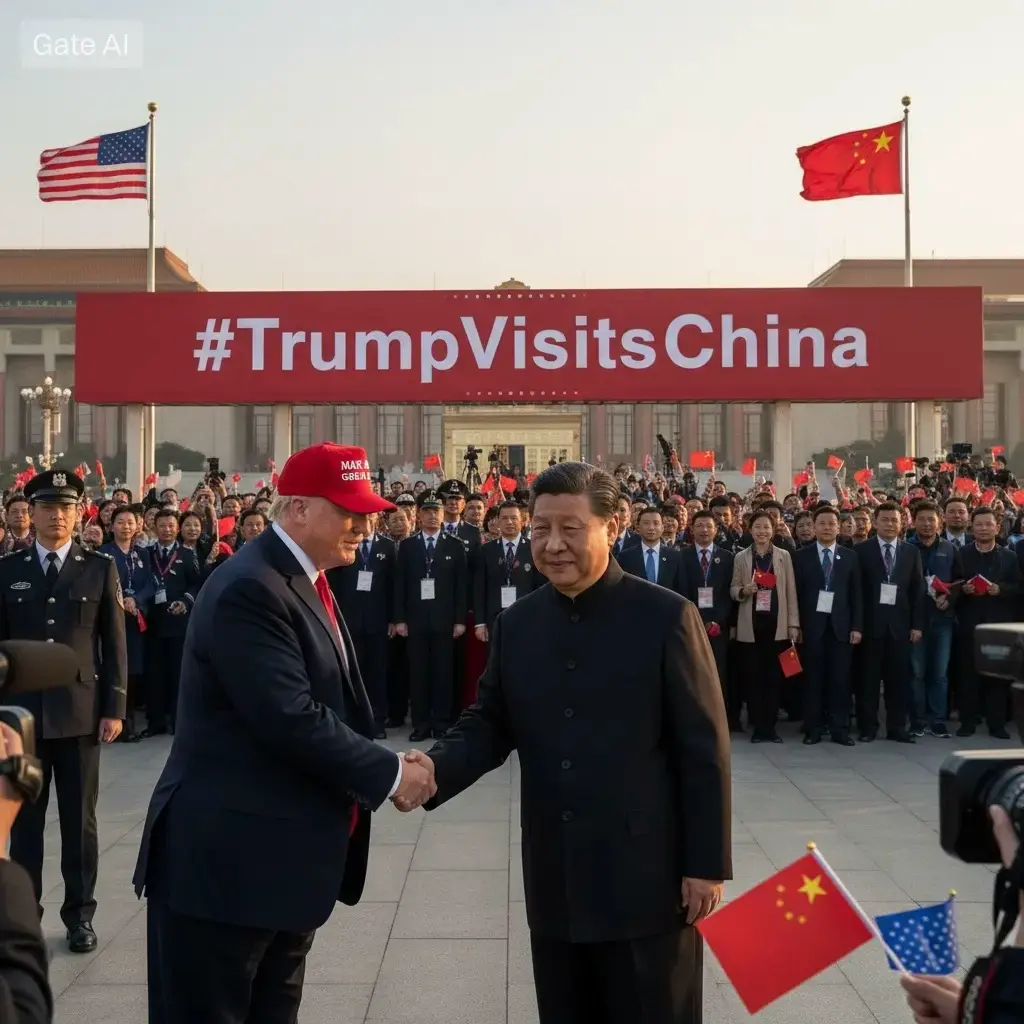
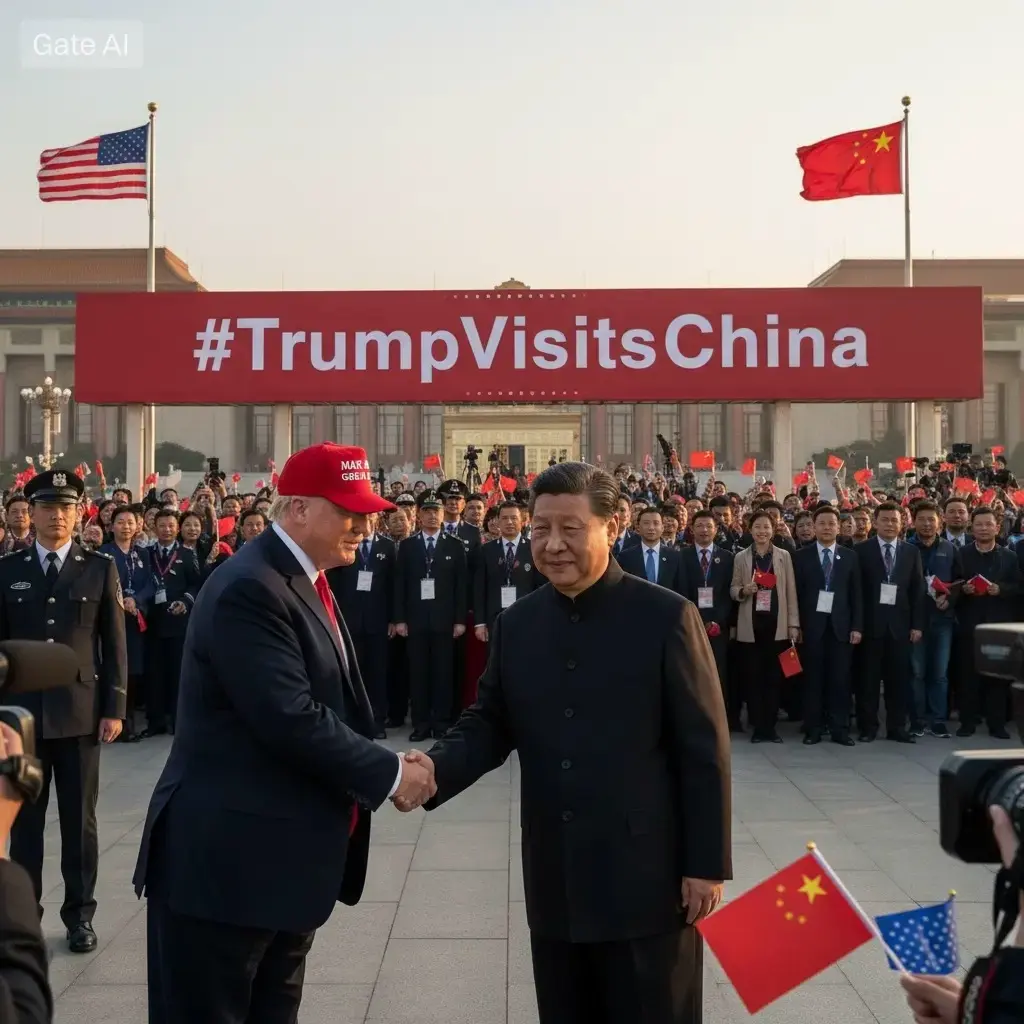
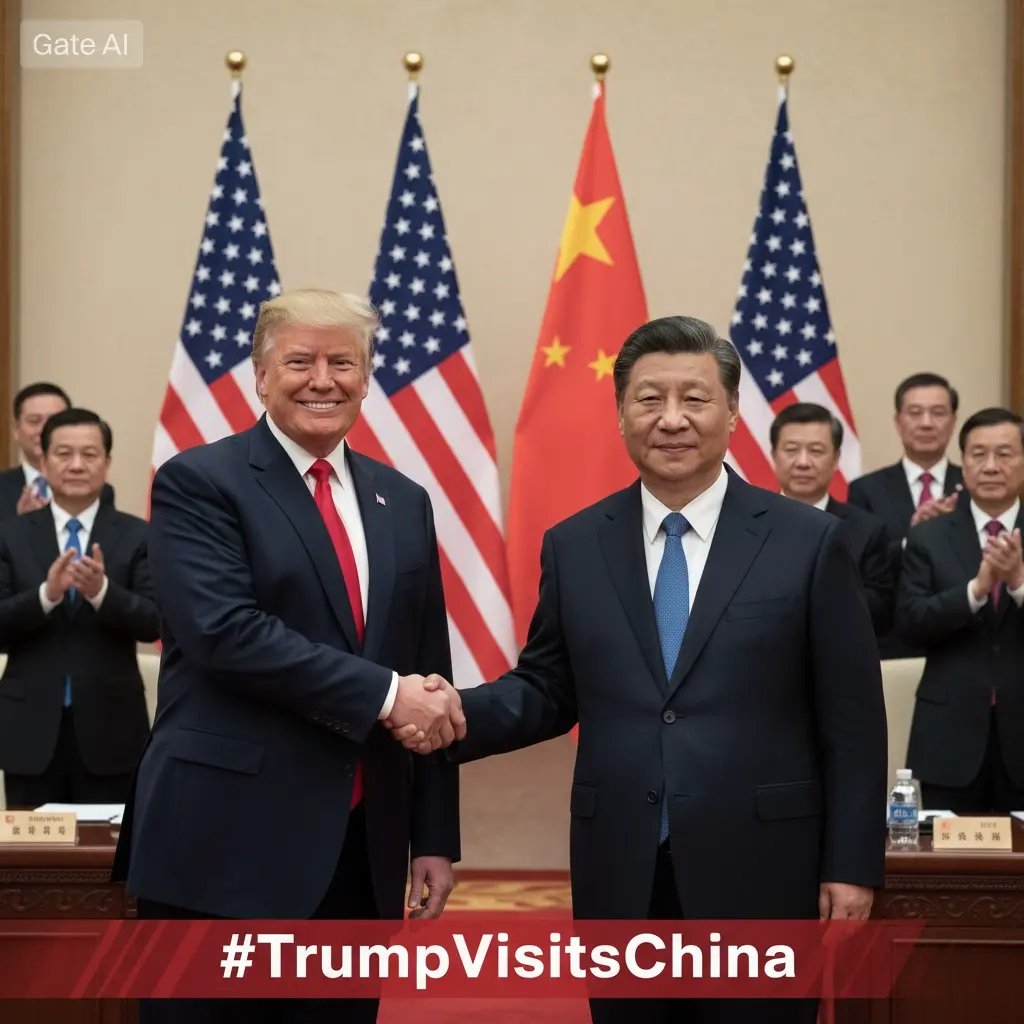
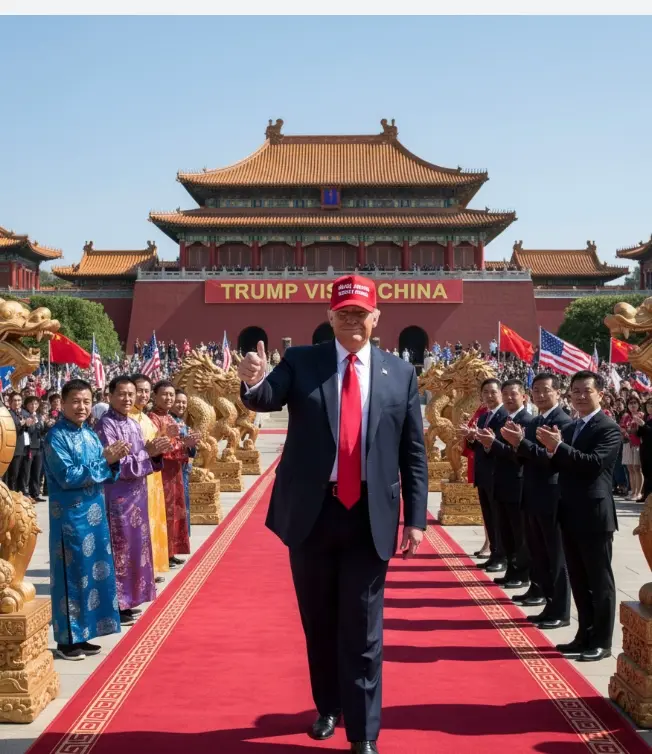
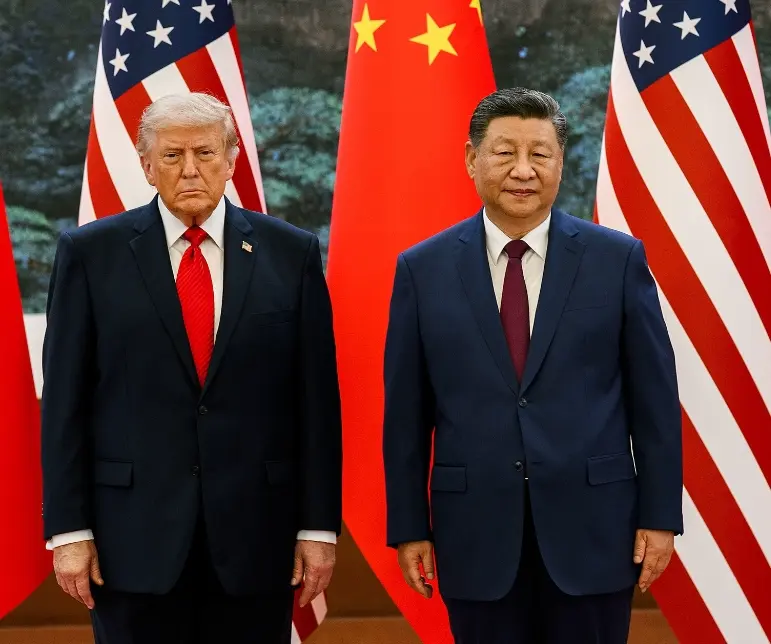
Trump paid a state visit to China from May 13 to 15, the first US presidential visit in nine years. China rolled out high-level honors including a 21-gun salute, guard inspection and state banquet. About 200 US executives including Musk, Cook and Huang accompanied Trump. First-day talks lasted about two hours, covering trade, Iran, Taiwan, AI and critical minerals. Xi stressed that bilateral economic ties are mutually beneficial and win-win. Trump said the US-China relationship will be "better than ever before". However, the US approved arms sales to Taiwan and sanctioned Chinese firms over Iranian oil shipments on the eve of the visit, sending mixed signals. China declined to negotiate on nuclear arms and AI military control. Analysts suggest Beijing's primary goal is to gauge Trump's "minimum price point". Day two moves to Zhongnanhai for tea talks, with potential deals including a Boeing aircraft purchase.

#TrumpVisitsChina
The Trump–Xi Beijing summit from May 13–15, 2026 became one of the biggest macroeconomic events of the year, not because of what was officially signed, but because of how global financial markets reacted before and after the meetings. Investors entered the summit expecting a major breakthrough between the United States and China on trade, technology cooperation, energy agreements, and geopolitical stability. Instead, the event exposed how sensitive global markets have become to expectations, narratives, and policy uncertainty.
Ahead of the summit, institutional investors agg
BTC-2.8%
XAU-0.72%
CryptoChampion
#TrumpVisitsChina
The Trump–Xi Beijing summit from May 13–15, 2026 became one of the biggest macroeconomic events of the year, not because of what was officially signed, but because of how global financial markets reacted before and after the meetings. Investors entered the summit expecting a major breakthrough between the United States and China on trade, technology cooperation, energy agreements, and geopolitical stability. Instead, the event exposed how sensitive global markets have become to expectations, narratives, and policy uncertainty.
Ahead of the summit, institutional investors aggressively increased exposure to Bitcoin, technology stocks, energy markets, and commodities. Hedge funds and large traders believed improving U.S.–China relations could stabilize global trade conditions, reduce supply-chain pressure, and support risk assets worldwide. Markets were already operating under pressure from persistent inflation, elevated interest rates, slowing global growth, and rising Middle East tensions connected to the Strait of Hormuz.
Bitcoin became one of the most actively watched assets during the summit. Before Trump arrived in Beijing, BTC traded between $80,500 and $82,300 as traders anticipated a bullish breakout if positive diplomatic developments emerged. Optimism increased further after reports confirmed that major U.S. technology executives joined the delegation, fueling speculation about future AI infrastructure cooperation and broader technology investment between both countries.
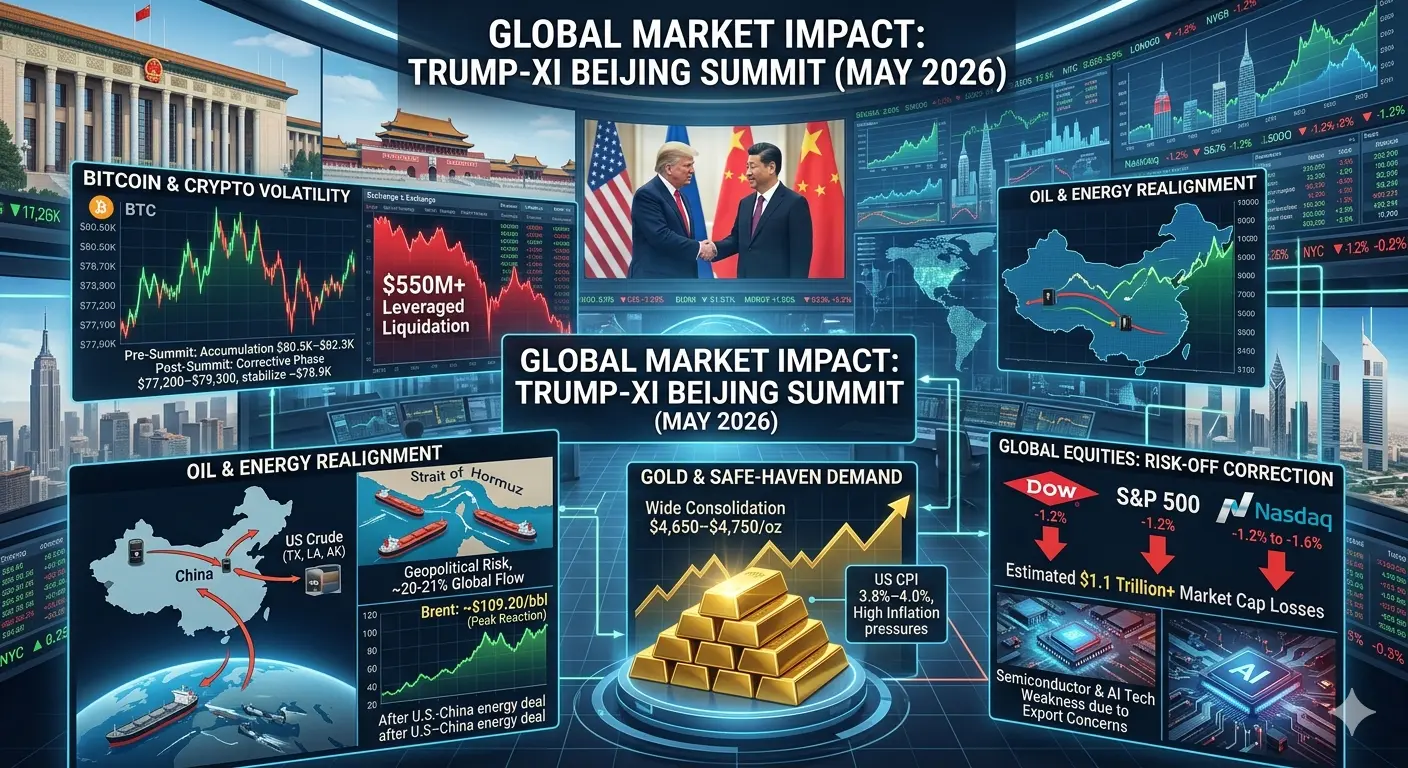
However, once the summit concluded without significant breakthrough agreements, markets quickly shifted into profit-taking mode. Bitcoin dropped sharply toward the $77,200–$79,300 zone before stabilizing near $78,900. The decline triggered heavy liquidations across leveraged futures markets, with an estimated $550 million to $620 million in long positions wiped out within hours. Analysts described the move as a textbook “buy the rumor, sell the news” reaction where expectations became overheated before reality reset market sentiment.
Despite the short-term correction, institutional sentiment toward Bitcoin remains structurally bullish because ETF inflows, corporate accumulation, and long-term adoption trends continue supporting the broader market. Traders now expect Bitcoin to remain volatile between $75,000 and $85,000 in the near term, while a breakout above $88,000 could reopen momentum toward the $90,000 region if geopolitical conditions improve.
Oil markets also experienced major volatility throughout the summit. Brent crude initially traded near $106–$108.50 per barrel while WTI fluctuated around $104.80–$107.20 because investors remained concerned about Middle East supply disruptions. During the meetings, oil prices briefly declined as traders expected diplomatic progress that could reduce geopolitical risks. But sentiment changed immediately after Trump announced that China planned to increase purchases of U.S. crude oil from Texas, Louisiana, and Alaska.
The announcement pushed Brent crude close to $110 while WTI approached $108.50 during intraday trading as investors interpreted the development as a potential revival of large-scale U.S.–China energy cooperation. Analysts now warn that any escalation involving Iran or disruption near the Strait of Hormuz could rapidly push oil prices toward $115 or higher.
Gold maintained strong safe-haven demand during the summit as inflation concerns and geopolitical uncertainty continued supporting defensive positioning. Prices remained stable between $4,680 and $4,720 per ounce while investors monitored Federal Reserve policy expectations and rising producer inflation data.
Meanwhile, global stock markets reacted negatively after the summit failed to deliver larger trade and technology breakthroughs. The Dow Jones, S&P 500, and Nasdaq all declined as technology and semiconductor sectors faced renewed uncertainty regarding exports and future China-related growth opportunities. Total global equity losses exceeded approximately $1.1 trillion during the post-summit selloff.
The Trump–China summit ultimately showed that modern financial markets are no longer driven only by economic fundamentals. Expectations, geopolitical narratives, liquidity flows, and investor psychology now play an equally powerful role in shaping volatility across cryptocurrencies, commodities, energy markets, and global equities.
repost-content-media
  • Reward
  • 2
  • Repost
  • Share
MasterChuTheOldDemonMasterChu:
Steadfast HODL💎
View More
#TrumpVisitsChina
The Trump–Xi Beijing summit from May 13–15, 2026 became one of the biggest macroeconomic events of the year, not because of what was officially signed, but because of how global financial markets reacted before and after the meetings. Investors entered the summit expecting a major breakthrough between the United States and China on trade, technology cooperation, energy agreements, and geopolitical stability. Instead, the event exposed how sensitive global markets have become to expectations, narratives, and policy uncertainty.
Ahead of the summit, institutional investors agg
BTC-2.78%
post-image
  • Reward
  • 2
  • Repost
  • Share
MasterChuTheOldDemonMasterChu:
Steadfast HODL💎
View More
#TrumpVisitsChina
The Trump–Xi Beijing summit from May 13–15, 2026 became one of the biggest macroeconomic events of the year, not because of what was officially signed, but because of how global financial markets reacted before and after the meetings. Investors entered the summit expecting a major breakthrough between the United States and China on trade, technology cooperation, energy agreements, and geopolitical stability. Instead, the event exposed how sensitive global markets have become to expectations, narratives, and policy uncertainty.
Ahead of the summit, institutional investors agg
BTC-2.8%
XAU-0.72%
CryptoChampion
#TrumpVisitsChina
The Trump–Xi Beijing summit from May 13–15, 2026 became one of the biggest macroeconomic events of the year, not because of what was officially signed, but because of how global financial markets reacted before and after the meetings. Investors entered the summit expecting a major breakthrough between the United States and China on trade, technology cooperation, energy agreements, and geopolitical stability. Instead, the event exposed how sensitive global markets have become to expectations, narratives, and policy uncertainty.
Ahead of the summit, institutional investors aggressively increased exposure to Bitcoin, technology stocks, energy markets, and commodities. Hedge funds and large traders believed improving U.S.–China relations could stabilize global trade conditions, reduce supply-chain pressure, and support risk assets worldwide. Markets were already operating under pressure from persistent inflation, elevated interest rates, slowing global growth, and rising Middle East tensions connected to the Strait of Hormuz.
Bitcoin became one of the most actively watched assets during the summit. Before Trump arrived in Beijing, BTC traded between $80,500 and $82,300 as traders anticipated a bullish breakout if positive diplomatic developments emerged. Optimism increased further after reports confirmed that major U.S. technology executives joined the delegation, fueling speculation about future AI infrastructure cooperation and broader technology investment between both countries.
However, once the summit concluded without significant breakthrough agreements, markets quickly shifted into profit-taking mode. Bitcoin dropped sharply toward the $77,200–$79,300 zone before stabilizing near $78,900. The decline triggered heavy liquidations across leveraged futures markets, with an estimated $550 million to $620 million in long positions wiped out within hours. Analysts described the move as a textbook “buy the rumor, sell the news” reaction where expectations became overheated before reality reset market sentiment.
Despite the short-term correction, institutional sentiment toward Bitcoin remains structurally bullish because ETF inflows, corporate accumulation, and long-term adoption trends continue supporting the broader market. Traders now expect Bitcoin to remain volatile between $75,000 and $85,000 in the near term, while a breakout above $88,000 could reopen momentum toward the $90,000 region if geopolitical conditions improve.
Oil markets also experienced major volatility throughout the summit. Brent crude initially traded near $106–$108.50 per barrel while WTI fluctuated around $104.80–$107.20 because investors remained concerned about Middle East supply disruptions. During the meetings, oil prices briefly declined as traders expected diplomatic progress that could reduce geopolitical risks. But sentiment changed immediately after Trump announced that China planned to increase purchases of U.S. crude oil from Texas, Louisiana, and Alaska.
The announcement pushed Brent crude close to $110 while WTI approached $108.50 during intraday trading as investors interpreted the development as a potential revival of large-scale U.S.–China energy cooperation. Analysts now warn that any escalation involving Iran or disruption near the Strait of Hormuz could rapidly push oil prices toward $115 or higher.
Gold maintained strong safe-haven demand during the summit as inflation concerns and geopolitical uncertainty continued supporting defensive positioning. Prices remained stable between $4,680 and $4,720 per ounce while investors monitored Federal Reserve policy expectations and rising producer inflation data.
Meanwhile, global stock markets reacted negatively after the summit failed to deliver larger trade and technology breakthroughs. The Dow Jones, S&P 500, and Nasdaq all declined as technology and semiconductor sectors faced renewed uncertainty regarding exports and future China-related growth opportunities. Total global equity losses exceeded approximately $1.1 trillion during the post-summit selloff.
The Trump–China summit ultimately showed that modern financial markets are no longer driven only by economic fundamentals. Expectations, geopolitical narratives, liquidity flows, and investor psychology now play an equally powerful role in shaping volatility across cryptocurrencies, commodities, energy markets, and global equities.
repost-content-media
  • Reward
  • Comment
  • Repost
  • Share
#TrumpVisitsChina The official state visit of U.S. President Donald Trump to Beijing from May 13–15, 2026, concluded as a pivotal "transactional" event that recalibrated global market expectations. While the summit avoided the massive geopolitical breakthroughs some had priced in, it delivered specific energy outcomes that reshaped the commodity landscape.
​📉 Bitcoin (BTC): The "Liquidity Reset"
​Bitcoin entered the summit week with high-velocity momentum but faced a sharp "sell-the-news" correction as the meetings concluded without explicit crypto-regulatory de-escalation from Beijing.
​Pr
BTC-2.78%
RWA1.37%
  • Reward
  • Comment
  • Repost
  • Share
#TrumpVisitsChina
🌏 Trump's China Visit — The Aftermath Is More Important Than the Summit Itself
The handshakes are done. The press conferences are over. Air Force One is wheels up from Beijing. And now comes the part that actually determines whether this summit mattered — the follow through.
Three days in Beijing produced enough constructive signals to shift market sentiment meaningfully. Tariff framework conversations progressing. Iran ceasefire facilitation commitment from Beijing secured. Commercial agreements between US corporations and Chinese partners moving forward. The tone througho
CHIP-1.47%
BTC-2.78%
post-image
  • Reward
  • 14
  • Repost
  • Share
LittleGodOfWealthPlutus:
Hold firmly to 💎
View More
#TrumpVisitsChina
The official visit of U.S. President to China from May 13–15, 2026, became one of the most important financial and geopolitical events of the year as global investors, crypto traders, institutions, hedge funds, and commodity markets closely monitored the meetings between Trump and Chinese President in Beijing. Financial markets entered the summit with very high expectations because traders believed the discussions could improve trade relations, stabilize global markets, increase energy cooperation, and reduce tensions between the world’s two biggest economies.
The summit h
BTC-2.8%
HighAmbition
#TrumpVisitsChina
The official visit of U.S. President to China from May 13–15, 2026, became one of the most important financial and geopolitical events of the year as global investors, crypto traders, institutions, hedge funds, and commodity markets closely monitored the meetings between Trump and Chinese President in Beijing. Financial markets entered the summit with very high expectations because traders believed the discussions could improve trade relations, stabilize global markets, increase energy cooperation, and reduce tensions between the world’s two biggest economies.
The summit happened during a difficult economic environment where inflation remained high, interest rates stayed elevated, oil markets faced supply risks because of Middle East tensions, and global investors were already worried about volatility linked to the Strait of Hormuz and slowing economic growth across major economies.
Before the summit started, investors aggressively entered Bitcoin, technology stocks, oil futures, and commodity markets because expectations were rising that Trump and Xi could announce stronger trade agreements, technology cooperation, and expanded economic partnerships. However, after the meetings ended without major breakthrough agreements, markets quickly shifted toward profit-taking and defensive positioning, creating strong volatility across cryptocurrencies, commodities, and global equities.
Bitcoin (BTC) Market Reaction and Crypto Volatility
Bitcoin became one of the most closely watched assets during the Trump–China summit because traders expected that better diplomatic relations between the United States and China could indirectly support institutional crypto adoption and improve global market confidence.
Before the summit, Bitcoin traded between approximately $80,500 and $82,300 while bullish traders targeted higher resistance zones near $84,000, $85,500, and $88,000 if positive announcements emerged from Beijing. Optimism increased after reports confirmed that several major technology executives joined Trump’s delegation, which investors viewed as a positive sign for future technology cooperation and AI-related infrastructure growth.
During the summit, Bitcoin initially remained stable around $81,000, but volatility expanded quickly as traders waited for official announcements related to trade policy and technology agreements. After the summit concluded without meaningful crypto-related developments, sentiment weakened and Bitcoin declined toward the $77,200–$79,300 range before stabilizing near $78,900.
The correction triggered heavy liquidations across leveraged futures markets, with approximately $550 million–$620 million worth of long positions removed within a short period. Traders described the movement as a classic “buy the rumor, sell the news” reaction where expectations became too optimistic before the event and were later reset after the final outcomes disappointed markets.
Despite short-term weakness, analysts believe Bitcoin’s broader long-term structure remains stable because ETF inflows, institutional accumulation, and long-term adoption trends continue supporting the market. Many traders now expect Bitcoin to fluctuate between $75,000 and $85,000 in the near term, while a breakout above $88,000 could reopen momentum toward $90,000 and higher levels if global tensions ease.
Oil Market Reaction and Energy Developments
The oil market experienced major volatility throughout the Trump–China meetings because investors remained concerned about Middle East tensions and supply risks connected to the Strait of Hormuz, which handles a significant portion of global oil transportation.
Before the summit, Brent crude traded between $106 and $108.50 per barrel, while WTI crude fluctuated near $104.80–$107.20 per barrel because geopolitical uncertainty and supply concerns continued supporting elevated prices.
During the summit, oil prices briefly moved lower toward $106 per barrel because traders expected diplomatic progress that could calm global tensions. However, sentiment changed after Trump announced that China plans to increase purchases of U.S. crude oil from Texas, Louisiana, and Alaska.
The announcement created a bullish reaction in energy markets, pushing Brent crude toward $109–$110 per barrel while WTI approached $108.50 per barrel during intraday trading. Investors interpreted the development as a possible revival of U.S.–China energy cooperation after years of trade restrictions and tariff disputes.
Even after prices stabilized, oil remained highly volatile between $101 and $110 per barrel, while analysts warned that any escalation involving Iran or disruptions around the Strait of Hormuz could quickly push Brent crude toward $115 or higher levels.
Gold Market Performance and Safe-Haven Demand
Gold remained one of the strongest safe-haven assets during the summit because investors continued searching for protection against inflation uncertainty, geopolitical risks, and market volatility.
Before the meetings, gold traded between $4,680 and $4,720 per ounce as Middle East tensions and inflation concerns supported strong demand. During the summit, gold prices remained relatively stable near $4,690–$4,715 per ounce, while futures contracts traded close to $4,725 per ounce.
Inflation data showed U.S. CPI remaining near 3.8%–4.0%, while producer prices continued rising, creating uncertainty for financial markets and limiting stronger upside momentum in gold.
Federal Reserve policy expectations also influenced gold prices because persistent inflation reduced the possibility of rapid interest rate cuts, keeping pressure on non-yielding assets. However, analysts still believe gold could remain structurally strong above $4,600, while a move above $4,750–$4,800 could open the path toward the psychological $5,000 level if geopolitical tensions intensify further.
Global Stock Market Reaction
Global stock markets reacted negatively after the Trump–China summit because investors expected larger breakthroughs in trade agreements and technology cooperation. Once those expectations failed to materialize, institutional investors reduced exposure to high-risk sectors.
The Dow Jones declined approximately 0.80%–0.95%, the S&P 500 fell around 0.90%–1.10%, and the Nasdaq dropped nearly 1.20%–1.60% as technology and semiconductor companies faced renewed uncertainty regarding exports and future China-related business growth.
Total market capitalization losses exceeded approximately $1.1 trillion during the post-summit selloff, showing how strongly investors repositioned after the event outcomes disappointed financial markets.
Final Market Outlook
Following the Trump–China summit, global financial markets entered a new phase of volatility where investors remain highly sensitive to geopolitical developments, inflation data, energy security risks, and central bank policy decisions. Bitcoin continues trading inside a macro-driven environment, oil remains reactive to Middle East developments, gold continues acting as a safe-haven asset, and global equities remain vulnerable to disappointment surrounding trade and technology negotiations.
The summit demonstrated that financial markets are increasingly influenced by expectations, liquidity conditions, and geopolitical narratives, meaning future diplomatic meetings between the United States and China will likely continue creating major volatility across cryptocurrencies, commodities, and stock markets.
repost-content-media
  • Reward
  • Comment
  • Repost
  • Share
summit markets were genuinely nervous. The Iran escalation, semiconductor export tensions, Taiwan friction and tariff standoffs created a backdrop where a failed summit was a real possibility. That worst case scenario did not materialize. Both sides came out describing productive dialogue and that alone was enough to move risk assets constructively.
On tariffs — the signals suggest a framework rather than a resolution. Neither side walked away with complete victory which in diplomacy usually means both sides got something workable. A partial tariff reduction framework, if confirmed, directly r
BA-0.39%
QCOM11.03%
BTC-2.78%
post-image
  • Reward
  • 2
  • Repost
  • Share
Lock_433:
Steadfast HODL💎
View More
#TrumpVisitsChina
The official visit of U.S. President to China from May 13–15, 2026, became one of the most important financial and geopolitical events of the year as global investors, crypto traders, institutions, hedge funds, and commodity markets closely monitored the meetings between Trump and Chinese President in Beijing. Financial markets entered the summit with very high expectations because traders believed the discussions could improve trade relations, stabilize global markets, increase energy cooperation, and reduce tensions between the world’s two biggest economies.
The summit h
BTC-2.8%
XAUUSD-0.74%
HighAmbition
#TrumpVisitsChina
The official visit of U.S. President to China from May 13–15, 2026, became one of the most important financial and geopolitical events of the year as global investors, crypto traders, institutions, hedge funds, and commodity markets closely monitored the meetings between Trump and Chinese President in Beijing. Financial markets entered the summit with very high expectations because traders believed the discussions could improve trade relations, stabilize global markets, increase energy cooperation, and reduce tensions between the world’s two biggest economies.
The summit happened during a difficult economic environment where inflation remained high, interest rates stayed elevated, oil markets faced supply risks because of Middle East tensions, and global investors were already worried about volatility linked to the Strait of Hormuz and slowing economic growth across major economies.
Before the summit started, investors aggressively entered Bitcoin, technology stocks, oil futures, and commodity markets because expectations were rising that Trump and Xi could announce stronger trade agreements, technology cooperation, and expanded economic partnerships. However, after the meetings ended without major breakthrough agreements, markets quickly shifted toward profit-taking and defensive positioning, creating strong volatility across cryptocurrencies, commodities, and global equities.
Bitcoin (BTC) Market Reaction and Crypto Volatility
Bitcoin became one of the most closely watched assets during the Trump–China summit because traders expected that better diplomatic relations between the United States and China could indirectly support institutional crypto adoption and improve global market confidence.
Before the summit, Bitcoin traded between approximately $80,500 and $82,300 while bullish traders targeted higher resistance zones near $84,000, $85,500, and $88,000 if positive announcements emerged from Beijing. Optimism increased after reports confirmed that several major technology executives joined Trump’s delegation, which investors viewed as a positive sign for future technology cooperation and AI-related infrastructure growth.
During the summit, Bitcoin initially remained stable around $81,000, but volatility expanded quickly as traders waited for official announcements related to trade policy and technology agreements. After the summit concluded without meaningful crypto-related developments, sentiment weakened and Bitcoin declined toward the $77,200–$79,300 range before stabilizing near $78,900.
The correction triggered heavy liquidations across leveraged futures markets, with approximately $550 million–$620 million worth of long positions removed within a short period. Traders described the movement as a classic “buy the rumor, sell the news” reaction where expectations became too optimistic before the event and were later reset after the final outcomes disappointed markets.
Despite short-term weakness, analysts believe Bitcoin’s broader long-term structure remains stable because ETF inflows, institutional accumulation, and long-term adoption trends continue supporting the market. Many traders now expect Bitcoin to fluctuate between $75,000 and $85,000 in the near term, while a breakout above $88,000 could reopen momentum toward $90,000 and higher levels if global tensions ease.
Oil Market Reaction and Energy Developments
The oil market experienced major volatility throughout the Trump–China meetings because investors remained concerned about Middle East tensions and supply risks connected to the Strait of Hormuz, which handles a significant portion of global oil transportation.
Before the summit, Brent crude traded between $106 and $108.50 per barrel, while WTI crude fluctuated near $104.80–$107.20 per barrel because geopolitical uncertainty and supply concerns continued supporting elevated prices.
During the summit, oil prices briefly moved lower toward $106 per barrel because traders expected diplomatic progress that could calm global tensions. However, sentiment changed after Trump announced that China plans to increase purchases of U.S. crude oil from Texas, Louisiana, and Alaska.
The announcement created a bullish reaction in energy markets, pushing Brent crude toward $109–$110 per barrel while WTI approached $108.50 per barrel during intraday trading. Investors interpreted the development as a possible revival of U.S.–China energy cooperation after years of trade restrictions and tariff disputes.
Even after prices stabilized, oil remained highly volatile between $101 and $110 per barrel, while analysts warned that any escalation involving Iran or disruptions around the Strait of Hormuz could quickly push Brent crude toward $115 or higher levels.
Gold Market Performance and Safe-Haven Demand
Gold remained one of the strongest safe-haven assets during the summit because investors continued searching for protection against inflation uncertainty, geopolitical risks, and market volatility.
Before the meetings, gold traded between $4,680 and $4,720 per ounce as Middle East tensions and inflation concerns supported strong demand. During the summit, gold prices remained relatively stable near $4,690–$4,715 per ounce, while futures contracts traded close to $4,725 per ounce.
Inflation data showed U.S. CPI remaining near 3.8%–4.0%, while producer prices continued rising, creating uncertainty for financial markets and limiting stronger upside momentum in gold.
Federal Reserve policy expectations also influenced gold prices because persistent inflation reduced the possibility of rapid interest rate cuts, keeping pressure on non-yielding assets. However, analysts still believe gold could remain structurally strong above $4,600, while a move above $4,750–$4,800 could open the path toward the psychological $5,000 level if geopolitical tensions intensify further.
Global Stock Market Reaction
Global stock markets reacted negatively after the Trump–China summit because investors expected larger breakthroughs in trade agreements and technology cooperation. Once those expectations failed to materialize, institutional investors reduced exposure to high-risk sectors.
The Dow Jones declined approximately 0.80%–0.95%, the S&P 500 fell around 0.90%–1.10%, and the Nasdaq dropped nearly 1.20%–1.60% as technology and semiconductor companies faced renewed uncertainty regarding exports and future China-related business growth.
Total market capitalization losses exceeded approximately $1.1 trillion during the post-summit selloff, showing how strongly investors repositioned after the event outcomes disappointed financial markets.
Final Market Outlook
Following the Trump–China summit, global financial markets entered a new phase of volatility where investors remain highly sensitive to geopolitical developments, inflation data, energy security risks, and central bank policy decisions. Bitcoin continues trading inside a macro-driven environment, oil remains reactive to Middle East developments, gold continues acting as a safe-haven asset, and global equities remain vulnerable to disappointment surrounding trade and technology negotiations.
The summit demonstrated that financial markets are increasingly influenced by expectations, liquidity conditions, and geopolitical narratives, meaning future diplomatic meetings between the United States and China will likely continue creating major volatility across cryptocurrencies, commodities, and stock markets.
repost-content-media
  • Reward
  • Comment
  • Repost
  • Share
#TrumpVisitsChina
The official visit of U.S. President to China from May 13–15, 2026, became one of the most important financial and geopolitical events of the year as global investors, crypto traders, institutions, hedge funds, and commodity markets closely monitored the meetings between Trump and Chinese President in Beijing. Financial markets entered the summit with very high expectations because traders believed the discussions could improve trade relations, stabilize global markets, increase energy cooperation, and reduce tensions between the world’s two biggest economies.
The summit h
BTC-2.8%
post-image
  • Reward
  • 2
  • Repost
  • Share
MissCrypto:
2026 GOGOGO 👊
View More
#TrumpVisitsChina
Global markets are closely watching the latest developments surrounding Donald Trump and the growing discussions around U.S.–China relations. Any major diplomatic engagement between the world’s two largest economies has the potential to influence financial markets, trade expectations, commodities, and overall investor sentiment.
Whenever tensions between the United States and China begin to ease, markets often react positively because investors expect stronger global trade activity, improved economic stability, and reduced uncertainty across supply chains. On the other hand,
BTC-2.78%
post-image
post-image
  • Reward
  • 4
  • Repost
  • Share
ybaser:
2026 GOGOGO 👊
View More
Load More