68687070

vip
Active for: 0.8y
Peak Tier 5
No content yet
BTC Prediction
851 views
2026-07-24 17:28
  • Reward
  • Comment
  • Repost
  • Share
#USDTDepositEarningsDoublePlay
Most traders think the biggest mistake in crypto is buying the wrong coin. I think it's something much simpler—letting your USDT do absolutely nothing.
I've noticed this happen in almost every market cycle. A trader closes a profitable position, converts everything into USDT, and tells himself he'll wait for the next opportunity. A few days turn into a few weeks, sometimes even months. The market keeps moving, new opportunities appear, and those stablecoins remain exactly where they were on day one. Safe? Yes. Productive? Not really.
As crypto continues to matur
BTC0.01%
MrFlower_XingChen
#USDTDepositEarningsDoublePlay
Most traders think the biggest mistake in crypto is buying the wrong coin. I think it's something much simpler—letting your USDT do absolutely nothing.
I've noticed this happen in almost every market cycle. A trader closes a profitable position, converts everything into USDT, and tells himself he'll wait for the next opportunity. A few days turn into a few weeks, sometimes even months. The market keeps moving, new opportunities appear, and those stablecoins remain exactly where they were on day one. Safe? Yes. Productive? Not really.
As crypto continues to mature, the conversation is slowly changing. Investors are no longer asking only which coin could deliver the next big rally. They're also asking how to make every dollar in their portfolio work, even while they're waiting for the next trade. That mindset is one of the biggest reasons wealth management products and stablecoin earning strategies have become so popular over the past year.
Gate's latest USDT Deposit Earnings Double Play campaign reflects this change in thinking. Instead of rewarding users in just one way, it combines a deposit incentive with a wealth management opportunity. The idea isn't about encouraging unnecessary trading—it's about making idle capital more efficient.
Think about it this way. Imagine two traders each holding 50,000 USDT after taking profits. Both are waiting for Bitcoin to reach a better entry point. The first trader simply leaves the funds untouched. The second trader looks for opportunities that allow those funds to generate value while remaining part of an overall investment strategy. A month later, both traders may still have the same market opportunity, but only one allowed their capital to keep working during the waiting period.
That's the difference between simply holding money and managing money.
The first part of Gate's campaign focuses on deposits. Eligible users who complete the required net USDT deposit and satisfy the corresponding futures trading volume can qualify for up to 1% USDT cashback, with rewards reaching 10,000 USDT per user for those who meet the campaign requirements. Rather than treating deposits as something passive, the campaign turns them into part of a broader earning strategy.
The second part focuses on what many investors overlook—unused stablecoins.
Not every dollar needs to be sitting idle while waiting for the next trade. Through Gate's VIP exclusive wealth products, eligible users can subscribe idle USDT into fixed-term products offering 3.8% APR for a 7-day term or 4.0% APR for a 30-day term. For investors who already planned to hold stablecoins for a short period, this creates an opportunity to potentially earn while they wait instead of earning nothing at all.
What I find interesting isn't just the numbers. It's the message behind them.
Crypto has spent years teaching people how to chase returns. Now the industry is gradually teaching something equally important—how to improve capital efficiency.
Professional investors rarely allow large amounts of cash to remain completely inactive. Whether it's treasury management, money market funds, government securities, or yield products, idle capital is usually given a job. The same philosophy is becoming more common inside the digital asset industry, where stablecoins are evolving from simple parking assets into productive financial tools.
Of course, every investor should think carefully before participating in any campaign. Cashback rewards depend on meeting the published requirements, and fixed-term products involve committing funds for the selected duration. Understanding the rules, managing liquidity, and choosing products that match your own investment goals will always matter more than chasing the highest advertised percentage.
What excites me most is the bigger picture.
The crypto market is slowly becoming more complete. A few years ago, exchanges were mainly places to buy and sell digital assets. Today they're building ecosystems that combine trading, wealth management, tokenized real-world assets, structured earning products, and portfolio management into one experience. That evolution gives investors more ways to grow their assets without relying solely on market volatility.
No strategy is perfect, and no campaign replaces disciplined investing. But one lesson continues to stand out: capital that keeps working generally performs better over time than capital that simply waits.
If you already hold USDT while watching the market for your next opportunity, the real question may not be when you'll make your next trade.
It might be whether your stablecoins are helping you while you wait—or just sitting there doing nothing.
I'd genuinely like to hear how others approach this. When you're holding USDT between trades, do you prefer keeping every dollar fully liquid, or do you look for opportunities to make idle capital generate additional returns while staying prepared for the next market move?
@Gate_Square
@GateSquare
#SummerCreationCamp
repost-content-media
  • Reward
  • Comment
  • Repost
  • Share
#WarshSaysFedDecidesIfAIInflation
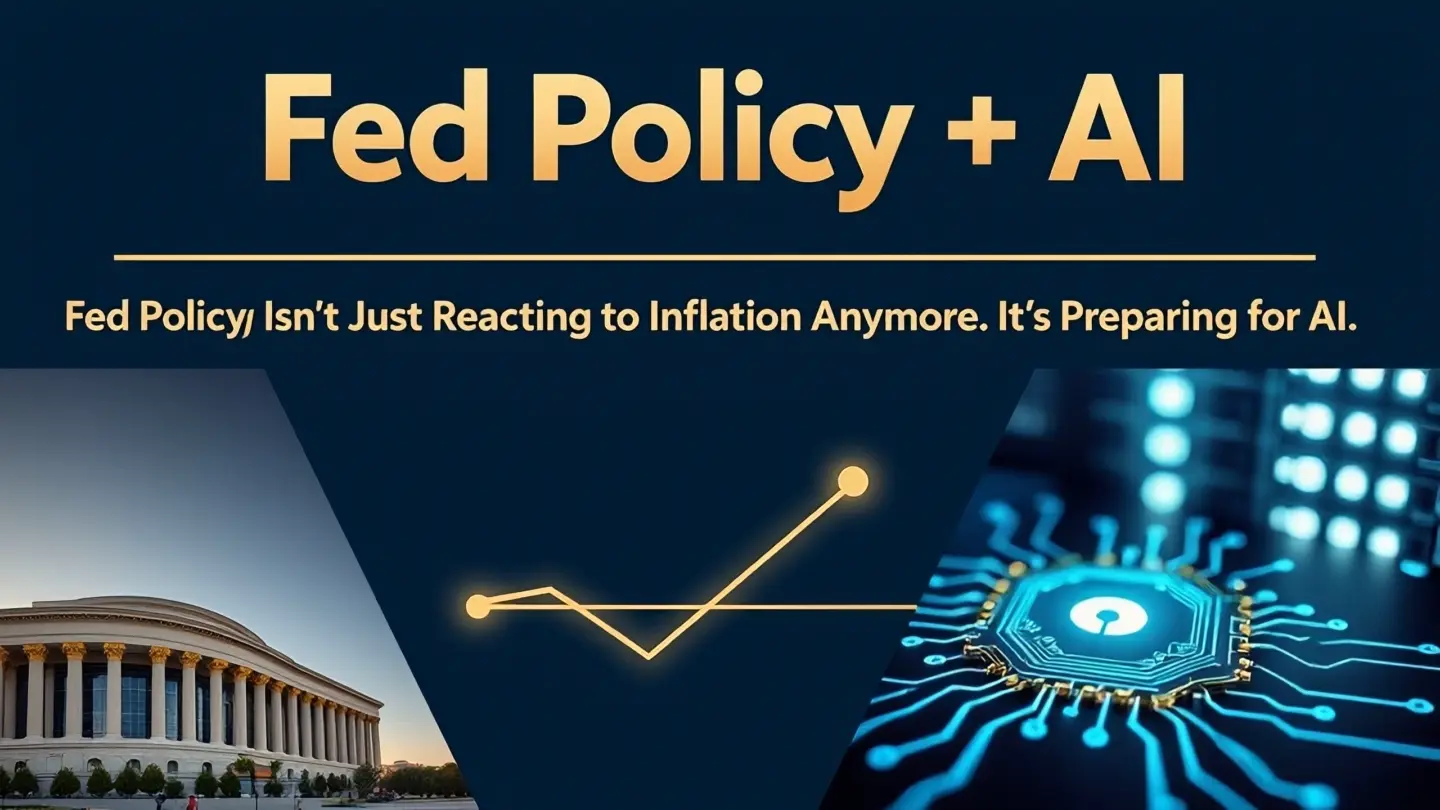
Fed policy isn't just reacting to inflation anymore. It's also preparing for the economic impact of artificial intelligence.
Kevin Warsh's latest remarks before the Senate Banking Committee offered a clear message: AI is transforming the economy, but whether it becomes inflationary depends largely on how monetary policy responds.
Warsh explained that the current wave of AI investment is increasing spending across technology, infrastructure, data centers, semiconductors, and automation. These investments naturally push demand higher in certain sectors and can
ON-3.64%
MrFlower_XingChen
#WarshSaysFedDecidesIfAIInflation
Fed policy isn't just reacting to inflation anymore. It's also preparing for the economic impact of artificial intelligence.
Kevin Warsh's latest remarks before the Senate Banking Committee offered a clear message: AI is transforming the economy, but whether it becomes inflationary depends largely on how monetary policy responds.
Warsh explained that the current wave of AI investment is increasing spending across technology, infrastructure, data centers, semiconductors, and automation. These investments naturally push demand higher in certain sectors and can temporarily lift prices. However, he argued that AI itself should not be viewed as the root cause of long-term inflation. Instead, the Federal Reserve's policy decisions will determine whether those price pressures become persistent or remain under control.
He also highlighted an important point that markets should not ignore. While June's CPI showed signs of cooling, a single inflation report is not enough to declare victory. Inflation trends often fluctuate from month to month, and relying on one data release can create a false sense of confidence. According to Warsh, the Fed must remain disciplined and continue monitoring broader economic conditions before considering any significant policy shift.
On the labor market, Warsh expects AI to create opportunities in the near term. Massive investment in AI infrastructure is generating demand for engineers, construction workers, chip manufacturers, cloud computing services, and software developers. This investment cycle could support employment and economic growth over the coming quarters.
At the same time, he acknowledged the longer-term challenge. As AI systems become more capable, automation may replace certain routine jobs, forcing businesses and workers to adapt. The transition is unlikely to happen overnight, but it reinforces the need for productivity gains, workforce reskilling, and thoughtful economic policy.
His "zero tolerance" stance toward persistent inflation also signals that the Fed is unlikely to relax its inflation-fighting approach simply because one CPI report came in softer than expected. Policymakers will continue evaluating wage growth, services inflation, consumer demand, and inflation expectations before becoming more confident that price stability has been restored.
For financial markets, this balanced message carries several implications. Continued AI investment remains supportive for technology, semiconductor, cloud computing, and infrastructure-related sectors. At the same time, expectations for aggressive interest-rate cuts could remain restrained if inflation risks continue to linger beneath the surface.
Investors should remember that markets are increasingly driven by two powerful themes: rapid technological innovation and central bank policy. AI may accelerate productivity and reshape industries, but the pace of monetary easing will still depend on whether inflation continues moving sustainably toward the Fed's target.
Warsh's testimony ultimately reinforces a simple but important idea: technological progress does not automatically create lasting inflation. The bigger question is how policymakers respond to changing economic conditions. As AI reshapes the global economy, the Federal Reserve's decisions will remain one of the most important factors influencing inflation, interest rates, and overall market direction.
#SummerCreationCamp
@Gate_Square
@GateSquare
repost-content-media
  • Reward
  • Comment
  • Repost
  • Share
#Web3SecurityGuide
Security in Web3 isn't tested when everything goes smoothly. It's tested the moment your deposit is delayed, your withdrawal is under review, or your account triggers a risk check. Knowing how to respond before these situations happen can save both your funds and your peace of mind.
Many crypto users focus on finding the next profitable trade but pay very little attention to transaction security. In reality, depositing and withdrawing assets are among the most sensitive actions on any exchange. A single mistake, an unknown wallet address, or unusual transaction behavior can
MrFlower_XingChen
#Web3SecurityGuide
Security in Web3 isn't tested when everything goes smoothly. It's tested the moment your deposit is delayed, your withdrawal is under review, or your account triggers a risk check. Knowing how to respond before these situations happen can save both your funds and your peace of mind.
Many crypto users focus on finding the next profitable trade but pay very little attention to transaction security. In reality, depositing and withdrawing assets are among the most sensitive actions on any exchange. A single mistake, an unknown wallet address, or unusual transaction behavior can lead to additional verification procedures. These measures are not designed to punish users—they exist to protect the platform and its community from fraud, stolen assets, and financial crime.
One of the most common questions is why risk controls are triggered in the first place. Modern exchanges don't simply process transactions automatically. They continuously monitor blockchain activity, wallet histories, transaction patterns, and account behavior. If an account suddenly receives funds from a wallet linked to scams, hacks, phishing attacks, sanctions, or other high-risk activities, the system may temporarily pause the transaction for a compliance review. Even if the account owner had no bad intentions, the platform still has a responsibility to investigate.
The safest habit is to always know where your crypto comes from. Before accepting funds from another person or an unfamiliar service, make sure the source is trustworthy. Receiving assets from suspicious wallets can create unnecessary complications. A clean transaction history is one of the best ways to reduce the chance of triggering additional reviews.
Withdrawals deserve the same level of attention. Every blockchain transaction is irreversible once confirmed. Before clicking the withdrawal button, verify the wallet address carefully, confirm that the blockchain network matches the receiving wallet, and double-check the amount. A few extra seconds of verification can prevent mistakes that cannot be undone.
Account security is equally important. Strong passwords, two-factor authentication, anti-phishing codes, withdrawal verification, and login alerts should never be viewed as optional features. They are your first line of defense against unauthorized access. Many successful attacks happen not because exchanges fail, but because users neglect basic security practices.
Another factor that often attracts unnecessary attention is unusual transaction behavior. Rapid deposits followed by immediate withdrawals, frequent transfers between multiple newly created wallets, or sudden changes in login locations may appear abnormal to automated monitoring systems. While legitimate users may have valid reasons for these actions, consistent and transparent account activity generally creates fewer compliance concerns.
Many users also ask what to do if their bank card becomes frozen after crypto-related transactions. In many countries, banks conduct their own compliance checks independently of cryptocurrency exchanges. If a payment is temporarily restricted, remain calm. Keep records of your deposits and withdrawals, maintain screenshots or transaction IDs, and communicate directly with your financial institution if additional verification is requested. Having complete documentation often speeds up the resolution process.
If your exchange account is temporarily restricted, patience is far more effective than frustration. Compliance reviews are designed to protect both users and the platform. Follow every instruction provided by the support team, submit accurate identification documents if requested, explain the source of your funds honestly, and avoid creating multiple support tickets for the same issue. Clear communication and timely cooperation usually help the review process move forward more efficiently.
Another important lesson for every Web3 participant is to avoid shortcuts. Services that promise anonymous transfers, unusually fast conversions, or methods to bypass compliance checks may expose users to far greater risks. Protecting your account should always be more important than saving a few minutes during a transaction.
Blockchain transparency is one of the industry's greatest strengths. Every transaction leaves a permanent record that can be analyzed. While this transparency helps identify stolen funds and suspicious activity, it also rewards users who maintain responsible transaction habits. Building a clean on-chain history is becoming increasingly valuable as compliance standards continue to evolve across the crypto industry.
Artificial intelligence is also transforming blockchain security. Advanced monitoring systems can identify unusual transaction patterns within seconds, helping exchanges detect potential fraud before it spreads. While no automated system is perfect, these technologies make the ecosystem safer for millions of legitimate users by reducing criminal activity and protecting customer assets.
The future of Web3 depends on more than innovation. It depends on trust. Every secure deposit, every carefully verified withdrawal, and every responsible user contributes to a healthier digital asset ecosystem. Security is no longer just the responsibility of exchanges—it is a shared responsibility between platforms and every individual investor.
The smartest crypto users are not simply those who generate the highest returns. They are the ones who understand that protecting their assets is just as important as growing them. A profitable portfolio can always be rebuilt, but avoiding preventable security mistakes is far easier than recovering from them.
As the crypto industry continues to mature, compliance, transparency, and security will become even more important. Users who develop strong security habits today will be better prepared for tomorrow's Web3 ecosystem. Every safe transaction builds confidence, every careful decision reduces unnecessary risk, and every responsible action helps strengthen the future of digital finance.
What security practice do you believe is most important when depositing or withdrawing crypto? Have you ever experienced a compliance review or risk-control check, and what did you learn from it?
#SummerCreationCamp
@Gate_Square
@GateSquare
repost-content-media
  • Reward
  • Comment
  • Repost
  • Share
#USEndsLatestStrikesOnIran
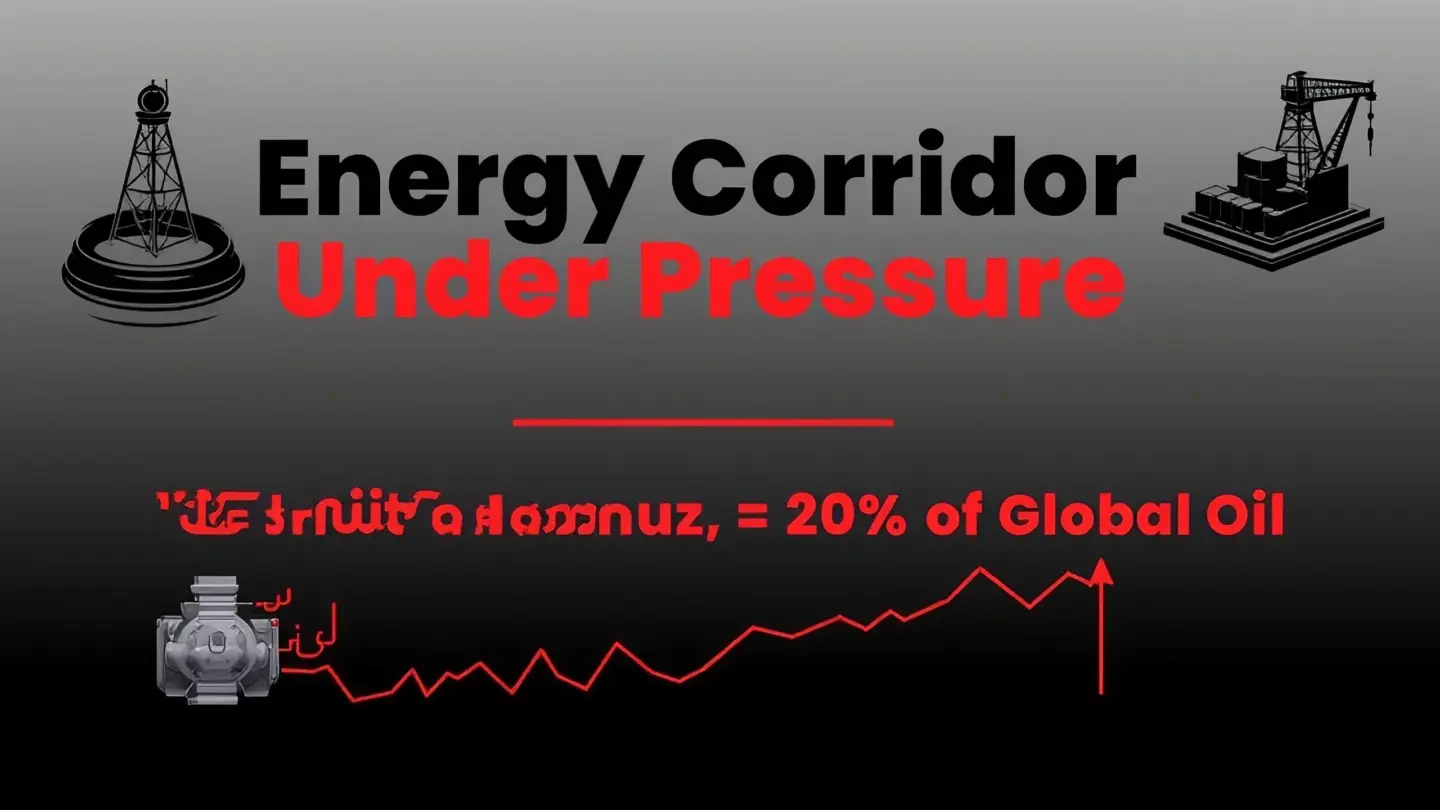
When military conflict reaches the world's most important energy corridor, it stops being a regional story. It becomes a global market event.
The latest phase of the U.S.-Iran confrontation has once again raised the stakes for investors, energy markets, and the global economy. What began as another round of military operations has quickly evolved into a broader geopolitical challenge, with implications extending far beyond the Middle East. Every new strike, every retaliatory attack, and every political statement is now influencing oil prices, inflation expectations,
BTC0.01%
FUEL-0.28%
MrFlower_XingChen
#USEndsLatestStrikesOnIran
When military conflict reaches the world's most important energy corridor, it stops being a regional story. It becomes a global market event.
The latest phase of the U.S.-Iran confrontation has once again raised the stakes for investors, energy markets, and the global economy. What began as another round of military operations has quickly evolved into a broader geopolitical challenge, with implications extending far beyond the Middle East. Every new strike, every retaliatory attack, and every political statement is now influencing oil prices, inflation expectations, and risk sentiment across global financial markets.
According to U.S. Central Command (CENTCOM), American forces completed another large-scale operation targeting Iran's military infrastructure. The strikes focused on command centers, air defense systems, missile and drone facilities, logistics infrastructure, and coastal surveillance capabilities around strategic areas, including Bandar Abbas. The primary objective was to weaken Iran's ability to threaten commercial shipping through the Strait of Hormuz, one of the world's most critical maritime trade routes.
Bandar Abbas was not chosen by accident. It is Iran's largest commercial port and one of the country's most important naval hubs. It also serves as a key gateway to the Strait of Hormuz, the narrow passage through which nearly one-fifth of global seaborne oil supplies move every day. Any disruption in this region immediately captures the attention of energy traders, governments, and financial markets because even a temporary interruption can affect fuel prices worldwide.
At the political level, President Donald Trump delivered one of his strongest warnings so far. He stated that if Iran refuses to return to negotiations, future military operations could expand beyond military installations to include bridges, power plants, and additional strategic infrastructure. Whether those threats become reality or remain part of diplomatic pressure, the message significantly increases uncertainty surrounding the conflict.
Iran responded by demonstrating that it retains the capability to strike beyond its own borders. Missile and drone attacks targeting U.S.-linked facilities in Bahrain and Kuwait signaled that Tehran is prepared to widen the confrontation if military pressure continues. These retaliatory actions reinforce the risk that the conflict could spread across the Gulf rather than remain confined to Iranian territory.
For financial markets, the immediate concern is energy security. Oil traders are not simply reacting to explosions—they are pricing the possibility of supply disruptions. The Strait of Hormuz remains one of the world's most important oil transportation corridors. If shipping activity becomes more dangerous or insurance costs continue rising, global crude prices could remain elevated even without a complete blockade. Recent trading has already reflected these concerns, with oil moving above the $90 per barrel level as tensions intensified.
Higher oil prices create another challenge: inflation. Energy costs influence transportation, manufacturing, food production, and consumer prices around the world. If crude remains elevated for an extended period, central banks may find it more difficult to reduce interest rates. This creates a difficult balance between supporting economic growth and keeping inflation under control.
Gold has also attracted renewed attention as investors seek traditional safe-haven assets during periods of geopolitical uncertainty. Whenever military conflicts escalate, capital often shifts toward defensive investments before confidence gradually returns to higher-risk markets.
The cryptocurrency market faces a more complex situation. Bitcoin is increasingly viewed by some investors as a digital store of value during periods of uncertainty, while others still treat it as a higher-risk asset. As a result, geopolitical crises often produce sharp volatility rather than a simple bullish or bearish trend. Short-term price swings may become larger as traders respond to both military developments and changing expectations for global monetary policy.
Equity markets could also remain sensitive in the days ahead. Rising energy costs may pressure sectors that depend heavily on transportation and manufacturing, while energy producers and defense-related companies could continue attracting investor interest. Market leadership often changes quickly during geopolitical events, making risk management especially important.
The next stage of this conflict will likely depend on diplomacy as much as military action. If negotiations resume, markets could stabilize rapidly as fears of supply disruptions begin to fade. However, if retaliatory strikes continue and critical infrastructure becomes a larger target, investors should prepare for prolonged volatility across commodities, equities, and digital assets.
For traders, several indicators deserve close attention over the coming days:
Developments around the Strait of Hormuz and commercial shipping.
Crude oil price movements and energy supply updates.
Additional military announcements from CENTCOM and Iran.
Diplomatic signals from Washington and Tehran.
Bitcoin, gold, and equity market reactions to geopolitical headlines.
History has repeatedly shown that markets dislike uncertainty more than bad news itself. As long as both sides continue exchanging military action while keeping negotiations uncertain, volatility is likely to remain elevated.
This conflict is no longer just about military strategy. It has become a test of global energy security, inflation expectations, central bank policy, and investor confidence. The coming days may determine not only the direction of Middle East tensions but also the next major move across global financial markets.
How do you think this conflict will influence crude oil, Bitcoin, and global markets if tensions continue to escalate instead of returning to negotiations?
DYOR 😎
#SummerCreationCamp
@Gate_Square
@GateSquare
repost-content-media
  • Reward
  • Comment
  • Repost
  • Share
#SummerCreationCamp

The Biggest Mistake Isn't Buying the Wrong Stock—It's Buying Without a Reason
A few days ago, I was scrolling through market discussions and noticed something interesting.
Whenever a stock starts climbing, the same comments appear:
"I'm buying before it's too late."
"This stock is going to the moon."
"Everyone is talking about it, so it must be a good investment."
At first, those comments sound exciting. But after spending time in both the crypto and stock markets, I've realized something:
Most investors don't lose money because they choose the wrong company.
They lose mon
MrFlower_XingChen
#SummerCreationCamp
The Biggest Mistake Isn't Buying the Wrong Stock—It's Buying Without a Reason
A few days ago, I was scrolling through market discussions and noticed something interesting.
Whenever a stock starts climbing, the same comments appear:
"I'm buying before it's too late."
"This stock is going to the moon."
"Everyone is talking about it, so it must be a good investment."
At first, those comments sound exciting. But after spending time in both the crypto and stock markets, I've realized something:
Most investors don't lose money because they choose the wrong company.
They lose money because they never ask why they're buying it in the first place.
That's one reason I like the idea behind Gate Stocks.
It doesn't just give crypto users access to stock-related opportunities—it also reminds us that investing should be based on research, not excitement. Having more opportunities is valuable, but only if we know how to evaluate them.
So before I ever think about pressing the Buy button, I ask myself a few questions.
The first question is always the simplest:
What does this company actually do?
This sounds obvious, yet it's surprising how many people skip it.
If a company can't explain how it makes money, how can an investor expect to understand its future?
Is it selling products?
Providing cloud services?
Building AI infrastructure?
Developing software?
Leading the semiconductor industry?
Every stock represents a real business. The stronger that business becomes, the stronger the long-term investment case usually becomes.
The second question is one that many beginners ignore:
Is the company getting stronger every quarter?
This is where earnings reports become incredibly valuable.
Revenue growth tells us whether demand is increasing.
Net profit shows whether the company is turning that demand into real earnings.
Cash flow reveals whether the business is financially healthy.
Management guidance often tells us where the company believes it is heading next.
Numbers don't tell the entire story—but they tell far more than social media hype ever will.
Then I step back and look at the bigger picture.
Even the world's best companies don't operate in isolation.
Imagine a business delivering excellent results, but at the same time inflation begins rising sharply, interest rates increase, and investors become worried about economic growth.
Suddenly the market reacts differently.
The business hasn't changed overnight—but investor expectations have.
That's why experienced investors don't only follow companies.
They follow inflation reports.
Federal Reserve meetings.
Employment data.
Economic growth.
Geopolitical developments.
The market is connected, and successful investors understand those connections.
Another lesson I've learned is that a great company can still be a poor investment if the price is too high.
This was one of the hardest concepts for me to understand.
I used to think, "If it's a great company, I should buy it."
Now I ask a different question:
"Is it a great company at today's price?"
There's a difference.
Imagine paying twice the market price for your dream house.
The house is still beautiful—but the investment may no longer make sense.
Stocks work the same way.
Quality matters.
Price matters.
Patience matters.
I also remind myself that putting everything into one company isn't confidence—it's concentration.
Markets are unpredictable.
Technology companies can struggle.
Energy companies can surprise.
Healthcare can outperform when nobody expects it.
No one knows exactly which sector will lead next year.
Diversification isn't about reducing returns.
It's about surviving uncertainty.
Perhaps the biggest challenge isn't choosing a stock.
It's controlling ourselves.
When markets rally, greed whispers, "Buy more."
When markets fall, fear shouts, "Sell everything."
Neither emotion is a reliable investment strategy.
Discipline is.
Before entering any position, I want to know three things:
Why am I buying?
How much am I risking?
What would make me change my mind?
Having answers before investing is much easier than trying to find answers during market panic.
That's something every investor eventually learns.
Gate Stocks creates access.
But access alone doesn't create success.
Knowledge does.
Research does.
Patience does.
The platform can open the door to new opportunities, but walking through that door wisely is entirely our responsibility.
In my opinion, the future of investing won't belong to people who simply chase the fastest-moving stocks.
It will belong to investors who understand businesses, respect risk, stay curious, and make decisions based on facts instead of emotions.
Every stock has a price.
Not every stock has value.
Knowing the difference is what separates investing from gambling.
So before your next investment, don't ask:
"How much can I make?"
Ask instead:
"Do I truly understand what I'm buying?"
That one question has the potential to change every investment decision you make from this point forward.
@Gate_Square
@GateSquare
repost-content-media
  • Reward
  • Comment
  • Repost
  • Share
#SummerCreationCamp

7 Things Every Gate Stocks User Should Check Before Buying Any Stock
Buying a stock is easy. Buying the right stock is the hard part.
One of the biggest mistakes new investors make is believing that a famous company automatically becomes a good investment. A well-known brand doesn't always mean the stock is worth buying at its current price. Successful investors don't follow hype—they follow research.
If you're exploring opportunities through Gate Stocks, here are seven important factors you should always evaluate before making an investment decision.
1. Understand the Bus
MrFlower_XingChen
#SummerCreationCamp
7 Things Every Gate Stocks User Should Check Before Buying Any Stock
Buying a stock is easy. Buying the right stock is the hard part.
One of the biggest mistakes new investors make is believing that a famous company automatically becomes a good investment. A well-known brand doesn't always mean the stock is worth buying at its current price. Successful investors don't follow hype—they follow research.
If you're exploring opportunities through Gate Stocks, here are seven important factors you should always evaluate before making an investment decision.
1. Understand the Business Before Looking at the Stock Price
The first question should never be, "How much has this stock gone up?"
Instead, ask, "What does this company actually do?"
Every company has a business model. Some earn revenue by selling products, while others generate income through subscriptions, cloud services, advertising, software, or financial services. If you don't understand how a company makes money, you'll struggle to understand why its stock price moves.
Also look at the company's competitive advantage. Does it have a strong brand? Is it a leader in its industry? Does it own technology or products that competitors can't easily copy?
Companies with sustainable business models often perform better over the long term than businesses built on temporary trends.
Before investing, make sure you can explain the company's business in your own words. If you can't, you probably need more research.
2. Read Earnings Reports Instead of Social Media Posts
Many investors buy a stock because they saw someone recommending it online.
Professional investors do the opposite—they read earnings reports.
An earnings report tells you how the company is performing financially. Important areas include revenue growth, net profit, earnings per share (EPS), operating margins, free cash flow, and management's outlook for future quarters.
Sometimes a company reports record profits, but the stock still falls because investors expected even better results. On the other hand, a company with average earnings may rise sharply if its future guidance is stronger than expected.
The market reacts to expectations—not just numbers.
Learning to understand earnings reports gives you an advantage over investors who rely only on headlines.
3. Never Ignore the Bigger Economic Picture
Even the strongest companies are affected by the economy.
Inflation, interest rates, GDP growth, unemployment data, and central bank decisions all influence investor confidence.
For example, when interest rates rise, borrowing becomes more expensive. Growth companies may slow down, consumer spending can weaken, and stock valuations often come under pressure.
When inflation begins to fall or central banks become more supportive, market sentiment often improves.
This is why experienced investors always keep an eye on the economic calendar. Understanding macroeconomic events helps explain why the entire market moves—even when nothing has changed inside an individual company.
4. A Great Company Can Still Be an Expensive Investment
Many beginners believe that if a company is excellent, they should buy it immediately.
But price matters.
Imagine buying a house. Even if it's a beautiful house, you wouldn't pay double its actual value. The same principle applies to stocks.
Before investing, consider whether the current valuation already reflects future growth. Metrics such as the Price-to-Earnings (P/E) ratio, revenue growth, and historical valuation can help determine whether a stock is reasonably priced.
Buying quality companies is important—but buying them at sensible prices is even more important.
5. Diversification Protects Your Portfolio
Putting all your money into one stock might generate large profits—but it can also create large losses.
Different industries perform differently during changing economic conditions.
Technology companies may benefit from AI innovation, while energy companies often react to oil prices. Financial companies respond to interest rates, and healthcare businesses may remain relatively stable during uncertain markets.
Diversification doesn't eliminate risk, but it reduces the impact of one poor-performing investment.
Building a balanced portfolio is one of the simplest ways to improve long-term investing discipline.
6. Control Your Emotions Before They Control Your Money
The market tests emotions every single day.
When prices rise quickly, many investors experience FOMO and buy without research.
When prices fall sharply, panic replaces logic, causing investors to sell at exactly the wrong time.
Successful investing requires discipline.
Before entering any position, decide why you're buying, what your investment goal is, and under which conditions you'll sell.
Having a plan removes emotional decision-making and helps you stay focused even during periods of high volatility.
Remember, markets reward patience far more often than impulsive decisions.
7. Risk Management Is More Important Than Finding the Next Big Winner
Every investment carries uncertainty.
No investor—not even the world's best—wins every trade.
This is why protecting your capital should always come before chasing profits.
Before investing, decide:
• How much of your portfolio you'll allocate.
• The maximum loss you're willing to accept.
• Your profit-taking strategy.
• Your exit plan if the investment thesis changes.
Risk management is what keeps investors in the game for years, while poor risk management often ends investing journeys early.
Final Thoughts
Gate Stocks gives investors access to more opportunities, but opportunities alone don't guarantee success.
The investors who achieve consistent results aren't always the smartest—they're usually the most disciplined. They understand businesses, study financial reports, follow the economy, respect valuations, diversify their portfolios, control their emotions, and manage risk with patience.
The market will always offer another opportunity. Your job isn't to catch every trend—it's to make informed decisions that can stand the test of time.
Which of these seven factors do you think is the most important before buying a stock? I'd love to hear your thoughts.
@Gate_Square
@GateSquare
repost-content-media
  • Reward
  • Comment
  • Repost
  • Share
#USDTDepositEarningsDoublePlay
𝙊𝙣𝙚 𝙐𝙎𝘿𝙏, 𝙏𝙬𝙤 𝙊𝙥𝙥𝙤𝙧𝙩𝙪𝙣𝙞𝙩𝙞𝙚𝙨: Why Capital Efficiency Matters More Than Ever
One of the biggest mistakes in crypto isn't buying the wrong asset.
It's letting your capital sit idle.
Many investors spend hours searching for the next breakout token while thousands of USDT remain untouched in their wallets. They wait for the "perfect entry," believing they're avoiding risk. In reality, idle capital has its own cost—the opportunity to earn while you wait.
That's why Gate's USDT Deposit Earnings Double Play campaign caught my attention.
At first
MrFlower_XingChen
#USDTDepositEarningsDoublePlay
𝙊𝙣𝙚 𝙐𝙎𝘿𝙏, 𝙏𝙬𝙤 𝙊𝙥𝙥𝙤𝙧𝙩𝙪𝙣𝙞𝙩𝙞𝙚𝙨: Why Capital Efficiency Matters More Than Ever
One of the biggest mistakes in crypto isn't buying the wrong asset.
It's letting your capital sit idle.
Many investors spend hours searching for the next breakout token while thousands of USDT remain untouched in their wallets. They wait for the "perfect entry," believing they're avoiding risk. In reality, idle capital has its own cost—the opportunity to earn while you wait.
That's why Gate's USDT Deposit Earnings Double Play campaign caught my attention.
At first glance, it looks like another promotional event.
But when you look deeper, it highlights an important concept that many investors overlook: capital efficiency.
Every Dollar Should Have a Job
Professional investors don't think of capital as something that should simply sit in an account.
They think of it as a resource that should work continuously.
Imagine having 5,000 USDT in your wallet while waiting for the next market opportunity.
You have two choices.
The first is to let it remain idle, earning nothing while you monitor the market every day.
The second is to put that capital to work without completely losing sight of future opportunities.
This is the idea behind the Double Play campaign.
Instead of offering only one incentive, Gate combines deposit rewards with wealth management returns, allowing the same pool of capital to generate value in more than one way.
The First Opportunity: Deposit and Earn Cashback
The campaign rewards users who complete eligible net USDT deposits and meet the required futures trading volume.
Those who qualify can receive up to 1% USDT cashback, with rewards reaching as much as 10,000 USDT per user.
This isn't simply about depositing funds.
It encourages active participation while rewarding users who contribute to the platform's trading ecosystem.
For active traders, cashback can help reduce overall trading costs and improve capital efficiency over time.
The Second Opportunity: Put Idle USDT to Work
Not every USDT needs to remain unused while waiting for the next trade.
Gate also offers VIP fixed-term wealth products designed for users who want their stablecoins to generate passive returns.
The current options include:
• 3.8% APR for the 7-day fixed-term product.
• 4.0% APR for the 30-day fixed-term product.
For investors who expect to hold stablecoins for a period of time, these products provide an opportunity to earn while remaining within the Gate ecosystem.
The concept is simple.
Instead of allowing capital to remain inactive, you give it a productive role until you're ready to deploy it elsewhere.
Why This Matters Beyond the Promotion
The most interesting part of this campaign isn't the cashback percentage or the advertised APR.
It's the mindset behind it.
Crypto investors often focus entirely on market gains while ignoring how efficiently they manage idle assets.
During periods of uncertainty, many traders move into stablecoins.
That decision protects capital, but protection doesn't necessarily mean inactivity.
Modern crypto platforms are increasingly creating products that allow stable assets to remain productive without forcing users into higher-risk investments.
This shift reflects a broader evolution in digital finance.
Stablecoins are no longer viewed only as a safe place to park funds.
They're becoming tools for generating yield, improving liquidity management, and increasing overall portfolio efficiency.
Is This Suitable for Everyone?
Not necessarily.
Before participating in any campaign or subscribing to a wealth product, investors should understand the eligibility requirements, lock-up periods, reward conditions, and their own liquidity needs.
For example, if you expect to use your USDT immediately, locking it into a fixed-term product may not match your strategy.
Likewise, qualifying for cashback depends on meeting the campaign's trading requirements, so users should evaluate whether those conditions align with their normal trading activity rather than increasing risk simply to chase rewards.
The smartest investors don't ask only, "How much can I earn?"
They also ask, "Does this fit my strategy?"
The Bigger Picture
Crypto is gradually moving beyond simple trading.
Today's platforms are building complete financial ecosystems where one asset can serve multiple purposes—trading, earning yield, participating in investment opportunities, and improving capital efficiency.
Gate's USDT Deposit Earnings Double Play reflects that direction.
By combining up to 1% USDT cashback for eligible participants with VIP fixed-term products offering 3.8% APR for 7 days and 4.0% APR for 30 days, the campaign encourages investors to think differently about stablecoins.
The real lesson isn't that one promotion offers two rewards.
The real lesson is that capital should never remain idle without a reason.
In every market cycle, opportunities come and go. The investors who often stay ahead aren't just the ones who find the next winning trade—they're the ones who make every dollar work as efficiently as possible.
#SummerCreationCamp
@Gate_Square
@GateSquare
repost-content-media
  • Reward
  • Comment
  • Repost
  • Share
#NansenCEOBullishOnApple
𝙒𝙝𝙮 𝙄𝙨 𝙉𝙖𝙣𝙨𝙚𝙣'𝙨 𝘾𝙀𝙊 𝘽𝙪𝙡𝙡𝙞𝙨𝙝 𝙤𝙣 𝘼𝙥𝙥𝙡𝙚 𝘼𝙜𝙖𝙞𝙣? The 5 Reasons Deserve a Closer Look
For most of the AI boom, Apple has been the company everyone questioned.
NVIDIA dominated AI chips.
Microsoft partnered with OpenAI.
Google accelerated Gemini.
Meta invested billions into open-source AI.
While competitors were making headlines almost every week, Apple seemed unusually quiet. Many investors interpreted that silence as a sign that the company was falling behind.
But what if Apple wasn't losing the AI race?
What if it was simply running a dif
MrFlower_XingChen
#NansenCEOBullishOnApple
𝙒𝙝𝙮 𝙄𝙨 𝙉𝙖𝙣𝙨𝙚𝙣'𝙨 𝘾𝙀𝙊 𝘽𝙪𝙡𝙡𝙞𝙨𝙝 𝙤𝙣 𝘼𝙥𝙥𝙡𝙚 𝘼𝙜𝙖𝙞𝙣? The 5 Reasons Deserve a Closer Look
For most of the AI boom, Apple has been the company everyone questioned.
NVIDIA dominated AI chips.
Microsoft partnered with OpenAI.
Google accelerated Gemini.
Meta invested billions into open-source AI.
While competitors were making headlines almost every week, Apple seemed unusually quiet. Many investors interpreted that silence as a sign that the company was falling behind.
But what if Apple wasn't losing the AI race?
What if it was simply running a different race altogether?
That question became more interesting after Nansen CEO Alex Svanevik said he is turning bullish on Apple again, highlighting five reasons that he believes could strengthen Apple's long-term position.
Rather than looking only at the headline, I think it's worth examining why each of these reasons matters.
1. Siri Is Finally Showing Signs of Progress
For years, Siri was often criticized for lagging behind competing AI assistants.
It understood simple commands, but when compared with modern AI systems, it often felt limited.
According to Svanevik, the latest iOS 27 Beta shows noticeable improvements in Siri's capabilities.
That may sound like a software update, but for Apple, it's much bigger than that.
Siri is one of the few AI products that already reaches hundreds of millions of devices worldwide.
If Apple transforms Siri into a truly intelligent assistant, it won't need users to download a separate AI application.
The AI will already be part of the device they use every day.
That existing distribution network could become one of Apple's biggest competitive advantages.
2. Edge AI Could Become Apple's Biggest Strength
Most people think powerful AI must always run in the cloud.
Apple believes many AI tasks should happen directly on the device.
This approach is known as edge AI inference.
Instead of sending personal data to remote servers, AI processes information locally.
That creates several important advantages.
Responses become faster.
Privacy improves because less information leaves the device.
Internet connectivity becomes less important.
Battery optimization can also improve as hardware becomes more specialized.
As AI models continue becoming smaller and more efficient, Apple's hardware-first strategy may become increasingly valuable.
Sometimes the best AI isn't the biggest model.
It's the one users can access instantly.
3. Leadership Can Shape the Next Decade
Svanevik also mentioned John Ternus, whose hardware engineering background could influence Apple's future direction.
Apple has always been different from many technology companies because it controls both hardware and software.
That integration has been one of its greatest competitive advantages for decades.
If future leadership continues combining hardware innovation with AI software development, Apple could deliver experiences that competitors using separate ecosystems may struggle to replicate.
Technology companies don't only compete through software.
They compete through ecosystem design.
4. Strong Cash Flow Gives Apple Extraordinary Flexibility
Innovation requires investment.
Fortunately for Apple, funding innovation has never been its biggest challenge.
The company generates enormous cash flow, allowing it to invest aggressively in AI research, custom silicon, software development, acquisitions, and ecosystem expansion without placing pressure on its financial stability.
This financial strength also gives Apple something many companies don't have.
Time.
It doesn't need to rush unfinished products into the market simply to impress investors.
It can afford to refine technology before releasing it at scale.
5. Apple's Brand Is Still One of Its Strongest Assets
Technology changes quickly.
Trust doesn't.
Apple has spent decades building one of the world's strongest consumer brands.
When the company introduces a new feature, millions of existing users already own compatible devices.
That creates a unique advantage.
Instead of convincing customers to enter a new ecosystem, Apple can simply improve the ecosystem they already use.
In business, retaining customers is often just as valuable as acquiring new ones.
But There Are Still Challenges
Becoming bullish doesn't mean ignoring risks.
Apple still faces intense competition from Microsoft, Google, OpenAI, Meta, and other companies investing heavily in artificial intelligence.
Cloud-based AI continues advancing rapidly.
Regulatory pressure remains an ongoing concern.
Global smartphone demand has also become more competitive than it was a decade ago.
Perhaps the biggest challenge is execution.
The market already expects Apple to deliver meaningful AI innovation.
Meeting those expectations won't be easy.
Why Investors Should Pay Attention
Whether or not you agree with Svanevik's view, his comments highlight an important shift in the conversation.
For months, investors mainly asked:
"Why is Apple behind?"
Now a different question is emerging:
"What if Apple's slower strategy produces a better long-term experience?"
That change in narrative can influence how the market evaluates Apple's future.
Sometimes stock prices don't move because a company changes overnight.
They move because investor expectations change.
My Perspective
I don't think Apple's biggest advantage in AI is Siri.
I don't even think it's custom chips.
I think it's something much harder to build.
Trust.
More than two billion active Apple devices already exist around the world.
If Apple successfully combines better Siri performance, efficient on-device AI, powerful hardware, financial strength, and its deeply connected ecosystem, it won't need to win the AI race through the biggest model.
It may win by delivering AI to more people in a way that feels natural, private, and effortless.
The AI race isn't only about building the smartest technology.
It's about putting useful intelligence into the hands of everyday users.
And if Apple succeeds in doing that, today's bullish outlook may prove to be more than just another market opinion—it could be the beginning of a new investment narrative.
#SummerCreationCamp
@Gate_Square
@GateSquare
repost-content-media
  • Reward
  • Comment
  • Repost
  • Share
#StarshipAimsForThursdayLaunch
Starship's Next Launch Isn't Just About Reaching Space
Most people see a delayed rocket launch as bad news.
I see it differently.
The last-second launch abort showed that safety systems are doing exactly what they're designed to do. In space exploration, stopping a launch is often better than risking a mission failure. Every delay gives engineers more data, and every test moves the technology one step forward.
Now, all attention turns to Starship Flight 13.
This mission is important because it isn't just another test flight. It is expected to deploy the first ba
MrFlower_XingChen
#StarshipAimsForThursdayLaunch
Starship's Next Launch Isn't Just About Reaching Space
Most people see a delayed rocket launch as bad news.
I see it differently.
The last-second launch abort showed that safety systems are doing exactly what they're designed to do. In space exploration, stopping a launch is often better than risking a mission failure. Every delay gives engineers more data, and every test moves the technology one step forward.
Now, all attention turns to Starship Flight 13.
This mission is important because it isn't just another test flight. It is expected to deploy the first batch of next-generation Starlink V3 satellites while also attempting an in-space engine relight. If both objectives are achieved, it would be another meaningful step toward building a fully reusable launch system capable of supporting larger commercial missions in the future.
From an investment perspective, this launch is about confidence as much as technology.
A successful mission could strengthen market optimism around the long-term potential of reusable rockets and satellite infrastructure. On the other hand, another delay may create short-term volatility, but it wouldn't necessarily change the long-term vision. Space innovation has always advanced through testing, adjustments, and repeated attempts—not perfection on the first try.
For investors, the smartest approach is to look beyond the countdown clock.
The real value lies in continuous engineering progress, improving launch reliability, and expanding commercial opportunities in space.
History shows that breakthrough technologies are rarely built in a straight line. They are built one successful test at a time, and Flight 13 could become another important milestone on that journey.
#SummerCreationCamp
@Gate_Square
@GateSquare
repost-content-media
  • Reward
  • Comment
  • Repost
  • Share
#USCoreCPIMissesExpectations
Inflation didn't just miss expectations. It challenged one of the market's biggest assumptions. The real question is whether that change is sustainable.
June's U.S. inflation report delivered exactly what investors had been hoping for. Both headline and core inflation came in softer than expected, reinforcing the view that price pressures are gradually easing. Within minutes of the release, Treasury yields declined, the U.S. dollar weakened, equities moved higher, and cryptocurrencies gained momentum as traders reduced expectations for another near-term Federal Re
GAS-1.52%
BTC0.01%
ETH0.21%
XAUUSD0.08%
MrFlower_XingChen
#USCoreCPIMissesExpectations
Inflation didn't just miss expectations. It challenged one of the market's biggest assumptions. The real question is whether that change is sustainable.
June's U.S. inflation report delivered exactly what investors had been hoping for. Both headline and core inflation came in softer than expected, reinforcing the view that price pressures are gradually easing. Within minutes of the release, Treasury yields declined, the U.S. dollar weakened, equities moved higher, and cryptocurrencies gained momentum as traders reduced expectations for another near-term Federal Reserve rate hike.
The market celebrated the numbers.
I'm more interested in what those numbers actually mean.
A closer look at the report shows that a significant part of the improvement came from lower energy prices. Falling gasoline and fuel costs reduced transportation expenses, eased pressure on manufacturers, and lowered costs across supply chains. Since energy influences almost every sector of the economy, even a moderate decline can have a meaningful impact on overall inflation.
That is undoubtedly positive.
But it also creates an important challenge.
Energy is one of the most volatile components of inflation.
Recent geopolitical tensions have already increased uncertainty in global oil markets. If crude prices begin climbing again, some of June's progress could quickly fade, reminding investors that one favorable report doesn't necessarily establish a long-term trend.
This is exactly why the Federal Reserve remains cautious.
Fed Chair Kevin Warsh welcomed the softer inflation data but made it clear that policymakers will not declare victory based on a single month's report. Inflation often moves in cycles, and temporary improvements can easily reverse if underlying pressures remain.
The Federal Reserve isn't looking for one good month.
It's looking for consistent evidence that inflation is moving sustainably toward its long-term target.
That distinction matters because markets and central banks operate differently.
Markets price expectations.
Central banks respond to confirmed trends.
Understanding that difference helps explain why asset prices can rally long before policy actually changes—and why those rallies can reverse just as quickly if expectations prove wrong.
For the cryptocurrency market, this report improves the short-term outlook but doesn't remove uncertainty.
Lower inflation supports the possibility of improved liquidity, which has historically benefited Bitcoin, Ethereum, and other digital assets. Expectations for a less aggressive Federal Reserve generally encourage investors to increase exposure to growth and risk assets.
However, if inflation begins accelerating again because of higher energy prices, stronger wage growth, or renewed supply-chain pressures, markets may once again price in tighter monetary policy. That would likely strengthen the U.S. dollar and reduce liquidity across financial markets.
Technology stocks face a similar balance.
Lower bond yields improve valuations for growth companies, particularly those leading the AI revolution. But long-term performance will still depend on earnings growth, corporate investment, and the resilience of the broader economy—not inflation data alone.
Gold and the U.S. dollar also remain closely linked to the inflation narrative.
A more patient Federal Reserve could weaken the dollar and support gold prices. On the other hand, if inflation proves more persistent than expected, investors may once again favor the dollar while gold faces renewed pressure from higher interest rates.
What I'm Watching Next
One inflation report can improve confidence.
Only a series of reports can change policy.
Over the coming weeks, four indicators will be far more important than today's headlines:
• Core PCE Inflation – the Federal Reserve's preferred measure of inflation.
• Employment and wage growth – to determine whether underlying inflation pressures are easing.
• Energy prices – because oil remains one of the biggest macroeconomic risks.
• Federal Reserve communication – as every policy signal influences global liquidity and market sentiment.
My Market View
I don't believe June's Core CPI marked the end of the inflation battle.
I believe it marked the beginning of a new phase.
The market is becoming more optimistic, but optimism alone doesn't create a sustainable bull market. Lasting rallies are built on consistent economic improvement, stable inflation, and clear monetary policy—not a single data release.
The biggest opportunities rarely belong to investors who react first.
They belong to those who recognize when temporary improvement becomes a lasting trend.
Stay informed. Manage your risk.
#SummerCreationCamp
@Gate_Square
@GateSquare
  • Reward
  • Comment
  • Repost
  • Share
#广场预测世界杯赢40000U
The biggest night in world football has arrived.
Two champions. Two different football philosophies. One trophy.
Spain 🇪🇸 vs Argentina 🇦🇷
Spain have been the tournament's most consistent side, controlling games through possession, tactical discipline, and defensive stability. They haven't relied on moments of magic—they've built victories through structure, patience, and teamwork.
Argentina, meanwhile, have once again proven why champions should never be underestimated. Their knockout performances have shown resilience, experience, and the ability to deliver under the high
MrFlower_XingChen
#广场预测世界杯赢40000U
The biggest night in world football has arrived.
Two champions. Two different football philosophies. One trophy.
Spain 🇪🇸 vs Argentina 🇦🇷
Spain have been the tournament's most consistent side, controlling games through possession, tactical discipline, and defensive stability. They haven't relied on moments of magic—they've built victories through structure, patience, and teamwork.
Argentina, meanwhile, have once again proven why champions should never be underestimated. Their knockout performances have shown resilience, experience, and the ability to deliver under the highest pressure. When the stakes rise, Argentina usually find another level.
So, who has the edge?
From my perspective, Spain enter the final as slight favorites. Their balanced squad, midfield control, and defensive organization give them a small advantage over 90 minutes. However, Argentina have repeatedly shown that finals are rarely decided by statistics alone.
My Prediction
🏆 Winner: Spain 🇪🇸
⚽ Predicted Score: Spain 2–1 Argentina
⭐ Player to Watch: Lamine Yamal – His pace and creativity could be the difference-maker on the biggest stage.
What Could Decide the Final?
• Spain's ability to dominate possession and control the tempo.
• Argentina's experience in high-pressure knockout matches.
• Which team takes its chances in front of goal.
• Individual brilliance in key moments.
This feels like a match where one mistake, one save, or one moment of magic could decide the World Cup.
No matter who lifts the trophy, football fans around the world are about to witness a final worthy of the world's biggest sporting event.
My final call: Spain to become the 2026 FIFA World Cup Champions. 🏆
Who are you backing tonight—Spain or Argentina?
#SummerCreationCamp
@Gate_Square
@GateSquare
repost-content-media
  • Reward
  • Comment
  • Repost
  • Share
#广场预测世界杯赢40000U
The biggest mistake before a World Cup final is believing it's decided by star players.
Finals are rarely won by the biggest name on the pitch.
They are won by the team whose tactical identity survives ninety minutes of pressure.
That is why Spain vs Argentina is far more than a battle for the trophy. It is a clash between two football philosophies, two generations, and two completely different ways of winning matches.
One team wants to dominate every minute.
The other knows how to survive every storm.
Tonight, only one philosophy will become world champion.
Match Details
🏆 T
MrFlower_XingChen
#广场预测世界杯赢40000U
The biggest mistake before a World Cup final is believing it's decided by star players.
Finals are rarely won by the biggest name on the pitch.
They are won by the team whose tactical identity survives ninety minutes of pressure.
That is why Spain vs Argentina is far more than a battle for the trophy. It is a clash between two football philosophies, two generations, and two completely different ways of winning matches.
One team wants to dominate every minute.
The other knows how to survive every storm.
Tonight, only one philosophy will become world champion.
Match Details
🏆 Tournament: FIFA World Cup 2026 Final
⚽ Match: Spain 🇪🇸 vs Argentina 🇦🇷
📅 Date: 20 July 2026
⏰ Kick-off: 03:00 (UTC+8)
🏟️ Venue: New York New Jersey Stadium
📍 City: East Rutherford, New Jersey, United States
---
This Final Won't Be Decided By Emotion
Football fans love talking about superstars, but World Cup finals are usually decided by details most people never notice.
The positioning of the midfield.
The timing of the press.
The ability to recover after losing possession.
The discipline to stay compact under pressure.
One mistake.
One transition.
One moment.
That is often the difference between lifting the trophy and finishing second.
Spain's Biggest Strength Is Control
Spain don't simply keep possession.
They use possession as a weapon.
Every pass has a purpose.
Every movement is designed to pull defenders out of position before attacking the space they leave behind.
Their midfield dictates the tempo, while their aggressive pressing prevents opponents from building attacks comfortably.
The longer Spain control the ball, the harder the match becomes for the opposition.
It's not only physically exhausting.
It's mentally exhausting too.
Eventually, concentration drops.
That's when Spain usually strike.
Argentina's Greatest Quality Is Experience
Argentina approach football differently.
They don't need to dominate possession to dominate a match.
Their greatest weapon is experience.
This team understands pressure better than almost anyone.
They remain calm when defending.
They stay patient when opportunities don't arrive.
And when their opponent makes one mistake...
They punish it.
That's what champions do.
Argentina have repeatedly shown that knockout football isn't about creating the most chances.
It's about finishing the most important one.
The Midfield Will Decide The Champion
Every great final has one decisive battle.
Tonight, it's the midfield.
If Spain succeed in controlling possession, Argentina will spend long periods chasing the game instead of controlling it.
If Argentina disrupt Spain's passing rhythm and force quick transitions, the match becomes much more balanced.
Whoever wins the midfield won't simply control possession.
They'll control the emotional rhythm of the final.
The Physical Battle Could Change Everything
One area receiving very little attention is fitness.
Spain have maintained relentless pressing throughout the tournament.
Their younger squad allows them to sustain high intensity from the opening whistle until the closing stages.
Argentina rely more on intelligence, positioning, and experience.
If the match becomes slow and tactical, Argentina become increasingly dangerous.
If the tempo remains high for ninety minutes, Spain may gain an important advantage during the final stages.
Finals Are Won By Small Margins
Statistics don't lift trophies.
Neither do predictions.
Execution does.
One defensive mistake.
One brilliant save.
One set-piece.
One counterattack.
That's often all it takes.
This is why World Cup finals are impossible to predict with certainty.
The better team on paper doesn't always become champion.
The team that handles pressure usually does.
My Prediction
After analyzing both squads, tactical systems, recent performances, and overall balance, I believe Spain hold a slight edge.
Not because Argentina are weaker.
But because Spain's collective structure has been the most complete throughout this tournament.
If they control possession early and maintain their pressing intensity, they should create enough opportunities to make the difference.
However, Argentina's experience means this match will remain alive until the final whistle.
🏆 Predicted Champion: Spain 🇪🇸
⚽ Predicted Score: Spain 2–1 Argentina
⭐ Player to Watch: Lamine Yamal — If Spain win, don't be surprised if his creativity becomes the decisive factor.
Final Thought
Football history isn't written by predictions.
It's written by moments.
Tonight, ninety minutes will decide which nation adds another star above its badge.
My prediction is Spain.
Now it's your turn.
Who will lift the 2026 FIFA World Cup trophy — Spain or Argentina?
#SummerCreationCamp
@Gate_Square
@GateSquare
repost-content-media
  • Reward
  • Comment
  • Repost
  • Share
#广场预测世界杯赢40000U
Some World Cup finals are decided by individual brilliance.
Others are decided long before kickoff—through tactics, squad balance, and which team can impose its identity for 90 minutes.
Spain 🇪🇸 vs Argentina 🇦🇷 feels like one of those finals.
Forget emotions for a moment.
Let's look at what the game is actually telling us.
Spain arrive in the final with one of the most complete teams in the tournament. Their success hasn't been built around one superstar—it has been built around a system. Every phase of their game is connected. They control possession, recover the ball qui
MrFlower_XingChen
#广场预测世界杯赢40000U
Some World Cup finals are decided by individual brilliance.
Others are decided long before kickoff—through tactics, squad balance, and which team can impose its identity for 90 minutes.
Spain 🇪🇸 vs Argentina 🇦🇷 feels like one of those finals.
Forget emotions for a moment.
Let's look at what the game is actually telling us.
Spain arrive in the final with one of the most complete teams in the tournament. Their success hasn't been built around one superstar—it has been built around a system. Every phase of their game is connected. They control possession, recover the ball quickly, stretch opponents across the pitch, and rarely lose their defensive shape.
This is modern tournament football at its best.
Argentina's journey has been different.
Champions know how to survive difficult moments, and Argentina have once again shown incredible character throughout the knockout stages. Their experience, mentality, and ability to deliver in high-pressure situations make them one of the toughest teams to face in world football.
But finals aren't won by reputation alone.
They're won by who controls the match.
The tactical battle could be the biggest factor tonight.
Spain's objective will be simple: dominate possession, dictate the tempo, and force Argentina to spend long periods defending. Their midfield thrives on constant movement, quick passing combinations, and aggressive pressing immediately after losing possession.
If Spain succeed in controlling the rhythm, Argentina may struggle to create sustained attacks.
The longer they defend, the more physically demanding the match becomes.
That is where Spain could gain the upper hand.
Argentina's biggest strength remains its experience.
The squad understands how to manage pressure, absorb difficult moments, and punish opponents when opportunities appear. Even if Spain dominate possession, Argentina need only one well-executed counterattack or one set-piece to completely change the game.
That's why this final is so fascinating.
One team wants to control every minute.
The other knows that football is often decided in just one moment.
Another factor many people overlook is physical intensity.
Spain have looked energetic throughout the tournament, maintaining high pressing and quick transitions from the first whistle to the last. Their younger core allows them to sustain that intensity for longer periods.
Argentina, meanwhile, may prefer a slower tempo where experience and decision-making become more important than constant running.
Whichever team successfully imposes its preferred style will take a huge step toward lifting the trophy.
Key Battles to Watch
• Can Spain's midfield dominate possession without leaving space behind?
• Can Argentina remain compact enough to frustrate Spain's passing game?
• Which goalkeeper produces the decisive save?
• Will the match be decided by open play—or a single moment from a set piece?
My Prediction
🏆 Winner: Spain 🇪🇸
⚽ Predicted Score: Spain 2–1 Argentina
Spain appear slightly stronger from a tactical and physical perspective, while Argentina possess the experience to keep the match competitive until the very end.
Regardless of the result, this has all the ingredients of a memorable World Cup final between two football giants.
Now it's your turn.
Who lifts the trophy tonight—Spain or Argentina?
#SummerCreationCamp
@Gate_Square
@GateSquare
repost-content-media
  • Reward
  • Comment
  • Repost
  • Share
#BTC
Most traders are asking one question today: "Is Bitcoin finally ready to break higher?"
I think the better question is:
"Does the market actually have enough conviction to sustain a breakout?"
A rising price doesn't always signal a strong trend. Sometimes it simply reflects a temporary lack of sellers. That's why today's crypto market deserves a closer look beyond the green candles.
#CryptoMarketAnalysis
As of July 19, the cryptocurrency market has recovered modestly after several volatile sessions. Bitcoin is trading around $64,900, while Ethereum is holding near $1,875. At the same tim
BTC0.01%
ETH0.21%
MrFlower_XingChen
#BTC
Most traders are asking one question today: "Is Bitcoin finally ready to break higher?"
I think the better question is:
"Does the market actually have enough conviction to sustain a breakout?"
A rising price doesn't always signal a strong trend. Sometimes it simply reflects a temporary lack of sellers. That's why today's crypto market deserves a closer look beyond the green candles.
#CryptoMarketAnalysis
As of July 19, the cryptocurrency market has recovered modestly after several volatile sessions. Bitcoin is trading around $64,900, while Ethereum is holding near $1,875. At the same time, the Crypto Fear & Greed Index has climbed to 28, improving from Extreme Fear to Fear. This tells us that sentiment is stabilizing, but confidence has not fully returned.
Bitcoin Is Rising, But Momentum Still Needs Confirmation
Bitcoin continues to trade inside a relatively tight range as weekend liquidity remains thin. Buyers have managed to defend higher levels, yet they have not generated enough volume to trigger a decisive breakout.
The technical picture remains constructive.
On the 4-hour chart, the MACD continues expanding after a bullish crossover, suggesting medium-term momentum is gradually strengthening.
On the daily timeframe, the moving averages remain in a bullish alignment, with price trading above the MA5, MA10, and MA30. This structure usually favors buyers as long as key support levels remain intact.
However, the 1-hour RSI has climbed above 80, entering overbought territory. That doesn't necessarily mean a reversal is coming, but it does increase the probability of short-term profit-taking before the next move.
For now, $65,520 remains the key resistance level. A successful breakout above this area could open the door toward the $66,000-$66,500 region. On the downside, $61,884 remains the major support that bulls cannot afford to lose.
Ethereum Is Quietly Building Strength
While much of the attention remains on Bitcoin, Ethereum continues showing encouraging signs.
Buyers have repeatedly defended the $1,849 demand zone, proving that institutional and long-term interest remains active around current prices.
Immediate support sits near $1,860, while the broader demand area extends toward $1,800.
On the upside, $1,950 remains the first significant resistance. A confirmed move above $2,000 would represent a major technical breakout and could significantly improve overall market sentiment.
Unlike Bitcoin, Ethereum's RSI still has room to rise, while MACD continues attempting to maintain positive momentum.
The Market Is Watching More Than Just Charts
Several important macro events continue influencing market psychology.
The U.S.–Iran conflict has entered its eighth consecutive night of military operations, pushing crude oil above $84 per barrel. Interestingly, Bitcoin has only posted modest gains despite increasing geopolitical tensions.
For many investors, this raises an important question:
Can Bitcoin truly behave as "digital gold" during periods of global uncertainty, or is it still primarily a liquidity-driven risk asset?
At the same time, developers continue monitoring discussions surrounding BIP-110, where potential consensus compatibility issues between older and newer nodes have attracted attention. While no immediate disruption has occurred, technical developments like these remain important for long-term network stability.
Options Expiry Could Increase Volatility
Today's market also faces another major catalyst.
Approximately $1.2 billion worth of Bitcoin options are approaching expiration, with the maximum pain level sitting close to $63,000.
Large options expirations often increase short-term volatility as market makers adjust their positions. Even if the broader trend remains unchanged, price swings may become more aggressive over the next 24 hours.
Derivatives Still Show Caution
One of today's most interesting signals comes from the funding market.
Funding rates for both BTC and ETH remain below 0.005%, indicating that leveraged traders are not aggressively chasing long positions.
This is actually a healthy sign.
Strong rallies supported by moderate leverage tend to be more sustainable than rallies fueled by excessive speculation.
Macro Events Will Decide The Next Major Move
Technical analysis explains where price is trading.
Macroeconomics often explains where price goes next.
Investors are now watching two major events:
• China's July 20 Loan Prime Rate (LPR) decision.
• The U.S. Federal Reserve meeting on July 30.
Both events could significantly influence global liquidity expectations, which remain one of the strongest drivers of cryptocurrency prices.
My Market View
The current market doesn't look weak.
It looks patient.
Bitcoin is holding above important support while Ethereum continues building a constructive structure.
At the same time, improving sentiment, stable funding rates, and strengthening technical indicators suggest that panic selling is gradually fading.
However, confirmation is still missing.
Until Bitcoin decisively reclaims $65,500 with strong trading volume, this remains a consolidation market rather than the beginning of a new bullish trend.
Sometimes the smartest trade isn't chasing every green candle.
It's waiting for the market to prove that the next breakout is backed by real conviction.
#SummerCreationCamp @Gate_Square
@GateSquare
repost-content-media
  • Reward
  • Comment
  • Repost
  • Share
#B
The market loves explosive rallies. Professional traders ask a different question: Who is buying, and how long can they keep buying?
Today's move in B Token (BUSDT) isn't just another green candle. A 22% daily surge combined with a 74% weekly rally suggests that momentum has shifted decisively in favor of buyers. The real challenge now isn't finding reasons to be bullish—it's determining whether this breakout has enough strength to develop into a sustainable trend.
BUSDT is currently trading around 0.2027 USDT, pushing against the highest levels of the day after climbing nearly 22% within
MrFlower_XingChen
#B
The market loves explosive rallies. Professional traders ask a different question: Who is buying, and how long can they keep buying?
Today's move in B Token (BUSDT) isn't just another green candle. A 22% daily surge combined with a 74% weekly rally suggests that momentum has shifted decisively in favor of buyers. The real challenge now isn't finding reasons to be bullish—it's determining whether this breakout has enough strength to develop into a sustainable trend.
BUSDT is currently trading around 0.2027 USDT, pushing against the highest levels of the day after climbing nearly 22% within 24 hours. Such moves usually attract FOMO, but experienced traders know that the first test of resistance often decides whether momentum continues or fades.
What stands out most isn't only the price appreciation—it's the consistency behind it. A gain of more than 73% in one week tells us this wasn't driven by a single pump. Buyers have been accumulating over several sessions, gradually absorbing sell pressure before forcing price into a new trading range.
Momentum Has Returned — Now It Must Be Proven
The current structure clearly favors the bulls.
Price has broken above its recent consolidation zone while trading volume remains healthy, suggesting genuine market participation rather than a temporary liquidity spike.
However, strong momentum alone doesn't guarantee another vertical rally.
Every major breakout eventually reaches a point where early buyers begin taking profits while new buyers decide whether they're willing to pay even higher prices.
That decision is usually made around resistance.
For BUSDT, the immediate battlefield sits near 0.204–0.205 USDT.
A convincing close above this area would strengthen the probability of an extension toward 0.22 USDT, with 0.25 USDT becoming the next realistic objective if buying pressure continues expanding.
The Trend Looks Strong... But The Bigger Picture Still Matters
One statistic deserves more attention than today's rally.
Despite this week's impressive recovery, BUSDT remains significantly below its longer-term highs and is still down sharply over the past year.
That tells us something important.
The market is recovering.
It has not fully recovered.
In strong bull markets, every rally builds on the previous one.
In recovering markets, sharp rallies often alternate with equally aggressive pullbacks.
Understanding that difference helps traders manage expectations instead of emotions.
Where Could Buyers Lose Control?
Bullish momentum remains valid as long as important support levels continue holding.
The first support sits around 0.166 USDT, followed by today's low near 0.163 USDT.
If price falls below this region, it would suggest that short-term momentum traders are beginning to exit their positions.
As long as those supports remain intact, buyers continue controlling the short-term structure.
What I'm Watching Next
I'm not focusing only on price.
I'm watching behavior.
Can BUSDT continue printing higher highs while maintaining healthy trading volume?
Will buyers absorb profit-taking near resistance?
Can momentum remain strong after the initial excitement fades?
Those answers will determine whether this becomes a genuine trend continuation or simply an impressive short-term breakout.
My Market View
At this stage, the advantage clearly belongs to the bulls.
The combination of strong weekly performance, expanding momentum, and improving volume gives buyers the upper hand.
Even so, disciplined traders understand that markets rarely move in straight lines.
A brief consolidation above 0.20 USDT would actually strengthen the bullish structure by allowing momentum to cool before another potential advance.
If buyers successfully defend the current breakout zone, 0.22 USDT becomes the next logical target, while 0.25 USDT could come into focus if momentum accelerates.
Strong trends create opportunities.
Patient execution turns those opportunities into results.
#SummerCreationCamp
@Gate_Square
@GateSquare
repost-content-media
  • Reward
  • Comment
  • Repost
  • Share
#BANK
The strongest rallies aren't defined by how fast they climb—they're defined by how well they hold their gains. Lorenzo ($BANK) is now entering a phase where market structure matters more than momentum.
Current Market Overview
Lorenzo ($BANK) is currently trading around $0.17, maintaining a large portion of its recent gains after a sharp bullish rally. Rather than collapsing after the advance, the token has moved into a healthy consolidation phase, suggesting that buyers are still defending higher price levels. This type of price action often reflects accumulation before the market choos
MrFlower_XingChen
#BANK
The strongest rallies aren't defined by how fast they climb—they're defined by how well they hold their gains. Lorenzo ($BANK ) is now entering a phase where market structure matters more than momentum.
Current Market Overview
Lorenzo ($BANK) is currently trading around $0.17, maintaining a large portion of its recent gains after a sharp bullish rally. Rather than collapsing after the advance, the token has moved into a healthy consolidation phase, suggesting that buyers are still defending higher price levels. This type of price action often reflects accumulation before the market chooses its next direction.
Technical Analysis
On the short-term timeframe, BANK continues to trade above its MA5, MA10, and MA30, confirming that the primary trend remains bullish. The immediate resistance is still the recent swing high near $0.12181 (or the latest local high if a new high has already formed), while the market is now testing the $0.17 region as an important price acceptance zone.
If buyers maintain control above current levels and trading volume increases, the next upside targets could emerge as momentum traders return. However, failure to defend the current consolidation could trigger a healthy pullback before another attempt higher.
Support & Resistance
• Immediate Support: $0.16
• Strong Support: $0.15
• Immediate Resistance: $0.18
• Major Resistance: $0.20
My Market View
The rally has already proven that demand exists. Now the market must prove that demand is sustainable. Holding above $0.17 while volume gradually expands would strengthen the bullish case. Until then, consolidation should be viewed as a period of accumulation rather than weakness.
Disclaimer: This analysis is for educational purposes only and should not be considered financial advice. Always do your own research before making investment decisions.
#SummerCreationCamp @Gate_Square
@GateSquare
$BANK ‌
repost-content-media
  • Reward
  • Comment
  • Repost
  • Share
#ETH
Ethereum Is Approaching Its Most Important Decision Point — The Next Breakout Could Define July
There are moments in the market when price action becomes quieter, volatility begins to contract, and traders start losing interest. Ironically, these are often the periods when the foundation for the next major move is being built. Ethereum appears to be entering one of those moments. While many participants remain focused on the recent weakness around the $1,570 region, the broader picture tells a far more interesting story. Technical structure, institutional demand, and whale accumulation a
MrFlower_XingChen
#ETH
Ethereum Is Approaching Its Most Important Decision Point — The Next Breakout Could Define July
There are moments in the market when price action becomes quieter, volatility begins to contract, and traders start losing interest. Ironically, these are often the periods when the foundation for the next major move is being built. Ethereum appears to be entering one of those moments. While many participants remain focused on the recent weakness around the $1,570 region, the broader picture tells a far more interesting story. Technical structure, institutional demand, and whale accumulation are beginning to align, even as on-chain activity sends a warning that cannot be ignored.
At first glance, Ethereum doesn't look particularly exciting. The price is still trading near multi-month lows, and confidence across the market remains fragile. However, experienced investors rarely judge a market solely by where it is trading today. Instead, they focus on what is happening beneath the surface, and that is where Ethereum is starting to stand out.
The 4-hour chart has developed into a classic decision zone. The level every trader should be watching is $1,697. This is far more than another resistance level—it represents the point where buyers would officially regain short-term control. A clean breakout above this area, supported by strong trading volume, would confirm that the recent consolidation has evolved into a genuine bullish reversal rather than a temporary bounce.
If buyers successfully reclaim this level, the first technical objective comes into view near $1,791, where previous resistance is expected to challenge the rally. Should momentum remain strong, the market could extend toward the $1,960 region during July. These levels are not based on optimism alone; they reflect the measured technical structure currently developing on the chart.
On the other hand, the downside remains equally important. Ethereum continues to receive support around $1,500, a level carrying both technical and psychological significance. Losing this support would increase the probability of another decline toward $1,430, the major support established during June. Until either side breaks decisively, the market remains in a battle between accumulation and uncertainty.
Momentum indicators are quietly improving despite the lack of explosive price action. Volume-based analysis continues to suggest accumulation instead of aggressive selling. Ethereum has also maintained stronger relative momentum than Bitcoin in recent sessions, indicating that buyers are gradually returning to the asset rather than abandoning it altogether. This relative strength is often an early characteristic of markets preparing for a larger directional move.
The on-chain picture, however, presents a more balanced narrative.
Daily active Ethereum addresses have declined significantly, falling to nearly 420,000, their lowest level in many months. A reduction in network activity typically reflects weaker participation from everyday users and slower transactional demand. From a purely fundamental perspective, this is a signal that deserves attention because sustainable bull markets are usually supported by growing network usage.
Yet the behavior of large investors tells a remarkably different story.
Wallets holding between 1,000 and 10,000 ETH recorded one of their strongest accumulation phases during the final days of June. Rather than selling into weakness, these investors increased their exposure while prices remained depressed. Even more notable, individual whale transactions worth tens of thousands of ETH were recorded within a single day, representing hundreds of millions of dollars entering long-term holdings. History repeatedly shows that institutional-scale investors rarely accumulate aggressively during periods of maximum optimism. Instead, they build positions while sentiment remains cautious.
This divergence between declining retail activity and increasing whale accumulation creates one of the most fascinating market structures currently visible in the cryptocurrency sector.
Institutional demand is adding another layer of confidence.
Spot Ethereum ETFs continue attracting fresh capital through consistent net inflows, demonstrating that professional investors remain interested despite recent market volatility. Unlike speculative retail trading, institutional allocations generally represent longer-term investment decisions. Every new inflow reduces available market supply while reinforcing Ethereum's position as one of the leading digital assets for traditional financial participants.
Corporate adoption is also beginning to expand. Companies are increasingly exploring Ethereum-based treasury strategies, while organizations dedicated to institutional Ethereum adoption continue strengthening the ecosystem. These developments may not create immediate price rallies, but they gradually improve the long-term demand profile supporting the network.
Regulation remains both an opportunity and a challenge.
Europe has now entered a new phase with the full implementation of MiCA, providing greater legal clarity for digital asset businesses operating across the region. Regulatory certainty often encourages institutional participation because investment decisions become easier when compliance requirements are clearly defined.
Meanwhile, uncertainty continues in the United States after regulators delayed decisions regarding staking functionality within several Ethereum ETF applications. Although these delays may temporarily slow market enthusiasm, they have not altered Ethereum's broader institutional adoption trend.
Beyond the base network, Ethereum's Layer-2 ecosystem continues to evolve rapidly.
Arbitrum, Base, and Optimism have firmly established themselves as the dominant scaling networks, together processing the overwhelming majority of Layer-2 activity. Billions of dollars remain locked across these ecosystems, supporting decentralized finance, gaming, payments, and consumer applications. While competition among Layer-2 projects will likely eliminate weaker participants over time, the leading networks appear increasingly positioned to strengthen Ethereum's overall ecosystem rather than dilute it.
Competition from Solana remains one of Ethereum's most important long-term considerations.
Solana has successfully positioned itself as Ethereum's strongest alternative by delivering faster transactions and attracting significant developer activity. However, Ethereum continues to benefit from deeper institutional adoption, broader developer infrastructure, stronger decentralized finance liquidity, and growing ETF participation. Instead of dozens of smart contract competitors fighting for relevance, the market increasingly resembles a contest between two dominant ecosystems.
From a trading perspective, the roadmap remains clear.
A confirmed breakout above $1,697, supported by strong volume, would significantly strengthen the bullish outlook and shift attention toward $1,791 before potentially targeting $1,960. Conversely, failure to defend $1,500 would increase downside risk and place $1,430 back into focus.
Risk management remains essential regardless of market direction. Chasing breakouts without confirmation or ignoring key support levels has historically been one of the most expensive mistakes traders make. Allowing price to confirm its direction before increasing exposure often produces better long-term results than attempting to predict every market move.
For investors with a medium to long-term perspective, the current environment presents an interesting balance of opportunity and caution. Weak retail participation raises understandable concerns, yet institutional inflows, continued ETF demand, whale accumulation, and the strength of Ethereum's ecosystem suggest that the broader investment thesis remains intact.
Ultimately, Ethereum is no longer simply moving sideways.
It is approaching a defining technical moment where buyers and sellers must decide the next major direction. The market has already revealed where smart money is positioning itself. Now all attention turns to whether price can confirm that conviction.
As long as Ethereum remains above its key support and successfully reclaims $1,697, the probability of a broader bullish recovery continues to improve. Until then, patience, confirmation, and disciplined risk management remain every investor's greatest advantage.
DYOR
#ETHStandsAbove1900 #SummerCreationCamp
@Gate_Square
@GateSquare
repost-content-media
  • Reward
  • Comment
  • Repost
  • Share
#夏日创作营
The Next Bull Market Won't Reward Every Stock—Only the Companies That Keep Delivering
Every bull market eventually reaches a point where investors stop asking, "Will the market go higher?" and start asking a much more important question: "Who will actually lead the next stage of the rally?"
I believe the U.S. stock market is approaching that moment.
For much of the last two years, artificial intelligence has dominated headlines and driven one of the strongest technology rallies in recent history. Companies connected to AI attracted enormous investor attention, pushing valuations higher
US500-0.15%
MrFlower_XingChen
#夏日创作营
The Next Bull Market Won't Reward Every Stock—Only the Companies That Keep Delivering
Every bull market eventually reaches a point where investors stop asking, "Will the market go higher?" and start asking a much more important question: "Who will actually lead the next stage of the rally?"
I believe the U.S. stock market is approaching that moment.
For much of the last two years, artificial intelligence has dominated headlines and driven one of the strongest technology rallies in recent history. Companies connected to AI attracted enormous investor attention, pushing valuations higher and creating concerns that the market had become too dependent on a handful of mega-cap stocks.
But the next chapter of this story is unlikely to be driven by excitement alone.
Wall Street is gradually shifting its focus from AI promises to AI profits. Investors are becoming more selective, rewarding companies that can translate innovation into stronger earnings, healthier cash flow, and sustainable long-term growth. In other words, the next bull market may not belong to every company associated with AI—it will belong to the businesses that consistently deliver financial results.
This is why Big Tech continues to stand out.
The world's largest technology companies are no longer just software providers or hardware manufacturers. They have become the infrastructure behind the digital economy. From cloud computing and enterprise software to AI models, cybersecurity, digital advertising, and advanced semiconductor ecosystems, these companies operate businesses that millions of customers rely on every day.
More importantly, they possess something many competitors cannot easily replicate—scale.
Developing next-generation AI requires billions of dollars in investment, massive computing power, global data centers, world-class engineering talent, and years of research. Only a limited number of companies have the financial strength to fund that level of innovation while continuing to generate healthy profits. This creates a competitive advantage that becomes even more valuable during uncertain economic conditions.
However, investors should avoid assuming that every technology stock is automatically a good investment.
A great company can still become a poor investment if expectations move far beyond reality. Premium businesses often deserve premium valuations, but those valuations must eventually be supported by earnings growth. The market has become less interested in ambitious presentations and more interested in measurable business performance.
That transition explains why quarterly earnings reports now matter more than headlines.
Companies capable of expanding revenue, protecting profit margins, generating free cash flow, and proving that AI investments create real economic value are likely to remain market leaders. Businesses that fail to convert innovation into financial performance may struggle, regardless of how exciting their technology appears.
This changing environment also reflects broader market conditions.
Higher interest rates have made capital more expensive and increased competition from fixed-income investments. Investors have become more disciplined because future growth is no longer valued as generously as it was during the era of near-zero interest rates. Strong balance sheets, consistent cash flow, and disciplined capital allocation have once again become essential characteristics of successful long-term investments.
That does not mean opportunities only exist in technology.
Financial companies continue benefiting from improving earnings and stronger capital positions. Materials may gain support if infrastructure spending and industrial activity remain healthy. Select industrial businesses could benefit from the global expansion of AI infrastructure. Market leadership can broaden over time, but companies with durable earnings growth are still likely to attract the largest share of institutional capital.
Risks remain impossible to ignore.
Persistent inflation, higher Treasury yields, regulatory pressure on large technology companies, geopolitical uncertainty, and overly optimistic AI expectations all have the potential to create periods of market volatility. Short-term corrections should not surprise investors, especially after strong rallies.
Yet volatility and long-term opportunity are not mutually exclusive.
History shows that transformational technologies rarely move in a straight line. The internet experienced multiple corrections before reshaping the global economy. Cloud computing faced years of skepticism before becoming essential for modern businesses. Artificial intelligence is likely to follow a similar path, where periods of uncertainty exist alongside long-term structural growth.
For investors, this changes the conversation completely.
The next twelve months should not simply be viewed as a choice between being bullish or bearish on the S&P 500. A more valuable approach is identifying companies capable of delivering sustainable earnings, maintaining competitive advantages, and allocating capital efficiently regardless of the economic environment.
The strongest portfolios are rarely built by chasing the hottest headlines.
They are built by owning businesses that continue creating value long after market excitement fades.
The next bull market may still be led by Big Tech—but leadership will not be decided by popularity. It will be earned by execution, financial discipline, and the ability to consistently turn innovation into profits.
In the end, markets don't reward the loudest stories.
They reward the companies that continue delivering results when expectations are at their highest.
#SummerCreationCamp
@Gate_Square
@GateSquare
repost-content-media
  • Reward
  • Comment
  • Repost
  • Share
#夏日创作营
The Biggest Mistake Crypto Investors Will Make This Summer Isn't Buying the Wrong Coin
Every crypto cycle creates a new obsession.
One month it's AI tokens.
The next, it's meme coins.
Then comes DeFi, real-world assets, gaming, or the latest blockchain promising to change everything.
The narrative changes.
The excitement changes.
The influencers change.
But one thing never changes.
Most investors don't lose money because they picked the wrong project. They lose money because they abandoned their strategy.
That's the mistake worth talking about this summer.
The Market Doesn't Reward the
MEME-2.66%
RWA0.86%
BTC0.01%
ETH0.21%
MrFlower_XingChen
#夏日创作营
The Biggest Mistake Crypto Investors Will Make This Summer Isn't Buying the Wrong Coin
Every crypto cycle creates a new obsession.
One month it's AI tokens.
The next, it's meme coins.
Then comes DeFi, real-world assets, gaming, or the latest blockchain promising to change everything.
The narrative changes.
The excitement changes.
The influencers change.
But one thing never changes.
Most investors don't lose money because they picked the wrong project. They lose money because they abandoned their strategy.
That's the mistake worth talking about this summer.
The Market Doesn't Reward the Fastest Investor
Crypto moves at a speed that makes almost everyone feel late.
A token rallies 80% overnight.
Social media fills with screenshots of massive profits.
Suddenly, it feels like everyone is making money except you.
That feeling is dangerous.
Because the market has a way of convincing people that every opportunity is their last opportunity.
It never is.
The investors who survive multiple market cycles usually aren't the fastest buyers.
They're the ones who understand the difference between momentum and emotion.
Not Every Trending Narrative Deserves Your Money
Artificial intelligence continues attracting attention.
Real-world asset tokenization is growing.
Stablecoins are becoming a bigger part of global payments.
DeFi is quietly rebuilding after years of volatility.
These trends matter.
But a strong narrative doesn't automatically create a strong investment.
Every bull market produces hundreds of projects built around the hottest story of the year.
Only a small number continue creating value after the excitement disappears.
Before investing, ask a simple question:
If nobody was talking about this project today, would I still want to own it?
If the answer is no, you're probably buying attention—not value.
Capital Is More Difficult to Build Than It Is to Lose
Many investors spend weeks searching for the next 10x opportunity.
Very few spend the same amount of time thinking about downside risk.
That's backwards.
Making money matters.
Keeping it matters even more.
The crypto market will always create another opportunity.
Lost capital is much harder to recover.
Every investment should begin with risk before reward.
How much could I lose?
What would make me exit?
Does this position fit my overall portfolio?
Professional investors ask these questions before placing a trade.
Retail investors often ask them after taking a loss.
The Most Valuable Skill Isn't Trading
It's filtering.
Every day brings new predictions.
New launches.
New partnerships.
New influencers.
New price targets.
Most of them won't matter six months from now.
Learning what to ignore has become just as valuable as learning what to buy.
Your attention is limited.
Treat it like capital.
Protect it from noise.
Security Is Still an Investment Strategy
Bull markets don't only attract investors.
They attract scammers.
Fake airdrops.
Wallet drainers.
Phishing websites.
Impersonation accounts.
Unrealistic staking offers.
The technology behind crypto keeps improving.
So do the tactics used by attackers.
Before connecting your wallet, clicking a link, or approving a transaction, pause for thirty seconds.
Those thirty seconds could protect assets you've spent years building.
Knowledge Compounds Faster Than Hype
Many people spend hours watching price charts.
Very few spend the same amount of time understanding the technology behind those charts.
That's where long-term confidence comes from.
Study Bitcoin's monetary design.
Understand why Ethereum continues evolving.
Learn how stablecoins work.
Explore tokenomics.
Read project documentation.
Research the team.
Markets reward informed conviction far more often than emotional confidence.
My Rule for Summer 2026
I'm not trying to catch every rally.
I'm not trying to own every trending token.
And I'm certainly not trying to win every trade.
My goal is much simpler.
Protect capital.
Wait for high-conviction opportunities.
Ignore unnecessary noise.
Keep learning.
Because another opportunity will always come.
The real challenge is making sure you're still in the game when it does.
One Final Thought
The biggest winners in crypto usually aren't the people who predicted every trend correctly.
They're the people who stayed disciplined while everyone else chased excitement.
This summer, the market will offer plenty of opportunities.
It will also offer plenty of distractions.
Knowing the difference may become your greatest investment advantage.
Now I'd like to hear your view.
If you could choose only one crypto narrative to outperform over the next 12 months, what would it be?
• Bitcoin
• Ethereum
• AI + Crypto
• Stablecoins
• Real-World Assets (RWA)
• DeFi
Or do you think the next big opportunity hasn't appeared yet?
Share your thoughts below. The best investment discussions often begin with different opinions.
DYOR
#SummerCreationCamp
@Gate_Square
@GateSquare
repost-content-media
  • Reward
  • Comment
  • Repost
  • Share
  • Pinned