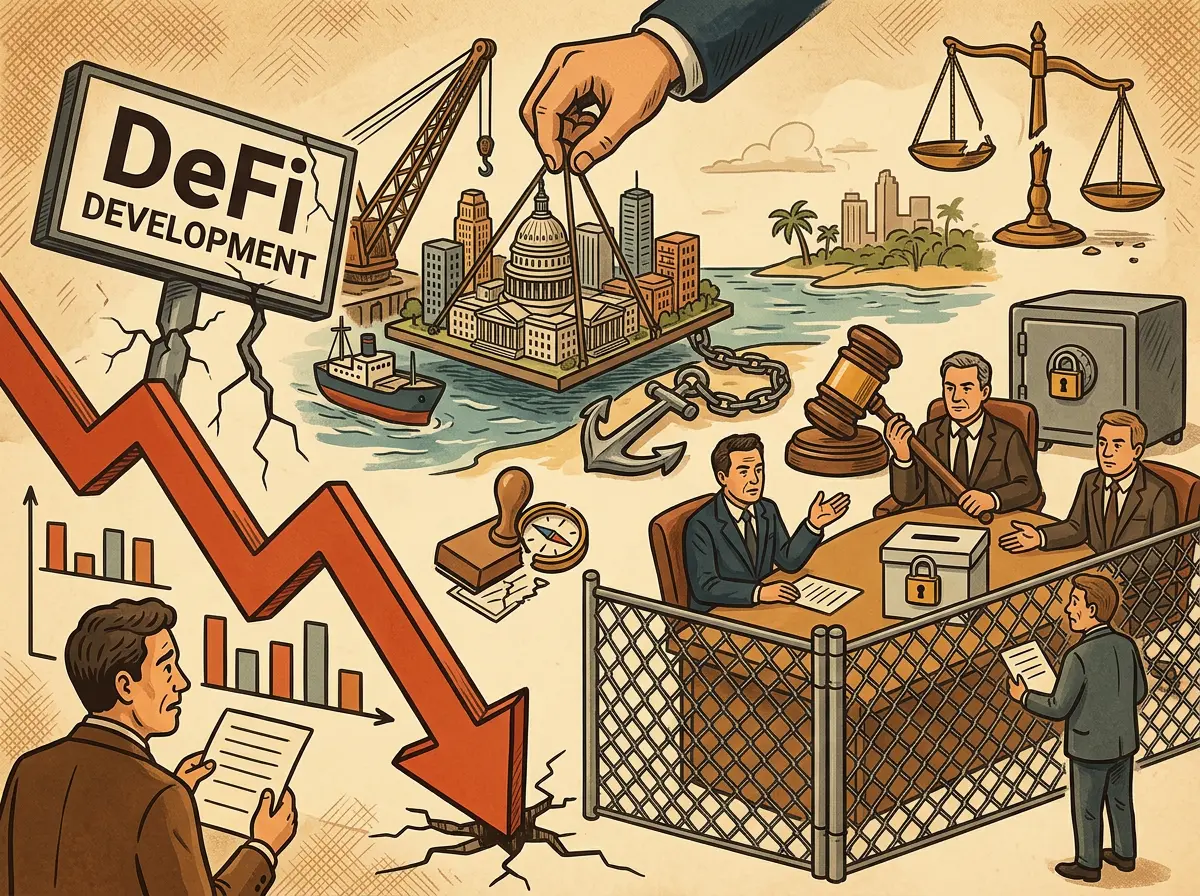
DeFi Development Corp, the first Solana finance company listed on the US Nasdaq, filed documents with the SEC on May 26 confirming that the company has moved its registration from Delaware to Nevada. The board approved the re-registration on May 21, with a resolution passed by management holding 81.94% of voting power. Common shareholders learned about the change only through SEC filings and do not need to vote or provide consent.
Super-voting structure: Shares and voting ratios confirmed in the SEC filing
According to the SEC filing, DFDV currently has 30,118,205 shares of common stock, with one vote per share; in addition, there are 10,000 shares of Series A preferred stock, all held by management and its affiliated entities, with 10,000 votes per share. This structure gives Chairman and CEO Joseph Onorati control of 36.46% of total voting power; the 10 executives and directors combined control 81.94% of total voting power. Because management’s share of voting rights exceeds two-thirds, even all remaining common shareholders acting together cannot, mathematically, reach the removal threshold for directors specified in the new bylaws.
Specific bylaw changes in the new Nevada articles
The new Nevada bylaws raise the threshold for removing directors without cause from the simple majority allowed under Delaware to two-thirds of total voting power. Delaware’s written-consent framework allows a majority of shareholders to approve resolutions without holding a shareholder meeting; under the new Nevada setup, common stock minority shareholders, in any case, cannot independently reach the two-thirds threshold to remove incumbent directors.
Official explanation in the company’s SEC filing
The re-registration reasons listed by DFDV in the SEC filing include: Delaware’s “increasingly active litigation environment, where well-funded plaintiff law firms are bringing opportunistic lawsuits against the company and its directors and officers more frequently”; Nevada taxes are lower than Delaware’s; and Nevada law allows “our directors and senior officers to better focus on their work, free from unnecessary scrutiny.” The filing also states that the change “is not intended to respond to any attempt currently being made to obtain control of the company,” and “is not intended to prevent the company from selling.”
FAQ
Who formed DFDV and when, and why did the share price fall sharply?
In the spring of 2025, a group of former Kraken executives led by Joseph Onorati acquired an established real-estate financial technology company and transformed it into a Solana asset accumulation company (DeFi Development Corp). The company’s share price once broke above $53 per share, with a 52-week high of $38.21 (recorded on May 27, 2025); as of the close on May 26, 2026, it has fallen to $3.94 per share.
How does Delaware corporate law allow this re-registration to be completed without holding a shareholder meeting?
Delaware corporate law allows a majority of shareholders to approve corporate actions in writing without holding a shareholder meeting. Because management holds 81.94% of the voting power, DFDV completed the re-registration through management’s written consent, and minority common shareholders’ participation is not necessary under the legal process.
Which other companies have also re-registered from Delaware, and what is the “Dexit” trend?
Protos reported that TripAdvisor, Dropbox, and Tesla are precedents for re-registering from Delaware—i.e., the so-called “Dexit,” meaning “leaving Delaware.” DFDV’s move has drawn particular attention because it occurred after a sharp drop in the share price and came alongside bylaw amendments.


