The British pound gained significantly against most major currencies following political and economic developments on Wednesday 15 July and Thursday 16 July. Current Home Secretary Shabana Mahmood emerged as the frontrunner for next Chancellor under Andy Burnham's government-in-waiting, while monthly GDP for May returned to 0.1% growth after April's decline. The positive sentiment stemmed from expectations that Burnham's government would promote continuity rather than a sudden leftward shift. British inflation appears likely to have slowed in June, with early estimates suggesting the annual headline rate could have declined to as low as 2.4%, which reduces immediate pressure on the Bank of England to tighten monetary policy despite the current bank rate of 3.75%.
Shabana Mahmood Emerges as Frontrunner for Chancellor
A credible report on Wednesday 15 July identified Shabana Mahmood as the likely choice for Chancellor under Andy Burnham. Previous expectations that Ed Miliband, nicknamed 'Red Ed', might take the job were negative for sentiment on the pound. Media reports in recent days concentrated on the likelihood of Burnham's government to stress continuity with Keir Starmer's rather than a clear, sudden shift leftward.
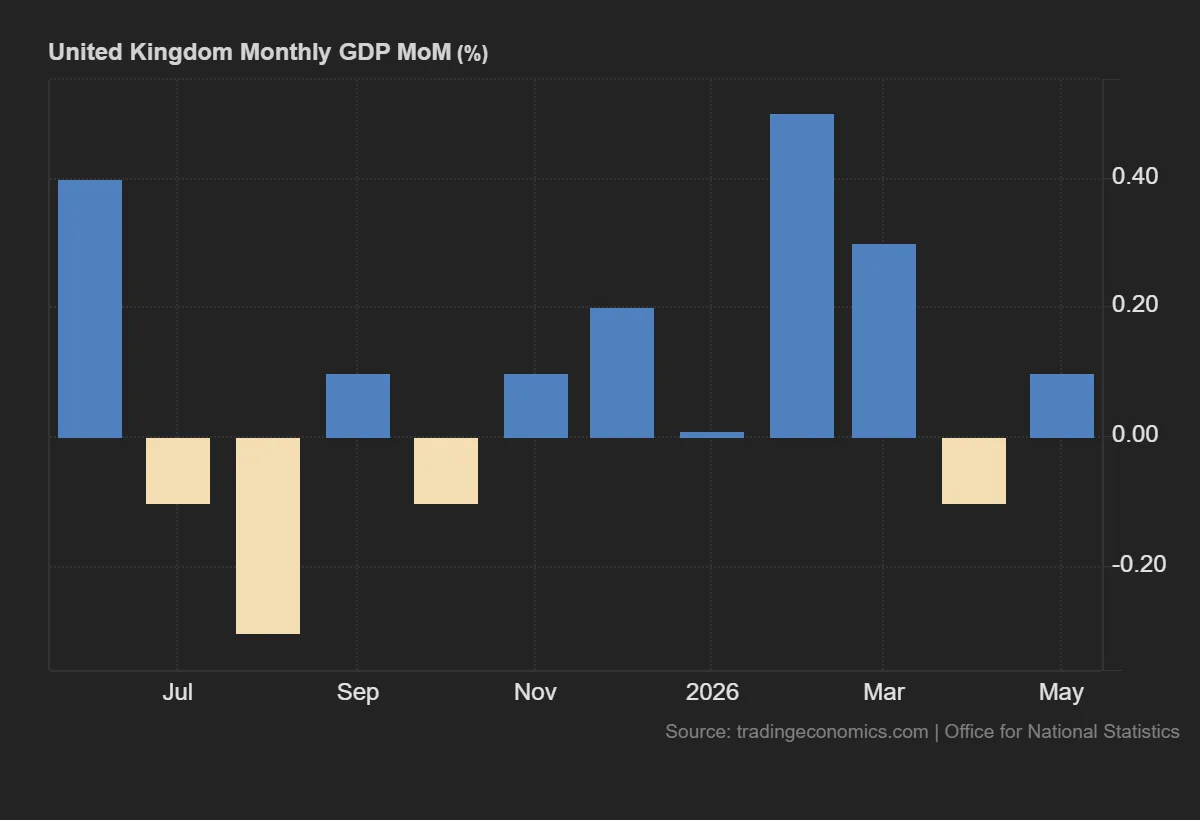
British GDP Returns to Growth in May
Monthly British GDP for May was announced on Thursday 16 July, showing 0.1% growth. This represented a recovery from April's decline. Final British GDP for the first quarter as announced on 30 June met the consensus at 0.6%.
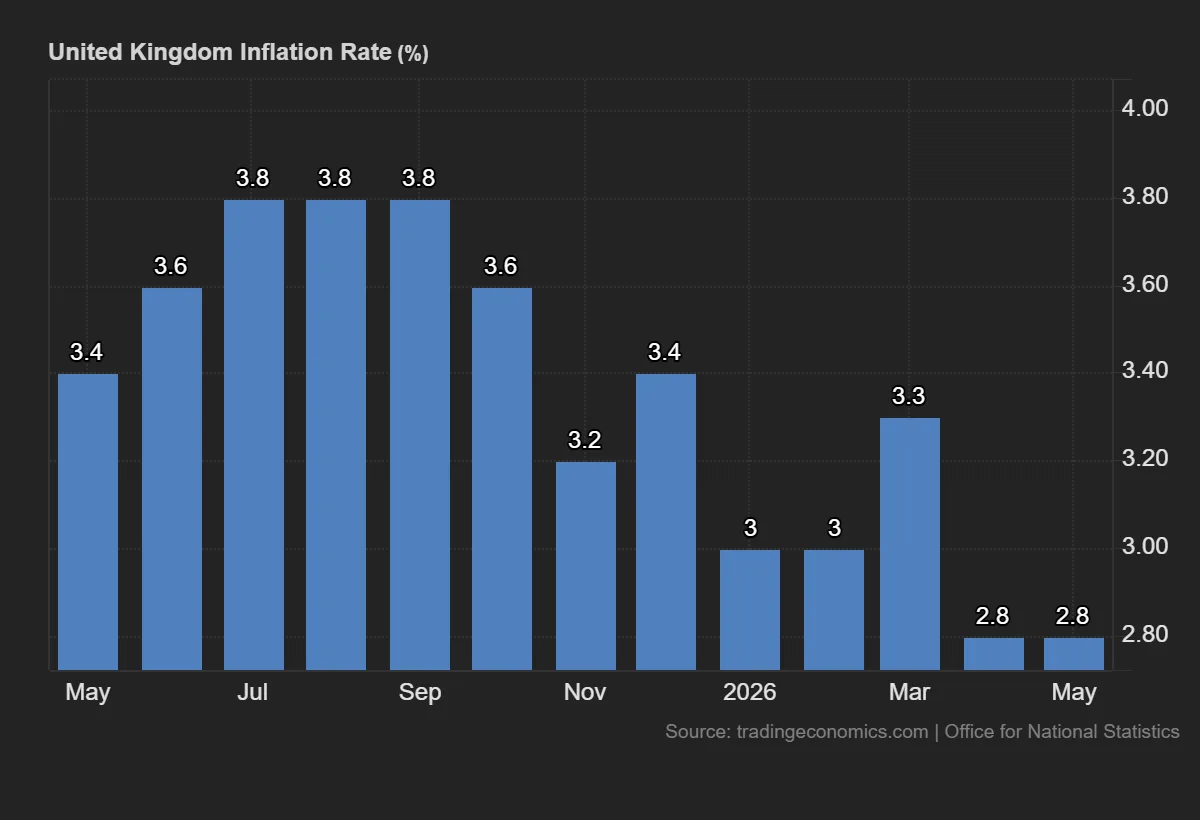
British Inflation Declines Contrary to Expectations
Rather than rising as expected in the early stages of the current Gulf conflict, British annual headline inflation declined. Early estimates suggest that the rate could have continued to go down last month, possibly as low as 2.4%. The upcoming inflation release is scheduled for Wednesday 22 July.
Bank of England Policy Outlook
The current bank rate is 3.75%, significantly higher than annual headline inflation. At its last meeting, only two members of the Monetary Policy Committee voted for a hike. A hike by the BoE seems fairly likely in November.
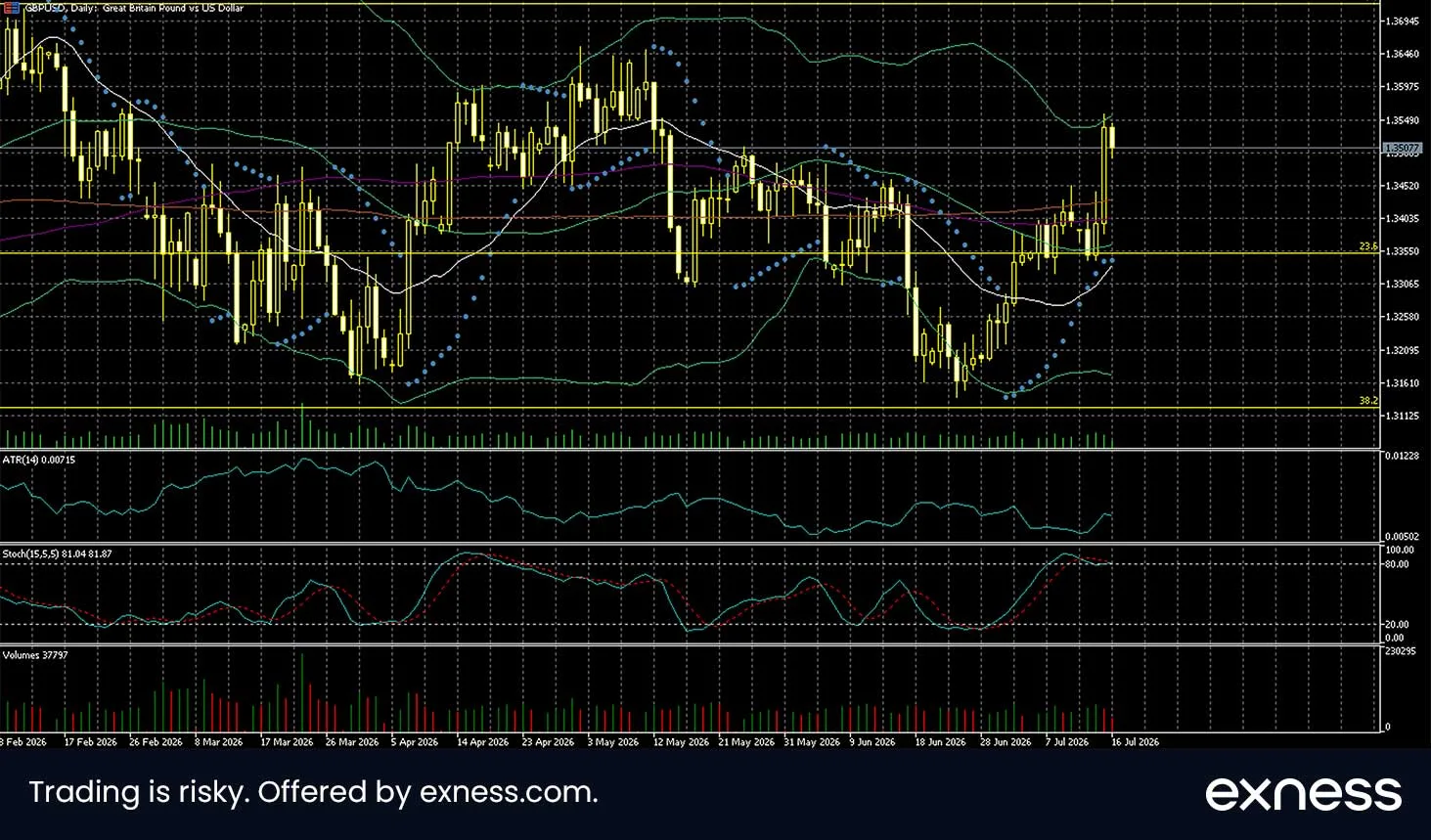
GBPUSD Reaches Two-Month Highs
Efforts by likely incoming Prime Minister Andy Burnham to stress continuity and involve figures on the right of the Labour party in the change of government were received positively by participants in financial markets. The 15 July large up candle represented cable's strongest daily gain since April, pushing clearly above all the moving averages. The price has now retraced and might consolidate around $1.35. The area slightly above $1.36 is a possible resistance.
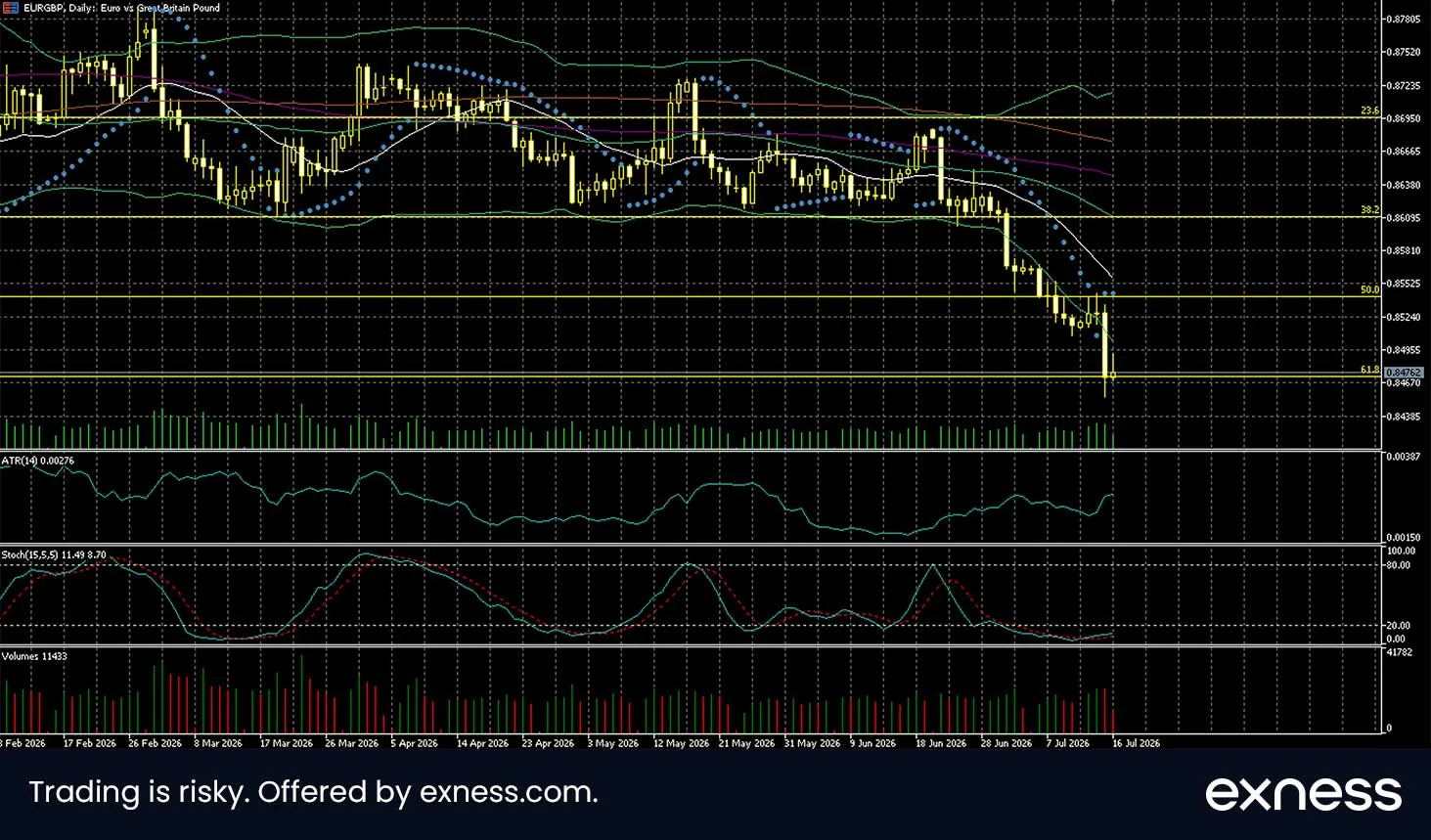
Euro-Pound Reaches Fresh Annual Lows
The pound made strong gains on 15 July against most major currencies including the euro. The ECB seems to be broadly more hawkish than the BoE with a hike by the former likely in September. The difference in rates remains 1.25% in favour of the pound. The 61.8% weekly Fibonacci retracement is a possible support. The 50% Fibo around 85.4p is a possible resistance.
Upcoming Economic Releases Week of 20 July
The week beginning on 20 July is likely to be active for the pound. The job report is scheduled for 21 July, inflation for 22 July, and retail sales will be released during the week. The ECB's press conference is scheduled for 23 July.
FAQ
What caused the British pound to gain on 15 July?
The pound gained significantly on Wednesday 15 July following a credible report that Shabana Mahmood emerged as the frontrunner for next Chancellor under Andy Burnham's government-in-waiting. This was positive for sentiment as it indicated continuity rather than a sudden leftward shift.
What did the May GDP data show for Britain?
Monthly British GDP for May, released on Thursday 16 July, showed 0.1% growth, representing a recovery from April's decline. Final British GDP for the first quarter as announced on 30 June met the consensus at 0.6%.
What is the current Bank of England bank rate?
The current Bank of England bank rate is 3.75%, which is significantly higher than annual headline inflation. At its last meeting, only two members of the Monetary Policy Committee voted for a hike.


