
# ETHPlunges5PercentBelow1800

116.85M

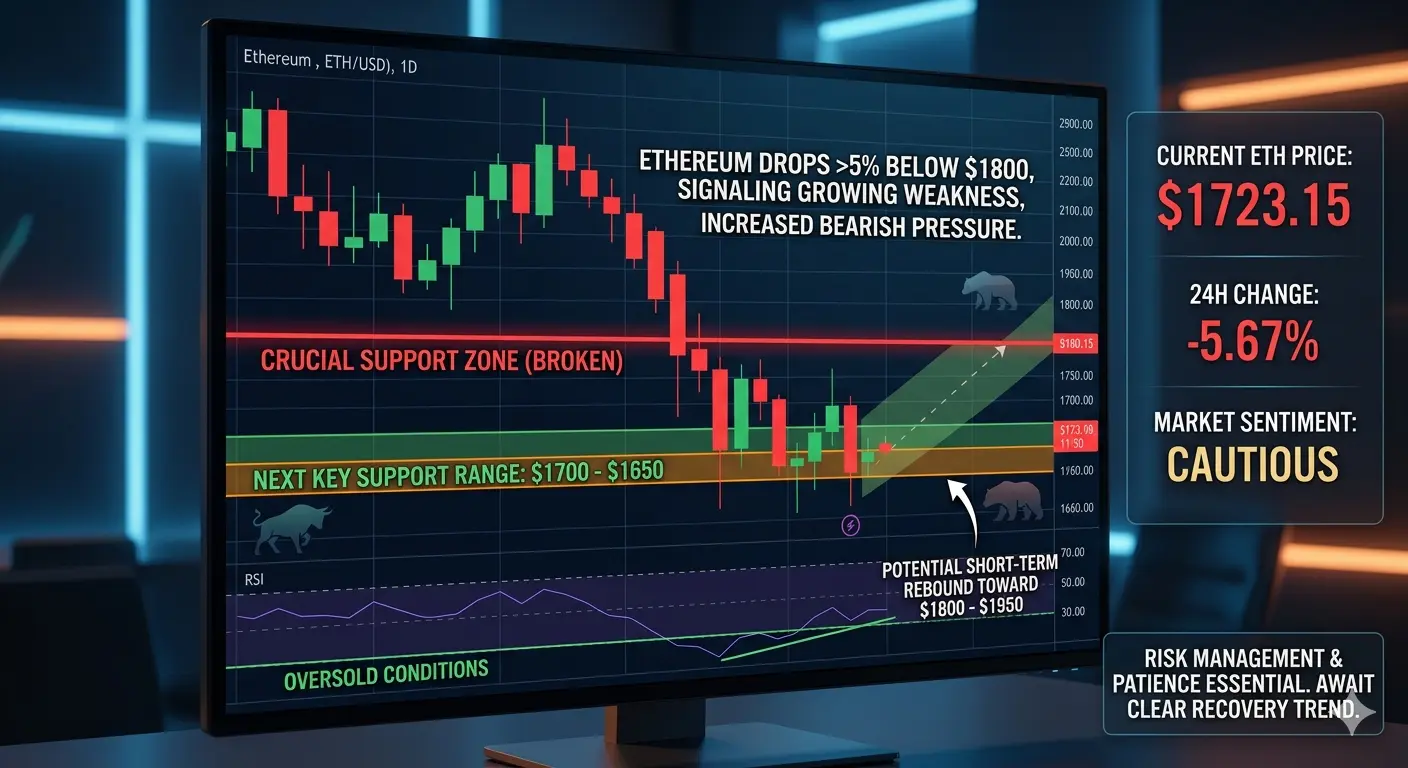
On June 4, Ethereum extended its losses, dropping 5.58 percent in 24 hours and breaking below the 1,800 US dollar level, hitting a low near 1,734 US dollars, a three-week low. Bitcoin also came under pressure, falling below 63,000 US dollars to a low of 62,839 US dollars, down about 5.9 percent in 24 hours. Total liquidations exceeded 1.1 billion US dollars in the past 24 hours, with over 160,000 traders forced out, and long positions accounting for 85 percent of liquidations. Multiple headwinds are converging. Fed rate cut expectations have all but disappeared, with CME data showing a 58 percent probability of a rate hike by year-end. Renewed US-Iran tensions have pushed oil prices higher, driving the 10-year Treasury yield to 4.69 %. Bitcoin spot ETFs saw a single-day net outflow of 519 million US dollars, a clear signal of institutional de-risking. Strategy sold Bitcoin for the first time in nearly four years, delivering a symbolic shock to market sentiment. The largest ETH long position on Hyperliquid, built at an average price of 2,261 US dollars for 120,000 ETH, has now expanded its unrealized loss to approximately 58 million US dollars. The address has added 11 million USDC in margin to lower its liquidation price to 1,506 US dollars. Key support for ETH is seen in the 1,700-1,720 US dollar area. A break below could lead to a test of previous lows. For Bitcoin, the key support level to watch is 63,000 US dollars.

#ETHPlunges5PercentBelow1800
Ethereum, the second largest cryptocurrency by market capitalization, has suffered a sharp decline of 5 percent, breaking below the psychologically critical 1800 dollar support level. This dramatic drop has sent shockwaves across the crypto market, triggering liquidations, panic selling, and a wave of uncertainty among traders and investors alike. In this detailed discussion, we will examine the root causes behind this plunge, analyze the current price action, provide forecasts for where ETH might head next, and outline a clear trading strategy with actionable ste
post-image
post-image
  • Reward
  • 6
  • Repost
  • Share
BeautifulDay:
To The Moon 🌕
View More
#Gate广场五月交易分享 My Trading Strategy, Experience & Market Perspective
Trading in the crypto market has taught me one thing very clearly: success is not about catching every opportunity, it is about choosing the right opportunities. In the beginning, like many traders, I used to think that more trades meant more profit. But with experience, I learned that overtrading creates more mistakes, more emotional decisions, and unnecessary losses. Now my strategy is built on patience, discipline, and calculated execution. I focus on protecting capital first because capital is the foundation of every future
BTC-3.17%
ETH-2.1%
GT-0.89%
post-image
  • Reward
  • 9
  • Repost
  • Share
wahebsharaf:
› We have entered the morning, and the kingdom belongs to Allah from then on: “O Lord, let whoever has great ambitions be granted the world’s service, and let his ambitions be fulfilled.”
O God, I am nothing but a small being on this earth; his loss does not split the world, and his sorrows do not shame the sun—but only You, my Lord, know how life is gathered and contained within his heart.
View More
#ETHMemeCoinFLORKSurges
🚀 ETH Meme Sector Update: “FLORK” Surge Highlights Speculative Liquidity Rotation in Crypto Markets
The recent surge in ETH-linked meme assets, led by tokens like FLORK, is not just another hype cycle. It reflects a deeper and more structural behavior in crypto markets: liquidity rotation during uncertainty phases in major assets like Ethereum.
When traders see sudden explosive moves in meme coins, they often assume “new money is entering.” In reality, most of these moves are internal capital rotation—money shifting within the ecosystem rather than fresh inflows.
This
ETH-2.1%
BTC-3.17%
Yusfirah
#ETHMemeCoinFLORKSurges
🚀 ETH Meme Sector Update: “FLORK” Surge Highlights Speculative Liquidity Rotation in Crypto Markets
The recent surge in ETH-linked meme assets, led by tokens like FLORK, is not just another hype cycle. It reflects a deeper and more structural behavior in crypto markets: liquidity rotation during uncertainty phases in major assets like Ethereum.
When traders see sudden explosive moves in meme coins, they often assume “new money is entering.” In reality, most of these moves are internal capital rotation—money shifting within the ecosystem rather than fresh inflows.
This distinction matters because it determines whether a rally is sustainable or fragile.
📊 1. What the FLORK surge actually signals
The sharp upside movement in FLORK-style meme tokens is usually driven by:
Low-liquidity amplification (small capital moves large price)
Short-term speculative positioning
Social momentum cycles (not fundamentals)
Derivatives spillover from ETH volatility
Retail chasing breakout candles
But the key insight is this:
Meme coin surges often increase when major assets like Ethereum enter consolidation or uncertainty phases.
When ETH slows down or becomes range-bound, traders search for higher volatility elsewhere. Meme coins become that outlet.
⚠️ 2. Why these surges are misleading for most traders
The biggest mistake retail traders make is interpreting meme rallies as “bull market confirmation.”
In reality, these moves often indicate:
Capital fragmentation
Risk appetite shifting into lower-quality assets
Short-term leverage buildup
Exit liquidity formation for early entrants
This creates a dangerous illusion:
“Everything is pumping, so the market is strong.”
But structurally, it may actually be the opposite—capital is rotating away from high-conviction assets into speculative noise.
🧠 3. Ethereum’s role in this cycle
Ethereum is not just another token—it is the liquidity backbone of the altcoin ecosystem.
When ETH experiences:
sideways movement
reduced volatility
unclear trend structure
Then capital naturally spills into meme sectors.
Why?
Because traders still want movement. If ETH is not moving, they go hunting for volatility.
This is why meme coins often outperform during ETH consolidation phases—but that outperformance is usually short-lived and unstable.
📉 4. The hidden risk behind meme surges
The FLORK-type moves come with structural risks that are often ignored:
1. Liquidity risk
Most meme tokens have thin order books. Large holders can move price dramatically in both directions.
2. Exit liquidity trap
Early buyers distribute into late FOMO buyers. When momentum slows, price collapses quickly.
3. Correlation snap-back
When ETH volatility returns, meme coins typically underperform sharply.
4. Sentiment overextension
Social hype peaks before price peaks—never after.
📊 5. Market psychology behind the surge
The psychology cycle usually follows this pattern:
ETH stabilizes → traders get bored
Meme coin starts moving → attention shifts
Social media amplifies gains
Retail FOMO accelerates entries
Early holders distribute positions
Sharp reversal begins
This cycle repeats constantly across crypto cycles because human behavior does not change.
🧭 6. What smart traders are watching instead
Professionals are not chasing FLORK-style moves blindly. They are tracking:
ETH volatility expansion signals
Funding rate imbalance across meme tokens
Volume sustainability after breakout
BTC dominance shifts (macro liquidity signal)
On-chain flow consistency (not spikes)
Because the real question is not:
“Which meme coin is pumping?”
It is:
“Is this liquidity expansion sustainable or just rotation?”
🧩 7. Strategic interpretation (not hype-driven thinking)
From a disciplined trading perspective, the FLORK surge suggests:
Short-term speculative phase is active
Risk appetite is temporarily elevated
ETH is not currently driving directional momentum
Market is rotating rather than expanding
This is important because rotation phases often end with:
sharp rebalancing
liquidity resets
sudden drawdowns in low-cap assets
🧱 8. Risk framework for traders
If you are participating in this type of market:
Avoid chasing vertical candles
Reduce exposure size in low-liquidity tokens
Treat meme rallies as timed trades, not investments
Always assume distribution is happening during parabolic moves
Respect ETH and BTC structure before alt exposure
Most losses in this phase come from ignoring liquidity mechanics, not wrong predictions.
🧭 Final perspective
The FLORK surge is not a standalone event—it is a symptom of broader market rotation behavior inside the Ethereum ecosystem.
When Ethereum is stable but not trending, capital doesn’t disappear—it moves sideways into higher-risk narratives.
That movement creates opportunity, but also traps.
Dragon Fly Official view: In these conditions, survival is not about catching every pump—it’s about avoiding the collapse that follows overextended rotation cycles.
⚠️ Risk Warning
Meme coin markets are highly speculative and extremely volatile. Prices can reverse sharply without warning due to low liquidity and concentrated holdings. Never use high leverage in these conditions. Most losses occur during late-stage entry, not early-stage opportunity.

  • Reward
  • 11
  • Repost
  • Share
Luna_Star:
2026 GOGOGO 👊
View More
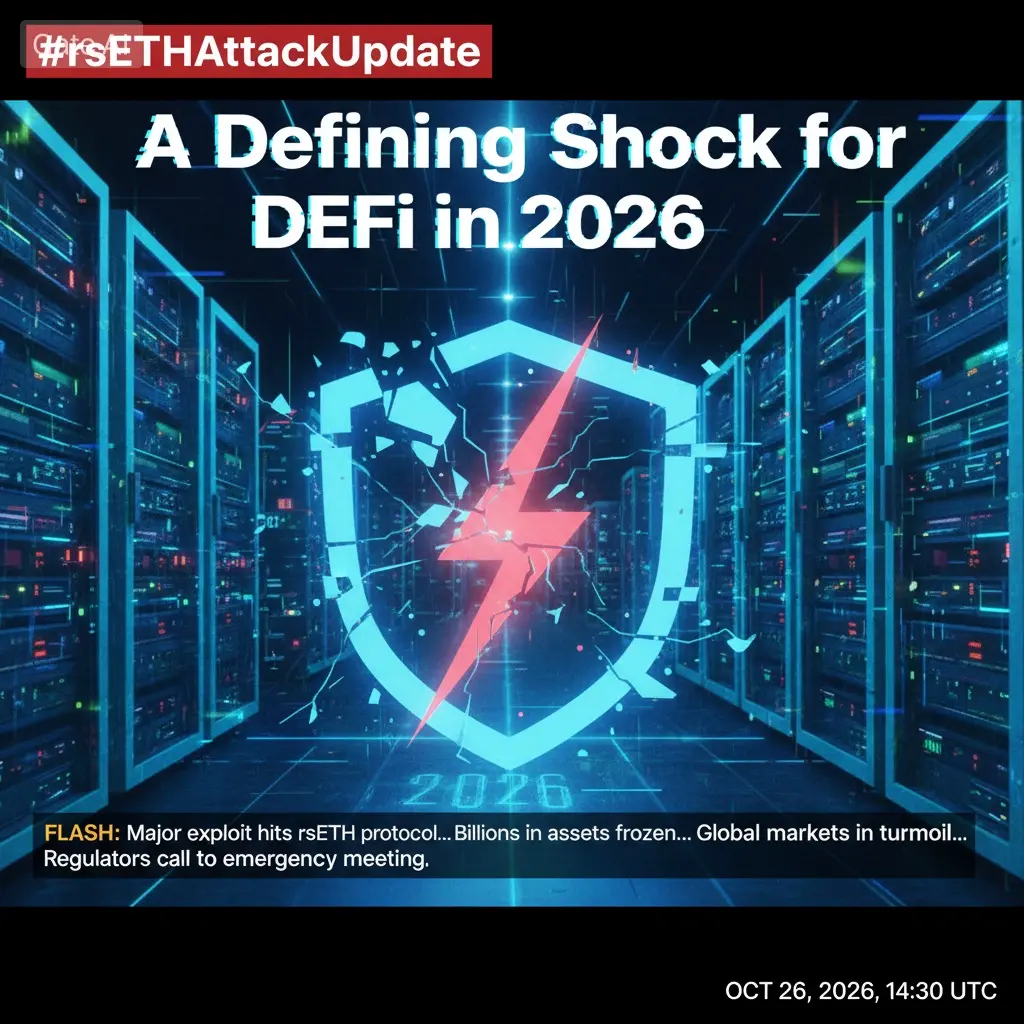
#rsETHAttackUpdate
A Defining Shock for DeFi in 2026
The rsETH exploit on April 18, 2026, didn’t just hit one protocol—it exposed a critical structural weakness across the entire decentralized finance ecosystem. What initially appeared to be an isolated bridge issue quickly evolved into a systemic liquidity crisis affecting lending markets, restaking protocols, and cross-chain infrastructure.
At the center of this crisis was Kelp DAO, which suffered a devastating loss of approximately $292 million, making it the largest DeFi exploit of 2026 so far. The attackers drained 116,500 rsETH tokens,
ETH-2.1%
ZRO5.22%
AAVE-2.02%
HighAmbition
#rsETHAttackUpdate
A Defining Shock for DeFi in 2026
The rsETH exploit on April 18, 2026, didn’t just hit one protocol—it exposed a critical structural weakness across the entire decentralized finance ecosystem. What initially appeared to be an isolated bridge issue quickly evolved into a systemic liquidity crisis affecting lending markets, restaking protocols, and cross-chain infrastructure.
At the center of this crisis was Kelp DAO, which suffered a devastating loss of approximately $292 million, making it the largest DeFi exploit of 2026 so far. The attackers drained 116,500 rsETH tokens, representing nearly 18% of the total circulating supply, immediately destabilizing confidence in liquid restaking assets.
Root Cause: Not a Smart Contract Bug, But Infrastructure Failure
Unlike many previous exploits, this attack did not originate from a flaw in smart contracts or lending logic. Instead, it targeted a weaker layer—cross-chain communication infrastructure powered by LayerZero Version 2.
The most critical vulnerability was the 1-of-1 verifier setup, meaning only a single validator was responsible for confirming cross-chain messages. This created a dangerous single point of failure in an otherwise decentralized system.
Step-by-Step Attack Breakdown
The attack was highly coordinated and executed with precision:
Attack initiated at Ethereum block 24,908,285
Target: Bridge route between Unichain and Ethereum
Attackers compromised two RPC nodes
Malicious software replaced legitimate node infrastructure
Simultaneous denial-of-service attacks disabled clean nodes
System was forced to rely on compromised data feeds
This allowed attackers to forge a fake cross-chain message, tricking the bridge into releasing real assets on Ethereum without any backing.
The result:
➡️ 116,500 rsETH minted out of thin air
➡️ Sent directly to attacker-controlled wallets
➡️ Logs erased, malware self-deleted
This wasn’t just hacking—it was infrastructure manipulation at a deep level.
Exploitation Phase: Turning Fake Assets Into Real Liquidity
Once the attackers had unbacked rsETH, they moved rapidly to extract value.
They deposited around 89,567 rsETH into lending protocols like Aave V3, primarily on Ethereum and Arbitrum.
From there, they borrowed:
~82,650 WETH
Additional wstETH positions
Total borrowed value: ~$236 million
These positions were engineered with extremely tight health factors (1.01–1.03), making liquidation difficult and prolonging systemic stress.
Immediate Market Reaction: Liquidity Crisis Unfolds
Although Aave was not directly hacked, it became the primary shock absorber.
Key Impacts:
100% utilization reached in multiple WETH pools
Borrow rates adjusted downward to stabilize liquidity
rsETH collateral frozen across 11 deployments
Loan-to-value (LTV) ratios set to zero
This triggered a cascade:
Massive withdrawals across DeFi
Total Value Locked (TVL) dropped $5B–$10B+
“Bank-run” behavior spread across protocols
A notable withdrawal of ~$154 million, reportedly linked to Justin Sun, intensified panic sentiment.
Price Impact Across the Market
Ethereum (ETH)
Dropped 2%–3.7%
Traded near $2,300–$2,380
Decline driven by sentiment and liquidity stress—not protocol failure
Bitcoin (BTC)
Held relatively stable around $78,980
Acted as a risk-off safe haven within crypto
AAVE Token
Fell 16%–20%
Traded between $95–$105
Reflected direct exposure to lending ecosystem risk
Bad Debt Scenarios: Systemic Risk Quantified
Analysts modeled multiple outcomes:
Scenario 1: Distributed Loss Model
Bad debt: ~$123.7 million
Implies ~15% depeg in rsETH
Scenario 2: Isolated L2 Loss Model
Bad debt: ~$230 million
Severe impact on:
Arbitrum: up to 27% shortfall
Base: ~23%
Mantle: extreme cases up to 71%
Aave-specific exposure
Estimated between $177M–$200M
Rapid Response: DeFi Coordination in Action
Despite the scale of the attack, response speed was critical.
Kelp DAO Actions
Emergency pause activated within 46 minutes
Prevented additional $95M–$100M loss
Halted minting and bridging
Recovery Efforts – “DeFi United”
Industry-wide collaboration to restore backing
Key contributions:
Arbitrum recovered 30,000+ ETH
Mantle proposed 30,000 ETH credit facility
Aave DAO considered 25,000 ETH support
Contributions from Lido, EtherFi, Golem Foundation
Total pledged: ➡️ 43,500+ ETH (~$100M+)
Security Attribution and Investigation
Lazarus Group was identified with high confidence as the attacker.
This aligns with previous high-profile crypto exploits, reinforcing a growing trend:
➡️ Nation-state actors targeting DeFi infrastructure
➡️ Focus shifting from smart contracts to off-chain systems
Key Lessons for DeFi and Cross-Chain Systems
This exploit revealed several critical weaknesses:
1. Single Verifier = Systemic Risk
Decentralization must extend beyond smart contracts into validation layers.
2. RPC Node Security is Critical
Attackers didn’t break code—they corrupted data sources.
3. Cross-Chain Complexity Multiplies Risk
Operating across 20+ chains introduces exponential attack surfaces.
4. Liquidity Layer is Fragile
Even safe protocols like Aave can face stress under extreme conditions.
Market Psychology: Fear, Liquidity, and Trust
The exploit triggered three key psychological phases:
Shock Phase – Immediate panic and withdrawals
Liquidity Crunch – Borrowing pressure and frozen markets
Stabilization – Governance actions and recovery pledges
Interestingly, no widespread retail wallet losses occurred. The damage was protocol-level, not user-level—an important distinction that helped prevent deeper panic.
Current Status (Late April 2026)
Gradual unfreezing of assets underway
Governance votes determining final loss distribution
rsETH partially stabilized but still under scrutiny
Security upgrades being implemented across bridges
Forward Outlook: What Comes Next?
Short-Term
Continued volatility in ETH-linked assets
Tight liquidity conditions persist
DeFi TVL recovery will be gradual
Mid-Term
Mandatory multi-verifier bridge standards
Increased audits of infrastructure layers
Higher risk premiums on restaking assets
Long-Term
Stronger, more resilient cross-chain systems
Institutional confidence returns with safeguards
DeFi evolves toward security-first architecture
Final Takeaway
The rsETH exploit was not just another hack—it was a stress test for the entire DeFi ecosystem.
Despite:
$292M drained
$200M+ bad debt risk
Billions in liquidity shifts
The system did not collapse.
Instead, it coordinated, adapted, and began recovery.
That’s the real story here:
➡️ DeFi is fragile—but resilient
➡️ Interconnected—but responsive
➡️ Risky—but evolving fast
repost-content-media
  • Reward
  • 1
  • Repost
  • Share
Dubai_Prince:
To The Moon 🌕
#rsETHAttackUpdate
A Defining Shock for DeFi in 2026
The rsETH exploit on April 18, 2026, didn’t just hit one protocol—it exposed a critical structural weakness across the entire decentralized finance ecosystem. What initially appeared to be an isolated bridge issue quickly evolved into a systemic liquidity crisis affecting lending markets, restaking protocols, and cross-chain infrastructure.
At the center of this crisis was Kelp DAO, which suffered a devastating loss of approximately $292 million, making it the largest DeFi exploit of 2026 so far. The attackers drained 116,500 rsETH tokens,
ETH-2.1%
BTC-3.17%
AAVE-2.02%
HighAmbition
#rsETHAttackUpdate
A Defining Shock for DeFi in 2026
The rsETH exploit on April 18, 2026, didn’t just hit one protocol—it exposed a critical structural weakness across the entire decentralized finance ecosystem. What initially appeared to be an isolated bridge issue quickly evolved into a systemic liquidity crisis affecting lending markets, restaking protocols, and cross-chain infrastructure.
At the center of this crisis was Kelp DAO, which suffered a devastating loss of approximately $292 million, making it the largest DeFi exploit of 2026 so far. The attackers drained 116,500 rsETH tokens, representing nearly 18% of the total circulating supply, immediately destabilizing confidence in liquid restaking assets.
Root Cause: Not a Smart Contract Bug, But Infrastructure Failure
Unlike many previous exploits, this attack did not originate from a flaw in smart contracts or lending logic. Instead, it targeted a weaker layer—cross-chain communication infrastructure powered by LayerZero Version 2.
The most critical vulnerability was the 1-of-1 verifier setup, meaning only a single validator was responsible for confirming cross-chain messages. This created a dangerous single point of failure in an otherwise decentralized system.
Step-by-Step Attack Breakdown
The attack was highly coordinated and executed with precision:
Attack initiated at Ethereum block 24,908,285
Target: Bridge route between Unichain and Ethereum
Attackers compromised two RPC nodes
Malicious software replaced legitimate node infrastructure
Simultaneous denial-of-service attacks disabled clean nodes
System was forced to rely on compromised data feeds
This allowed attackers to forge a fake cross-chain message, tricking the bridge into releasing real assets on Ethereum without any backing.
The result:
➡️ 116,500 rsETH minted out of thin air
➡️ Sent directly to attacker-controlled wallets
➡️ Logs erased, malware self-deleted
This wasn’t just hacking—it was infrastructure manipulation at a deep level.
Exploitation Phase: Turning Fake Assets Into Real Liquidity
Once the attackers had unbacked rsETH, they moved rapidly to extract value.
They deposited around 89,567 rsETH into lending protocols like Aave V3, primarily on Ethereum and Arbitrum.
From there, they borrowed:
~82,650 WETH
Additional wstETH positions
Total borrowed value: ~$236 million
These positions were engineered with extremely tight health factors (1.01–1.03), making liquidation difficult and prolonging systemic stress.
Immediate Market Reaction: Liquidity Crisis Unfolds
Although Aave was not directly hacked, it became the primary shock absorber.
Key Impacts:
100% utilization reached in multiple WETH pools
Borrow rates adjusted downward to stabilize liquidity
rsETH collateral frozen across 11 deployments
Loan-to-value (LTV) ratios set to zero
This triggered a cascade:
Massive withdrawals across DeFi
Total Value Locked (TVL) dropped $5B–$10B+
“Bank-run” behavior spread across protocols
A notable withdrawal of ~$154 million, reportedly linked to Justin Sun, intensified panic sentiment.
Price Impact Across the Market
Ethereum (ETH)
Dropped 2%–3.7%
Traded near $2,300–$2,380
Decline driven by sentiment and liquidity stress—not protocol failure
Bitcoin (BTC)
Held relatively stable around $78,980
Acted as a risk-off safe haven within crypto
AAVE Token
Fell 16%–20%
Traded between $95–$105
Reflected direct exposure to lending ecosystem risk
Bad Debt Scenarios: Systemic Risk Quantified
Analysts modeled multiple outcomes:
Scenario 1: Distributed Loss Model
Bad debt: ~$123.7 million
Implies ~15% depeg in rsETH
Scenario 2: Isolated L2 Loss Model
Bad debt: ~$230 million
Severe impact on:
Arbitrum: up to 27% shortfall
Base: ~23%
Mantle: extreme cases up to 71%
Aave-specific exposure
Estimated between $177M–$200M
Rapid Response: DeFi Coordination in Action
Despite the scale of the attack, response speed was critical.
Kelp DAO Actions
Emergency pause activated within 46 minutes
Prevented additional $95M–$100M loss
Halted minting and bridging
Recovery Efforts – “DeFi United”
Industry-wide collaboration to restore backing
Key contributions:
Arbitrum recovered 30,000+ ETH
Mantle proposed 30,000 ETH credit facility
Aave DAO considered 25,000 ETH support
Contributions from Lido, EtherFi, Golem Foundation
Total pledged: ➡️ 43,500+ ETH (~$100M+)
Security Attribution and Investigation
Lazarus Group was identified with high confidence as the attacker.
This aligns with previous high-profile crypto exploits, reinforcing a growing trend:
➡️ Nation-state actors targeting DeFi infrastructure
➡️ Focus shifting from smart contracts to off-chain systems
Key Lessons for DeFi and Cross-Chain Systems
This exploit revealed several critical weaknesses:
1. Single Verifier = Systemic Risk
Decentralization must extend beyond smart contracts into validation layers.
2. RPC Node Security is Critical
Attackers didn’t break code—they corrupted data sources.
3. Cross-Chain Complexity Multiplies Risk
Operating across 20+ chains introduces exponential attack surfaces.
4. Liquidity Layer is Fragile
Even safe protocols like Aave can face stress under extreme conditions.
Market Psychology: Fear, Liquidity, and Trust
The exploit triggered three key psychological phases:
Shock Phase – Immediate panic and withdrawals
Liquidity Crunch – Borrowing pressure and frozen markets
Stabilization – Governance actions and recovery pledges
Interestingly, no widespread retail wallet losses occurred. The damage was protocol-level, not user-level—an important distinction that helped prevent deeper panic.
Current Status (Late April 2026)
Gradual unfreezing of assets underway
Governance votes determining final loss distribution
rsETH partially stabilized but still under scrutiny
Security upgrades being implemented across bridges
Forward Outlook: What Comes Next?
Short-Term
Continued volatility in ETH-linked assets
Tight liquidity conditions persist
DeFi TVL recovery will be gradual
Mid-Term
Mandatory multi-verifier bridge standards
Increased audits of infrastructure layers
Higher risk premiums on restaking assets
Long-Term
Stronger, more resilient cross-chain systems
Institutional confidence returns with safeguards
DeFi evolves toward security-first architecture
Final Takeaway
The rsETH exploit was not just another hack—it was a stress test for the entire DeFi ecosystem.
Despite:
$292M drained
$200M+ bad debt risk
Billions in liquidity shifts
The system did not collapse.
Instead, it coordinated, adapted, and began recovery.
That’s the real story here:
➡️ DeFi is fragile—but resilient
➡️ Interconnected—but responsive
➡️ Risky—but evolving fast
repost-content-media
  • Reward
  • Comment
  • Repost
  • Share
#CrudeOilPriceRose #EthereumFoundationUnstakes$48.9METH 🔥 #rsETHAttackUpdate – The DeFi Stress Test That Changed Everything (April 2026) 🔥
The rsETH exploit was not just another hack — it was a full-scale stress test of decentralized finance, exposing weaknesses far beyond a single protocol and shaking confidence across cross-chain infrastructure, restaking systems, and lending markets. What started as a technical breach quickly escalated into a system-wide liquidity shock.
---
⚠️ What Actually Happened?
At the center of the crisis was Kelp DAO, which suffered a massive ~$292M loss after att
ETH-2.1%
AAVE-2.02%
ZRO5.22%
AYATTAC
#EthereumFoundationUnstakes$48.9METH 🔥 #rsETHAttackUpdate – The DeFi Stress Test That Changed Everything (April 2026) 🔥
The rsETH exploit was not just another hack — it was a full-scale stress test of decentralized finance, exposing weaknesses far beyond a single protocol and shaking confidence across cross-chain infrastructure, restaking systems, and lending markets. What started as a technical breach quickly escalated into a system-wide liquidity shock.
---
⚠️ What Actually Happened?
At the center of the crisis was Kelp DAO, which suffered a massive ~$292M loss after attackers drained 116,500 rsETH (≈18% of supply). But the real danger wasn’t the size — it was how it happened.
👉 This was NOT a smart contract bug
👉 This was infrastructure-level manipulation
Attackers exploited a weakness in cross-chain communication using LayerZero V2, specifically a 1-of-1 verifier setup, creating a single point of failure.
---
🧠 Attack Breakdown (High-Level)
• Compromised RPC nodes → corrupted data layer
• Disabled legitimate nodes via coordinated attacks
• Forced system to trust malicious input
• Forged cross-chain message → minted fake rsETH
• Extracted real liquidity via lending protocols
👉 Result:
Fake assets → Real borrowing power → System-wide stress
---
💥 Exploitation Phase – Liquidity Extraction
The attackers didn’t stop at minting — they weaponized liquidity:
• Deposited rsETH into lending markets like Aave V3
• Borrowed ~$236M in ETH-based assets
• Maintained tight liquidation levels (1.01–1.03 HF)
👉 This created a liquidity trap, making it difficult to liquidate positions without further damage
---
📉 Market Reaction – DeFi Shockwave
The impact spread instantly across the ecosystem:
• WETH pools hit 100% utilization
• rsETH collateral frozen across multiple deployments
• TVL dropped $5B–$10B+
• Panic withdrawals triggered “bank-run” behavior
Even major players reportedly pulled out large funds, amplifying fear.
---
📊 Price Impact Snapshot
• ETH → Dropped $79K), acting as safe haven داخل crypto
• AAVE → Fell 16–20%, reflecting direct exposure
👉 Key insight:
This was a DeFi-specific crisis, not a full crypto collapse
---
⚖️ Systemic Risk – Bad Debt Reality
Different models estimate:
• ~$123M (mild impact scenario)
• Up to ~$230M+ (severe L2 exposure)
👉 Some chains faced extreme localized risk (up to 70%)
---
🤝 DeFi Response – Coordination Over Collapse
Despite the scale, the ecosystem reacted fast:
• Kelp DAO paused system within 46 minutes
• Prevented additional ~$100M loss
• Industry collaboration (“DeFi United”) began recovery
Major support included:
• ETH liquidity injections
• DAO-backed recovery proposals
• Cross-protocol coordination
👉 Over 43,000+ ETH pledged (~$100M+)
---
🕵️ Who Was Behind It?
High-confidence attribution points to the Lazarus Group, reinforcing a growing trend:
👉 Nation-state actors targeting infrastructure, not code
---
🧠 Key Lessons for DeFi (Critical)
1️⃣ Single verifier = systemic failure
2️⃣ RPC nodes = weakest hidden layer
3️⃣ Cross-chain = multiplied risk surface
4️⃣ Liquidity systems are fragile under stress
👉 Security must go beyond smart contracts
---
📊 Market Psychology – 3 Phases
• Shock → Panic withdrawals
• Liquidity Crunch → Frozen markets
• Stabilization → Recovery + governance action
💡 Important:
Retail users were largely unaffected directly — damage stayed protocol-level, preventing full panic
---
🔮 What Happens Next?
Short-Term:
• Continued volatility in ETH ecosystem
• Tight liquidity conditions
Mid-Term:
• Multi-verifier bridge standards
• Infrastructure-level audits
Long-Term:
• Stronger, more secure DeFi architecture
• Institutional confidence rebuilds
---
🔥 Final Takeaway
This was not just a hack —
it was a wake-up call for DeFi evolution
👉 Weak? Yes
👉 Broken? No
Because despite:
• $292M exploit
• $200M+ risk
• Billions in liquidity shifts
The system did not collapse — it adapted.
---
🚀 DeFi is not perfect… but it is learning fast
#Gateio #CryptoSecurity #SmartMoney #Web3
  • Reward
  • 2
  • Repost
  • Share
BeautifulDay:
To The Moon 🌕
View More
#rsETHAttackUpdate
A Defining Shock for DeFi in 2026
The rsETH exploit on April 18, 2026, didn’t just hit one protocol—it exposed a critical structural weakness across the entire decentralized finance ecosystem. What initially appeared to be an isolated bridge issue quickly evolved into a systemic liquidity crisis affecting lending markets, restaking protocols, and cross-chain infrastructure.
At the center of this crisis was Kelp DAO, which suffered a devastating loss of approximately $292 million, making it the largest DeFi exploit of 2026 so far. The attackers drained 116,500 rsETH tokens,
ETH-2.1%
ZRO5.22%
AAVE-2.02%
HighAmbition
#rsETHAttackUpdate
A Defining Shock for DeFi in 2026
The rsETH exploit on April 18, 2026, didn’t just hit one protocol—it exposed a critical structural weakness across the entire decentralized finance ecosystem. What initially appeared to be an isolated bridge issue quickly evolved into a systemic liquidity crisis affecting lending markets, restaking protocols, and cross-chain infrastructure.
At the center of this crisis was Kelp DAO, which suffered a devastating loss of approximately $292 million, making it the largest DeFi exploit of 2026 so far. The attackers drained 116,500 rsETH tokens, representing nearly 18% of the total circulating supply, immediately destabilizing confidence in liquid restaking assets.
Root Cause: Not a Smart Contract Bug, But Infrastructure Failure
Unlike many previous exploits, this attack did not originate from a flaw in smart contracts or lending logic. Instead, it targeted a weaker layer—cross-chain communication infrastructure powered by LayerZero Version 2.
The most critical vulnerability was the 1-of-1 verifier setup, meaning only a single validator was responsible for confirming cross-chain messages. This created a dangerous single point of failure in an otherwise decentralized system.
Step-by-Step Attack Breakdown
The attack was highly coordinated and executed with precision:
Attack initiated at Ethereum block 24,908,285
Target: Bridge route between Unichain and Ethereum
Attackers compromised two RPC nodes
Malicious software replaced legitimate node infrastructure
Simultaneous denial-of-service attacks disabled clean nodes
System was forced to rely on compromised data feeds
This allowed attackers to forge a fake cross-chain message, tricking the bridge into releasing real assets on Ethereum without any backing.
The result:
➡️ 116,500 rsETH minted out of thin air
➡️ Sent directly to attacker-controlled wallets
➡️ Logs erased, malware self-deleted
This wasn’t just hacking—it was infrastructure manipulation at a deep level.
Exploitation Phase: Turning Fake Assets Into Real Liquidity
Once the attackers had unbacked rsETH, they moved rapidly to extract value.
They deposited around 89,567 rsETH into lending protocols like Aave V3, primarily on Ethereum and Arbitrum.
From there, they borrowed:
~82,650 WETH
Additional wstETH positions
Total borrowed value: ~$236 million
These positions were engineered with extremely tight health factors (1.01–1.03), making liquidation difficult and prolonging systemic stress.
Immediate Market Reaction: Liquidity Crisis Unfolds
Although Aave was not directly hacked, it became the primary shock absorber.
Key Impacts:
100% utilization reached in multiple WETH pools
Borrow rates adjusted downward to stabilize liquidity
rsETH collateral frozen across 11 deployments
Loan-to-value (LTV) ratios set to zero
This triggered a cascade:
Massive withdrawals across DeFi
Total Value Locked (TVL) dropped $5B–$10B+
“Bank-run” behavior spread across protocols
A notable withdrawal of ~$154 million, reportedly linked to Justin Sun, intensified panic sentiment.
Price Impact Across the Market
Ethereum (ETH)
Dropped 2%–3.7%
Traded near $2,300–$2,380
Decline driven by sentiment and liquidity stress—not protocol failure
Bitcoin (BTC)
Held relatively stable around $78,980
Acted as a risk-off safe haven within crypto
AAVE Token
Fell 16%–20%
Traded between $95–$105
Reflected direct exposure to lending ecosystem risk
Bad Debt Scenarios: Systemic Risk Quantified
Analysts modeled multiple outcomes:
Scenario 1: Distributed Loss Model
Bad debt: ~$123.7 million
Implies ~15% depeg in rsETH
Scenario 2: Isolated L2 Loss Model
Bad debt: ~$230 million
Severe impact on:
Arbitrum: up to 27% shortfall
Base: ~23%
Mantle: extreme cases up to 71%
Aave-specific exposure
Estimated between $177M–$200M
Rapid Response: DeFi Coordination in Action
Despite the scale of the attack, response speed was critical.
Kelp DAO Actions
Emergency pause activated within 46 minutes
Prevented additional $95M–$100M loss
Halted minting and bridging
Recovery Efforts – “DeFi United”
Industry-wide collaboration to restore backing
Key contributions:
Arbitrum recovered 30,000+ ETH
Mantle proposed 30,000 ETH credit facility
Aave DAO considered 25,000 ETH support
Contributions from Lido, EtherFi, Golem Foundation
Total pledged: ➡️ 43,500+ ETH (~$100M+)
Security Attribution and Investigation
Lazarus Group was identified with high confidence as the attacker.
This aligns with previous high-profile crypto exploits, reinforcing a growing trend:
➡️ Nation-state actors targeting DeFi infrastructure
➡️ Focus shifting from smart contracts to off-chain systems
Key Lessons for DeFi and Cross-Chain Systems
This exploit revealed several critical weaknesses:
1. Single Verifier = Systemic Risk
Decentralization must extend beyond smart contracts into validation layers.
2. RPC Node Security is Critical
Attackers didn’t break code—they corrupted data sources.
3. Cross-Chain Complexity Multiplies Risk
Operating across 20+ chains introduces exponential attack surfaces.
4. Liquidity Layer is Fragile
Even safe protocols like Aave can face stress under extreme conditions.
Market Psychology: Fear, Liquidity, and Trust
The exploit triggered three key psychological phases:
Shock Phase – Immediate panic and withdrawals
Liquidity Crunch – Borrowing pressure and frozen markets
Stabilization – Governance actions and recovery pledges
Interestingly, no widespread retail wallet losses occurred. The damage was protocol-level, not user-level—an important distinction that helped prevent deeper panic.
Current Status (Late April 2026)
Gradual unfreezing of assets underway
Governance votes determining final loss distribution
rsETH partially stabilized but still under scrutiny
Security upgrades being implemented across bridges
Forward Outlook: What Comes Next?
Short-Term
Continued volatility in ETH-linked assets
Tight liquidity conditions persist
DeFi TVL recovery will be gradual
Mid-Term
Mandatory multi-verifier bridge standards
Increased audits of infrastructure layers
Higher risk premiums on restaking assets
Long-Term
Stronger, more resilient cross-chain systems
Institutional confidence returns with safeguards
DeFi evolves toward security-first architecture
Final Takeaway
The rsETH exploit was not just another hack—it was a stress test for the entire DeFi ecosystem.
Despite:
$292M drained
$200M+ bad debt risk
Billions in liquidity shifts
The system did not collapse.
Instead, it coordinated, adapted, and began recovery.
That’s the real story here:
➡️ DeFi is fragile—but resilient
➡️ Interconnected—but responsive
➡️ Risky—but evolving fast
repost-content-media
  • Reward
  • Comment
  • Repost
  • Share
#rsETHAttackUpdate
A Defining Shock for DeFi in 2026
The rsETH exploit on April 18, 2026, didn’t just hit one protocol—it exposed a critical structural weakness across the entire decentralized finance ecosystem. What initially appeared to be an isolated bridge issue quickly evolved into a systemic liquidity crisis affecting lending markets, restaking protocols, and cross-chain infrastructure.
At the center of this crisis was Kelp DAO, which suffered a devastating loss of approximately $292 million, making it the largest DeFi exploit of 2026 so far. The attackers drained 116,500 rsETH tokens,
ZRO5.22%
ETH-2.1%
post-image
  • Reward
  • 6
  • Repost
  • Share
Dubai_Prince:
zindabad great 👍 post clapping 👏
View More
🔥 #rsETHAttackUpdate – The DeFi Stress Test That Changed Everything (April 2026) 🔥
The rsETH exploit was not just another hack — it was a full-scale stress test of decentralized finance, exposing weaknesses far beyond a single protocol and shaking confidence across cross-chain infrastructure, restaking systems, and lending markets. What started as a technical breach quickly escalated into a system-wide liquidity shock.
---
⚠️ What Actually Happened?
At the center of the crisis was Kelp DAO, which suffered a massive ~$292M loss after attackers drained 116,500 rsETH (≈18% of supply). But the r
ZRO5.22%
AAVE-2.02%
ETH-2.1%
post-image
  • Reward
  • 16
  • Repost
  • Share
BeautifulDay:
To The Moon 🌕
View More
#rsETHAttackUpdate
DeFi Infrastructure Breakdown, Systemic Risk & Recovery Response Analysis (April 2026)
The rsETH exploit in April 2026 represents one of the most significant stress events in decentralized finance to date. What initially appeared to be a targeted attack on a single protocol quickly expanded into a broader liquidity and trust shock across the entire DeFi ecosystem, exposing weaknesses not in smart contracts alone, but in the underlying infrastructure that supports cross-chain finance.
At the center of the incident was Kelp DAO, which suffered losses of approximately $292 mil
MrFlower_XingChen
#rsETHAttackUpdate
DeFi Infrastructure Breakdown, Systemic Risk & Recovery Response Analysis (April 2026)
The rsETH exploit in April 2026 represents one of the most significant stress events in decentralized finance to date. What initially appeared to be a targeted attack on a single protocol quickly expanded into a broader liquidity and trust shock across the entire DeFi ecosystem, exposing weaknesses not in smart contracts alone, but in the underlying infrastructure that supports cross-chain finance.
At the center of the incident was Kelp DAO, which suffered losses of approximately $292 million. This made it the largest DeFi exploit of 2026 so far. The attackers extracted around 116,500 rsETH, representing a significant portion of circulating supply, immediately destabilizing confidence in liquid restaking assets and triggering widespread concern across lending and bridging systems.
ROOT CAUSE: INFRASTRUCTURE WEAKNESS, NOT SMART CONTRACT FAILURE
Unlike traditional DeFi exploits that rely on code vulnerabilities, this attack targeted the infrastructure layer, specifically cross-chain messaging powered by LayerZero V2.
The most critical weakness was the 1-of-1 verifier design. This meant a single validator was responsible for confirming cross-chain transactions, creating a central point of failure inside a system designed to be decentralized.
The attackers exploited this structure by compromising RPC nodes and manipulating data feeds rather than directly breaking smart contracts. This shift is important because it highlights a new category of risk in DeFi: infrastructure-level manipulation.
ATTACK EXECUTION FLOW
The attack was executed in a highly coordinated sequence. It began at Ethereum block 24,908,285 and targeted the bridge between Unichain and Ethereum.
Attackers first compromised two RPC nodes and replaced legitimate infrastructure with malicious versions. Simultaneously, denial-of-service actions disabled clean nodes, forcing the system to rely on corrupted data sources.
This allowed a forged cross-chain message to pass validation, resulting in the unauthorized minting of 116,500 rsETH. These tokens were then transferred directly to attacker-controlled wallets, while logs were erased and malware self-deleted to reduce traceability.
This was not a simple exploit—it was a full infrastructure-level manipulation of trust assumptions.
LIQUIDITY EXTRACTION PHASE
After generating unbacked rsETH, attackers quickly moved to extract real value from DeFi markets. Approximately 89,567 rsETH was deposited into lending protocols, including Aave V3 across Ethereum and Arbitrum.
From these positions, attackers borrowed roughly 82,650 WETH along with additional wstETH exposure, accumulating a total borrowed value of around $236 million.
These positions were structured with extremely tight health factors near 1.01 to 1.03, making them resistant to immediate liquidation and prolonging systemic stress across lending markets.
MARKET IMPACT AND LIQUIDITY CRISIS
Although Aave itself was not directly hacked, it became the primary liquidity shock absorber for the entire system.
Multiple WETH pools reached near 100% utilization, forcing protocols to adjust borrow rates and freeze rsETH collateral across multiple deployments. Loan-to-value ratios were reduced to zero in affected markets, effectively halting further risk exposure.
This triggered a broader liquidity contraction across DeFi, with total value locked dropping by an estimated $5 billion to $10 billion. Withdrawal activity surged rapidly, resembling bank-run behavior across multiple platforms.
A significant withdrawal event of approximately $154 million further intensified panic sentiment and liquidity pressure.
PRICE IMPACT ACROSS MAJOR ASSETS
Ethereum experienced a moderate decline of roughly 2% to 3.7%, trading around the $2,300 to $2,380 range. The movement was primarily sentiment-driven rather than a reflection of protocol-level failure.
Bitcoin remained comparatively stable near $78,980, acting as a relative risk-off asset within the crypto ecosystem during the shock phase.
AAVE, however, experienced a sharp decline of 16% to 20%, reflecting direct exposure to lending market stress and perceived systemic vulnerability.
SYSTEMIC RISK AND BAD DEBT SCENARIOS
Analysts modeled multiple outcomes based on exposure levels and liquidity fragmentation.
In a distributed loss scenario, estimated bad debt reached approximately $123.7 million, implying potential rsETH depegging of around 15%. In a more severe isolated Layer 2 scenario, losses could reach $230 million, with significant shortfalls across Arbitrum, Base, and Mantle ecosystems.
Aave’s direct exposure was estimated between $177 million and $200 million, highlighting how interconnected lending systems amplify localized shocks into broader systemic risk.
EMERGENCY RESPONSE AND RECOVERY ACTIONS
Kelp DAO responded quickly by activating an emergency pause within 46 minutes of the attack. This action prevented an additional estimated $95 million to $100 million in losses by halting minting and bridging operations.
A coordinated industry response followed under what was referred to as “DeFi United,” involving multiple ecosystems working together to stabilize liquidity conditions. Contributions included ETH recovery efforts from Arbitrum, credit proposals from Mantle, and support considerations from Aave DAO, along with participation from major DeFi entities such as Lido and EtherFi.
Total pledged recovery support exceeded 43,500 ETH, valued at over $100 million.
SECURITY ATTRIBUTION AND THREAT EVOLUTION
Investigations attributed the attack with high confidence to the Lazarus Group, reinforcing a growing trend of nation-state actors targeting decentralized financial infrastructure.
This marks a shift in threat behavior from smart contract exploitation to infrastructure-level compromise, particularly RPC nodes, cross-chain bridges, and off-chain validation systems.
KEY STRUCTURAL LESSONS FOR DEFI
The rsETH incident exposed several critical vulnerabilities in the current DeFi architecture.
First, decentralization must extend beyond smart contracts into validation and infrastructure layers. A single verifier system creates systemic risk even in otherwise distributed ecosystems.
Second, RPC node security is now a primary attack surface. Manipulation of data feeds can bypass smart contract integrity entirely.
Third, cross-chain systems dramatically expand attack surfaces. As interoperability increases, so does complexity and risk exposure.
Finally, liquidity layers remain fragile. Even well-established protocols like Aave can experience severe stress under cascading liquidation conditions.
MARKET PSYCHOLOGY AND SYSTEM BEHAVIOR
The market reaction followed a structured psychological cycle.
It began with shock and immediate panic withdrawals, followed by liquidity crunch conditions across lending platforms. This was eventually followed by stabilization efforts through governance coordination and capital injections.
Importantly, no widespread retail wallet losses were recorded. The damage was primarily at the protocol level, which helped prevent deeper systemic panic among retail participants.
CURRENT STATUS AND RECOVERY PHASE
As of late April 2026, gradual unfreezing of assets is underway, with governance votes determining final loss distribution and protocol adjustments. rsETH remains partially stabilized but continues to undergo scrutiny, while security upgrades are being implemented across bridge infrastructure.
FUTURE OUTLOOK
In the short term, Ethereum-linked assets are expected to remain volatile, with tight liquidity conditions persisting across DeFi markets. Recovery in total value locked is likely to be gradual rather than immediate.
In the mid-term, the industry is expected to adopt stricter multi-verifier bridge standards, increased infrastructure audits, and higher risk premiums for restaking assets.
In the long term, this event is likely to accelerate the evolution of DeFi toward more security-focused architecture, with stronger cross-chain validation systems and improved resilience against off-chain attacks.
FINAL CONCLUSION
The rsETH exploit was not simply a DeFi hack—it was a full-scale stress test of decentralized financial infrastructure.
Despite approximately $292 million in direct losses, over $200 million in potential bad debt exposure, and billions in liquidity movement, the system did not collapse.
Instead, it coordinated, adapted, and initiated recovery mechanisms across multiple ecosystems.
The key takeaway is clear:
DeFi is not fragile in isolation—it is fragile in structure but resilient in coordination.
#GateSquare
#ContentMining
#CreaterCarnival
repost-content-media
  • Reward
  • 4
  • Repost
  • Share
CryptoDiscovery:
2026 GOGOGO 👊
View More
Load More