GateUser-c7ab0120

vip
Age 0.3 Year
Peak Tier 0
No content yet
#TradfiTradingChallenge
#BTC
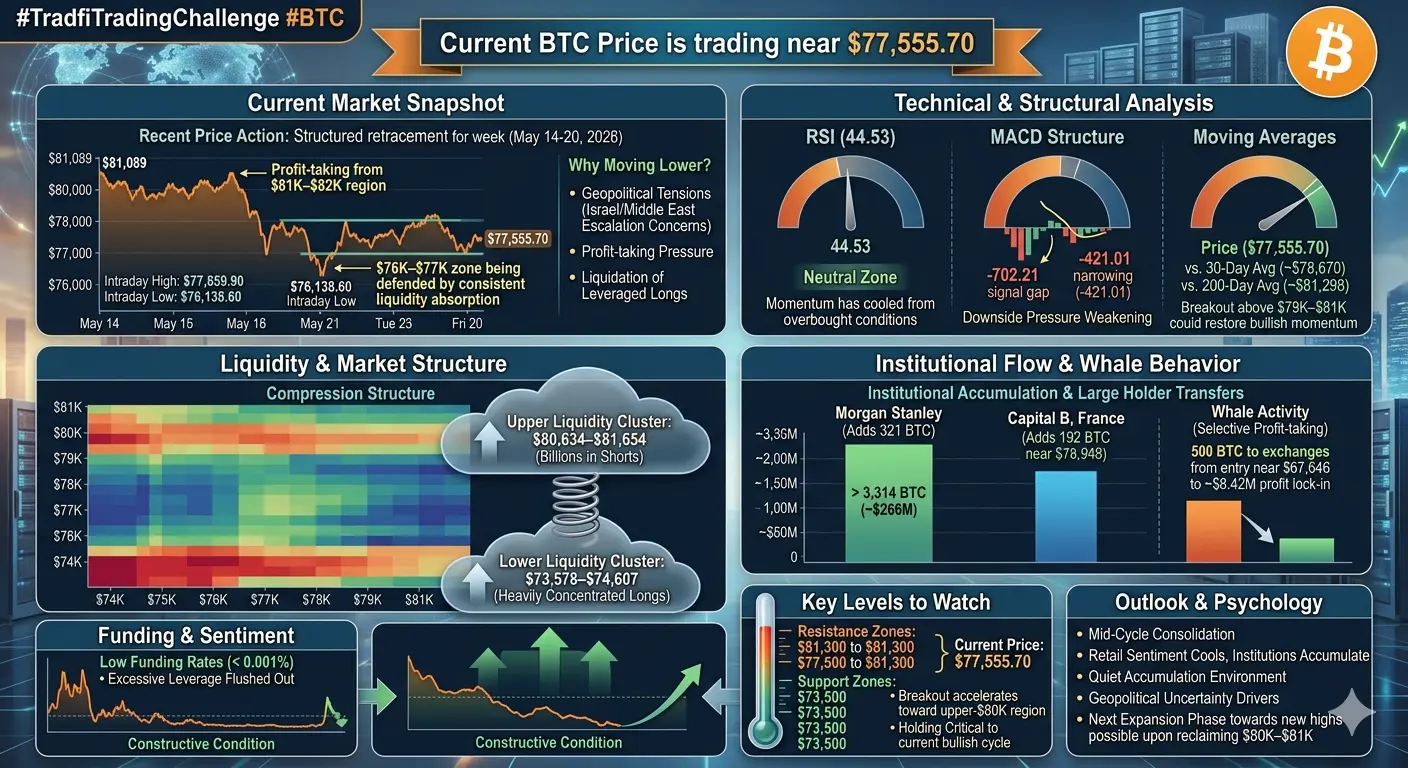
Current BTC Price is trading near $77,555.70 after Bitcoin entered a major consolidation phase of the 2026 cycle following the strong rally toward the $82,000 region, where institutional inflows, ETF demand, macro liquidity expansion, and improving regulatory sentiment pushed the market into temporary overextension before a controlled pullback began shaping the current structure.
Recent geopolitical tensions in the Middle East, including renewed escalation concerns between Israel and regional adversaries and the possibility of further military strikes in the comin
BTC-1.36%
HighAmbition
#TradfiTradingChallenge
#BTC
Current BTC Price is trading near $77,555.70 after Bitcoin entered a major consolidation phase of the 2026 cycle following the strong rally toward the $82,000 region, where institutional inflows, ETF demand, macro liquidity expansion, and improving regulatory sentiment pushed the market into temporary overextension before a controlled pullback began shaping the current structure.
Recent geopolitical tensions in the Middle East, including renewed escalation concerns between Israel and regional adversaries and the possibility of further military strikes in the coming days, have added an additional layer of uncertainty across global risk assets, and Bitcoin—like other high-risk instruments—has been reacting to this uncertainty through short-term volatility and liquidity-driven swings rather than any fundamental breakdown in long-term demand.
At the same time, Bitcoin’s recent downside movement is not being driven by a single event, but rather by a combination of profit-taking from the $81K–$82K region, liquidation of leveraged long positions, strengthening macro caution, and temporary risk-off sentiment across global markets where investors are reducing exposure to volatile assets until geopolitical clarity improves.
📊 1. Current Market Snapshot & Price Action
Bitcoin is currently priced around $77,555.70 after reaching an intraday high near $77,659.90 and a low near $76,138.60, showing that despite short-term volatility, the market is still holding above critical support zones while buyers continue defending the mid-$70K region with consistent liquidity absorption.
Over the past week, Bitcoin moved from approximately $81,089 on May 14 down toward $79,113 on May 15, then further cooling toward $78,146 on May 16 and around $77,458 on May 17, followed by stabilization near $77,003 on May 18 and $76,832 on May 19 before recovering again toward the current $77,555 level, which reflects a structured retracement rather than panic-driven collapse.
This movement from $82,000 highs toward the $76,000–$77,000 range is being interpreted as a healthy reset phase inside a broader bullish cycle, where leverage is being removed and the market is preparing for its next directional expansion.
📈 2. Technical & Structural Analysis
Bitcoin’s technical behavior shows short-term weakness but medium-term structural strength remains intact, as moving averages are being tested while institutional positioning continues to support the broader trend.
🔹 RSI Structure
RSI currently sits near 44.53 after previously reaching almost 59.98 during the rally phase, showing that momentum has cooled from overbought conditions into a neutral zone where neither bulls nor bears have full control, and the market is temporarily balancing before a new directional move develops.
🔹 MACD Structure
MACD remains negative at around -702.21 with a signal gap near -421.01, showing that bearish momentum is still present, but the narrowing gap indicates weakening downside pressure and possible stabilization if buying demand increases near support zones.
🔹 Moving Averages
Bitcoin is currently trading slightly below the 30-day average near $78,670 and also below the 200-day average near $81,298, which confirms short-term weakness, but price proximity to these levels suggests that any breakout above $79K–$81K could quickly restore bullish momentum.
⚖️ 3. Liquidity & Market Structure
Bitcoin remains trapped between two major liquidity zones, creating a compression structure where volatility can expand sharply once a breakout occurs.
Upper liquidity cluster sits around $80,634–$81,654 where billions in short positions are concentrated, meaning that a breakout above this zone could trigger forced liquidations and accelerate price toward higher resistance levels.
Lower liquidity cluster sits around $73,578–$74,607 where long positions are heavily concentrated, meaning that a breakdown below this zone could trigger liquidation-driven downside volatility before larger buyers step in.
This compression between $74K and $81K is creating a coiled market structure waiting for a catalyst, whether macroeconomic, geopolitical, or liquidity-driven.
🏦 4. Institutional Flow & Whale Behavior
Institutional accumulation continues to act as a stabilizing force in the market.
Large financial entities such as Morgan Stanley have expanded exposure by adding over 321 BTC valued near $25.8 million, bringing total holdings above 3,314 BTC worth approximately $266 million, showing continued confidence in Bitcoin as a long-term macro asset.
Similarly, Capital B in France has increased holdings by adding around 192 BTC near the $78,948 level, reinforcing the trend of corporate treasury accumulation even during periods of volatility.
At the same time, whale activity shows selective profit-taking, such as a large holder transferring around 500 BTC to exchanges after accumulating near $67,646, locking in roughly $8.42 million in gains, which reflects strategic distribution rather than panic selling behavior.
📉 5. Why Bitcoin is moving lower right now
The current pullback from $82K toward $77K is primarily driven by three combined forces rather than a single trigger.
First, profit-taking pressure emerged after Bitcoin entered the $81K–$82K resistance zone where many traders locked in gains.
Second, leveraged long positions were liquidated as price volatility increased, especially around support retests near $76K–$77K.
Third, geopolitical uncertainty—especially rising tensions and renewed concerns about potential Israeli military action and broader regional escalation risks—has increased risk aversion across global markets, pushing investors temporarily toward safer assets and reducing exposure to volatile instruments like Bitcoin.
This combination has created short-term downward pressure, but importantly, it has not broken the broader accumulation structure.
📊 6. Funding & Sentiment Conditions
Funding rates remain extremely low, generally below 0.001%, which shows that excessive leverage has been flushed out of the system after the rally toward $82K.
This is typically a constructive condition because it reduces liquidation risk and allows the market to rebuild momentum in a more stable environment.
📌 7. Key Levels to Watch
Resistance zones remain at $78,500, $79,500, $80,600, and $81,300, and a breakout above these levels could rapidly accelerate momentum back toward the upper-$80K region if short liquidation pressure intensifies.
Support zones remain at $76,000, $74,600, and $73,500, and holding above these levels is critical to maintaining the current bullish cycle structure.
🧠 8. Market Psychology
The market is currently in a mid-cycle consolidation phase where volatility is being driven more by liquidity positioning and macro headlines than by structural breakdown.
Retail sentiment has cooled, while institutional accumulation continues, creating a quiet accumulation environment beneath visible price fluctuations.
Historically, this type of structure appears before major continuation moves in strong bullish cycles, especially when leverage resets and liquidity compresses tightly between defined zones.
🎯 9. Final Outlook
Bitcoin near $77,555 remains in a sensitive equilibrium zone where geopolitical uncertainty, liquidity compression, institutional accumulation, and technical consolidation are all interacting simultaneously.
The recent downside movement is being driven more by short-term risk reduction, geopolitical tension concerns, and profit-taking from higher levels rather than any structural weakness in long-term demand.
If Bitcoin stabilizes above $74K–$76K and reclaims $80K–$81K resistance, the next major expansion phase toward new highs could resume as liquidity conditions improve and market confidence returns across global risk assets.
repost-content-media
  • Reward
  • Comment
  • Repost
  • Share
#TradFi交易分享挑战
The US30 index (Dow Jones Industrial Average) remains one of the most influential benchmarks in global TradFi markets, representing 30 major U.S. blue-chip companies across industrials, technology, financials, healthcare, and consumer sectors. As of early 2026, the index is trading near 49,300, hovering close to its all-time high region after a strong multi-year bullish expansion.
This index is not just a stock market indicator; it has become a global liquidity barometer, heavily watched by forex traders, crypto investors, hedge funds, and macro funds due to its sensitivity to i
US300.66%
BTC-1.36%
ETH-1.2%
HighAmbition
#TradFi交易分享挑战
The US30 index (Dow Jones Industrial Average) remains one of the most influential benchmarks in global TradFi markets, representing 30 major U.S. blue-chip companies across industrials, technology, financials, healthcare, and consumer sectors. As of early 2026, the index is trading near 49,300, hovering close to its all-time high region after a strong multi-year bullish expansion.
This index is not just a stock market indicator; it has become a global liquidity barometer, heavily watched by forex traders, crypto investors, hedge funds, and macro funds due to its sensitivity to interest rates, U.S. dollar strength, and global risk appetite.
2. Current Market Structure (2026)
Current Price: ~49,300
Trend: Strong long-term bullish structure
Market Phase: High-level consolidation / distribution near ATH
Volatility: Moderate (lower than Nasdaq, higher than S&P 500 stable phases)
Macro Bias: Risk-on environment with periodic correction waves
The US30 is currently in a macro expansion cycle, but short-term price action shows exhaustion zones near historical resistance levels.
3. Core Composition & Market Influence
The US30 consists of 30 companies, but influence is highly concentrated due to its price-weighted structure.
Key Drivers:
Financials: Goldman Sachs, JPMorgan, Visa
Tech Leaders: Microsoft, Apple, NVIDIA
Industrials: Caterpillar, Boeing, Honeywell
Consumer Giants: Amazon, McDonald’s, Walmart
Healthcare Stability: UnitedHealth, Amgen, Johnson & Johnson
Structural Insight:
Unlike S&P 500, where market cap dominates, US30 reacts sharply to high-priced stocks, meaning:
A $10 move in Goldman Sachs can impact index more than smaller companies
Stock splits can reduce influence dramatically
Price distortion risk is structurally present
4. Crypto Market vs US30 (TradFi Correlation)
In modern markets, US30 and crypto assets (Bitcoin, Ethereum, altcoins) share a growing correlation:
Positive Correlation (Risk-On)
US30 bullish → crypto liquidity inflows increase
Institutional risk appetite rises
Bitcoin often follows NASDAQ & US30 momentum
Negative Correlation (Risk-Off)
US30 correction → crypto sell pressure increases
Dollar strength rises → crypto weakens
Liquidity contraction impacts altcoins heavily
Key Insight:
US30 now acts as a liquidity sentiment engine for crypto markets. When Dow rallies, crypto “beta assets” often outperform.
5. Technical Analysis (Macro & Intraday)
Key Price Levels:
Current Price: 49,300
Immediate Resistance (R1): 49,700
Major Resistance (ATH Zone): 50,500 – 51,200
Support 1: 48,800
Support 2: 47,800
Strong Demand Zone: 46,900
Macro Support: 44,700 (200-day SMA region)
Trend Structure:
20 EMA > 50 EMA > 200 EMA → strong bullish alignment
Market still in higher high / higher low structure
Momentum slowing near top range
RSI Condition:
RSI near 60–65 range
Not overbought yet, but approaching distribution zone
6. Macro Fundamental Drivers
Bullish Factors:
AI-driven productivity boom (Microsoft, NVIDIA ecosystem expansion)
Strong corporate earnings growth cycle
Expected Federal Reserve rate cuts (liquidity expansion)
Institutional ETF inflows into equities
Strong U.S. labor market resilience
Risk Factors:
Geopolitical instability affecting energy & inflation
High valuation compression risk
Dollar volatility impacting global flows
Concentration risk in top index components
Potential recessionary signals in delayed indicators
7. US30 Trading Behavior (How It Moves)
Characteristics:
Highly reactive to U.S. economic data (NFP, CPI, FOMC)
Sharp intraday volatility during NY session
Fake breakouts common near ATH zones
Strong correlation with bond yields (10Y Treasury)
Average Daily Range:
200 – 450 points (normal conditions)
500+ points during macro events
8. Trading Strategy (Professional Approach)
1. Trend Following Strategy
Buy dips above 50-day moving average (~47,800)
Hold longs during higher high structure
Exit near resistance zones (49,700 – 50,500)
2. Breakout Strategy
Entry above 49,700 with volume confirmation
Target: 50,500 → 51,200
Stop-loss: below 48,800
3. Mean Reversion Strategy
Sell short-term overbought spikes near ATH
Buy retracements toward 48,000 – 47,800 support zone
4. Liquidity Sweep Strategy
Wait for false breakout above 50,000
Re-enter on rejection confirmation
High probability institutional trap zone
9. Price Forecast Scenarios (2026 Outlook)
Bullish Scenario (60% probability)
Break above 50,500 resistance
Extension toward 51,500 – 52,800
Driven by Fed liquidity easing + strong earnings
Neutral Scenario (25% probability)
Range-bound between 47,800 – 50,500
Consolidation phase before next macro move
Bearish Scenario (15% probability)
Breakdown below 47,800 support
Correction toward 46,000 – 44,700 zone
10. Institutional Outlook
Large institutions remain moderately bullish:
Expected upside: +5% to +12% annually
Key driver: AI productivity + earnings expansion
Risk-adjusted view: controlled bullish cycle, not parabolic rally
11. Crypto-TradFi Trading Insight
For traders operating in both crypto and US30:
Use US30 trend as macro bias filter
Bullish US30 → prefer long crypto positions
Bearish US30 → reduce leverage in altcoins
Watch US30 volatility spikes → often precede crypto liquidation events
12. Risk Management (Critical)
Professional traders should apply:
Max exposure: 3–7% per trade
Stop-loss: below structure levels (never emotional exits)
Avoid trading during major news without confirmation
Do not over-leverage during ATH zones
Hedge positions during FOMC & CPI releases
13. Final Outlook
The US30 remains in a long-term bullish supercycle, driven by technological transformation, corporate earnings strength, and liquidity cycles. However, the index is now approaching historically sensitive resistance zones near 50,000, where volatility expansion is expected.
Key Takeaway:
Long-term trend: Bullish
Short-term: Consolidation / distribution risk
Mid-term target: 51,500 – 52,800 possible
Critical support: 47,800 level must hold
repost-content-media
  • Reward
  • Comment
  • Repost
  • Share
#TradFi交易分享挑战
USDJPY.
USDJPY remains one of the most actively traded TradFi forex pairs in global financial markets as institutional traders, hedge funds, banks, and retail CFD participants continue focusing on the strong divergence between United States monetary policy and Japanese interest-rate conditions. The pair is currently trading near 158.75, maintaining a broader bullish structure as the US dollar continues outperforming the Japanese yen because of higher US interest rates, stronger Treasury yields, and resilient American economic data.
The current market environment remains extremel
HighAmbition
#TradFi交易分享挑战
USDJPY.
USDJPY remains one of the most actively traded TradFi forex pairs in global financial markets as institutional traders, hedge funds, banks, and retail CFD participants continue focusing on the strong divergence between United States monetary policy and Japanese interest-rate conditions. The pair is currently trading near 158.75, maintaining a broader bullish structure as the US dollar continues outperforming the Japanese yen because of higher US interest rates, stronger Treasury yields, and resilient American economic data.
The current market environment remains extremely important because USDJPY is approaching the critical psychological resistance region near 160.00, a zone historically connected with potential intervention risk from Japanese authorities. Traders across forex markets are closely monitoring whether buyers can sustain momentum above 158 while also preparing for the possibility of sharp volatility if Japanese policymakers attempt to stabilize the yen through verbal warnings or direct market intervention.
The broader macroeconomic backdrop continues supporting dollar strength because the Federal Reserve maintains relatively elevated interest rates near 3.75%, while the Bank of Japan still operates with significantly lower borrowing costs. This large interest-rate differential remains the primary structural driver behind USDJPY’s multi-year bullish trend.
Fundamental Drivers Supporting USDJPY Strength
The most important factor supporting USDJPY upside remains the strong difference between US and Japanese monetary policy conditions.
The United States Federal Funds Rate currently stands near 3.75%, while Japanese policy rates remain close to ultra-low levels despite gradual normalization efforts by the Bank of Japan. This creates a strong carry-trade environment where institutional traders continue favoring USD-denominated assets because they provide higher yields compared with Japanese financial instruments.
Inflation data in the United States also continues supporting dollar strength. CPI indicators recently increased toward 330 points compared with approximately 327 previously, while Personal Consumption Expenditures data expanded toward 16,731 billion dollars during March 2026. These figures indicate that inflationary pressure remains persistent enough to prevent aggressive Federal Reserve easing in the short term.
Additional US macroeconomic data also continues supporting bullish dollar sentiment:
• GDP growth remained stable near 3,644 billion dollars during recent quarterly estimates.
• Non-Farm Payrolls increased approximately 178,000 jobs during March 2026.
• Treasury yields remained elevated as investors reduced expectations for rapid interest-rate cuts.
However, some mixed signals also appeared inside labor-market data because the US unemployment rate increased toward 4.9%, suggesting that economic momentum may gradually slow later in the year. While this does not immediately destroy dollar strength, it introduces medium-term uncertainty regarding future Federal Reserve policy decisions.
On the Japanese side, the Bank of Japan continues moving carefully regarding monetary normalization. Even though inflationary pressure inside Japan increased moderately during recent quarters, policymakers remain cautious about tightening policy aggressively because they want sustainable wage growth and economic stability before implementing major rate increases.
This difference between aggressive US yields and relatively low Japanese rates continues acting as the core reason behind USDJPY strength.
Market Structure and Technical Outlook
USDJPY currently trades near 158.75, remaining close to multi-year highs and maintaining broader bullish momentum despite periods of short-term consolidation.
The most important technical resistance zone sits between 159.50 and 160.00 because this region represents a major psychological barrier and an area historically associated with intervention risk from Japanese authorities. Traders remember previous intervention episodes during 2022 and 2024 when rapid yen-buying activity triggered sharp intraday declines exceeding 200–400 pips within extremely short periods.
Key resistance levels currently include:
• 159.50
• 160.00
• 161.80
• 163.00
Important support zones include:
• 157.20
• 155.00
• 152.00
• 149.50
Technical indicators currently show mixed conditions across multiple timeframes. RSI readings across shorter timeframes indicate stretched momentum conditions, suggesting the pair may experience temporary pullbacks even while maintaining a broader bullish structure.
MACD indicators remain relatively flat on several timeframes, while moving-average alignment appears neutral rather than strongly aggressive. This means price action itself currently provides stronger bullish confirmation than momentum indicators.
ADX readings also remain relatively weak, indicating that trend strength has slowed despite elevated price levels. Because of this, traders should remain cautious regarding sudden volatility spikes near the 160 region.
What Trader Hazraat Are Thinking Right Now
Institutional forex traders and CFD participants currently remain divided into two major camps regarding USDJPY’s next movement.
The bullish camp believes USDJPY can continue rising toward 160.00, 162.00, and potentially even 165.00 if Federal Reserve policy remains restrictive while Japanese policymakers avoid direct intervention. These traders focus heavily on Treasury yields, inflation data, and continued dollar demand across global financial markets.
Bullish traders also argue that global uncertainty, geopolitical instability, and resilient US economic performance continue supporting capital inflows toward dollar-based assets, which indirectly strengthens USDJPY.
The cautious camp believes the pair is entering an extremely dangerous zone because intervention risk increases significantly above 160.00. Many traders remember how quickly previous intervention episodes erased hundreds of pips in a matter of minutes.
Some short-term traders therefore expect sharp corrections toward 155.00–156.00 before another larger bullish continuation attempt develops later.
Options-market positioning also suggests increasing volatility expectations because traders are actively hedging against sudden yen-strength scenarios.
Upcoming Economic Events and Market Catalysts
Several major economic releases could strongly influence USDJPY volatility during the coming weeks.
May 28 — US GDP Second Estimate
If GDP data weakens significantly below expectations, markets may reduce confidence in long-term dollar strength, potentially pushing USDJPY lower toward 157 or 155 support levels.
May 29 — PCE Inflation Report
The Personal Consumption Expenditures index remains the Federal Reserve’s preferred inflation measure. A strong reading above expectations could support Treasury yields and push USDJPY toward the 160 region again.
A softer inflation report could trigger expectations for earlier interest-rate cuts, weakening the dollar and creating downside pressure.
June 5 — Non-Farm Payrolls
Labor-market performance remains extremely important for Federal Reserve policy expectations. Payroll growth below 150,000 combined with rising unemployment could weaken bullish momentum significantly.
Bank of Japan Commentary
Any signal regarding additional rate hikes, bond-market adjustments, or direct FX intervention warnings could create extremely rapid volatility across USDJPY markets.
USDJPY Trading Strategy Plans
Conservative Trading Strategy
Conservative traders may prefer waiting for confirmed price action either above 160.00 or below 155.00 before entering larger swing positions. This approach reduces emotional trading inside highly volatile consolidation zones.
Potential bullish breakout confirmation could appear above 160.20 with strong volume and stable Treasury yields. In that scenario, upside targets may extend toward 162.00 and 163.50.
Aggressive Bullish Strategy
Aggressive traders may continue buying short-term pullbacks toward 157.50–158.00 while maintaining disciplined stop-loss management below 155.00.
Potential upside targets include:
• 160.00
• 161.80
• 163.00
• 165.00
However, traders using leverage should remain extremely careful because intervention risk can create violent intraday reversals.
Short-Term Correction Strategy
Some traders may attempt short-term sell positions near 159.50–160.00 because historical intervention fear often creates temporary pullbacks from this region.
Potential downside targets for corrective trades include:
• 157.00
• 155.50
• 152.00
Risk management remains critical because unexpected breakout momentum above 160 could invalidate bearish setups rapidly.
Risk Management and Important Warnings
USDJPY currently trades inside one of the most sensitive macroeconomic environments in global forex markets. Volatility can increase extremely quickly during economic data releases, central-bank commentary, or intervention rumors.
Important risks include:
• Sudden BOJ intervention above 160.00
• Weak US inflation data reducing dollar strength
• Treasury yield declines
• Global recession concerns
• Unexpected geopolitical developments affecting safe-haven demand
Traders should avoid excessive leverage and maintain disciplined position sizing because sharp 200–300 pip movements remain possible during high-volatility sessions.
Final Market Outlook
USDJPY continues maintaining a broader bullish structure because of strong US interest rates, elevated Treasury yields, and persistent policy divergence between the Federal Reserve and the Bank of Japan. The pair remains heavily supported above 155.00 while traders continue targeting the major 160 psychological resistance zone.
However, the market also remains highly sensitive to intervention risks, inflation reports, labor-market data, and Federal Reserve policy expectations. While bullish momentum still dominates the larger trend, traders should remain cautious because volatility near multi-year highs can increase rapidly without warning.
The coming weeks will likely determine whether USDJPY breaks decisively above 160 toward higher long-term targets or enters a larger corrective phase driven by policy adjustments and intervention fears across global forex markets.
repost-content-media
  • Reward
  • Comment
  • Repost
  • Share
#TradFi交易分享挑战
#TradFi交易分享挑战
#Australian Dollar (AUDUSD)
AUDUSD is currently trading near 0.71455, maintaining a structurally bullish but highly sensitive condition within global TradFi forex markets. The pair continues to reflect the ongoing interaction between United States monetary policy expectations and Australia’s commodity-driven economic framework. Market participants including banks, hedge funds, and CFD traders are closely monitoring this pair due to its strong responsiveness to macroeconomic data, liquidity shifts, and global risk sentiment changes.
The broader 2026 macro environme
AUDUSD-0.16%
HighAmbition
#TradFi交易分享挑战
#TradFi交易分享挑战
#Australian Dollar (AUDUSD)
AUDUSD is currently trading near 0.71455, maintaining a structurally bullish but highly sensitive condition within global TradFi forex markets. The pair continues to reflect the ongoing interaction between United States monetary policy expectations and Australia’s commodity-driven economic framework. Market participants including banks, hedge funds, and CFD traders are closely monitoring this pair due to its strong responsiveness to macroeconomic data, liquidity shifts, and global risk sentiment changes.
The broader 2026 macro environment remains mixed. Inflation levels in major economies are still relatively elevated, central banks are maintaining cautious policy stances, and global growth is uneven across regions. In this environment, AUDUSD is acting as a key sentiment indicator, reacting quickly to changes in investor confidence and liquidity expectations.
At current levels, price is holding above the critical psychological zone near 0.71000, while buyers are attempting to maintain upward structure toward higher resistance regions. However, volatility remains elevated, meaning both continuation and corrective scenarios must be considered.
Understanding AUDUSD in Simple TradFi Terms
AUDUSD shows how many US dollars are required to purchase one Australian dollar.
• If AUDUSD rises → Australian dollar strengthens
• If AUDUSD falls → US dollar strengthens
The Australian dollar is a risk-linked commodity currency, meaning it tends to perform well when global growth improves and commodity demand increases.
The US dollar acts as a global safe-haven currency, strengthening during uncertainty, tighter financial conditions, or risk-off sentiment.
This structural contrast makes AUDUSD highly reactive compared to many other forex pairs.
Current Market Structure
AUDUSD is trading near 0.71455 and showing recovery from previous consolidation phases, forming a controlled bullish structure.
Key Resistance Zones
• 0.71800 – short-term resistance
• 0.72250 – breakout trigger zone
• 0.73000 – institutional resistance area
• 0.74200 – expansion target zone
• 0.75000 – psychological extension
A sustained break above 0.72250 may trigger stronger upside momentum.
Key Support Zones
• 0.71000 – immediate support
• 0.70800 – structure defense zone
• 0.70000 – major psychological level
• 0.69200 – deeper correction area
• 0.68450 – long-term structural support
Maintaining price above 0.70000 remains essential for bullish continuity.
Fundamental Drivers Behind AUDUSD
1. United States Dollar Factors
The US dollar remains influenced by Federal Reserve policy and macro data.
Key conditions: • Interest rates remain elevated
• Inflation still moderately persistent
• Treasury yields relatively strong
• Labor market showing mixed signals
This keeps USD supported but sensitive to any policy shift expectations.
2. Australian Dollar Factors
AUD is driven by global trade and commodity cycles.
Supporting elements: • Strong iron ore and gold exports
• Energy exports remain stable
• China demand expectations improving
• Risk sentiment stabilization
• Relatively steady policy stance
Australia’s export dependence makes AUD highly sensitive to global growth conditions.
3. China Impact
China remains the most important external driver for AUD.
• Strong China activity → AUD strength
• Weak China activity → AUD pressure
Current expectations of gradual industrial stabilization are supporting AUD bias.
4. Global Risk Sentiment
AUDUSD reacts strongly to risk conditions.
• Risk-on → AUD strengthens
• Risk-off → USD strengthens
This makes the pair highly volatile during global uncertainty phases.
Technical Structure Overview
AUDUSD remains in a controlled bullish phase with moderate momentum strength.
Trend conditions: • Short-term: Bullish
• Medium-term: Bullish
• Long-term: Neutral to bullish
Momentum indicators: • RSI: Balanced strength, not overbought
• MACD: Positive but stable
• Moving averages: Gradual bullish alignment
• Volatility: Medium-high
Market is trending upward but still vulnerable to pullbacks.
Institutional Sentiment
Bullish Positioning
Large participants expect: • Break above 0.72250
• Expansion toward 0.73000–0.74200
• Gradual USD weakness cycle
• Commodity-driven AUD support
They view current structure as accumulation.
Bearish Positioning
Cautious participants highlight: • Strong USD yield support
• Resistance pressure near 0.72250–0.73000
• Global uncertainty risk
• Potential profit-taking zones
Temporary corrections remain possible.
Advanced Trading Strategies
1. Buy-on-Dip Strategy
• Entry: 0.70800 – 0.71000
• Stop-loss: Below 0.70000
• Target 1: 0.72250
• Target 2: 0.73000
• Target 3: 0.74200
Best suited for trend continuation environments.
2. Breakout Strategy
• Buy above 0.72250 with confirmation
• Targets: 0.73000 → 0.74200 → 0.75000
• Stop-loss: Below breakout zone
High reward but requires strong confirmation.
3. Range Strategy
• Sell: 0.72200–0.73000
• Buy: 0.70800–0.71000
• Focus: Intraday movements
Works best during consolidation phases.
4. Swing Strategy
• Hold 3–10 days
• Follow macroeconomic events
• Focus CPI, NFP, China data
• Avoid overtrading during volatility spikes
Risk Considerations
Key risks include: • US inflation surprises
• Federal Reserve policy shifts
• China slowdown risks
• Commodity price declines
• Sudden USD strength spikes
• Geopolitical shocks
• Global liquidity tightening
Recommended approach: • Low leverage usage
• Strict stop-loss discipline
• Avoid emotional entries
• Do not chase breakouts
Market Outlook Scenarios
Bullish Scenario
If risk sentiment improves: • 0.72250 breakout
• 0.73000 expansion
• 0.74200–0.75000 continuation
Neutral Scenario
• Range: 0.70000 – 0.72250
• Accumulation phase
• Await macro catalyst
Bearish Scenario
If USD strengthens: • Drop toward 0.70000
• Possible 0.69200 test
• Extended correction toward 0.68450
Final Outlook
AUDUSD remains in a macro-supported bullish structure with controlled volatility. The market is currently in a decision zone where breakout confirmation is required for further upside continuation.
Key levels to monitor: • 0.71000 – support base
• 0.72250 – breakout trigger
• 0.73000 – resistance cluster
• 0.74200 – expansion zone
Overall, AUDUSD continues to offer strong opportunities for both swing and intraday traders, provided risk management and macro awareness remain the primary focus.
repost-content-media
  • Reward
  • Comment
  • Repost
  • Share
#BitcoinVShapedReversalBack .
BITCOIN V-SHAPED REVERSAL ANALYSIS (2026)
Market Structure Overview — V-Shaped Recovery Formation in Bitcoin
Bitcoin has recently developed a clear V-shaped reversal structure across its 2026 price cycle, where sharp downside volatility into the $70,000–$75,000 zone was rapidly absorbed by aggressive buyers, leading to an equally strong recovery back toward the $79,000–$82,500 macro resistance band. This type of structure is typically associated with capitulation-style sell-offs followed by strong demand re-entry, where liquidity is quickly removed from the downs
BTC-1.36%
IN17.89%
BAND-2.7%
HighAmbition
#BitcoinVShapedReversalBack .
BITCOIN V-SHAPED REVERSAL ANALYSIS (2026)
Market Structure Overview — V-Shaped Recovery Formation in Bitcoin
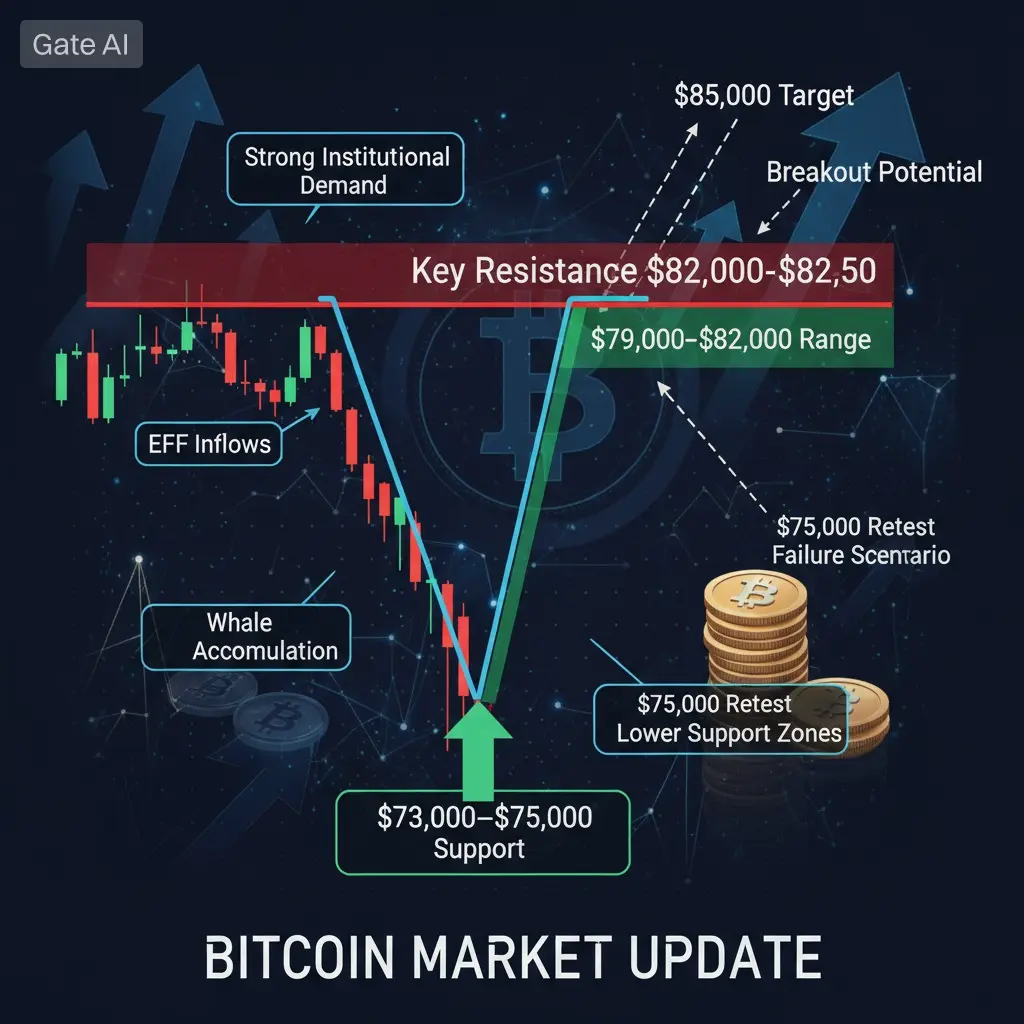
Bitcoin has recently developed a clear V-shaped reversal structure across its 2026 price cycle, where sharp downside volatility into the $70,000–$75,000 zone was rapidly absorbed by aggressive buyers, leading to an equally strong recovery back toward the $79,000–$82,500 macro resistance band. This type of structure is typically associated with capitulation-style sell-offs followed by strong demand re-entry, where liquidity is quickly removed from the downside and transferred back into bullish accumulation zones. In recent trading sessions, Bitcoin has fluctuated between $78,900 and $82,400, showing that the market is currently in a high-volatility equilibrium phase where neither bulls nor bears have full directional control, but buyers are consistently defending higher lows above the critical $78,000 psychological support region.
The importance of this structure lies in the speed of recovery, because Bitcoin previously dropped aggressively from mid-range levels near $85,000–$88,000 earlier in the cycle toward $73,000–$75,000, yet failed to sustain downside continuation and instead formed a rapid reversal back above $80,000, which signals strong spot demand absorption, ETF-driven accumulation, and large-scale whale repositioning during discounted liquidity conditions.
Price Action Context — From Capitulation to Recovery
The V-shaped recovery began forming after Bitcoin tested deeper liquidity zones around $73,500–$75,000, where forced liquidations and macro-driven fear triggered a temporary breakdown in market structure. However, instead of extending into a prolonged bearish trend, price action quickly reversed, pushing BTC back toward $78,000–$80,000, and eventually reclaiming the $81,000 region on multiple occasions, confirming that sellers were unable to maintain control at lower levels.
Recent price snapshots show Bitcoin trading around $80,860 (May 12, 2026) and fluctuating between $79,300 and $81,000+ in futures markets, reflecting strong two-way liquidity but consistent bullish defense at key demand zones. The recovery from $63,000–$70,000 earlier in the macro cycle to current levels near $80,000 highlights a broader structural shift where institutional participation via ETFs, custodial inflows, and long-term accumulation strategies is actively reducing available sell-side liquidity.
Resistance Zone Pressure — Why $80K–$82.5K is Critical
Despite the strong V-shaped rebound, Bitcoin continues to face heavy resistance between $80,000 and $82,500, which acts as the primary decision-making zone for the next macro trend expansion. This region contains clustered liquidity from prior distribution phases, leveraged short positions, and long-term profit-taking levels, making it a high-friction zone where price often consolidates before either breaking into expansion or rejecting back into support.
The 200-day moving average near $82,200–$82,500 is particularly important because it represents a macro trend filter used by institutional traders, and repeated rejection at this level suggests that Bitcoin still requires stronger volume confirmation to transition from recovery phase into sustained bullish expansion. A clean breakout above $82,500 with strong volume confirmation could unlock momentum toward $84,000 → $85,000 → $88,000 → $90,000, while failure to break resistance could lead to consolidation or a retest of $78,000 → $75,000 liquidity zones.
Institutional Flow Dynamics — ETF Demand and Whale Accumulation
One of the strongest drivers behind the V-shaped recovery structure is continuous institutional accumulation through ETF inflows, custody expansion, and large whale positioning during dips. Bitcoin ETF inflows have remained consistently positive in multiple weekly cycles, contributing hundreds of millions to billions in net demand depending on volatility conditions, while long-term holders continue absorbing supply during corrections below $75,000–$78,000 zones.
Large wallet accumulation patterns suggest that entities holding 1,000 BTC to 10,000+ BTC ranges have been actively increasing exposure during downside liquidity events, effectively reducing circulating supply and accelerating recovery speed once selling pressure exhausts. This structural shift is critical because it reduces the depth of future corrections and increases the probability of sharp reversal-based rallies, especially in environments where macro liquidity is gradually improving.
Macro Environment — Inflation, Liquidity, and Fed Expectations
The broader macro environment remains a key influence on Bitcoin’s ability to sustain the V-shaped recovery. Persistent inflation pressures, elevated treasury yields, and uncertain Federal Reserve rate-cut expectations continue to create intermittent volatility spikes across global risk assets. These macro conditions have repeatedly triggered liquidity sweeps into the $78,000–$80,000 range, but each time Bitcoin has demonstrated strong recovery behavior, suggesting that structural demand is outweighing macro-driven sell pressure.
However, macro risk remains active, and any renewed inflation acceleration or hawkish Fed stance could temporarily pressure Bitcoin back toward $75,000 or even $70,000 zones, especially if liquidity tightens globally. Conversely, any shift toward easing policy or liquidity expansion could act as a catalyst for rapid breakout continuation above $82,500 resistance toward $90,000+ levels.
Market Sentiment — V-Recovery Psychology and Trader Positioning
Market sentiment around the V-shaped reversal remains cautiously optimistic, with traders interpreting repeated rebounds from $75,000–$78,000 support zones as evidence of strong underlying demand. Many participants view this structure as a potential early-stage continuation setup rather than a full reversal exhaustion pattern, especially given the speed at which Bitcoin reclaimed the $80,000 psychological level.
However, sentiment is not one-sided, as bearish traders continue to highlight repeated rejection near $82,000–$82,500 resistance, suggesting that without a clean breakout, the market may remain range-bound between $78,000 and $82,500 for an extended consolidation phase. This balance of bullish structural recovery and bearish resistance rejection creates a compression environment where volatility expansion becomes highly likely in the coming weeks.
Bullish Scenario — Continuation Toward $90K–$100K+
In the bullish scenario, Bitcoin successfully holds above the $78,000–$80,000 support zone while breaking decisively above $82,500 resistance with volume confirmation, triggering a continuation rally toward $84,000 → $88,000 → $90,000 psychological expansion zone. If macro liquidity conditions improve alongside sustained ETF inflows, Bitcoin could extend further toward $95,000–$100,000 macro target range, especially if institutional demand accelerates during breakout phases.
This scenario becomes more likely if inflation stabilizes, treasury yields decline, and risk-on sentiment returns across global markets, allowing Bitcoin to transition from recovery structure into full expansion phase.
Bearish Scenario — Failed V-Reversal and Retest Zones
In the bearish invalidation scenario, failure to break above $82,500 resistance combined with macro tightening could lead to renewed downside pressure, pushing Bitcoin back toward $78,000 → $75,000 → $72,000 liquidity zones, and in extended correction cases even $65,000–$62,000 deeper structural support levels. This would represent a failed continuation of the V-shaped recovery and a transition back into broader consolidation or corrective structure.
Final Market Outlook — Key Decision Zone Ahead
Bitcoin is currently positioned at one of the most critical structural points of the 2026 cycle, where a confirmed breakout above $82,500 could define the next macro expansion leg toward $90,000–$100,000, while rejection from this zone could extend consolidation between $75,000 and $82,000 for a longer period.
The V-shaped reversal structure remains valid and bullish in nature, but confirmation still depends on volume-backed breakout behavior and macro liquidity alignment. Until then, Bitcoin remains in a high-stakes equilibrium phase where both continuation and rejection scenarios are actively competing.
#GateSquareMayTradingShare #GateaSquare #CreatorCarnival #ContentMining
repost-content-media
  • Reward
  • Comment
  • Repost
  • Share
#WCTCTradingKingPK
Professional Trading Strategy Guide — Market Survival & Execution Framework (2026)
Market Environment — Understanding Current Conditions
The current trading environment is characterized by high volatility, rapid liquidity shifts, and unpredictable momentum expansions driven by macroeconomic data, institutional flows, and algorithmic trading systems. Price action is no longer behaving in a simple directional trend; instead, it frequently moves in liquidity cycles where sharp moves in one direction are followed by equally strong reversals. This means traders are operating i
MMT-1.84%
IN17.89%
COMMON2.79%
ON-6.44%
HighAmbition
#WCTCTradingKingPK
Professional Trading Strategy Guide — Market Survival & Execution Framework (2026)
Market Environment — Understanding Current Conditions
The current trading environment is characterized by high volatility, rapid liquidity shifts, and unpredictable momentum expansions driven by macroeconomic data, institutional flows, and algorithmic trading systems. Price action is no longer behaving in a simple directional trend; instead, it frequently moves in liquidity cycles where sharp moves in one direction are followed by equally strong reversals. This means traders are operating in a market where stop-loss hunting, fake breakouts, and sudden volatility spikes are common, especially around key psychological levels and high-volume zones. In such conditions, success depends less on prediction and more on reaction, discipline, and structured decision-making.
Core Trading Strategy — Structured Liquidity-Based Approach
The most effective approach in this environment is a liquidity-based range trading and breakout confirmation strategy, where traders focus on identifying areas where large buy and sell orders are concentrated. Instead of chasing price movement, traders should wait for price to reach these zones and observe reaction behavior before entering positions. In ranging conditions, the market typically oscillates between defined support and resistance levels, and the optimal strategy is to accumulate near demand zones where buyers historically step in, and reduce exposure or take profits near supply zones where selling pressure increases.
In breakout conditions, however, traders must ensure confirmation through strong volume expansion, candle closure beyond resistance, and ideally a retest of the breakout level before entering. Without these confirmations, most breakouts in volatile environments fail and quickly reverse due to liquidity traps designed to capture impulsive traders.
Risk Management — The Foundation of Survival
Risk management is the single most important factor separating consistent traders from losing traders. Every position must be defined by a clear invalidation level before entry, and capital exposure should always remain controlled regardless of confidence level. In highly volatile conditions, even strong setups can fail due to external macro shocks or sudden liquidity events, which is why no single trade should ever threaten overall account stability.
Leverage should be used conservatively, especially in futures markets, where small price movements can lead to large liquidation cascades. Professional traders always prioritize capital preservation, understanding that survival in the market is more important than maximizing short-term profits.
Entry Strategy — Precision and Timing Over Emotion
Entries should only be executed when multiple conditions align, including market structure, volume behavior, and liquidity positioning. Ideal entries typically occur after liquidity sweeps, where price briefly breaks a key level, triggers stop-losses, and then reverses strongly in the opposite direction. These zones often represent institutional accumulation or distribution areas and provide high-probability setups when confirmed with momentum shifts.
Traders should avoid entering trades in the middle of price ranges where direction is unclear and volatility is random. Patience is a key advantage in such environments because the market frequently offers multiple re-entry opportunities rather than requiring immediate action.
Trade Management — Scaling, Profit Protection, and Exit Discipline
A professional trading approach involves scaling out of positions rather than attempting to capture exact tops or bottoms. Partial profit-taking at intermediate resistance levels allows traders to secure gains while still participating in potential extended moves. This reduces emotional pressure and improves long-term consistency.
Trailing stop-loss strategies can be useful in trending markets, but in choppy or sideways conditions, fixed multi-level profit booking is more effective. Traders should always aim to protect unrealized profits as soon as the market moves in their favor, ensuring that winning trades do not turn into losses due to sudden reversals.
Psychological Discipline — The Hidden Edge
Most trading failures are not caused by strategy flaws but by psychological errors such as overtrading, revenge trading, fear of missing out, and abandoning trading plans mid-execution. Emotional decision-making leads to inconsistent results, especially in volatile environments where price movements can trigger impulsive reactions.
Successful traders maintain a consistent mindset, stick to predefined strategies, and avoid reacting emotionally to short-term market fluctuations. They understand that losses are part of the system, but uncontrolled losses are what destroy accounts.
Market Behavior Insight — Why Structure Matters More Than Prediction
Modern markets are heavily influenced by institutional algorithms and liquidity engines that actively hunt for stop-loss clusters and inefficient price zones. This creates an environment where price often moves to areas of maximum liquidity before reversing, rather than following traditional technical patterns alone. Understanding this behavior allows traders to align with market mechanics instead of fighting against them.
This is why liquidity zones, market structure shifts, and confirmation signals are significantly more reliable than simple indicators or predictions.
Final Strategy Outlook — Consistency Over Aggression
The key to long-term success in trading is not aggressive positioning but consistent execution of a structured plan. Traders who focus on patience, risk control, and liquidity-based decision-making consistently outperform those who rely on emotion or random speculation.
The ultimate principle is simple: preserve capital during uncertainty, participate during confirmation, and scale performance during clarity. Markets will always provide opportunities, but only disciplined traders will be able to consistently capitalize on them over time.
repost-content-media
  • Reward
  • Comment
  • Repost
  • Share
#CMEToLaunchNasdaqCryptoIndexFutures
CME Group to Launch Nasdaq Crypto Index Futures
CME Group, the world’s largest and most influential derivatives marketplace, has officially announced the planned launch of Nasdaq CME Crypto Index Futures scheduled for June 8, 2026, subject to final regulatory approval from the U.S. Commodity Futures Trading Commission (CFTC), and this development represents one of the most important structural milestones in the evolution of crypto as a fully institutionalized asset class because it transitions digital assets from isolated spot markets into fully integrate
IN17.89%
BASED-4.89%
HighAmbition
#CMEToLaunchNasdaqCryptoIndexFutures
CME Group to Launch Nasdaq Crypto Index Futures
CME Group, the world’s largest and most influential derivatives marketplace, has officially announced the planned launch of Nasdaq CME Crypto Index Futures scheduled for June 8, 2026, subject to final regulatory approval from the U.S. Commodity Futures Trading Commission (CFTC), and this development represents one of the most important structural milestones in the evolution of crypto as a fully institutionalized asset class because it transitions digital assets from isolated spot markets into fully integrated, regulated index-based derivatives infrastructure similar to traditional equity benchmarks like the S&P 500 and Nasdaq-100 futures.
The introduction of this product signals a deepening bridge between Wall Street capital and the crypto ecosystem, especially at a time when Bitcoin is trading in the broad $80,000–$105,000 macro range, Ethereum is fluctuating near $4,200–$5,500 levels, and total crypto market capitalization has expanded into the multi-trillion-dollar zone exceeding $2.5T–$3.1T, showing that institutional participation is no longer theoretical but actively shaping price discovery across all major assets.
Contract Structure — Standardized, Cash-Settled Institutional Instruments
The newly introduced futures contracts will be cash-settled instruments, meaning no physical delivery of Bitcoin, Ethereum, or any underlying crypto assets will occur at expiration, and instead all settlements will be conducted in USD based on the official Nasdaq CME Crypto Settlement Index (NCIS), which currently trades in the approximate range of 3,700–3,900 index points, reflecting the combined weighted performance of major digital assets.
The product will be available in both standard contracts and micro contracts, allowing institutional players to deploy multi-million-dollar hedging strategies while simultaneously enabling retail participation through smaller exposure units, and this dual structure ensures liquidity depth across both high-capital hedge funds and smaller trading desks.
Margin efficiency also plays a critical role because traders will be able to control exposure equivalent to $50,000–$500,000+ per contract equivalent value depending on leverage conditions, which significantly increases capital efficiency compared to direct spot holdings requiring full asset ownership.
Nasdaq CME Crypto Index Composition — Market Cap Weighted Structure
The index underlying the futures contract is designed as a market-cap weighted diversified basket of leading cryptocurrencies, and as of mid-2026 the approximate structure includes:
Bitcoin (BTC): ~77%–78% weight, trading near $98,000–$105,000 range
Ethereum (ETH): ~11%–13% weight, trading near $4,200–$5,500
XRP: ~4%–5% weight, trading around $2.20–$3.10
Solana (SOL): ~2.5%–3.5% weight, trading near $180–$260
Cardano (ADA): ~0.5%–0.8% weight, trading near $0.70–$1.10
Chainlink (LINK): ~0.3%–0.6% weight, trading near $15–$25
Stellar (XLM): ~0.2%–0.4% weight, trading near $0.10–$0.18
This composition ensures that Bitcoin remains the dominant price driver of the index while still allowing Ethereum and selected altcoins to contribute meaningful diversification effects, and because BTC alone represents nearly $1.9T–$2.1T of total crypto capitalization, even small BTC fluctuations of 2%–5% daily movement ($2,000–$5,000 swings) will heavily influence index pricing behavior.
Market Behavior — Why This Product Matters for Price Discovery
The introduction of index futures fundamentally changes how institutional capital interacts with crypto markets because instead of trading fragmented exposure across BTC, ETH, SOL, or XRP individually, large funds can now express a single directional macro view on the entire crypto sector, meaning a hedge fund that expects bullish continuation across digital assets can simply go long the index rather than building multiple correlated positions.
At the same time, if macro conditions deteriorate due to inflation spikes, treasury yield increases above 5%–5.5% levels, or Federal Reserve tightening expectations re-emerge, institutional players can hedge downside exposure efficiently through index short positions without liquidating spot holdings valued in billions of dollars.
This creates a more stable yet more complex market structure where liquidity is concentrated into structured derivatives flow, and historical data from similar CME Bitcoin futures launches in 2017 (BTC near $8,000–$19,000 cycle phase) suggests that while initial volatility may increase, long-term institutional inflows typically expand significantly.
Institutional Impact — Wall Street Integration Accelerates
One of the most important consequences of this launch is the acceleration of institutional adoption because banks, pension funds, sovereign wealth funds, and hedge funds traditionally prefer regulated futures markets over fragmented crypto exchanges, and now they can gain exposure to a diversified crypto index with full compliance clarity under CME clearing infrastructure.
With CME already recording daily crypto derivatives volume exceeding $5–10 billion notional equivalents in peak sessions, the addition of index futures could potentially increase total crypto derivatives volume by 30%–60% over the next 12–18 months, especially as micro contracts open participation to a wider audience.
Major financial institutions like BlackRock-linked strategies, Morgan Stanley trading desks, and pension allocation models can now treat crypto as a macro asset class similar to equities and commodities, potentially increasing long-term capital inflows ranging from $100B–$500B institutional rotation potential over multiple cycles.
Market Liquidity Effects — Expansion of Trading Ecosystem
Liquidity expansion is expected across multiple dimensions because index futures will attract arbitrage traders, hedge funds, algorithmic market makers, and volatility traders, all of whom will create tighter spreads between spot markets and derivatives pricing, and this could reduce inefficiencies across exchanges where Bitcoin currently trades between $95,000–$105,000 ranges with temporary volatility spikes up to $110,000–$115,000 levels during macro news events.
The presence of a unified index also introduces improved pricing transparency because instead of relying solely on fragmented exchange data, traders can reference a standardized benchmark hovering around 3,800 index points, which correlates strongly with underlying BTC movement and provides a cleaner macro sentiment indicator.
Trading Strategies — Institutional & Retail Applications
1. Macro Directional Positioning
Traders can take long exposure when expecting crypto-wide expansion toward index levels of 4,000–4,300 points, which historically correlates with BTC moving toward $110,000–$125,000 breakout scenarios, while bearish positioning becomes attractive if index falls toward 3,500–3,200 levels, potentially aligning with BTC corrections toward $85,000–$90,000 zones.
2. Hedging Strategy
Portfolio managers holding large Bitcoin positions near $100,000 average entry cost basis can hedge downside risk by shorting index futures during macro uncertainty phases, especially when inflation prints exceed expectations or when bond yields rise above 5% threshold levels, reducing portfolio volatility without liquidating spot holdings.
3. Spread Arbitrage
Professional traders can exploit pricing differences between BTC futures ($100K), ETH ($4,500), and index futures (~3,800 points), especially during volatility spikes when correlation temporarily breaks down, creating arbitrage opportunities worth 0.5%–3% intraday inefficiencies.
Risk Considerations — Volatility, Leverage & Macro Sensitivity
Despite institutional structure, crypto remains highly volatile, with Bitcoin capable of moving $3,000–$8,000 daily ranges, Ethereum fluctuating $150–$400 intraday swings, and altcoins experiencing 10%–25% price volatility cycles, meaning leveraged futures positions must be carefully managed using strict margin discipline, stop-loss execution, and macro awareness.
Additionally, increased correlation with traditional markets may emerge, especially during risk-off environments where Nasdaq declines of 2%–4% can trigger crypto corrections of 5%–8%, highlighting the importance of cross-market monitoring.
Final Market Outlook — Structural Evolution of Crypto Finance
The launch of Nasdaq CME Crypto Index Futures represents a structural transformation in the crypto market architecture, shifting the industry from fragmented speculative trading into a fully institutional macro asset class where capital flows, derivatives positioning, and index-based hedging determine medium-term price direction more than isolated retail sentiment.
With Bitcoin trading near $100K levels, Ethereum near $5,000, and total crypto market capitalization exceeding $3 trillion, this product is likely to accelerate long-term adoption, increase liquidity depth, and stabilize institutional participation while simultaneously creating new volatility dynamics during early adoption phases.
In conclusion, this is not just a new trading instrument but a foundational shift in how global capital interacts with digital assets, and traders who understand index behavior, macro sensitivity, and derivatives flow positioning will be better prepared for the next expansion cycle potentially targeting BTC $120K–$150K, ETH $6K–$8K, and broader index levels above 4,500–5,000 points in strong bullish phases.
repost-content-media
  • Reward
  • Comment
  • Repost
  • Share
#TrumpVisitsChina
Macro Overview — A Defining Geopolitical Event Reshaping Global Market Liquidity Conditions
President Donald Trump’s official state visit to China from May 13 to May 15, 2026, represents one of the most significant geopolitical and economic coordination events of the decade, not because of symbolic diplomacy alone but because global financial markets are currently operating under extremely sensitive liquidity conditions where even small changes in trade expectations, energy stability, or geopolitical tone can rapidly reprice multi-trillion-dollar asset classes within hours,
TRUMP-1.79%
MAY-0.69%
NOT-1.35%
IN17.89%
HighAmbition
#TrumpVisitsChina
Macro Overview — A Defining Geopolitical Event Reshaping Global Market Liquidity Conditions
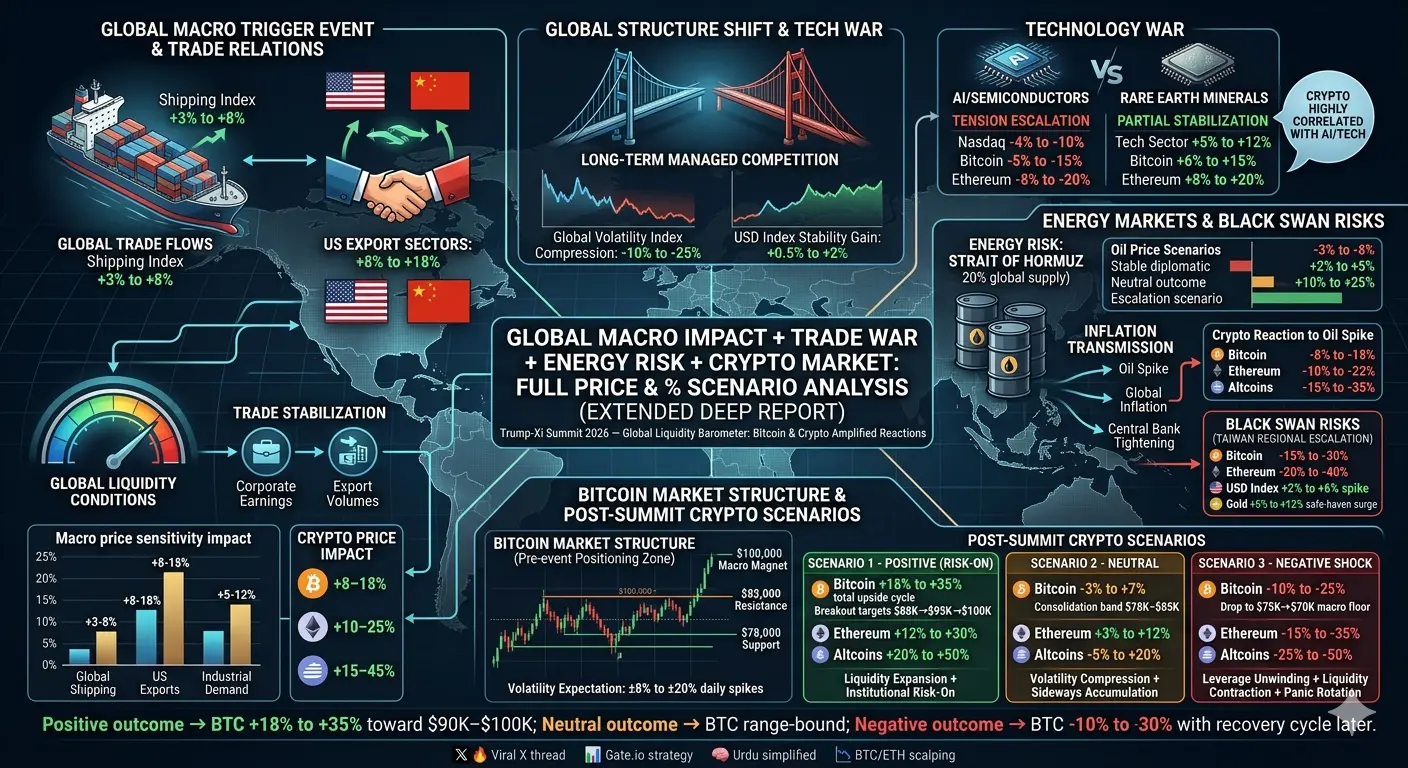
President Donald Trump’s official state visit to China from May 13 to May 15, 2026, represents one of the most significant geopolitical and economic coordination events of the decade, not because of symbolic diplomacy alone but because global financial markets are currently operating under extremely sensitive liquidity conditions where even small changes in trade expectations, energy stability, or geopolitical tone can rapidly reprice multi-trillion-dollar asset classes within hours, and at this moment Bitcoin is trading around the $78,000 to $82,500 zone while Ethereum fluctuates between $2,200 and $2,450 and global crypto market capitalization remains broadly in the $2.4 trillion to $2.8 trillion range, which indicates that risk appetite is still present but heavily dependent on macro stability signals emerging from high-level political discussions between the United States and China.
At the same time, crude oil remains structurally elevated with Brent crude trading near $104 to $108 per barrel and West Texas Intermediate fluctuating near $100 to $103 per barrel, reflecting ongoing geopolitical risk premiums tied to Middle East tensions and energy route security concerns, while gold continues to hold near historic elevated levels around $4,650 to $4,720 per ounce as investors maintain hedging positions against uncertainty, and this combination of elevated commodities alongside volatile but resilient crypto pricing creates a unique macro environment where every diplomatic signal from the Trump–Xi summit directly influences liquidity allocation across global financial systems.
Geopolitical Structure — Trade, Energy Security, and Strategic Balance Between Superpowers
The Trump–Xi meeting is centered around a multi-layered strategic framework that includes trade normalization discussions, energy market stabilization, geopolitical risk de-escalation, and long-term economic cooperation mechanisms that could reshape global supply chains, and the trade component alone carries potential implications for hundreds of billions of dollars in global flows, including possible agreements that could expand U.S.–China bilateral trade toward the $650 billion to $750 billion range annually if tariff easing on non-sensitive goods progresses, while also opening pathways for large-scale Chinese purchases of U.S. agricultural products valued between $25 billion and $40 billion and energy imports including LNG contracts that could exceed $15 billion to $25 billion depending on negotiation outcomes.
At the same time, aviation and industrial sectors are closely monitoring potential Boeing aircraft agreements that could range from $18 billion to $35 billion, and this alone is capable of influencing equity markets, aerospace indices, and currency flows, while simultaneously supporting broader U.S. export momentum, and in parallel energy security discussions around the Strait of Hormuz remain critically important because nearly 20% to 25% of global oil transit flows through this region, and any disruption or reassurance signal emerging from U.S.–China coordination could immediately shift oil pricing dynamics by $5 to $10 per barrel within short trading sessions.
Oil Market Dynamics — High Volatility Energy Pricing Driven by Geopolitical Risk Premium
The oil market currently remains in a structurally elevated volatility regime where Brent crude is oscillating between $104 and $108 while WTI crude is stabilizing around $100 to $103, and this pricing behavior reflects not only supply and demand fundamentals but also persistent geopolitical uncertainty linked to Iran-related tensions and global shipping route stability, and in such an environment even minor diplomatic signals from the Trump–Xi summit have the potential to generate large directional moves because if negotiations indicate improved energy cooperation or de-escalation of regional tensions then Brent crude could gradually retreat toward a $92 to $98 stabilization range while WTI could compress toward $88 to $94 levels as risk premiums decline, however if discussions fail to reduce geopolitical uncertainty or if tensions escalate further then oil could rapidly extend toward $110 to $120 for Brent and $105 to $115 for WTI, creating inflationary pressure across global economies and directly influencing central bank policy expectations.
This oil volatility is particularly important because energy pricing acts as a primary inflation driver, and any sustained move above the $100 threshold historically increases inflation expectations across both developed and emerging markets, which then feeds directly into interest rate speculation, bond yield movements, and ultimately risk asset behavior including equities and cryptocurrencies.
Gold Market Structure — Safe-Haven Capital Flow and Macro Hedge Positioning
Gold continues to function as the primary global safe-haven asset in the current macro environment, trading within a high-value consolidation zone between $4,650 and $4,720 per ounce while silver remains elevated near $82 to $86 per ounce and platinum trades between $2,050 and $2,150, reflecting broad precious metals strength driven by geopolitical uncertainty and inflation protection demand, and institutional investors continue to allocate capital into gold as a portfolio hedge against both currency volatility and geopolitical instability, particularly during high-level diplomatic events such as the Trump–Xi summit where uncertainty around outcomes tends to temporarily increase hedging demand.
If diplomatic outcomes from the summit show clear de-escalation in trade tensions and energy-related conflicts, gold may experience short-term profit-taking pressure toward the $4,500 to $4,600 zone as risk appetite improves, however if negotiations fail to reduce geopolitical uncertainty or if new tensions emerge, gold could extend its upward trajectory toward $4,800 to $5,000 and potentially even higher in extreme risk scenarios, reinforcing its role as a global liquidity safety asset.
Crypto Market Structure — Bitcoin at Macro Inflection Point with Institutional Flow Sensitivity
The cryptocurrency market remains in a structurally important consolidation phase where Bitcoin is trading near $78,000 to $82,500 while Ethereum fluctuates between $2,200 and $2,450 and major altcoins including XRP and Solana continue moving in correlation-driven cycles, and the broader crypto market cap remains above $2.4 trillion, showing sustained institutional participation through ETF inflows and derivatives positioning, and at this stage Bitcoin is particularly sensitive to macro developments emerging from geopolitical negotiations because it has evolved into a hybrid asset that reacts both to liquidity expansion and risk sentiment simultaneously.
From a technical macro perspective Bitcoin maintains strong support near $75,000 to $78,000 while resistance remains clustered around $82,500 to $85,000 and a confirmed breakout above this range could open upside expansion toward $88,000 to $92,000 and potentially even $95,000 to $105,000 if macro liquidity conditions improve, while downside scenarios linked to geopolitical escalation could result in retracement toward $74,000 or even $70,000 zones depending on severity of global risk repricing.
Institutional flows continue to play a major role in stabilizing Bitcoin’s structure as ETF inflows remain steady in the range of hundreds of millions per week and whale accumulation cycles continue absorbing supply during dips, which reduces downside volatility compared to earlier market cycles and supports a more structured long-term bullish trajectory.
Cross-Asset Correlation — How Oil, Gold, and Crypto Move Together in 2026 Macro Cycle
In the current macro environment, cross-asset correlation has strengthened significantly because oil price movements directly influence inflation expectations, gold reflects global uncertainty and liquidity hedging behavior, and Bitcoin represents a hybrid risk-on and liquidity-sensitive digital asset, and as a result these three markets are now interconnected in a way that means geopolitical headlines from events such as the Trump–Xi summit can simultaneously trigger movements across all three asset classes within a very short timeframe.
When oil rises above $100, inflation fears increase, which typically supports gold but pressures risk assets including Bitcoin in the short term, while when diplomatic outcomes reduce energy risk premiums, oil stabilizes, inflation expectations decline, and liquidity flows tend to rotate back into equities and crypto, creating a more favorable environment for Bitcoin expansion cycles.
Trading Strategy Outlook — Multi-Scenario Macro Positioning Framework
In a bullish diplomatic outcome scenario where trade agreements progress and energy tensions ease, Bitcoin is expected to hold above $78,000 and gradually move toward $85,000 followed by $90,000 and potentially $100,000 levels, Ethereum could move toward $2,600 to $3,000, oil could decline toward $92 to $98, and gold could retrace toward $4,500 to $4,600 as risk appetite increases and liquidity rotates into growth-oriented assets.
In a bearish escalation scenario where geopolitical tensions intensify or negotiations fail, Bitcoin could retest $74,000 to $70,000 levels, Ethereum could fall toward $2,000 or lower, oil could surge toward $110 to $120, and gold could accelerate toward $4,800 to $5,000 as safe-haven demand increases significantly across global markets.
In a neutral consolidation scenario where outcomes remain unclear, markets are expected to remain range-bound with Bitcoin between $76,000 and $83,000, oil between $100 and $106, and gold between $4,600 and $4,750 while traders focus on short-term volatility opportunities rather than directional positioning.
Final Market Interpretation — Global Liquidity Decision Point Driven by Geopolitics
The Trump–Xi summit represents a critical inflection point for global financial markets because it directly influences trade expectations, energy pricing stability, inflation trajectory, and risk sentiment across all major asset classes, and in a world where Bitcoin trades near $80,000, oil remains above $100, and gold is near record levels, even small diplomatic signals can create large-scale capital rotation between safe-haven assets and risk assets within extremely short timeframes, making this event one of the most important macro volatility triggers of 2026 where traders must carefully monitor liquidity shifts, correlation changes, and institutional flow behavior in order to navigate the next phase of global market direction.
repost-content-media
  • Reward
  • Comment
  • Repost
  • Share
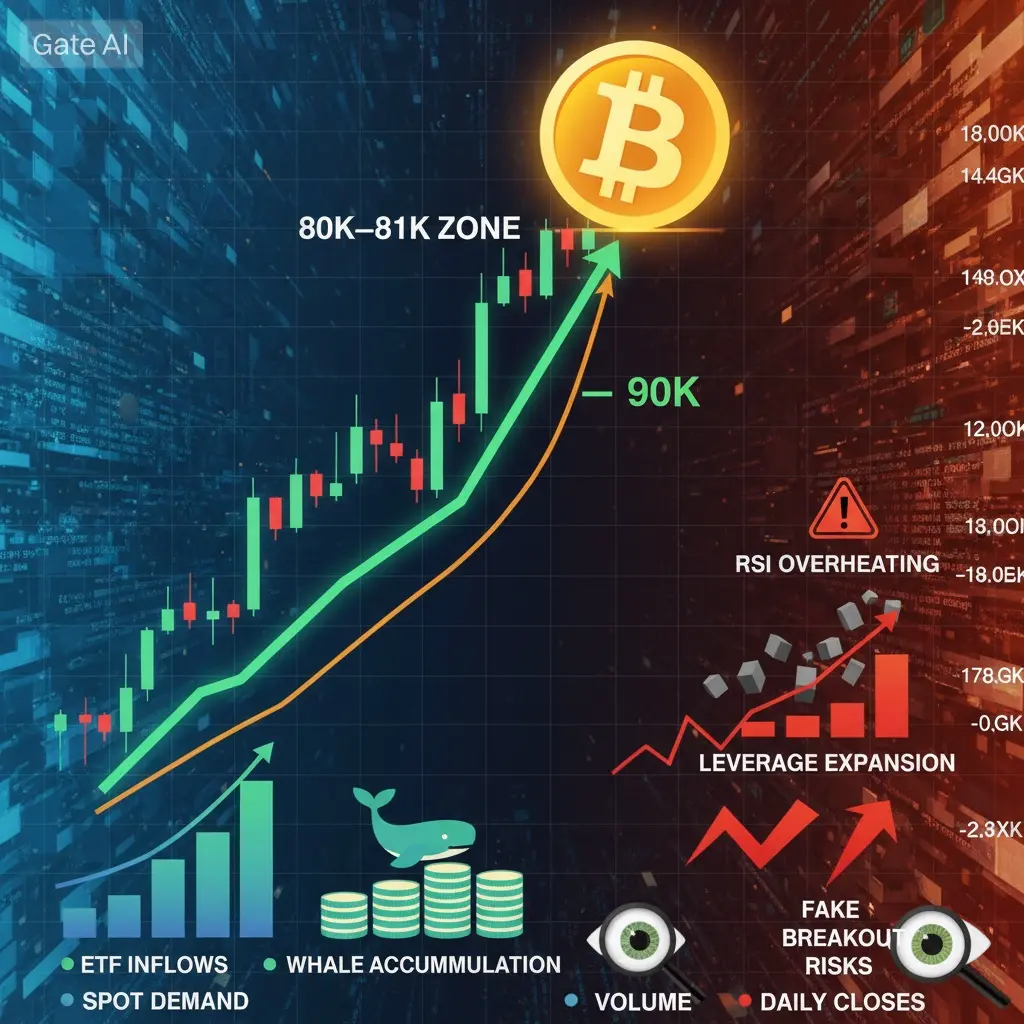
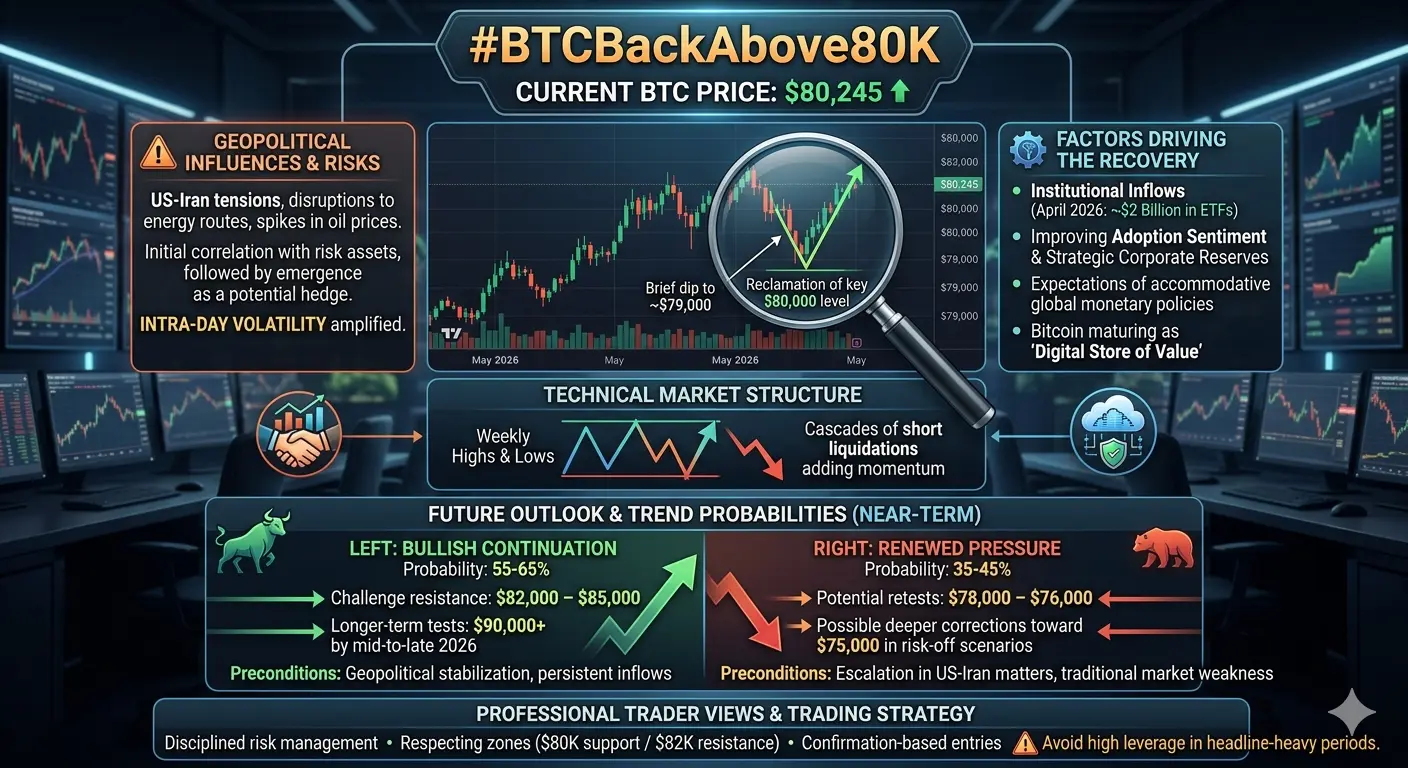
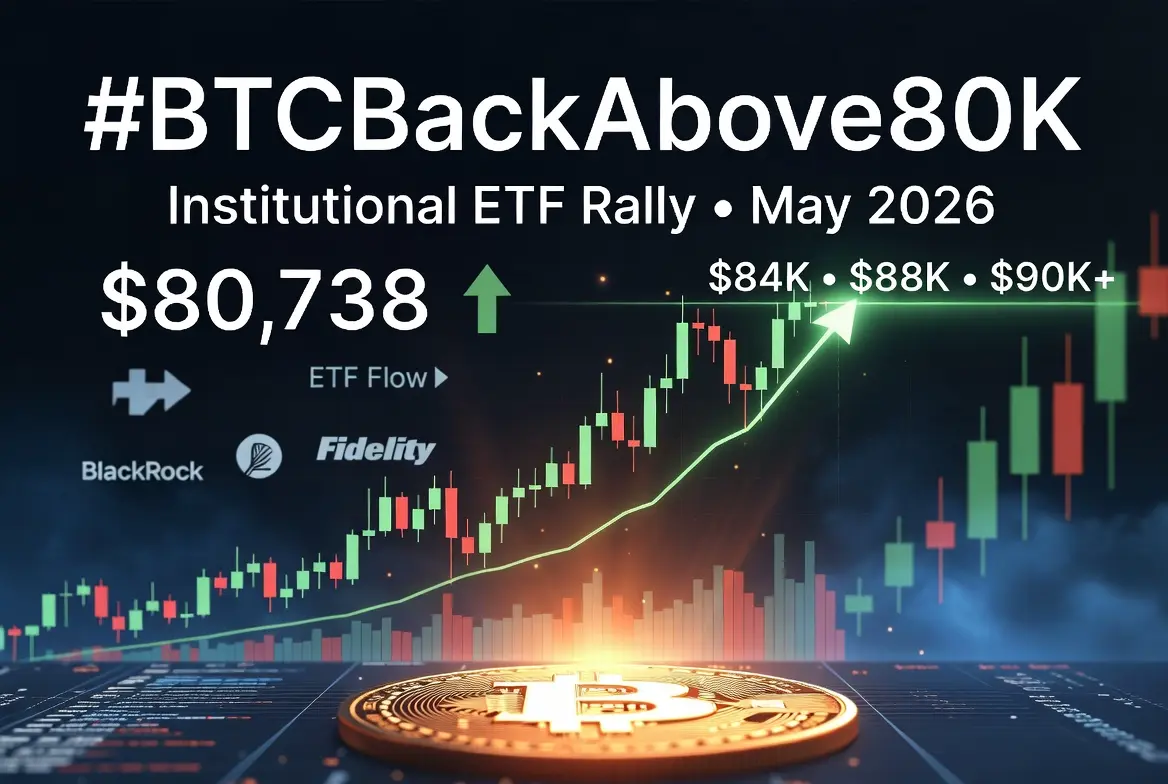
#BTCBackAbove80K
Bitcoin Reclaims $80,000
Bitcoin has officially reclaimed the major $80,000 psychological level in May 2026, marking one of the most important structural recoveries since the correction from the October 2025 all-time high above $126,000.
BTC is currently trading around $80,700–$81,000 after reaching intraday highs near $81,200 during recent sessions. This recovery represents:
+14.7% rebound from April lows near $68,000–$70,000
+7%+ rally within recent trading sessions
More than +18% recovery from local panic zones
BTC dominance remaining close to 60%
Daily trading volume ex
HighAmbition
#BTCBackAbove80K
Bitcoin Reclaims $80,000
Bitcoin has officially reclaimed the major $80,000 psychological level in May 2026, marking one of the most important structural recoveries since the correction from the October 2025 all-time high above $126,000.
BTC is currently trading around $80,700–$81,000 after reaching intraday highs near $81,200 during recent sessions. This recovery represents:
+14.7% rebound from April lows near $68,000–$70,000
+7%+ rally within recent trading sessions
More than +18% recovery from local panic zones
BTC dominance remaining close to 60%
Daily trading volume exceeding $16B+
The reclaim of $80K is not just another price move — it represents a major shift in: • Market psychology
• Institutional confidence
• ETF-driven demand
• Global liquidity positioning
• Risk appetite across financial markets
• Macro sentiment and speculative positioning
━━━━━━━━━━━━━━━━━━ BITCOIN PRICE STRUCTURE ANALYSIS ━━━━━━━━━━━━━━━━━━
Bitcoin spent several months consolidating below the critical $79K–$80K resistance zone after the sharp correction from the October 2025 ATH above $126K.
The correction pushed BTC through multiple support levels: $110K → $95K → $88K → $82K → eventually $68K–$70K support zones.
This represented approximately: -36% to -46% downside from peak levels depending on entry zones.
Despite the correction: • Long-term bullish structure remained intact
• ETF inflows stayed positive overall
• Institutional exposure continued increasing
• Whale wallets accumulated aggressively during weakness
• Long-term holders showed limited panic selling
The market entered a prolonged accumulation range between: $75K–$79K
Multiple breakout attempts failed initially because of: • Fed uncertainty
• US-Iran conflict fears
• Risk-off positioning in global markets
• Strong USD conditions
• Weak macro liquidity environment
However, early May 2026 completely changed momentum conditions.
━━━━━━━━━━━━━━━━━━ THE BREAKOUT ABOVE $80K ━━━━━━━━━━━━━━━━━━
Bitcoin finally broke above $80,000 during Asian trading sessions around May 4–5.
BTC surged toward: $80,529
then stabilized near: $80,700–$81,000
This breakout was highly important technically because it: • Broke multi-month resistance
• Shifted short-term structure bullish
• Triggered derivatives momentum expansion
• Forced short liquidations
• Increased spot buying activity
• Rebuilt trader confidence
Derivatives data showed: • Taker buy pressure exceeding $1B+ during some sessions
• Funding rates turning positive again
• Open interest expansion across major exchanges
• Increased futures positioning from institutional desks
Volume confirmation significantly strengthened the credibility of the breakout.
━━━━━━━━━━━━━━━━━━ ETF FLOWS & INSTITUTIONAL DEMAND ━━━━━━━━━━━━━━━━━━
One of the strongest drivers behind Bitcoin’s resilience remains institutional participation.
Spot Bitcoin ETFs continue attracting billions in capital.
Estimated inflows: $2.4B+ during April 2026 alone
Tens of billions cumulative since ETF approvals
Growing hedge fund, pension, and corporate exposure
Institutional investors increasingly treat Bitcoin as: • Digital reserve asset
• Long-term macro hedge
• Inflation-resistant allocation
• Portfolio diversification instrument
• High-growth asymmetric investment
This cycle differs from previous retail-dominated cycles because institutional capital is now providing stronger structural support during corrections.
Large wallet accumulation patterns suggest: Smart money continues buying fear while retail traders remain cautious.
━━━━━━━━━━━━━━━━━━ GLOBAL LIQUIDITY & FED EXPECTATIONS ━━━━━━━━━━━━━━━━━━
Another major bullish catalyst is improving global liquidity expectations.
Markets are increasingly pricing in: • Slower monetary tightening
• Potential Fed stabilization
• Improving liquidity conditions
• Reduced pressure on risk assets
Historically, Bitcoin performs strongly when: • Liquidity expands
• Bond yields weaken
• Risk appetite improves
• Dollar strength slows
This macro shift is beginning to support crypto markets again after months of pressure.
━━━━━━━━━━━━━━━━━━ US-IRAN CONFLICT & GEOPOLITICAL IMPACT ━━━━━━━━━━━━━━━━━━
Geopolitical developments continue heavily influencing crypto volatility.
The ongoing US-Iran conflict has now exceeded 70 days, creating uncertainty around: • Oil markets
• Shipping routes
• Inflation expectations
• Energy supply chains
• Global macro stability
The Strait of Hormuz remains one of the world’s most critical geopolitical pressure points.
Recent developments include: • Partial ceasefire discussions
• Diplomatic mediation through Pakistan & Qatar
• Maritime security operations
• Reduced escalation rhetoric
These developments caused: Brent crude oil to decline nearly 5% during some sessions.
Lower oil prices helped: • Reduce inflation fears
• Improve market sentiment
• Support equities and crypto recovery
• Strengthen Bitcoin’s reclaim above $80K
However, renewed escalation could rapidly increase market volatility again.
━━━━━━━━━━━━━━━━━━ BROADER CRYPTO MARKET CONDITIONS ━━━━━━━━━━━━━━━━━━
The broader crypto market is also improving alongside BTC.
Estimated market conditions: Total crypto market cap near $2.8T
Bitcoin dominance around 60%
ETH trading near $2,300
ETH remains 50%+ below ATH
Daily BTC volume above $16B
Meanwhile: • Solana ecosystems
• AI-related narratives
• Layer-1 projects
• DeFi sectors
• Mid-cap altcoins
are showing improving momentum and capital inflows.
Capital rotation has started expanding beyond Bitcoin dominance, often signaling: • Early-stage expansion conditions
• Increasing speculative confidence
• Potential broader bull market continuation
━━━━━━━━━━━━━━━━━━ ON-CHAIN DATA & WHALE BEHAVIOR ━━━━━━━━━━━━━━━━━━
On-chain activity also supports bullish arguments.
Current observations: • Exchange BTC reserves declining
• Long-term holders remaining inactive
• Whale accumulation increasing
• Stablecoin liquidity improving
• Reduced panic selling pressure
Lower exchange reserves often create: Supply compression during demand spikes.
At the same time: Retail participation still remains moderate compared to euphoric cycle peaks.
This suggests: The market may still be in a mid-cycle expansion phase rather than near a final top.
━━━━━━━━━━━━━━━━━━ TECHNICAL STRUCTURE & KEY LEVELS ━━━━━━━━━━━━━━━━━━
Current BTC structure suggests: • Higher lows formation
• Ascending support structure
• Improving RSI and momentum conditions
• Strength above key moving averages
• Bullish short-term market structure
Key Resistance Levels: $81,500
$82,000
$85,000
$90,000
$100,000 psychological zone
Key Support Levels: $80,000
$79,000
$77,000
$75,000
$70,000 macro support
If BTC successfully holds above: $80K–$82K
The probability increases for continuation toward: $85K–$90K
━━━━━━━━━━━━━━━━━━ MARKET PSYCHOLOGY & TRADER SENTIMENT ━━━━━━━━━━━━━━━━━━
The reclaim of $80K has significantly changed trader psychology.
Previous market behavior: • Fear-driven selling
• Distribution concerns
• Defensive positioning
• Panic around macro conditions
Current market behavior: • Recovery optimism
• Re-accumulation activity
• Increased bullish confidence
• Gradual return of speculative positioning
However, volatility remains elevated.
Current market conditions still include: • Liquidity sweeps
• Rapid leverage liquidations
• Emotional overtrading risks
• Macro headline sensitivity
This environment rewards: • Patience
• Structure
• Risk management
rather than emotional decision-making.
━━━━━━━━━━━━━━━━━━ WHAT ARE TRADERS CURRENTLY THINKING? ━━━━━━━━━━━━━━━━━━
Current trader sentiment is divided into three major groups.
Bullish Continuation Traders This group believes Bitcoin completed its correction and is preparing for another expansion phase.
Bullish arguments include: • Strong ETF inflows
• Institutional accumulation
• Improving macro conditions
• Strong support above $80K
• Healthy BTC dominance near 60%
Most bullish traders currently target: $85K → $90K → eventually $100K+
Neutral / Range Traders This group believes BTC may consolidate between: $75K–$85K
before deciding the next macro trend direction.
They focus on: • Volatility trading
• Range opportunities
• Scalping liquidity movements
• Macro headline reactions
Bearish Traders Bearish traders believe: • Macro risks remain dangerous
• Geopolitical tensions could escalate again
• BTC remains below previous ATH
• Profit-taking pressure may increase near resistance
This group expects: Possible rejection near: $82K–$85K
followed by pullbacks toward: $75K–$77K or even $70K.
━━━━━━━━━━━━━━━━━━ TRADING STRATEGY & NEXT PLAN ━━━━━━━━━━━━━━━━━━
Current market conditions favor structured trading over emotional chasing.
Recommended strategy: • Avoid FOMO after large green candles
• Focus on pullback opportunities
• Scale entries gradually
• Monitor volume confirmation carefully
• Take partial profits near resistance zones
• Avoid excessive leverage
Key Entry Zones: Aggressive dip entries: $79,500–$80,000
Strong accumulation zones: $77,000–$78,000
Deep correction opportunity: $70,000–$75,000
Breakout confirmation entries: Above $82,000 with strong volume.
━━━━━━━━━━━━━━━━━━ UPSIDE POTENTIAL & PRICE TARGETS ━━━━━━━━━━━━━━━━━━
If BTC successfully maintains support above $80K:
Short-term targets: $82K
$85K
$88K–$90K
Medium-term targets: $100K
$110K
$120K
Long-term bullish scenarios: $130K–$150K possible during 2026 if: • ETF inflows continue accelerating
• Global liquidity improves further
• Fed pressure weakens
• Institutional adoption expands globally
Extreme bullish scenarios discussed by some analysts: $180K+
Potential upside from current levels near $81K: +11% to $90K
+23–25% to $100K
+48% to $120K
+85% to $150K
━━━━━━━━━━━━━━━━━━ DOWNSIDE RISKS ━━━━━━━━━━━━━━━━━━
Despite bullish recovery, several risks remain important.
Potential bearish catalysts: • Renewed geopolitical escalation
• Fed tightening surprises
• Inflation rebound
• ETF outflows
• Large-scale profit-taking
• Strong USD recovery
Potential downside scenarios: Below $79K → retest $75K–$77K
Below $75K → possible move toward $70K
Extreme panic → deeper liquidity sweep conditions
However, structural demand currently appears stronger than during previous cycles.
━━━━━━━━━━━━━━━━━━ SMART MONEY VS RETAIL BEHAVIOR ━━━━━━━━━━━━━━━━━━
One important observation: Institutional investors and whales appear significantly calmer than retail traders.
Current smart money behavior suggests: • Strategic accumulation during fear
• Reduced emotional selling
• Long-term positioning
• Controlled exposure management
Meanwhile, retail traders continue: • Overtrading volatility
• Chasing momentum emotionally
• Using excessive leverage
• Reacting heavily to headlines
Historically: Markets reward patience and discipline more than emotional aggression.
━━━━━━━━━━━━━━━━━━ FINAL OUTLOOK ━━━━━━━━━━━━━━━━━━
Bitcoin reclaiming $80,000 represents far more than a simple technical breakout.
It signals: • Renewed institutional confidence
• Improving macro conditions
• Stronger liquidity flows
• Continued ETF demand
• Recovery in market sentiment
• Rebuilding bullish momentum
The market is transitioning from defensive consolidation toward constructive bullish expansion.
The next major battle zones remain: $82K
$85K
$90K
If Bitcoin successfully establishes support above these regions, the path toward: $100K–$120K+ becomes increasingly realistic during the broader 2026 cycle.
For now: $80,000 is no longer acting as resistance — it is beginning to act as a new structural floor for Bitcoin.
#GateSquareMayTradingShare: #GateSquare #ContentMining #CreatorCarnival
repost-content-media
  • Reward
  • Comment
  • Repost
  • Share
#BTCBreaks82000
Bitcoin is currently transitioning through one of its most critical decision zones of the mid-2026 cycle. The market is not simply reacting to price movement — it is responding to structural liquidity shifts, leveraged positioning resets, and sustained institutional accumulation.
The recent move toward $82,474 represents a liquidity breakout attempt from a multi-week compression range, followed by a controlled pullback toward the $81.4K region. This type of price action is typically associated with early expansion phases in macro bull cycles, where volatility increases but tre
BTC-1.36%
  • Reward
  • Comment
  • Repost
  • Share
#TrumpVisitsChinaMay13
Trump–Xi Summit 2026
INTRODUCTION — GLOBAL MACRO TRIGGER EVENT WITH DIRECT PRICE IMPACT
The Trump–Xi summit is being priced by global markets as a high-volatility macro catalyst because it directly influences global trade flows, inflation expectations, energy pricing, and institutional risk appetite. The most important point is that markets are not waiting for outcomes; instead, they are actively positioning for multiple possible scenarios, which is increasing volatility across crypto, equities, commodities, and forex simultaneously. Bitcoin and the broader crypto mark
BTC-1.36%
ETH-1.2%
HighAmbition
#TrumpVisitsChinaMay13
Trump–Xi Summit 2026
INTRODUCTION — GLOBAL MACRO TRIGGER EVENT WITH DIRECT PRICE IMPACT
The Trump–Xi summit is being priced by global markets as a high-volatility macro catalyst because it directly influences global trade flows, inflation expectations, energy pricing, and institutional risk appetite. The most important point is that markets are not waiting for outcomes; instead, they are actively positioning for multiple possible scenarios, which is increasing volatility across crypto, equities, commodities, and forex simultaneously. Bitcoin and the broader crypto market are acting as a global liquidity barometer, meaning price reactions are expected to be amplified compared to normal geopolitical events.
TRADE RELATIONS — DIRECT IMPACT ON GLOBAL LIQUIDITY & RISK ASSETS
At the core of negotiations is the stabilization of US–China trade relations after years of tariff pressure and supply chain disruption. Even partial progress in this area has a strong impact on global liquidity conditions because trade flows directly influence corporate earnings expectations, export volumes, and shipping activity across global markets.
If China increases agricultural imports such as soybeans, beef, and poultry, and if large industrial agreements such as aviation purchases are confirmed or even hinted, the impact on global markets would be immediate. Export-driven sectors in the US would benefit, while global logistics and shipping demand would increase, improving macro sentiment.
Macro price sensitivity impact:
Global shipping & trade index: +3% to +8%
US export sectors: +8% to +18%
Industrial demand confidence: +5% to +12%
Crypto price impact (liquidity transmission effect):
Bitcoin: +8% to +18% short-term upside
Ethereum: +10% to +25% upside
Altcoins: +15% to +45% (high beta expansion phase)
GLOBAL STRUCTURE SHIFT — MANAGED COMPETITION ECONOMY
The summit reflects a transition into a long-term managed competition framework, where both the US and China aim to avoid full economic decoupling while still maintaining strategic rivalry. This structure is important for markets because it reduces extreme uncertainty while keeping moderate geopolitical tension intact.
Market volatility effect:
Global volatility index compression: -10% to -25%
USD index stability gain: +0.5% to +2%
Equity risk premium reduction: moderate bullish bias
Crypto implication: Lower uncertainty = higher liquidity tolerance = stronger risk-on flows
TECHNOLOGY WAR — SEMICONDUCTORS, AI, AND RARE EARTH DOMINANCE
The technology conflict remains one of the strongest drivers of medium-term market volatility. The US continues restricting advanced semiconductor exports, particularly AI-related chips, while China retains strategic leverage through rare earth minerals, which are essential for EVs, defense systems, and electronics manufacturing.
If tensions escalate in tech sector:
Nasdaq: -4% to -10%
Bitcoin: -5% to -15%
Ethereum: -8% to -20%
Altcoins: -15% to -40%
If partial stabilization or compromise signals emerge:
Tech sector: +5% to +12%
Bitcoin: +6% to +15%
Ethereum: +8% to +20%
Altcoins: +12% to +35%
Key insight: Crypto is now highly correlated with AI/tech sentiment cycles.
ENERGY MARKETS — INFLATION SHOCK MULTIPLIER EFFECT
Energy markets remain one of the most critical transmission channels between geopolitics and crypto pricing. The Strait of Hormuz remains a key risk factor, as it handles nearly 20% of global oil supply.
Oil price scenarios:
Stable diplomatic outcome: -3% to -8% oil correction
Neutral outcome: +2% to +5% fluctuation range
Escalation scenario: +10% to +25% oil spike
Inflation transmission effect:
Oil spike → global inflation expectation: +0.3% to +1.2% increase
Central bank tightening expectation: high probability rise
Crypto reaction to oil spike:
Bitcoin: -8% to -18% correction risk
Ethereum: -10% to -22%
Altcoins: -15% to -35%
If oil stabilizes:
Crypto rebound potential: +5% to +12% recovery wave
BLACK SWAN RISKS — TAIWAN & REGIONAL ESCALATION SCENARIO
Taiwan remains the highest-impact geopolitical tail risk in global markets.
If escalation occurs (low probability but high impact):
Bitcoin: -15% to -30% flash correction
Ethereum: -20% to -40%
Altcoins: -25% to -50% liquidation wave
USD index: +2% to +6% spike
Gold: +5% to +12% safe-haven surge
Market behavior: rapid deleveraging followed by stabilization phase after panic absorption.
BITCOIN MARKET STRUCTURE — PRE-EVENT POSITIONING ZONE
Bitcoin is currently in a macro bullish structure with short-term consolidation behavior, trading within a key liquidity zone where both upside breakout and downside liquidation risks are active simultaneously.
Current structural range:
Support zone: $78,000 – $80,000
Resistance zone: $82,000 – $86,000
Breakout extension zone: $90,000 – $100,000 potential macro magnet level
Volatility expectation:
Pre-event swing range: ±8% to ±20% daily volatility spikes possible
Derivatives leverage risk zone: high liquidation sensitivity above $82K–$85K
POST-SUMMIT CRYPTO SCENARIOS — FULL PRICE & % BREAKDOWN
SCENARIO 1 — POSITIVE OUTCOME (RISK-ON EXPANSION PHASE)
If trade stabilizes, tech tensions ease, and energy risks decline:
Bitcoin:
Immediate move: +8% to +18%
Extended rally potential: +18% to +35% total upside cycle extension
Breakout targets: $88K → $95K → $100K
Ethereum:
+12% to +30% upside potential
Stronger momentum due to DeFi + staking flows
Altcoins:
+20% to +50% explosive rally zone
High-beta coins may outperform significantly
Market condition: Liquidity expansion + institutional risk-on rotation
⚪ SCENARIO 2 — NEUTRAL OUTCOME (MOST PROBABLE RANGE BOUND PHASE)
If limited agreements only:
Bitcoin:
Range: -3% to +7%
Consolidation band: $78K – $85K
Ethereum:
+3% to +12%
Altcoins:
-5% to +20% mixed performance
Market condition: Volatility compression + sideways accumulation phase
SCENARIO 3 — NEGATIVE SHOCK OUTCOME (RISK-OFF LIQUIDATION PHASE)
If tensions escalate across trade, tech, or energy systems:
Bitcoin:
Drop: -10% to -25%
Extreme downside wick: -30% possible in panic phase
Key support: $75K → $70K macro floor
Ethereum:
-15% to -35% correction risk
Altcoins:
-25% to -50% liquidation wave possible
Market condition: Leverage unwinding + liquidity contraction + panic rotation
INSTITUTIONAL FLOW STRUCTURE — STRONG BUT SENSITIVE
ETF inflows remain positive structural support
Long-term holders remain inactive (strong conviction)
Institutions using volatility dips for accumulation
Derivatives positioning highly leveraged around key zones
Interpretation: Market is structurally bullish but tactically fragile
FINAL MARKET CONCLUSION — GLOBAL REPRICING EVENT
The Trump–Xi summit is a global macro repricing catalyst where trade stability, energy flows, inflation expectations, and tech competition all converge into one synchronized market reaction system.
Final outcome logic:
Positive outcome → BTC +18% to +35% macro continuation toward $90K–$100K zone
⚪ Neutral outcome → BTC range-bound (-3% to +7%) consolidation phase
Negative outcome → BTC -10% to -30% volatility correction with recovery cycle later
repost-content-media
  • Reward
  • Comment
  • Repost
  • Share
#CapitalFlowsBackToAltcoins
CLARITY ACT AND GLOBAL CRYPTO MARKET
The Digital Asset Market Clarity Act of 2025 represents a historic structural transformation in global cryptocurrency regulation because it replaces years of uncertainty driven enforcement with a clearly defined legal architecture that directly reshapes how digital assets are classified traded taxed and institutionally adopted
This is not a normal policy update but a full regulatory framework shift that changes market behavior at every level from retail speculation to sovereign level capital allocation and long term institution
HighAmbition
#CapitalFlowsBackToAltcoins
CLARITY ACT AND GLOBAL CRYPTO MARKET
The Digital Asset Market Clarity Act of 2025 represents a historic structural transformation in global cryptocurrency regulation because it replaces years of uncertainty driven enforcement with a clearly defined legal architecture that directly reshapes how digital assets are classified traded taxed and institutionally adopted
This is not a normal policy update but a full regulatory framework shift that changes market behavior at every level from retail speculation to sovereign level capital allocation and long term institutional portfolio construction
For more than a decade crypto markets operated under regulatory ambiguity where classification was unclear enforcement was unpredictable and compliance risk acted as a hidden tax on valuation this created what is known as the regulatory uncertainty discount which suppressed capital inflows and increased volatility across all asset classes
The CLARITY Act removes this structural inefficiency by defining a three layer classification system that separates digital assets into securities under SEC jurisdiction digital commodities under CFTC jurisdiction and stablecoins under a shared regulatory model this separation eliminates overlapping enforcement conflicts and introduces predictable compliance pathways for exchanges issuers and investors
A key innovation is the introduction of a maturity based blockchain classification system which allows tokens to transition from securities into commodities once they achieve decentralization thresholds such as validator distribution governance independence and network activity dispersion this creates a legal upgrade path that fundamentally changes long term valuation dynamics of blockchain projects
The expansion of CFTC authority over digital commodity spot markets brings centralized exchanges under a unified regulatory framework while preserving decentralization at protocol level unless custodial control is involved this significantly reduces systemic risk perception for institutional investors and increases liquidity confidence across major trading venues
Stablecoin regulation remains one of the most influential macro drivers within the bill the final compromise restricts passive yield mechanisms that mimic traditional banking interest but allows activity based incentives tied to usage and engagement this protects traditional banking systems while still enabling crypto ecosystem growth and adoption acceleration
From a macro financial perspective markets are now transitioning from uncertainty pricing to clarity pricing which means valuation is no longer driven by fear of regulation but by structured and predictable regulatory cost frameworks this transition historically leads to major liquidity expansion cycles across risk assets
CURRENT MARKET STRUCTURE AND PRICE LANDSCAPE MAY 2026
Bitcoin BTC is currently positioned in a strong institutional accumulation range between $80,000 and $82,500 with structural support zones at $78,000 $75,000 and deeper macro support near $72,000 resistance levels are positioned at $85,000 $88,000 $94,000 with psychological expansion targets at $100,000 $110,000 and long term liquidity driven extension zones beyond that range depending on ETF inflows and sovereign demand acceleration
Ethereum ETH is consolidating in the $2,300 to $2,360 range with key structural support at $2,150 $2,000 and $1,800 resistance levels are located at $2,600 $2,800 $3,000 and extended breakout regions between $3,200 and $3,800 depending on DeFi recovery and staking framework clarity
Altcoin market structure remains highly sensitive to liquidity cycles with beta multipliers ranging between 2x and 5x relative to Bitcoin directional movement meaning small changes in Bitcoin price can create amplified reactions across altcoin sectors
BITCOIN BTC INSTITUTIONAL REPRICING AND MACRO DOMINANCE MODEL
Bitcoin remains the primary beneficiary of regulatory clarity due to its classification as a digital commodity and its deep integration into institutional investment frameworks including ETFs custody solutions sovereign accumulation and corporate treasury adoption
In bullish regulatory confirmation scenarios Bitcoin is expected to deliver immediate upside expansion between 8 percent and 18 percent over short to medium term cycles translating from current levels into potential movement toward $88,000 $96,000 with extended momentum phases reaching $100,000 to $110,000 depending on ETF inflow velocity which could range between $5 billion and $15 billion weekly in strong risk on environments
Short term volatility around legislative milestones is expected to remain contained within 3 percent to 7 percent reflecting headline driven repositioning rather than structural weakness
In restrictive or delayed scenarios downside correction risk remains limited between 5 percent and 10 percent with strong accumulation zones expected near $73,000 to $76,000 while deeper breakdown probability below $70,000 remains low due to institutional demand absorption
Over a 3 to 12 month horizon post regulatory clarity Bitcoin could experience a structural repricing cycle of 25 percent to 60 percent or more as regulatory risk premiums compress and institutional allocation expands potentially establishing new macro discovery price zones above previous cycle highs
ETHEREUM ETH INFRASTRUCTURE MULTIPLIER AND NETWORK VALUE EXPANSION
Ethereum functions as the programmable settlement layer of the digital economy and therefore reacts more sensitively to regulatory classification especially around DeFi staking and smart contract financial systems
In bullish CLARITY Act outcomes Ethereum is projected to outperform Bitcoin in percentage terms with upside ranges between 12 percent and 28 percent in early phases translating into potential price expansion toward $2,700 $3,000 and extended bullish targets between $3,200 and $3,800 depending on liquidity rotation and institutional adoption of tokenized real world assets
In stronger macro expansion cycles Ethereum could extend toward $4,000 to $4,500 representing 60 percent to 80 percent upside potential driven by DeFi capital return Layer 2 scaling growth and institutional blockchain infrastructure adoption
However Ethereum carries higher volatility exposure with potential downside correction ranges between 8 percent and 18 percent if staking regulation introduces compliance friction or if DeFi classification becomes restrictive
This makes Ethereum a high beta infrastructure asset that underperforms Bitcoin in early uncertainty phases but significantly outperforms during confirmed regulatory expansion cycles
ALTCOINS HIGH BETA LIQUIDITY EXPLOSION AND RISK EXPANSION ZONE
Altcoins represent the highest volatility segment in the crypto market and function as liquidity amplification instruments during regulatory clarity cycles due to their dependence on sentiment liquidity and exchange accessibility
Large cap altcoins such as SOL XRP ADA AVAX typically generate upside ranges between 15 percent and 45 percent in bullish regulatory scenarios for example SOL moving from $180 $200 toward $240 $280 XRP expanding toward $2.80 $3.50 depending on legal clarity and institutional listing support
Mid cap altcoins demonstrate higher elasticity with gains ranging between 25 percent and 90 percent during liquidity expansion cycles driven by retail inflows and speculative capital rotation
Small cap and memecoin segments represent extreme asymmetry where upside moves can range from 50 percent to 200 percent or higher during euphoric liquidity phases however downside risk is equally extreme with potential drawdowns between 40 percent and 80 percent during contraction cycles
This creates a structurally asymmetric environment where altcoins act as late cycle expansion engines and early cycle contraction accelerators making timing and liquidity awareness critical
GLOBAL CAPITAL ROTATION SEQUENCE UNDER CLARITY REGIME
Market behavior under regulatory clarity typically follows a structured three phase rotation model
Phase one Bitcoin leads as institutional capital enters and stabilizes market structure
Phase two Ethereum follows as infrastructure validation increases and smart contract capital reallocation begins
Phase three altcoins experience exponential expansion as risk appetite peaks and liquidity cascades into high beta instruments
In restrictive scenarios this sequence reverses with altcoins experiencing fastest and deepest corrections followed by Ethereum adjustment while Bitcoin remains relatively stable as the liquidity anchor asset
PROFESSIONAL TRADING STRATEGY AND POSITIONING FRAMEWORK
Professional traders approach CLARITY Act environments through adaptive multi phase positioning rather than static directional exposure
In early momentum phases focus remains on volatility breakout setups in Bitcoin and Ethereum with strict position sizing between 0.5 percent and 2 percent risk per trade while monitoring key breakout thresholds such as Bitcoin above $85,000 and Ethereum above $2,500 for confirmation signals
In accumulation phases portfolio structure typically evolves toward Bitcoin dominance of 40 percent to 60 percent Ethereum allocation of 20 percent to 35 percent and selective altcoin exposure of 10 percent to 20 percent based on relative strength and volume confirmation
In final regulatory confirmation phases exposure shifts toward high beta altcoins with staged profit taking strategies implemented at key percentage milestones such as 25 percent 50 percent 75 percent and 100 percent gains depending on asset volatility profile
Risk management remains essential across all phases with total portfolio risk maintained between 5 percent and 8 percent while using BTC dominance hedging strategies and reducing exposure ahead of high impact legislative events
MACRO IMPACT AND LONG TERM FINANCIAL SYSTEM TRANSFORMATION
The CLARITY Act is expected to compress crypto market risk premiums by approximately 15 percent to 35 percent over time which structurally increases total addressable market valuation and enables multi trillion dollar institutional capital inflows across digital assets tokenized securities and blockchain based financial infrastructure
Bitcoin strengthens as a global macro reserve asset Ethereum evolves into programmable financial infrastructure and altcoins function as innovation driven liquidity expansion instruments within the broader digital economy
FINAL MARKET CONCLUSION
The CLARITY Act does not create uniform price movement but instead establishes a multi layer rotation system where Bitcoin leads stability Ethereum amplifies infrastructure growth and altcoins generate high volatility expansion cycles
The key trading advantage in this environment is not prediction but structured rotation awareness disciplined risk control and adaptive capital allocation across different market phases
As Senate proceedings advance through May and June 2026 volatility is expected to increase liquidity cycles are likely to expand and institutional participation is expected to accelerate making this one of the most important structural transition periods in crypto market history
repost-content-media
  • Reward
  • Comment
  • Repost
  • Share
#BitcoinVolatility
BITCOIN VOLATILITY
Bitcoin volatility is the central driving force of the entire crypto market and in May 2026 it is operating in a more mature but still highly reactive phase where institutional participation has reduced chaotic randomness but has increased event driven sharp movements around liquidity flows regulatory developments and macroeconomic catalysts
In simple market structure terms Bitcoin is no longer behaving like a purely retail driven speculative asset but more like a global liquidity barometer that reacts to ETF inflows interest rate expectations regulatory
  • Reward
  • Comment
  • Repost
  • Share
#CapitalFlowsBackToAltcoins
CAPITAL FLOWS BACK TO ALTCOINS
INTRODUCTION TO CURRENT MARKET STRUCTURE AND CAPITAL ROTATION PHASE
The concept of capital flowing back into altcoins represents one of the most important and powerful phases in the entire crypto market cycle because it signals a transition from defensive accumulation in Bitcoin toward aggressive expansion into higher risk higher reward digital assets such as Ethereum and the broader altcoin ecosystem including Solana XRP ADA AVAX and emerging mid cap sectors
In my understanding of the current market structure this is not a random mo
HighAmbition
#CapitalFlowsBackToAltcoins
CAPITAL FLOWS BACK TO ALTCOINS
INTRODUCTION TO CURRENT MARKET STRUCTURE AND CAPITAL ROTATION PHASE
The concept of capital flowing back into altcoins represents one of the most important and powerful phases in the entire crypto market cycle because it signals a transition from defensive accumulation in Bitcoin toward aggressive expansion into higher risk higher reward digital assets such as Ethereum and the broader altcoin ecosystem including Solana XRP ADA AVAX and emerging mid cap sectors
In my understanding of the current market structure this is not a random movement of money but a highly structured liquidity cycle that repeats across every major crypto bull phase where Bitcoin first absorbs institutional capital then stabilizes and finally releases excess liquidity into Ethereum and altcoins in search of higher percentage returns
At the current stage of May 2026 I personally observe that the market is entering an early rotation phase where Bitcoin dominance is gradually weakening from previous highs and capital is slowly beginning to explore alternative assets with higher volatility and higher upside potential
BITCOIN DOMINANCE DECLINE AND CAPITAL ROTATION SIGNAL
One of the strongest signals confirming capital rotation is the decline in Bitcoin dominance from approximately 60 percent earlier in the cycle to around 51.8 percent in May 2026
In my opinion this is a very important structural shift because whenever Bitcoin dominance starts falling after a strong institutional rally it usually indicates that capital is no longer concentrating only in Bitcoin but is actively spreading into altcoins
Historically in both 2017 and 2021 cycles this exact pattern appeared before full scale altcoin rallies where Bitcoin dominance peaked and then gradually declined while altcoins started outperforming significantly
In numerical terms when Bitcoin dominance drops even by 5 to 10 percent it often leads to altcoin market expansions ranging from 50 percent to 300 percent depending on liquidity conditions and retail participation strength
ALTCOIN MARKET EXPANSION AND CAPITAL INFLOW STRUCTURE
The total altcoin market capitalization has now expanded to approximately 1.05 trillion to 1.06 trillion dollars which in my view is a strong confirmation that new capital is entering the crypto ecosystem rather than just rotating within Bitcoin alone
This expansion is extremely important because it shows that the market is not in a redistribution phase but in a growth phase where fresh liquidity is actively entering risk assets
At this stage the Altcoin Season Index has moved toward 42 out of 100 which means we are not yet in a full blown altseason but clearly in an early rotation phase where large cap altcoins begin to outperform Bitcoin before mid caps and small caps follow later
CAPITAL ROTATION PHASE STRUCTURE IN SIMPLE TERMS
From my perspective the crypto market always moves in a predictable liquidity waterfall structure
Phase 1 Bitcoin absorbs capital and stabilizes price between $75,000 and $85,000 range Phase 2 Ethereum starts outperforming with 12 percent to 28 percent upside moves Phase 3 Large cap altcoins begin explosive movement with 15 percent to 45 percent gains Phase 4 Mid cap altcoins follow with 25 percent to 90 percent gains Phase 5 Small cap and meme coins experience extreme volatility ranging from 50 percent to 200 percent or more
In my observation we are currently between Phase 2 and early Phase 3 which means Ethereum strength is improving and selected altcoins like SOL and SUI are already showing early double digit gains
ETHEREUM ROLE AS CAPITAL BRIDGE ASSET
Ethereum in my analysis acts as the most important bridge between Bitcoin stability and altcoin speculation
Currently Ethereum is trading around $2,300 to $2,360 and I personally believe that if capital rotation continues it can move toward $2,700 $3,000 and in stronger liquidity phases even $3,500 to $3,800 which represents a potential upside of 15 percent to 30 percent in short term and up to 60 percent to 80 percent in extended cycles
Ethereum is particularly important because institutional investors often rotate into ETH before moving into smaller altcoins due to its relative stability and strong infrastructure value in DeFi staking and tokenized asset ecosystems
INSTITUTIONAL ALTCOIN INFLOWS AND STRUCTURAL SHIFT
One of the most important developments in this cycle that I personally consider a game changer is the emergence of institutional capital flowing into altcoin related ETFs
For example SOL ETF inflows of approximately 19 million dollars and XRP inflows of around 4 million dollars show that institutional investors are no longer limited to Bitcoin exposure only
Combined altcoin ETF inflows reaching over 23 million dollars in a single session indicate that capital rotation is becoming structural rather than purely speculative
In my view this is one of the biggest differences between the current cycle and previous ones because in 2017 and 2021 altcoin rallies were mostly retail driven while in 2026 institutional participation is actively shaping rotation direction
ALTCOIN VOLATILITY AND RETURN POTENTIAL
Altcoins represent the highest risk and highest reward segment of the entire crypto market
Large cap altcoins like SOL XRP ADA and AVAX are currently positioned for potential moves between 15 percent to 45 percent in early rotation phases
For example SOL moving from $180 could realistically target $240 to $280 range representing nearly 30 percent to 50 percent upside potential
Mid cap altcoins have even higher volatility potential ranging from 25 percent to 90 percent depending on liquidity inflow strength and exchange listing activity
Small cap and meme coins represent extreme speculative zones where gains of 50 percent to 200 percent are possible but downside risk is equally high ranging from 40 percent to 80 percent during liquidity contractions
MACRO ECONOMIC DRIVERS BEHIND CAPITAL FLOW ROTATION
From my perspective capital rotation into altcoins is not only driven by crypto internal factors but also heavily influenced by global macro conditions
Dollar weakness concerns rising global debt levels and institutional diversification away from traditional safe assets are all contributing to increased risk appetite in crypto markets
When macro liquidity expands Bitcoin usually leads first followed by Ethereum and finally altcoins which benefit from late cycle liquidity expansion phases
In the current environment I personally observe that macro conditions are supportive of crypto expansion especially if regulatory clarity improves further under frameworks like the CLARITY Act
TRADING STRATEGY DURING CAPITAL FLOW ROTATION
From a trader perspective this phase requires structured positioning rather than emotional trading
In early rotation phases I personally believe Bitcoin allocation should remain around 40 percent to 60 percent focusing on accumulation zones between $78,000 and $82,000
Ethereum exposure should gradually increase between 20 percent to 40 percent targeting breakout levels above $2,500 with expected gains of 12 percent to 28 percent
Altcoin exposure should only be increased once Bitcoin and Ethereum confirm breakout structure with large caps first then mid caps and finally selective small caps
In my opinion risk management is absolutely critical in this environment with total portfolio risk ideally controlled between 5 percent and 8 percent and profits taken in stages such as 25 percent 50 percent 75 percent and full exit at 100 percent gain levels
EXPECTED PRICE MOVEMENTS AND PERCENTAGE STRUCTURE
Bitcoin potential upside range is $80,000 to $88,000 initially representing 8 percent to 18 percent gains followed by extended targets of $94,000 to $110,000 representing 25 percent to 60 percent upside in strong liquidity phases
Ethereum potential movement range is $2,300 to $2,700 initially representing 15 percent to 28 percent upside followed by $3,000 to $3,800 representing 40 percent to 80 percent extended gains
Altcoins potential movement ranges vary significantly with large caps 15 percent to 45 percent mid caps 25 percent to 90 percent and small caps 50 percent to 200 percent depending on liquidity strength
CURRENT EARLY ROTATION SIGNALS IN MARKET
In my observation the market is already showing early signals of capital rotation including declining Bitcoin dominance improving Ethereum relative strength and early breakout attempts in selected altcoins
However altcoin liquidity is still relatively compressed which in my opinion is a positive sign because compressed volatility usually leads to explosive expansion phases once capital fully rotates
FINAL MARKET OUTLOOK AND PERSONAL THOUGHTS
From my personal point of view I strongly believe that the crypto market is currently in a transition phase from Bitcoin dominance to multi asset expansion structure
I personally feel that this is one of the most important phases in the entire cycle because it determines how capital will be distributed across Bitcoin Ethereum and altcoins for the next major market expansion
In my opinion Bitcoin is acting as the foundation Ethereum as the bridge and altcoins as the expansion engine of this entire cycle
What I personally think is that patience and structured positioning are far more important than aggressive prediction in this phase because capital rotation happens in waves not in straight lines
I also believe that traders who understand liquidity flow timing dominance cycles and risk management will be the ones who benefit the most from this rotation phase
FINAL CONCLUSION
CapitalFlowsBackToAltcoins is not just a market trend but a complete structural transformation of liquidity across the crypto ecosystem
Bitcoin provides stability Ethereum provides scalability and altcoins provide exponential return potential
In my view the market is currently preparing for a major rotation phase where Bitcoin stabilizes Ethereum strengthens and altcoins potentially enter explosive expansion cycles ranging from 50 percent to 200 percent depending on sector selection and timing
This is a phase where understanding structure is more important than prediction and where disciplined trading can turn volatility into opportunity rather than risk
repost-content-media
  • Reward
  • Comment
  • Repost
  • Share
#GateSquareMayTradingShare
Bitcoin reclaiming the $80K zone has completely divided the market into multiple camps.
Right now, traders across Gate Square and the broader crypto market are not thinking the same way.
Some believe:
the next major bull expansion toward $90K–$100K has already started.
Others believe:
this is another liquidity trap before a violent correction.
This disagreement is exactly why volatility is increasing.
The market is currently standing in a high-emotion, high-risk, high-opportunity phase where psychology is becoming just as important as technical analysis.
What S
BTC-1.36%
ETH-1.2%
SOL-1.59%
HighAmbition
#GateSquareMayTradingShare
Bitcoin reclaiming the $80K zone has completely divided the market into multiple camps.
Right now, traders across Gate Square and the broader crypto market are not thinking the same way.
Some believe:
the next major bull expansion toward $90K–$100K has already started.
Others believe:
this is another liquidity trap before a violent correction.
This disagreement is exactly why volatility is increasing.
The market is currently standing in a high-emotion, high-risk, high-opportunity phase where psychology is becoming just as important as technical analysis.
What Smart Money Traders Are Thinking
Professional and experienced traders are not chasing every green candle emotionally.
Most smart-money participants are currently focused on:
confirmation
volume structure
ETF inflows
whale activity
liquidity behavior
macro developments
and leverage positioning
Their mindset is simple:
“Don’t predict — wait for the market to confirm direction.”
Many experienced traders believe:
reclaiming $80K is bullish
but sustainability matters more than temporary pumps
That’s why institutions and whales are still trading cautiously despite bullish momentum.
What Whale Traders Are Likely Doing
Whales are believed to be:
✅ accumulating during fear
✅ buying liquidity dips
✅ trapping emotional traders
✅ scaling positions gradually
They understand that: retail traders usually:
buy late
panic early
over-leverage aggressively
Whales often create volatility intentionally to force weak hands out before larger continuation moves.
This is why:
sudden wicks
liquidation hunts
fake breakouts
sharp pullbacks
are becoming increasingly common near the $80K–$85K zone.
The Bullish Traders — What They’re Thinking
Bullish traders currently believe:
1. BTC Reclaiming $80K Is Major Strength
They view this as proof that:
buyers defended the market aggressively
panic selling failed
institutional demand remains active
2. ETF Flows Could Drive Another Expansion
Bulls believe renewed ETF inflows may:
create sustained demand
strengthen long-term structure
reduce downside pressure
Some traders expect institutions to continue accumulating dips aggressively.
3. Whale Accumulation Signals Higher Targets
Many bullish traders are watching on-chain data closely.
They believe whales accumulating below $80K means: 🚀 smart money expects higher prices ahead.
4. $90K–$100K Is Becoming A Realistic Scenario
Bullish traders believe:
If BTC: ✅ holds above $80K–$81K
✅ breaks $85K cleanly
✅ maintains strong volume
then momentum could accelerate rapidly toward:
$88K
$90K
$95K
potentially even $100K+
Bullish Trader Strategies Right Now
Many bullish traders are:
scaling in slowly
avoiding full-position entries
using tight risk management
targeting breakout continuation
Common bullish targets:
Target Zone
Trader Expectation
$84K
First expansion move
$85K
Momentum trigger
$88K
Trend confirmation
$90K
Major institutional target
$95K–$100K
FOMO expansion
The Bearish Traders — What They’re Thinking
Bearish traders still believe the market may reject again.
Their arguments are based on:
overheated RSI
excessive leverage
macro uncertainty
fake breakout history
resistance exhaustion
Bearish Traders Fear A Bull Trap
Many bears believe: the market may be creating:
temporary excitement
emotional buying pressure
late-entry FOMO
before another major correction.
Their concern is that:
volume may weaken
BTC may fail to hold $80K
leveraged longs may get liquidated
which could trigger: 📉 another fast selloff.
Why Bears Are Still Cautious About The Rally
Bearish traders point out:
1. RSI Is Near Overbought Territory
This suggests:
buyers may be temporarily exhausted
short-term cooling may be needed
2. Futures Leverage Is Rising Fast
This creates liquidation risk.
Too many leveraged longs often lead to:
sudden volatility
sharp flushes
fake breakouts
3. Macro Risks Still Exist
Bearish traders are watching:
geopolitical tensions
global market weakness
liquidity concerns
regulatory headlines
Any major macro shock could temporarily hurt BTC again.
Bearish Trader Targets
If BTC loses momentum:
Support Zone
Bearish Expectation
$79K
First weakness signal
$78K
Short-term pullback
$76K
Major liquidity test
$74K–$75K
Strong support region
$72K
Deep correction possibility
Potential pullback expectations: 📉 -5% → -15% possible even without destroying the broader bullish structure.
Neutral Traders — The Largest Group Right Now
A huge number of experienced traders are not fully bullish or bearish yet.
They are simply: 👀 waiting.
This group believes: the market still needs confirmation.
Their strategy:
avoid emotional trades
reduce leverage
wait for daily closes
follow volume confirmation
What Conservative Traders Are Doing
Most disciplined traders are currently:
✅ reducing over-leverage
✅ avoiding impulsive FOMO entries
✅ using smaller position sizes
✅ waiting for confirmation candles
✅ focusing on risk management first
Because at major pivot zones: survival matters more than aggression.
What Scalpers & Short-Term Traders Are Thinking
Short-term traders are treating this market as: a volatility playground.
They are:
trading rapid swings
scalping liquidity moves
focusing on intraday momentum
hunting liquidation events
For scalpers:
volatility = opportunity
But also:
risk increases massively.
What Altcoin Traders Are Thinking
Altcoin traders are watching BTC very carefully.
Because historically:
BTC moves first
altcoins follow later
Many altcoin traders believe:
If BTC stabilizes above $85K:
massive altcoin rotation may begin.
Current Altcoin Expectations
Sector
Trader Expectations
ETH
Strong recovery
SOL
Momentum continuation
AI Tokens
High speculative demand
Meme Coins
Delayed explosive moves
Low Caps
Extreme volatility potential
Potential altcoin upside:
Large caps: +15%–40%
Mid caps: +40%–120%
Small caps: +100%–400%
Biggest Fear In The Market Right Now
The biggest fear is NOT price itself.
The biggest fear is:
getting trapped on the wrong side.
Because this market currently has:
fake breakout risk
liquidation danger
macro uncertainty
emotional volatility
Both bulls and bears know: one wrong over-leveraged trade can destroy weeks of profits.
What Most Experienced Traders Are Waiting For
The majority of professional traders are watching:
strong daily closes above $80K–$81K
sustained volume expansion
healthy spot demand
ETF inflow continuation
reduced leverage imbalance
Without these confirmations: many traders still refuse to go “all-in.”
Final Sentiment Outlook
Right now the market is divided into 3 groups:
Bulls
Expect continuation toward $90K–$100K+
Bears
Expect rejection and pullback first
Neutral Traders
Waiting for confirmation before committing heavily
And honestly: all 3 perspectives currently have valid arguments.
That’s exactly why volatility is becoming extreme.
Final Message To Traders
This market is testing:
patience
emotional control
discipline
and risk management
The next major move may define the direction of the entire crypto market for weeks ahead.
The smartest traders right now are not blindly bullish or blindly bearish.
They are: ✅ patient
✅ flexible
✅ disciplined
✅ confirmation-focused
Trade carefully.
Avoid emotional FOMO.
Respect volatility.
Protect capital first.
Because in markets like this: survival comes before profit.
👉 So what are YOU thinking right now? 🚀 Bull continuation toward $100K+ OR 📉 another deep pullback before the next rally?
repost-content-media
  • Reward
  • Comment
  • Repost
  • Share
#PolymarketHundredUWarGodChallenge
#BTCto90K — What Are The Real Chances Bitcoin Reaches $90K?
Bitcoin trading above the $80K psychological region has now evolved into one of the most intense debates in the entire financial market, because the question is no longer whether BTC survived the correction phase, but whether the market has enough strength, liquidity, institutional participation, and momentum continuation to push toward the historic $90K barrier before another violent correction appears.
At the moment, Bitcoin is fluctuating around the $81K region after recovering from recent fear
HighAmbition
#PolymarketHundredUWarGodChallenge
#BTCto90K — What Are The Real Chances Bitcoin Reaches $90K?
Bitcoin trading above the $80K psychological region has now evolved into one of the most intense debates in the entire financial market, because the question is no longer whether BTC survived the correction phase, but whether the market has enough strength, liquidity, institutional participation, and momentum continuation to push toward the historic $90K barrier before another violent correction appears.
At the moment, Bitcoin is fluctuating around the $81K region after recovering from recent fear-driven selloffs that briefly pushed price below critical support zones, triggering panic selling, leverage wipeouts, liquidation cascades, and emotional market reactions across both Bitcoin and the broader altcoin ecosystem, but the recovery itself has changed market psychology dramatically because reclaiming such a major level after heavy fear often signals that buyers, institutions, and whales are still actively defending the broader bullish structure rather than abandoning it.
Now the market is entering a dangerous but potentially explosive phase where every daily candle above or below the $80K–$81K region could determine whether BTC accelerates toward $90K–$100K+ or collapses back toward deeper support zones around $74K–$76K first
.
The most important question traders are asking right now is simple:
What are the REAL chances Bitcoin reaches $90K?
How many days or weeks could it take?
What factors could accelerate the move?
And what risks could completely destroy the bullish scenario?
The answer is extremely complex because Bitcoin is currently standing at the intersection of:
institutional demand
ETF flows
macroeconomic uncertainty
geopolitical fear
derivatives leverage
whale positioning
retail FOMO
liquidity rotation
and technical exhaustion signals
all at the same time.
Current BTC Structure — Why The Market Is So Divided
Bitcoin around $81K is creating one of the most emotionally divided environments of the 2026 cycle.
The bullish side believes: 🚀 BTC reclaiming $80K proves strength and opens the path toward $90K–$100K.
The bearish side believes: the market is overheated, over-leveraged, and preparing for another brutal correction before any sustainable breakout can happen.
And honestly, both arguments currently have strong evidence.
This is exactly why volatility is becoming increasingly dangerous.
What Are BTC’s Chances Of Reaching $90K?
Based on current:
ETF behavior
market structure
historical cycles
liquidity conditions
whale activity
momentum data
and macro sentiment
the probability structure currently looks approximately like this:
Scenario
Probability
BTC reaches $90K within coming weeks/months
65%–72%
BTC touches $95K–$100K later in cycle
45%–55%
BTC experiences major pullback before $90K
60%
BTC loses $70K macro support
20%–25%
BTC enters prolonged sideways consolidation
35%–40%
This means: the market currently favors eventual continuation toward $90K, but NOT necessarily in a straight line.
Most likely scenario: volatility + pullbacks + fakeouts before continuation.
Why Bulls Believe BTC Can Reach $90K
Several major bullish catalysts are aligning simultaneously.
1. ETF Inflows Are Changing The Entire Market Structure
This is one of the biggest reasons bulls remain confident.
ETF inflows matter because they create:
sustained demand
institutional participation
stronger liquidity floors
reduced probability of catastrophic collapse
Unlike retail traders, institutions:
accumulate slowly
manage huge capital
think long-term
buy weakness strategically
This cycle is fundamentally different from older cycles because: Bitcoin is no longer purely a retail-driven speculative asset.
Institutional involvement has permanently changed the market structure.
If ETF inflows continue strengthening: 🚀 BTC could gain enough structural support to challenge:
$85K
$88K
$90K
potentially even $100K later.
2. Whale Accumulation During Fear
One of the strongest bullish indicators is whale behavior during recent corrections.
Large wallets accumulated aggressively during panic below $80K.
Historically:
retail traders panic sell
whales accumulate fear
This matters because whales often position BEFORE major market expansions become obvious publicly.
Their behavior suggests: ✅ confidence in higher prices
✅ belief correction was temporary
✅ expectation of stronger future liquidity
Whale accumulation during panic phases has repeatedly preceded major Bitcoin rallies throughout previous cycles.
3. Spot Demand Is Improving
Healthy bull markets are driven by:
spot accumulation
Dangerous rallies are driven mainly by: leverage speculation
Right now: spot demand is improving.
That suggests:
real money returning
healthier order books
stronger accumulation structure
broader confidence expansion
This creates a more stable foundation for continuation.
4. Macro Liquidity Expectations Are Becoming More Positive
Bitcoin historically performs strongest during periods where:
liquidity expectations improve
fear declines
risk appetite expands
speculative participation increases
Markets increasingly expect:
future monetary easing
softer financial conditions later
stronger capital rotation into growth and speculative assets
If liquidity improves further: BTC could accelerate aggressively.
5. Geopolitical Uncertainty Strengthening BTC Narrative
Global tensions including:
US-Iran instability
energy market volatility
macroeconomic uncertainty
geopolitical fragmentation
are ironically strengthening Bitcoin’s long-term narrative as:
digital gold
alternative reserve asset
macro hedge
Short-term: fear creates volatility.
Medium-term: uncertainty often increases Bitcoin demand.
This explains why BTC repeatedly recovers after panic-driven dips.
Timeline — How Fast Could BTC Reach $90K?
This is where market structure becomes extremely important.
There are 3 realistic timeline scenarios.
Scenario 1 — Fast Bullish Expansion (7–20 Days)
Probability: 30%–35%
Requirements:
ETF inflows accelerate strongly
BTC holds above $81K daily
volume expands aggressively
leverage remains controlled
macro environment stays stable
Potential path:
$82K
$84K
$85K
$88K
$90K quickly
This scenario would likely trigger: strong FOMO across crypto markets.
Scenario 2 — Slow Grind Toward $90K (1–3 Months)
Probability: 45%–50% (most realistic)
BTC likely:
consolidates repeatedly
experiences fake breakouts
retests support zones
gradually builds momentum
Possible structure:
repeated battles between $78K–$85K
volatility expansions
liquidity sweeps
accumulation periods
Then eventually: 🚀 breakout toward $90K.
This is historically the healthier type of rally.
📉 Scenario 3 — Major Pullback Before $90K
Probability: 50%–60%
This scenario involves:
fake breakout failure
RSI exhaustion
leverage flush
macro fear event
Potential correction zones:
Support
Importance
$79K
Immediate defense
$78K
Short-term support
$76K
Liquidity region
$74K–$75K
Whale accumulation
$72K
Macro support
$68K–$70K
Deep fear scenario
After correction: BTC could still recover toward $90K later.
The Biggest Risk — Fake Breakout Danger
One of the biggest dangers now is:
emotional FOMO.
Many traders are aggressively chasing green candles expecting instant continuation toward $90K.
But historically: Bitcoin often:
traps late buyers
creates fake breakouts
liquidates over-leveraged positions
shakes out weak hands
before genuine expansion begins.
This is why experienced traders are still cautious despite bullish momentum.
RSI, MACD & Technical Exhaustion Signals
Several indicators currently suggest: short-term overheating risk exists.
RSI
Approaching overbought territory.
Meaning:
momentum strong
but temporary exhaustion possible
MACD Divergence
Suggests:
bullish momentum may be slowing short-term
correction risk increasing
CCI Overbought Conditions
Often signals:
excessive short-term expansion
cooling period may be needed
Important: These indicators do NOT automatically mean crash.
They usually suggest: volatility and pullbacks before continuation.
What Traders Are Thinking Right Now
The market is psychologically split into 3 camps
.
Bulls Believe:
BTC reclaiming $80K confirms strength
ETF demand supports continuation
whales are positioning higher
$90K–$100K possible soon
Bears Believe:
RSI overheated
leverage excessive
fake breakout risk high
macro fear unresolved
Smart Traders Are Waiting
Most experienced traders are: ✅ reducing leverage
✅ waiting for confirmation
✅ focusing on daily closes
✅ monitoring volume carefully
because they understand: major pivot zones are dangerous.
Altcoin Impact If BTC Reaches $90K
If BTC successfully breaks toward $90K:
Phase 1:
BTC absorbs liquidity
Phase 2:
ETH & large caps rally
Phase 3:
Mid caps accelerate aggressively
Phase 4:
Meme coins and speculative sectors explode
Potential altcoin upside:
Sector
Possible Upside
ETH & Large Caps
+15%–40%
Mid Caps
+40%–120%
AI Tokens
+60%–180%
Meme Coins
+100%–350%
Low Caps
+150%–500%
Final Probability Outlook
Current realistic probability structure:
Outcome
Probability
BTC touches $85K
80%
BTC reaches $90K eventually
65%–72%
BTC reaches $100K later in cycle
45%–55%
BTC pulls back before breakout
60%
BTC crashes below $70K
20%–25%
Most realistic expectation: volatility first
continuation later
Final Market Conclusion
Bitcoin is currently standing at one of the most important macro decision points of the entire 2026 cycle.
The market has enough:
institutional support
liquidity strength
whale accumulation
and macro narrative
to eventually challenge $90K.
But the path toward $90K will probably NOT be clean or easy.
The market still faces:
fake breakout risk
leverage danger
macro uncertainty
geopolitical volatility
emotional trader behavior
which means: pullbacks, fear events, and violent volatility are still highly likely before full breakout confirmation arrives.
Final Message To Traders
The biggest profits are rarely made by emotional traders chasing candles.
They are usually made by disciplined traders who:
✅ survive volatility
✅ manage leverage carefully
✅ respect risk
✅ wait for confirmation
✅ and understand market psychology deeply
Trade smart.
Protect capital.
Respect Bitcoin volatility.
And never confuse temporary excitement with guaranteed continuation.
repost-content-media
  • Reward
  • Comment
  • Repost
  • Share
#BTCBackAbove80K
The hashtag #BTCBackAbove80K symbolizes a significant market moment where Bitcoin has once again pushed past the crucial $80,000 psychological barrier after experiencing a short-term decline toward the $79,000 region. In simple terms, it highlights the asset’s ability to recover from temporary weakness and reclaim a key level that many traders and investors watch closely for signs of strength or potential reversal. With Bitcoin currently trading near $80,245, this recovery reflects ongoing battles between buying pressure, external uncertainties, and internal market dynamics t
HighAmbition
#BTCBackAbove80K
The hashtag #BTCBackAbove80K symbolizes a significant market moment where Bitcoin has once again pushed past the crucial $80,000 psychological barrier after experiencing a short-term decline toward the $79,000 region. In simple terms, it highlights the asset’s ability to recover from temporary weakness and reclaim a key level that many traders and investors watch closely for signs of strength or potential reversal. With Bitcoin currently trading near $80,245, this recovery reflects ongoing battles between buying pressure, external uncertainties, and internal market dynamics that continue to shape the cryptocurrency’s path in a complex global environment.
Bitcoin’s recent movement saw it dip toward the $79,000–$79,500 zone amid heightened volatility before buyers stepped in to drive it back above $80,000. This brief decline stemmed primarily from short-term panic reactions, profit-taking by traders who had entered at lower levels, and liquidation of leveraged positions as uncertainty grew in traditional markets. The drop represented roughly a 3-5% pullback from local highs near $82,000–$82,850, a move that tested the resolve of short-term holders but ultimately found solid absorption from larger participants who viewed the dip as a buying opportunity rather than the start of a major downturn. The quick rebound demonstrated that underlying demand remained intact, preventing a deeper slide into lower support areas and reinforcing the importance of the $80,000 level as both psychological support and resistance in recent trading sessions.
The broader climb from the $70,000 region toward and above $80,000 did not occur in isolation but resulted from a combination of several reinforcing factors. Institutional capital continued flowing into Bitcoin through spot exchange-traded funds, with April 2026 recording nearly $2 billion in net inflows — one of the strongest monthly performances of the year. This institutional interest, led by major players and wealth allocators, provided consistent buying support that absorbed selling pressure during uncertain periods. Additionally, improving sentiment around long-term adoption played a vital role, as more corporations and funds integrated Bitcoin into their strategic reserves, viewing it as a hedge against traditional financial risks rather than purely a speculative play. Global monetary expectations also contributed, with markets beginning to anticipate potential shifts toward more accommodative policies from central banks if economic pressures mounted, historically a positive environment for growth-oriented assets like Bitcoin.
Technical market structure further supported this advance. Bitcoin maintained higher lows on weekly and daily charts since earlier cycle supports in the $60,000–$70,000 range, creating a foundation of accumulating strength. Breakouts above interim resistance levels triggered cascades of short liquidations, which added momentum as algorithms and breakout-focused traders joined the move. This created self-reinforcing upward legs, often spanning 5-8% in relatively short periods, fueled by expanding volume during key recovery phases. Market psychology has also evolved significantly, with many participants now treating Bitcoin with greater maturity as a digital store of value, reducing the severity of panic reactions compared to previous market cycles.
Geopolitical developments, particularly the escalated tensions and ongoing conflict dynamics between the United States and Iran, have exerted considerable influence on Bitcoin’s short-term price action. The situation in the Middle East, including disruptions around key energy routes and retaliatory measures, has contributed to spikes in oil prices, broader risk aversion in equities, and fluctuating investor sentiment. During periods of intensified headlines, Bitcoin initially moved in tandem with other risk assets, experiencing selling pressure as traders sought liquidity or rotated to perceived safer positions. However, its recovery above $80,000 also underscores its emerging role as a potential hedge in certain scenarios, where capital seeks alternatives amid traditional market instability driven by energy volatility and global supply concerns. These events have amplified daily volatility, with intraday swings often reaching 3-5% as news flows rapidly influence positioning.
Current Bitcoin market trend pressure remains evident in the short term, characterized by elevated volatility and sensitivity to external headlines. On lower timeframes, the price action appears mixed, with rapid reactions to liquidity sweeps, geopolitical updates, and macroeconomic data releases. Yet on higher timeframes, the structure holds constructive characteristics as long as major support zones in the mid-$70,000s continue to hold. The overall environment features a tug-of-war between persistent institutional demand on one side and unresolved global uncertainties on the other, keeping traders alert to both upside potential and corrective risks.
Looking ahead, the question of whether Bitcoin will move higher or face additional downside from current levels near $80,245 depends on several interconnected developments. Bullish continuation appears more probable in the near term if geopolitical tensions stabilize or de-escalate and institutional inflows persist, potentially allowing Bitcoin to challenge resistance zones between $82,000 and $85,000. A successful consolidation above $80,000 with increasing volume and positive momentum indicators could open the door for gradual advances toward $85,000–$88,000 in the coming weeks, representing roughly 6-10% upside from present levels under favorable conditions. Longer-term forecasts in optimistic scenarios point to tests of $90,000 or higher by mid-to-late 2026 if the broader cycle momentum remains intact and adoption metrics continue improving.
Conversely, renewed escalation in US-Iran related matters or sharper weakness in traditional markets could pressure Bitcoin lower again, with potential retests of $78,000–$76,000 support areas equating to 3-6% declines. Deeper corrections toward $75,000 or the upper $70,000s remain possible in more severe risk-off scenarios but would likely attract strong buying interest based on recent history of absorption at those levels. Overall, the trend leans mildly bullish on the balance of current factors, with approximate probabilities estimated around 55-65% for continued upside or consolidation with net gains in the short-to-medium term, versus 35-45% for a more meaningful corrective phase. These are not certainties but reflect the prevailing weight of institutional support against macro headwinds.
Professional traders and market participants hold a range of views in this environment. Many bullish traders emphasize the resilience shown in repeated recoveries, strong ETF inflows exceeding $1-2 billion in strong months, ongoing whale accumulation, and Bitcoin’s scarcity dynamics post-halving. They argue that as long as key supports hold, the larger cycle uptrend remains dominant, favoring strategic long positions with controlled exposure. Bearish or cautious voices, however, highlight persistent geopolitical risks, potential for inflation or liquidity squeezes from energy market disruptions, and the possibility of profit-taking after recent gains from $70,000 levels. Many experienced participants avoid taking extreme directional bets, instead focusing on data-driven adjustments and waiting for clearer confirmation through price action, volume, and macro signals.
For traders navigating this market, the prevailing recommendation centers on disciplined risk management rather than aggressive positioning. Key trading tips include respecting clearly defined support and resistance zones, such as monitoring $80,000 for sustained holding as a bullish signal or watching for breakdowns below $79,000 that might target lower supports. Confirmation-based entries prove valuable — waiting for volume-backed closes above $81,000–$82,000 before scaling into longs, or observing rejection patterns near resistance for defensive adjustments. Position sizing remains critical, with many professionals limiting risk to 0.5-1% of capital per trade and avoiding high leverage during headline-heavy periods to prevent liquidation in sudden swings.
Diversifying across timeframes, incorporating on-chain metrics like exchange flows and institutional activity, and maintaining adaptability to fast-changing news help separate successful navigation from emotional decision-making.
In summary, Bitcoin’s reclamation above $80,000 at current prices near $80,245 illustrates enduring buyer conviction amid challenges, driven by institutional demand, technical resilience, and evolving perceptions of the asset’s role in global finance. While short-term pressures from geopolitical escalations and market uncertainty persist, the broader structure suggests potential for measured upside if supportive factors align, with realistic near-term targets in the $82,000–$85,000 range and further extension possible under improving conditions. Traders who prioritize patience, zone-based strategies, and robust risk controls stand better positioned to capitalize on opportunities while mitigating volatility inherent in this macro-sensitive phase. The market continues to reward thoughtful analysis over hype, as Bitcoin balances its maturing role with the realities of an interconnected world.
repost-content-media
  • Reward
  • Comment
  • Repost
  • Share
#GateSquareMayTradingShare
XAUT (Tether Gold) is currently trading around $4,709.2, holding a stable intraday structure after recovering from recent macro-driven volatility. The token posted a modest +0.19% daily gain, while the broader weekly performance remains stronger at approximately +4.23%. Despite the short-term rebound, the larger trend still reflects some correction pressure with roughly -0.31% over the last 30 days and nearly -6.1% across the past 90 days. This tells traders that XAUT is currently transitioning from a correction phase back toward accumulation territory rather than e
HighAmbition
#GateSquareMayTradingShare
XAUT (Tether Gold) is currently trading around $4,709.2, holding a stable intraday structure after recovering from recent macro-driven volatility. The token posted a modest +0.19% daily gain, while the broader weekly performance remains stronger at approximately +4.23%. Despite the short-term rebound, the larger trend still reflects some correction pressure with roughly -0.31% over the last 30 days and nearly -6.1% across the past 90 days. This tells traders that XAUT is currently transitioning from a correction phase back toward accumulation territory rather than entering a full bullish expansion cycle immediately.
The current 24-hour trading range remains extremely tight between $4,697.8 and $4,710.7 — a spread of only around 0.27%. Such low volatility is typical for physically-backed gold assets and makes XAUT fundamentally different from highly volatile cryptocurrencies. Instead of rapid speculative swings, XAUT primarily reacts to macroeconomic shifts including inflation expectations, central bank reserve diversification, geopolitical instability, bond market pressure, real interest rates, and currency devaluation concerns.
XAUT’s market capitalization currently fluctuates around $2.79B–$3.3B depending on circulating supply adjustments and gold valuation changes. Daily spot volume remains relatively thin near $1.07M, which is significantly smaller compared to major crypto assets. Thin liquidity means large market orders may experience noticeable slippage during volatile sessions. Traders should therefore focus on limit execution strategies rather than aggressive market entries, especially during macro headline events.
One of the most important structural developments is Tether’s massive gold reserve expansion. Tether now reportedly controls approximately 154 tons of gold combined: • Around 132 tons backing USDT reserve structures • Approximately 22 tons directly backing XAUT circulation
This places Tether among the world’s top sovereign-level gold holders, ranking near national reserve holders like Brazil. XAUT reserves alone reportedly expanded toward 707,747 ounces during Q1 2026, reflecting nearly +36% reserve growth year-over-year.
However, the pace of accumulation has slowed: • Q4 2025 additions: ~27 tons • Q1 2026 additions: ~6 tons
This slowdown is important. It does not necessarily indicate weakness, but it suggests reserve growth is entering a more controlled institutional phase rather than aggressive accumulation. Traders should monitor whether future reserve expansion reaccelerates because that could strongly influence long-term market confidence.
From a macro perspective, global central banks continue accumulating physical gold aggressively. Roughly 863 tonnes of gold were reportedly purchased globally during 2025, making it one of the strongest annual accumulation years on record. This broader gold demand creates a structural tailwind for assets like XAUT because digital gold products benefit from rising investor preference toward hard assets during uncertain economic conditions.
Gold itself remains in a long-term bullish macro cycle despite recent corrections. After reaching all-time highs earlier in 2026, spot gold corrected roughly 16%, which directly affected XAUT pricing. However, the recent +4% weekly recovery suggests buyers are gradually returning near major support zones. If macro uncertainty increases again, XAUT could revisit higher resistance regions around: • $4,750 • $4,820 • $4,900 • Psychological $5,000 area
On the downside, key support zones traders are monitoring include: • $4,650 • $4,580 • $4,500 • Major structural support near $4,320
A breakdown below $4,500 would increase medium-term bearish pressure, while stabilization above $4,700 keeps the short-term recovery structure intact.
One of XAUT’s strongest differentiators versus traditional gold exposure is its growing role inside decentralized finance ecosystems. Unlike physical bullion stored passively, tokenized gold can generate additional yield opportunities. Recent market data showed XAUT perpetual futures funding rates reaching approximately +12.4% annualized. This is significantly higher than competing gold-backed assets and even exceeds funding levels sometimes seen in BTC or ETH during quiet market phases.
This elevated funding creates opportunities for: • Cash-and-carry arbitrage • Delta-neutral hedging • Yield-enhanced gold exposure • Stable collateral strategies
For advanced traders, this transforms XAUT from merely a “safe-haven asset” into a capital efficiency instrument capable of generating layered returns.
Additionally, DeFi integrations are increasing: • Gold-backed vault systems • Lending collateral frameworks • Yield distribution mechanisms • Liquidity farming incentives • Tokenized commodity collateralization
Some XAUT vaults are reportedly distributing approximately 33.5K incentive tokens weekly, creating an additional passive reward layer beyond gold appreciation itself. This hybrid structure — combining gold stability with blockchain-native yield mechanics — is becoming one of XAUT’s strongest institutional narratives.
Social sentiment currently remains moderately bullish: • Bullish sentiment: ~67% • Bearish sentiment: nearly 0% • Discussion activity: declining nearly -60% over recent days
Lower social activity is not necessarily bearish for XAUT. Unlike meme coins or speculative altcoins, XAUT is largely driven by institutional flows, macro positioning, and defensive portfolio allocation rather than retail hype cycles. Fear & Greed metrics around 38 still reflect cautious market psychology, which historically benefits gold-related assets as investors rotate toward defensive exposure.
For traders, XAUT behaves differently from standard crypto pairs: • Lower volatility • Smaller percentage swings • Stronger macro correlation • Reduced emotional retail activity • Greater reaction to economic headlines
This means technical analysis should focus more on: • Macro support/resistance • Gold futures correlation • Dollar index movement • Treasury yields • Inflation data • Central bank activity
Momentum indicators currently suggest stabilization rather than explosive upside acceleration. RSI structures across higher timeframes remain relatively neutral after cooling from earlier overbought conditions. Volume recovery remains limited, meaning confirmation of a larger bullish continuation would require sustained inflows and broader commodity strength.
There are also important risks traders must monitor carefully.
Reserve Transparency Risk Quarterly attestations exist, but reserve transparency still trails some competitors in terms of real-time auditing depth and insurance disclosure clarity.
Liquidity Risk Daily turnover remains relatively low. During sudden volatility spikes, spreads may widen sharply.
Macro Reversal Risk If inflation cools faster than expected or central banks shift toward aggressive monetary easing, gold demand could weaken temporarily.
Yield Compression Risk The current 12.4% funding environment may normalize quickly if arbitrage participation increases.
Correlation Risk XAUT is not immune to broader crypto liquidity contractions even though it tracks gold.
Institutionally, tokenized gold is becoming an increasingly important sector. The combination of: • Physical reserve backing • Blockchain settlement • Cross-border transferability • Yield integration • Inflation hedging • Digital custody flexibility
creates a unique market category positioned between traditional commodities and decentralized finance.
For short-term traders: • Watch $4,700 closely • Momentum improves above $4,750 • Stronger bullish continuation above $4,820 • Weakness increases below $4,650
For swing traders: • $4,500–$4,580 remains a key accumulation region • $5,000 remains the major psychological upside target • Macro volatility will likely remain the primary driver
For long-term investors: XAUT continues evolving into a strategic digital gold reserve instrument rather than a speculative crypto asset. As institutional diversification into commodities expands, tokenized gold exposure may continue gaining adoption globally.
Overall, XAUT currently represents a low-volatility, macro-sensitive, institutionally-backed digital commodity asset with growing DeFi utility, expanding reserve infrastructure, improving adoption metrics, and increasing relevance during uncertain global financial conditions.
repost-content-media
  • Reward
  • Comment
  • Repost
  • Share
#BTCBackAbove80K
Bitcoin has officially reclaimed the massive $80,000 psychological level again, trading around $80,738–$81,000 after spending nearly three months below this major resistance zone. This move is far more important than a normal short-term breakout because $80K represents one of the biggest psychological, technical, and institutional levels in the entire current market cycle.
At the moment BTC is showing: • Current Price: ~$80,738
• 24H High: ~$81,068
• 24H Low: ~$80,130
• Daily Gain: +0.66%
• 7-Day Performance: +1.10%
• 30-Day Performance: +10.53%
• 90-Day Performance: +17.29%
BTC-1.36%
ARK-0.97%
HighAmbition
#BTCBackAbove80K
Bitcoin has officially reclaimed the massive $80,000 psychological level again, trading around $80,738–$81,000 after spending nearly three months below this major resistance zone. This move is far more important than a normal short-term breakout because $80K represents one of the biggest psychological, technical, and institutional levels in the entire current market cycle.
At the moment BTC is showing: • Current Price: ~$80,738
• 24H High: ~$81,068
• 24H Low: ~$80,130
• Daily Gain: +0.66%
• 7-Day Performance: +1.10%
• 30-Day Performance: +10.53%
• 90-Day Performance: +17.29%
• Market Cap: ~$1.62 Trillion
• BTC Dominance: ~55%–57%
• Daily Volume: Multi-billion dollar inflow activity remains elevated
The most important point traders must understand: This recovery is NOT behaving like previous retail-driven rallies. The structure behind this move is mainly institutional and ETF-driven rather than emotional retail speculation.
Why BTC Above $80K Matters So Much
$80K is not just a round number.
It is: • A psychological confidence zone
• A major leveraged short liquidation region
• A portfolio rebalancing level for institutions
• A media sentiment turning point
• A liquidity magnet for both bulls and bears
For nearly 3 months, many traders believed BTC would fail below $80K repeatedly. Massive short positions accumulated between: • $79,500
• $80,000
• $81,000
Once ETF inflows accelerated and BTC pushed higher, those short positions got liquidated aggressively, creating a chain-reaction squeeze that forced price rapidly upward.
This is why BTC moved so sharply once $80K broke.
ETF Flows — The Biggest Driver Behind This Rally
Institutional spot ETF demand remains the strongest engine behind Bitcoin’s current recovery.
Recent daily inflows reportedly exceeded: • Total Net ETF Inflow: ~$532M in one day
• BlackRock IBIT: ~$335M
• Fidelity FBTC: ~$184M
• ARK-related flows: ~$88M+
Even more importantly: Large traditional financial institutions are increasing exposure steadily rather than entering for speculation.
This changes market structure completely.
Unlike retail traders: • Institutions buy systematically
• They accumulate gradually
• They hold longer
• They reduce panic-selling pressure
Data increasingly suggests most BTC upside momentum is happening during US institutional trading hours, proving ETF flows are currently controlling a large part of Bitcoin’s trend direction.
Macro Environment Helping Bitcoin
Another major factor supporting BTC is improving global macro sentiment.
The easing of geopolitical tensions recently improved overall risk appetite: • Equities stabilized
• Oil volatility cooled slightly
• Capital rotated back toward higher-risk assets
• Crypto sentiment recovered
Bitcoin usually performs strongly when: • Liquidity improves
• Fear decreases
• Bond yields stabilize
• Investors rotate toward growth assets
This broader macro stabilization amplified ETF buying pressure.
Technical Analysis — Bullish Structure But Some Overheating Signals
The higher timeframe trend currently remains bullish overall.
Bullish Technical Signals: • MA7 remains above MA30
• MA30 remains above MA120
• Daily structure still forming higher lows
• Volume expansion confirms genuine participation
• DMI trend strength remains healthy
• Momentum remains positive on daily timeframe
BTC has now recovered: • Nearly +17% in 90 days
• More than +10% in one month
• Roughly +35%–40% from earlier correction lows
This is not normal for a weak market structure.
However traders must also understand: The market is becoming short-term overheated near resistance.
Caution Signals: • 4H RSI entering elevated zones
• Williams %R overbought territory
• Daily CCI above 100
• Some momentum divergence on lower timeframes
• Short-term profit-taking pressure increasing
This means BTC may: • Consolidate near $80K
• Retest support
• Form a range before next breakout
A straight vertical move upward without cooldown becomes harder from current levels.
Key Support Zones Traders Are Watching
Immediate Support: • $80,130
• $79,500
Major Support: • $78,000
• $77,000
Critical Bullish Defense: • $75,500–$76,000
As long as BTC holds above the $77K–$78K region, bulls remain structurally in control.
If BTC falls below $75K with strong volume, market structure weakens significantly.
Major Resistance Zones
Immediate Resistance: • $81,000–$81,500
Major Resistance: • $84,470
Higher Bullish Targets: • $86,000
• $88,500
• $90,000 psychological level
Extended Bullish Scenario: If ETF inflows continue aggressively and macro conditions remain stable, BTC could eventually target: • $92K
• $95K
• Possible six-figure discussions later in 2026
However, traders should expect volatility before such expansion happens.
Trader Sentiment — What Traders Are Thinking
Current trader psychology is extremely interesting.
Many traders remain bullish long-term but cautious short-term.
Bullish traders believe: • ETF demand is real
• Institutions are accumulating steadily
• BTC supply on exchanges keeps decreasing
• Long-term scarcity narrative remains strong
• Centralized financial adoption continues expanding
Bearish traders believe: • Market is temporarily overbought
• BTC may reject near $84K
• Short-term correction remains overdue
• ETF hype may cool temporarily
• Macro risks can return suddenly
Current sentiment indicators show: • ~61% bullish sentiment
• ~21% bearish sentiment
• Fear & Greed Index around 47 (neutral)
This is actually healthy.
Extreme greed often appears near major tops. Current neutral sentiment means market still has room for upside before becoming euphoric.
Trading Strategies Traders Are Using
Bullish Strategy
Bullish traders are mainly: • Buying dips near support
• Holding spot positions
• Using lower leverage
• Watching ETF flow continuation
Bullish Entry Zones: • $79K–$80K
• $77K–$78K on deeper pullbacks
Bullish Targets: • $84K
• $88K
• $90K+
Bullish Invalidations: • Strong breakdown below $75k
Bearish Strategy
Bearish traders are waiting for: • Rejection near $84K
• Momentum exhaustion
• Lower high formation
• Weak ETF inflow days
Bearish Targets: • $78K
• $75K
• Extreme correction zone near $72K
However aggressive shorting against institutional ETF flows remains dangerous because sudden short squeezes can liquidate positions rapidly.
What Smart Traders Are Watching Next
Can BTC close multiple daily candles above $80K? That would confirm genuine breakout strength.
Will ETF inflows remain above $200M daily consistently? That keeps institutional momentum alive.
Can BTC break $84,470 resistance? That becomes the next major confirmation for continuation higher.
Will volume remain elevated? Strong rallies require sustained participation.
Does macro stability continue? Any sudden geopolitical or economic shock can increase volatility quickly.
Mining Sector Situation
Interestingly, mining companies are still facing mixed profitability despite BTC trading above $80K.
Some miners continue reporting: • Rising operational costs
• Energy pressure
• Thin mining margins
• Infrastructure expansion expenses
Hashrate however remains near record highs: • Average network hashrate approaching ~970 EH/s
• Peak levels exceeded ~1,060 EH/s
This means miners still believe in long-term expansion despite short-term operational pressure.
Final Market Outlook
Overall Bitcoin structure currently remains bullish above $80K, supported heavily by institutional capital, ETF inflows, improving macro sentiment, and positive higher timeframe momentum.
However traders should NOT expect a straight-line rally upward.
Most likely scenarios: • Short-term consolidation between $78K–$84K
• Temporary pullbacks before continuation
• Increased volatility around ETF trading sessions
• Liquidity grabs on both sides before larger expansion
Bullish continuation remains favored while BTC holds above major support zones.
Short-term traders may focus on volatility and range opportunities. Swing traders continue watching $84K as the next major breakout trigger. Long-term investors still view institutional adoption as the dominant long-term bullish narrative for Bitcoin heading deeper into 2026.
repost-content-media
  • Reward
  • 1
  • Repost
  • Share
Yusfirah:
2026 GOGOGO 👊
#JapanTokenizesGovernmentBonds
Japan is quietly building what could become one of the most important financial infrastructure upgrades of the decade: the tokenization of Japanese Government Bonds (JGBs).
This is far bigger than a normal crypto narrative.
The discussion is no longer about meme coins, speculative trading, or experimental blockchain pilots. Japan is now exploring whether sovereign debt — the foundation of modern finance — can operate through blockchain-based settlement systems, stablecoins, and tokenized collateral markets.
The initiative officially accelerated on May 7, 2026, w
HighAmbition
#JapanTokenizesGovernmentBonds
Japan is quietly building what could become one of the most important financial infrastructure upgrades of the decade: the tokenization of Japanese Government Bonds (JGBs).
This is far bigger than a normal crypto narrative.
The discussion is no longer about meme coins, speculative trading, or experimental blockchain pilots. Japan is now exploring whether sovereign debt — the foundation of modern finance — can operate through blockchain-based settlement systems, stablecoins, and tokenized collateral markets.
The initiative officially accelerated on May 7, 2026, when the Digital Asset Co-Creation Consortium (DCC), operated by Progmat, launched a formal working group dedicated to tokenized JGBs and on-chain repo settlement infrastructure.
The proposed roadmap: • May 2026 → Working group launched
• September 2026 → JSCC blockchain PoC results
• October 2026 → Regulatory & operational report
• End of 2026 → Initial implementation target
This matters because Japan’s sovereign bond market exceeds: • ¥1 quadrillion outstanding issuance
• Approximately $6.4 trillion USD equivalent
That makes Japan one of the largest government debt markets on Earth.
Even a 0.5%–1% improvement in settlement efficiency across a market this large could unlock tens of billions of dollars in liquidity optimization annually.
━━━━━━━━━━━━━━━━━━
THIS IS NOT “CRYPTO HYPE” ━━━━━━━━━━━━━━━━━━
The biggest misunderstanding online is that Japan is suddenly replacing all bonds with blockchain overnight.
That is NOT what is happening.
Instead, Japan is building institutional-grade infrastructure step by step: • Tokenized collateral systems
• Stablecoin settlement rails
• Blockchain-based repo transactions
• Instant liquidity movement
• Automated financial workflows
• Programmable sovereign debt infrastructure
This is financial modernization — not retail speculation.
The key difference: Traditional finance is no longer asking: “Should blockchain be used?”
Now the question is: “How can blockchain reduce settlement friction, capital costs, and liquidity inefficiencies?”
That shift is extremely important.
━━━━━━━━━━━━━━━━━━ 2. WHY THE JGB MARKET MATTERS GLOBALLY ━━━━━━━━━━━━━━━━━━
Japanese Government Bonds are not small regional assets.
JGBs are among the most important sovereign debt instruments globally.
Current estimated market size: • Over ¥1 quadrillion
• Roughly $6.4T–$6.7T USD
• Around 230%+ debt-to-GDP ratio
Japan’s bond market is deeply connected to: • Global banking liquidity
• Pension systems
• Insurance balance sheets
• International collateral markets
• Central bank operations
Major holders include: • Bank of Japan (BOJ)
• Japanese megabanks
• Pension funds
• Insurance giants
• Foreign institutional investors
This means even small operational changes inside the JGB ecosystem can influence global liquidity conditions.
━━━━━━━━━━━━━━━━━━ 3. THE REAL GOAL = T+0 SETTLEMENT ━━━━━━━━━━━━━━━━━━
The centerpiece of the entire initiative is T+0 settlement.
Current model: • T+1 settlement cycle
• Settlement finality delayed
• Capital remains temporarily locked
• Counterparty exposure exists overnight
Targeted blockchain model: • T+0 instant settlement
• Real-time collateral transfers
• Faster liquidity circulation
• Reduced operational friction
• Lower settlement risk
Why this matters:
Under traditional systems, institutions often wait until the next business day for settlement completion.
Under tokenized systems: Collateral can theoretically move within minutes or seconds.
This dramatically increases: • Liquidity efficiency
• Capital velocity
• Intraday collateral reuse
• Institutional funding flexibility
Some analysts believe intraday collateral utilization could improve by: • 20%
• 30%
• Possibly 40%+ in active funding markets
That is an enormous structural efficiency gain.
━━━━━━━━━━━━━━━━━━ 4. REPO MARKETS — THE REAL BATTLEFIELD ━━━━━━━━━━━━━━━━━━
Japan is starting with repo transactions first.
Repo markets are the backbone of institutional liquidity.
Global repo market size: • Approximately $16 trillion+
Japan accounts for nearly: • 10% of global repo activity
Why repo markets matter: Banks, hedge funds, brokerages, insurers, and institutions constantly borrow and lend against government bond collateral.
Traditional repo markets involve: • Manual reconciliation
• Clearing delays
• Operational friction
• Settlement timing constraints
Tokenized repo systems aim to automate: • Collateral movement
• Cash settlement
• Position verification
• Liquidity transfers
This could create: • Faster funding markets
• Reduced operational costs
• Lower counterparty exposure
• Continuous institutional liquidity access
This is why many analysts say: “Repo tokenization may become the first truly large-scale institutional blockchain use case.”
━━━━━━━━━━━━━━━━━━ 5. STABLECOINS ARE BECOMING THE CASH LAYER ━━━━━━━━━━━━━━━━━━
One of the most fascinating developments is stablecoin integration.
Stablecoins are no longer viewed only as crypto trading tools.
Japan’s model explores stablecoins as: • Settlement infrastructure
• Repo payment rails
• Liquidity transfer mechanisms
• Blockchain-native cash equivalents
JPYSC — a yen-backed stablecoin project involving: • SBI Holdings
• Startale Group
• SBI Shinsei Trust & Banking
could become one of the first institutional-grade yen settlement tokens used inside sovereign debt ecosystems.
Potential impact: • Faster cross-border settlement
• Lower transaction friction
• On-chain yen liquidity
• 24/7 institutional funding access
This is a major evolution in stablecoin utility.
━━━━━━━━━━━━━━━━━━ 6. THE INSTITUTIONAL LINEUP IS MASSIVE ━━━━━━━━━━━━━━━━━━
The participant list explains why markets are taking this seriously.
Institutions involved include: • BlackRock Japan
• Mitsubishi UFJ Bank (MUFG)
• Mizuho Bank
• Sumitomo Mitsui Banking Corporation (SMBC)
• Daiwa Securities
• SBI Securities
• State Street Trust Bank
• Tokio Marine Holdings
• JSCC
• Nomura Holdings
Collectively these firms manage or influence: • Trillions of dollars in assets
• Core Japanese financial infrastructure
• Major institutional liquidity flows
This is not a startup experiment anymore.
This is the early construction phase of institutional blockchain finance.
━━━━━━━━━━━━━━━━━━ 7. TWO BLOCKCHAIN NETWORKS GAINING ATTENTION ━━━━━━━━━━━━━━━━━━
AVALANCHE
Avalanche is increasingly discussed because its subnet architecture allows: • Permissioned financial environments
• Institutional compliance layers
• High transaction throughput
• Custom blockchain infrastructure
Institutions prefer systems where: • Privacy controls exist
• Regulatory permissions can be managed
• Financial workflows remain customizable
CANTON NETWORK
Used in the JSCC/Nomura/Mizuho proof-of-concept.
Canton specializes in: • Institutional privacy
• Regulated financial transfers
• Compliant digital asset movement
• Financial-grade interoperability
This signals that future institutional blockchain finance may not rely entirely on public open networks alone.
Hybrid institutional ecosystems may dominate initially.
━━━━━━━━━━━━━━━━━━ 8. THE BIGGEST UNRESOLVED ISSUE = CAPITAL RULES ━━━━━━━━━━━━━━━━━━
One of the most critical discussions is whether tokenized intraday repo activity receives favorable capital treatment.
Potential institutional advantage: If positions open and close intraday, they may avoid certain end-of-day balance sheet pressures.
If regulators approve favorable treatment: • Banks could deploy capital more efficiently
• Repo activity may expand sharply
• Liquidity velocity increases
• Institutional participation accelerates
However: NO final approval exists yet.
This may become the single most important regulatory decision in the entire project.
━━━━━━━━━━━━━━━━━━ 9. THE “24/7 FINANCE” TRANSITION ━━━━━━━━━━━━━━━━━━
Many traders misunderstand what “24/7 markets” actually means here.
The first phase is NOT retail investors buying bonds at midnight on mobile apps.
Instead: Institutional financial infrastructure becomes continuously operational.
That means: • Settlement systems remain active
• Collateral moves continuously
• Funding markets operate beyond traditional hours
• Liquidity management becomes globalized
This is the true beginning of: “Always-on institutional finance.”
And if successful: Retail access may eventually come later.
━━━━━━━━━━━━━━━━━━ 10. WHY GLOBAL MARKETS ARE WATCHING JAPAN ━━━━━━━━━━━━━━━━━━
Japan is not operating in isolation.
Globally: • Tokenized U.S. Treasury markets exceed $15B
• RWA tokenization narratives are accelerating
• BlackRock is expanding digital asset infrastructure
• Major banks are experimenting with blockchain settlement
Estimated global RWA opportunity: • $450 trillion+
Currently tokenized: • Under $30 billion
Meaning: Less than 0.01% of real-world financial assets are currently on-chain.
The growth runway remains enormous.
━━━━━━━━━━━━━━━━━━ 11. POSSIBLE WINNERS IF THIS SUCCEEDS ━━━━━━━━━━━━━━━━━━
Sectors potentially benefiting: • Stablecoin infrastructure
• Institutional blockchain networks
• Tokenized collateral platforms
• Regulated custody providers
• RWA ecosystems
• Financial middleware providers
• Digital securities infrastructure firms
Narratives likely to strengthen: • RWA tokenization
• Institutional DeFi
• Sovereign debt tokenization
• Blockchain settlement systems
• Regulated stablecoins
━━━━━━━━━━━━━━━━━━ 12. MAJOR RISKS STILL REMAIN ━━━━━━━━━━━━━━━━━━
Despite excitement, risks remain significant.
Execution Risk: Japan’s regulatory process is careful and methodical.
Cybersecurity Risk: Government bond systems are systemically critical infrastructure.
Adoption Risk: Institutions may integrate slowly.
Interoperability Risk: Legacy systems and blockchain systems must coexist smoothly.
Liquidity Fragmentation Risk: Traditional and tokenized markets may split liquidity initially.
Policy Risk: Central banks may remain cautious regarding large-scale blockchain settlement.
This is why analysts say: “Tokenization momentum is real, but full transformation will likely happen in phases rather than instantly.”
━━━━━━━━━━━━━━━━━━ 13. WHAT SMART MONEY IS WATCHING NOW ━━━━━━━━━━━━━━━━━━
Key catalysts ahead: • September 2026 JSCC PoC findings
• October 2026 DCC framework report
• Stablecoin regulatory approvals
• Basel treatment decisions
• Foreign investor participation rules
• Avalanche institutional expansion
• Canton Network adoption growth
These developments could heavily influence: • Institutional crypto narratives
• Stablecoin adoption
• RWA market expansion
• Blockchain infrastructure valuations
━━━━━━━━━━━━━━━━━━ 14. FINAL OUTLOOK ━━━━━━━━━━━━━━━━━━
Japan may be building the foundation for one of the first large-scale blockchain-native sovereign debt ecosystems in the world.
The importance of this shift cannot be overstated.
Because once sovereign debt markets begin moving on-chain: • Collateral markets evolve
• Banking infrastructure changes
• Stablecoins gain institutional legitimacy
• Settlement systems modernize
• Financial markets become increasingly programmable
This is not simply about “crypto adoption.”
This is about rebuilding financial infrastructure itself.
The most important realization: The world’s largest institutions are no longer debating WHETHER blockchain belongs in finance.
They are now debating: “How quickly can critical financial systems transition on-chain safely?”
That alone marks a historic turning point for global markets.
repost-content-media
  • Reward
  • Comment
  • Repost
  • Share
  • Pinned