As Bitcoin experienced a significant decline in 2026, the crypto community revisited Satoshi Nakamoto’s July 9, 2010, assertions on BitcoinTalk regarding the “monopoly” of scarce assets, warning that monopolistic actions could backfire on buyers. By early July, public companies held approximately 1.27 million BTC in total. Bitwise data shows that in Q1, public companies added 50,351 BTC in a single quarter, which is 2.8 times the new issuance generated by miners.
Satoshi Nakamoto’s 2010 post: using the Hunt brothers’ silver monopoly as an example to explain the supply-demand mechanism of scarce assets
 (Source: BitcoinTalk)
According to BitcoinTalk historical records, on July 9, 2010, a user asked whether it would be possible to destroy the Bitcoin system if a well-funded attacker bought up all Bitcoins. Satoshi Nakamoto responded that such behavior is called a “monopoly market” in traditional markets, but for truly scarce assets, the more aggressively buyers absorb the supply, the faster the price rises—and the higher the cost of subsequent purchases becomes.
Satoshi Nakamoto used the Hunt brothers’ manipulation of the silver market as an example: from 1979 to 1980, silver prices surged from about $11 per ounce to nearly $50, then collapsed rapidly after exchanges adjusted margin rules, leaving the Hunt brothers with massive financial losses. He used this historical case to illustrate how monopolistic behavior that hoards large amounts of scarce assets may rebound on the buyers.
2026 major corporate Bitcoin holdings data
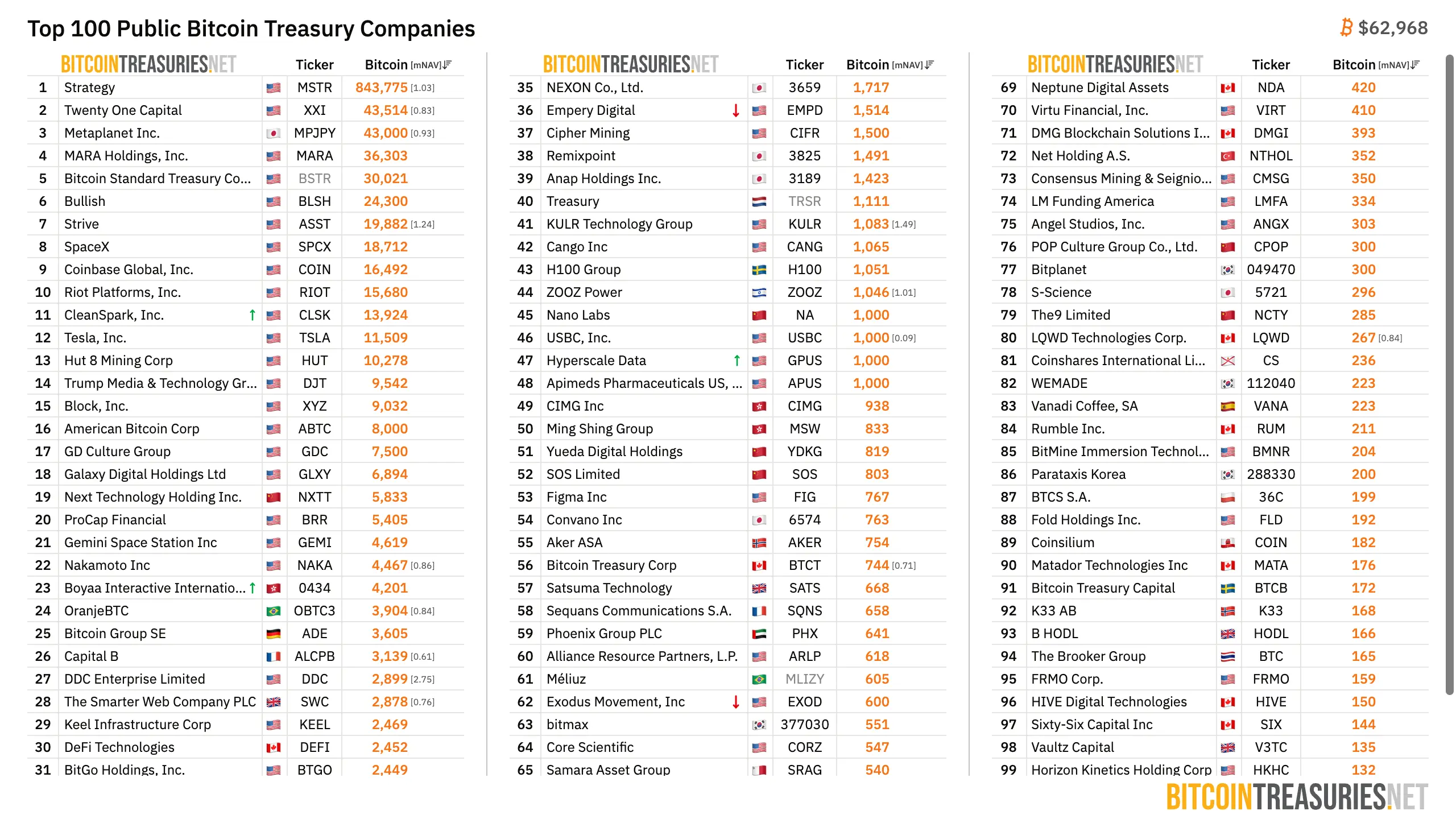 (Source: BitcoinTreasuries)
According to Bitcoin Treasuries and public data, as of early July 2026, major corporate holdings are as follows:
Strategy Inc.: 843,775 BTC (as of July 5), average cost about $75,476, total purchase cost approximately $63.69 billion, holding more than 4% of the total supply
Twenty One Capital: about 43,514 BTC
Japan Metaplanet: about 43,000 BTC
SpaceX and Tesla: hold significant positions (specific figures not fully disclosed)
Total: public companies hold about 1.27 million BTC (over 6% of the total supply, close to 200 companies)
In addition, spot ETFs and crypto exchanges together hold about 1.6 million BTC (about 7.7% of supply). Of that, BlackRock’s iShares Bitcoin Trust accounts for roughly 3.9% of circulating BTC.
Miners add about 450 BTC per day; corporate Q1 buying speed is 2.8x of new issuance
According to reports, based on the current block reward of 3.125 BTC, miners generate approximately 450 BTC in new output per day. Bitwise data shows that in Q1 2026, public companies increased holdings by 50,351 BTC that quarter; corporate absorption speed is about 2.8 times the new issuance.
Fidelity Digital Assets research classifies BTC that has not moved for more than 7 years and corporate holdings of at least 1,000 BTC as highly illiquid supply, estimating the total at over 6 million BTC, which accounts for more than 28% of the final supply. Additionally, Satoshi Nakamoto himself estimated that he holds more than 1.1 million dormant BTC—its size exceeds the remaining supply to be mined in the future.
FAQ
What did Satoshi Nakamoto say in 2010 about a Bitcoin monopoly?
According to BitcoinTalk historical records, on July 9, 2010, Satoshi Nakamoto stated that the more aggressively a buyer attempts to monopolize a scarce asset, the faster the price increases and the higher the subsequent purchase costs become; ultimately, monopolistic actions may backfire on the buyers. He cited the Hunt brothers’ silver market manipulation (1979–1980) as a historical example.
How large are corporate Bitcoin holdings in 2026?
According to Bitcoin Treasuries data, as of early July 2026, public companies collectively hold about 1.27 million BTC, representing over 6% of the total supply. The number of holding companies is nearly 200. Among them, Strategy Inc. holds 843,775 BTC, making it the largest single corporate holder.
How does the speed of corporate hoarding compare with Bitcoin’s new issuance?
According to Bitwise data, in Q1 2026, public companies increased holdings by 50,351 BTC, while miners generate about 450 BTC in new output per day. The corporate absorption rate is approximately 2.8 times the miners’ new issuance.


