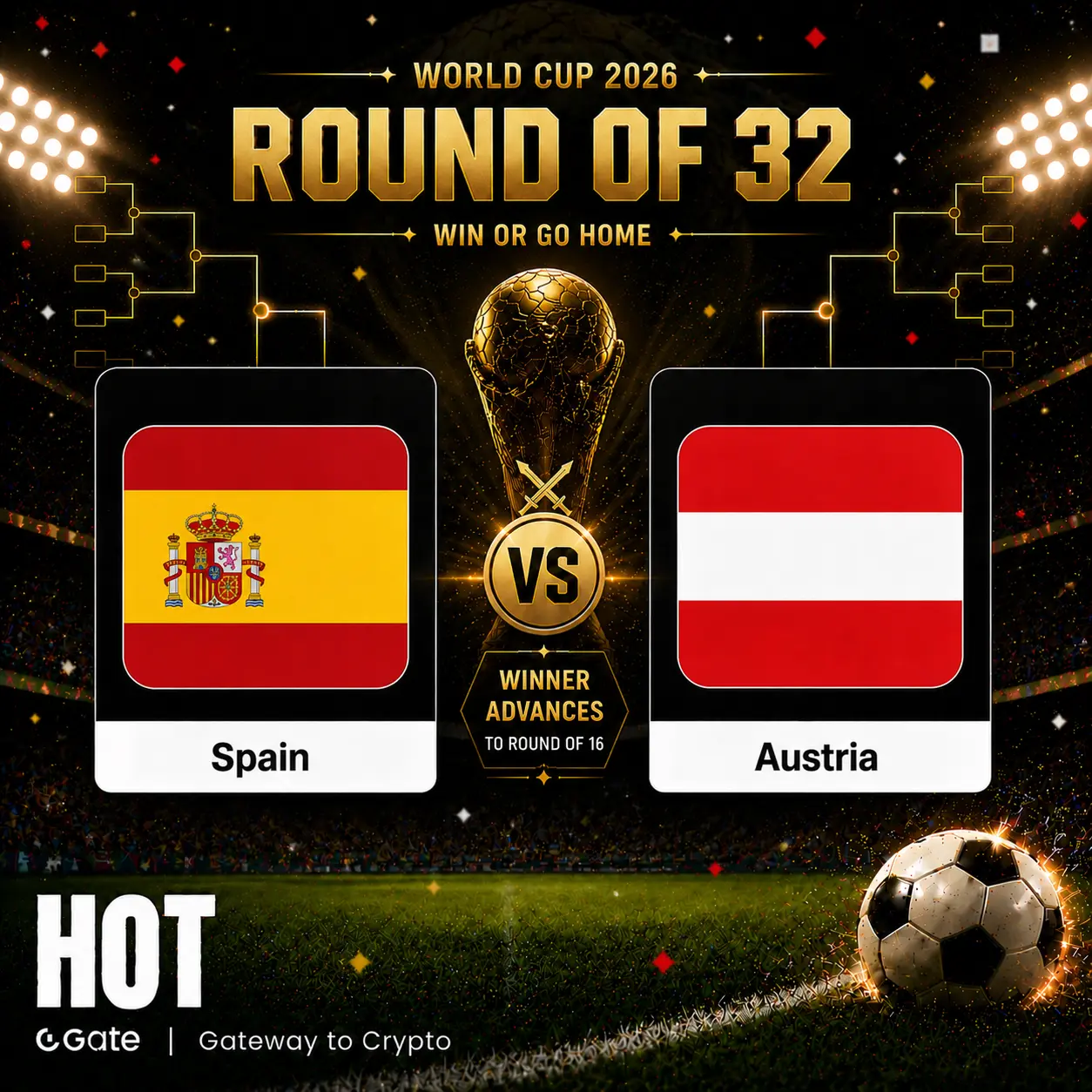
Spain, undefeated in 34 consecutive matches, why failed to show championship form in the group stage?
Spain came to the US, Canada, and Mexico with the halo of the 2024 European Championship title, boasting an awe-inspiring record of 34 consecutive matches without defeat across all competitions. Their last loss dates back to March 2023, since then they have achieved 27 wins and 7 draws in 34 matches. This unbeaten streak is closing in on the longest unbeaten record in international men's football history held by Italy – 37 matches.
However, their actual performance in the group stage has raised doubts. In their first match against debutant Cape Verde, Spain only managed a 0-0 draw. In the final round against Uruguay, they narrowly won 1-0 thanks to an opponent goalkeeper error. While the stats of 5 goals scored and 0 conceded in three group matches look good, the efficiency issue in attack has sparked widespread discussion.
Spain's head coach De la Fuente admitted in the pre-match press conference: "The team knows its position and is very confident. But confidence means self-belief, not arrogance." He also acknowledged that the team lacked precision at certain moments in the group stage, and the knockout stage demands even higher precision.
Why does Austria deserve the 8% market trust vote?
Austria advanced as the second-place finisher in Group J, with group stage results: a 3-1 win over Jordan, a 0-2 loss to Argentina, and a 3-3 dramatic draw with Algeria. In the final match against Algeria, tall striker Karajic scored a header in the 7th minute of stoppage time, pulling the team back from the brink of elimination. This not only marked Austria's first entry into the World Cup knockout stage since 1954, but also made them the first team in World Cup history to be trailing in second-half stoppage time yet remain unbeaten.
Austria's head coach Rangnick stated before the match: "Playing against a title contender is a huge motivation for us. There have been many upsets in this tournament, and we firmly believe we have the potential to defeat Spain." Regarding Spanish teenage winger Yamal, Rangnick bluntly said, "We will definitely defend tightly, not giving him easy touches or shooting space."
Austria has not defeated Spain in 36 years; their last victory over the Spanish bullfighting team dates back to a friendly in 1990. Historical data is unfavorable to Austria, but Rangnick's team is known for high-intensity pressing and quick transitions, possessing all the elements of a spoiler.
Hidden concerns behind the 34-match unbeaten streak: Is Spain's attacking efficiency declining?
Spain's defense has been impeccable. So far, the team has kept clean sheets throughout the entire World Cup, with opponents not even managing a single shot on target in the first half. In their last five World Cup matches, Spain's opponents have not exceeded six shots. Since 1966, only Argentina in 2022 has achieved this – and that Argentina ultimately won the title.
The problem lies in the attack. Spain had extremely high possession in the group stage, but their final pass and finishing ability have been frequently questioned. The team has not yet regained the rhythm, vertical penetration, and sharpness they displayed when winning the 2024 European Championship. Midfield core Rodri has not yet reached his Ballon d'Or level best form, while two starting wingers, Pino and Nico Williams, are both plagued by injuries. Nico Williams has been confirmed absent for this match against Austria.
However, 18-year-old Yamal has recovered from injury and scored in the group stage match against Saudi Arabia, gradually returning to form. Newly signed Liverpool winger Munoz is also expected to return for this match. Spain's midfield depth remains strong – Merino, Ruiz, Olmo, and Gavi are all competing for starting positions.
Tactical battle: How can Spain's possession break Austria's high press?
The core tactical confrontation of this match lies in the battle between Spain's possession system and Austria's high press. De la Fuente expects Austria to pack the box with a tight defensive formation, so he specifically emphasized that "precision" will be the key word of the match.
Spain's advantage lies in midfield control. The dual pivot of Rodri and Pedri possesses strong ball dominance, while Olmo's presence can bring creativity and vertical penetration. Notably, right-back Pedro Porro has better chemistry with Yamal, creating more one-on-one breakthrough opportunities for the latter.
Austria's strategy is relatively clear – high-intensity pressing, man-marking defense, waiting for counterattack opportunities. Captain Grillitsch said before the match that Spanish players have excellent individual ability and solid ball control, so Austria must exhibit high-intensity pressing defense to limit the opponent's attack and patiently wait for counterattack chances. If tall striker Karajic, standing two meters tall, comes on, he will be a key focus for Spain's defense in set-piece situations.
De la Fuente has confirmed that the team has practiced penalties. In a single-elimination format, every possibility must be considered.
From 74% advancement probability to 11.87% championship probability: How far is Spain's road to the title?
The 74% advancement probability given by the prediction market forms an interesting contrast with Spain's overall championship probability ranking. According to the latest simulation by renowned data agency Opta on July 1, Spain's championship probability is 11.87%, ranking third behind France (30.09%) and Argentina (15.11%).
The differences between various models precisely reflect the current uncertainty surrounding Spain – top-tier defense, deep midfield, but questionable attacking efficiency. The margin for error in the knockout stage shrinks dramatically; every attack and defense could decide the team's fate. If Spain gets past Austria, potential opponents in the round of 16 will be even stronger. De la Fuente is clear about this: "This team is used to breaking records. Maybe this is the team that can end the curse. Right now, we are solely focused on winning tomorrow's match."
The cruel logic of single elimination: Why does a 74% probability not equal a 74% outcome?
The probability from prediction markets is an assessment of the likelihood of an event occurring based on the collective wisdom of market participants, but it cannot eliminate the inherent randomness of football matches. One mistake, one counterattack, one set piece – the entire match can change.
Germany and the Netherlands have already been eliminated in the knockout stage, losing to Paraguay and Morocco respectively. Brazil and England also struggled against Japan and DR Congo, teams with much weaker paper lineups. These upset cases remind the market: probability advantages need to be converted into on-field performance, and this process is full of variables.
Spain's biggest advantage is defensive stability – the record of four clean sheets is an extremely valuable asset in the knockout stage. But if the attack cannot improve efficiency, dragging the match into a stalemate or penalty shootout will drastically increase uncertainty. Austria's resilience was already proven in their final group match; they have the ability to change the course of a match in adverse situations.
Frequently Asked Questions (FAQ)
Q: The Gate prediction market shows Spain's winning probability at 74%. How is this data derived?
Prediction market probabilities are determined by the collective trading behavior of market participants, reflecting their comprehensive assessment of the likelihood of an event. 74% means the market believes Spain has a high probability of defeating Austria in regular time.
Q: How valuable is Spain's 34-match unbeaten streak?
This streak includes the European Championship title, World Cup qualifiers, and this World Cup group stage, with opponents including several strong European teams. However, Spain's attacking performance in the group stage did not meet expectations, and the continuation of this streak faces a severe test in the knockout stage.
Q: How likely is an Austrian upset?
The prediction market gives Austria an 8% winning probability, reflecting the gap in strength between the two sides. However, upsets are common in a single-elimination format, and Austria's high-pressing tactics and quick transition ability have the potential to create surprises.
Q: If Spain advances to the round of 16, who would be their subsequent opponent?
Spain's opponents in their half of the bracket will depend on the results of other knockout matches. Regardless of the opponent, if Spain wants to challenge for their first World Cup title since 2010, they still need to show higher efficiency in attack.
Q: How much impact does the absence of Nico Williams have on Spain?
Nico Williams is one of Spain's most capable players for vertical penetration in attack. His absence means Yamal and Baena will need to take on more wing-breaking duties, and Spain's attacking width and speed will be somewhat affected.