Republican U.S. senators released the text of the 616-page “CLARITY Act” on July 23, including provisions that the White House called “the most comprehensive and far-reaching set of moral provisions in history”: all public officials, staff members, and their spouses are banned from issuing or sponsoring any digital assets, and crypto platforms are also banned from listing assets issued or sponsored by federal officials. The ban is temporary and expires on January 20, 2029.
All federal officials and spouses banned from issuing digital assets until January 20, 2029
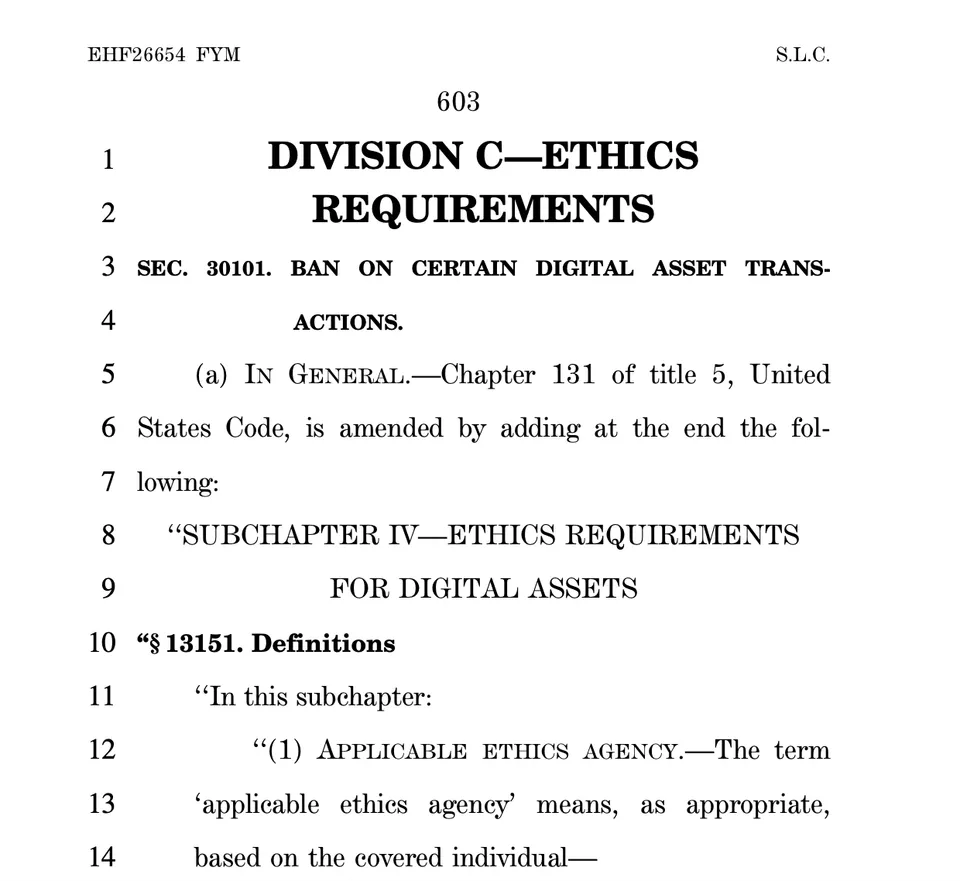 (Source: Cynthia Lummis)
The moral provisions in the CLARITY Act text specify the following:
Who it applies to: All U.S. federal public officials, employees, and their spouses
Prohibited conduct: Issuing or sponsoring any digital assets
Platform limits: Crypto platforms are prohibited from listing assets issued or sponsored by federal officials
Ban duration: Temporary ban, expires on January 20, 2029 (corresponding to the end date of Trump’s second term)
Enforcement entity: The U.S. Department of Justice is the primary enforcement agency, not individual state governments
Lummis said, “This bill applies to everyone, including the U.S. president, under the same moral standard, backed by practical and effective enforcement, real penalties, and authorization for the Department of Justice to take action. This is not just talk.”
Enforcement arrangements and concerns from Democratic lawmakers
The enforcement of moral standards led by the U.S. Department of Justice rather than state governments is at the core of concerns raised by some Democratic lawmakers. Senator Angela Alsobrooks, in an interview with Politico on Tuesday, said, “If the wording is like this, I wouldn’t support it, but we will keep working to reach an agreement that makes all of us accountable.”
Notably, as of Wednesday, Trump’s former private attorney and acting Attorney General Todd Blanche is still awaiting confirmation in the Senate to officially take office as attorney general, which has further heightened some lawmakers’ concerns about enforcement independence.
Exceptions to the CLARITY Act’s moral provisions: Children not included in the ban
Analysts and Democratic lawmakers have noted that the CLARITY Act’s moral provisions appear not to include adult children of public officials within the scope of the temporary ban. Trump’s three sons are co-founders of his family’s crypto company, World Liberty Financial, and two of them also founded a bitcoin mining company, American Bitcoin; under the current bill text, these family members’ crypto businesses are not subject to the 2029 ban. This exception has become one of the arguments used by some Democrats criticizing the existing moral provisions as not comprehensive enough.
FAQ
What specific prohibitions do the CLARITY Act’s moral provisions impose on federal officials?
Based on the 616-page bill text released on July 23, 2026, all U.S. federal public officials, employees, and their spouses are prohibited from issuing or sponsoring any digital assets, and crypto platforms are also prohibited from listing assets issued or sponsored by federal officials; this ban is a temporary provision that expires on January 20, 2029.
What is the CLARITY Act’s current legislative progress in the Senate?
The bill text was released on July 23, 2026. The Senate Majority Leader, Thune, plans to submit the bill for a full-chamber vote sometime next week, whether or not it has enough support from Democrats; however, the bill still must reach the Senate threshold of 60 votes, and the Senate has only a few weeks to complete the vote before the state government recess period.
Do the moral provisions apply to President Trump and his family members?
According to Senator Lummis’s explanation, the moral provisions also apply to President Trump, prohibiting him from issuing or sponsoring digital assets during his term; however, the bill text currently does not appear to include adult children of public officials in the scope of the ban. Trump’s three sons’ businesses at crypto companies such as World Liberty Financial are not covered.


