
LittleGodOfWealthPlutus

vip
Active for: 2.8y
Peak Tier 5
I used to be a trader, now I want to become an author.
Pin
#夏日创作营
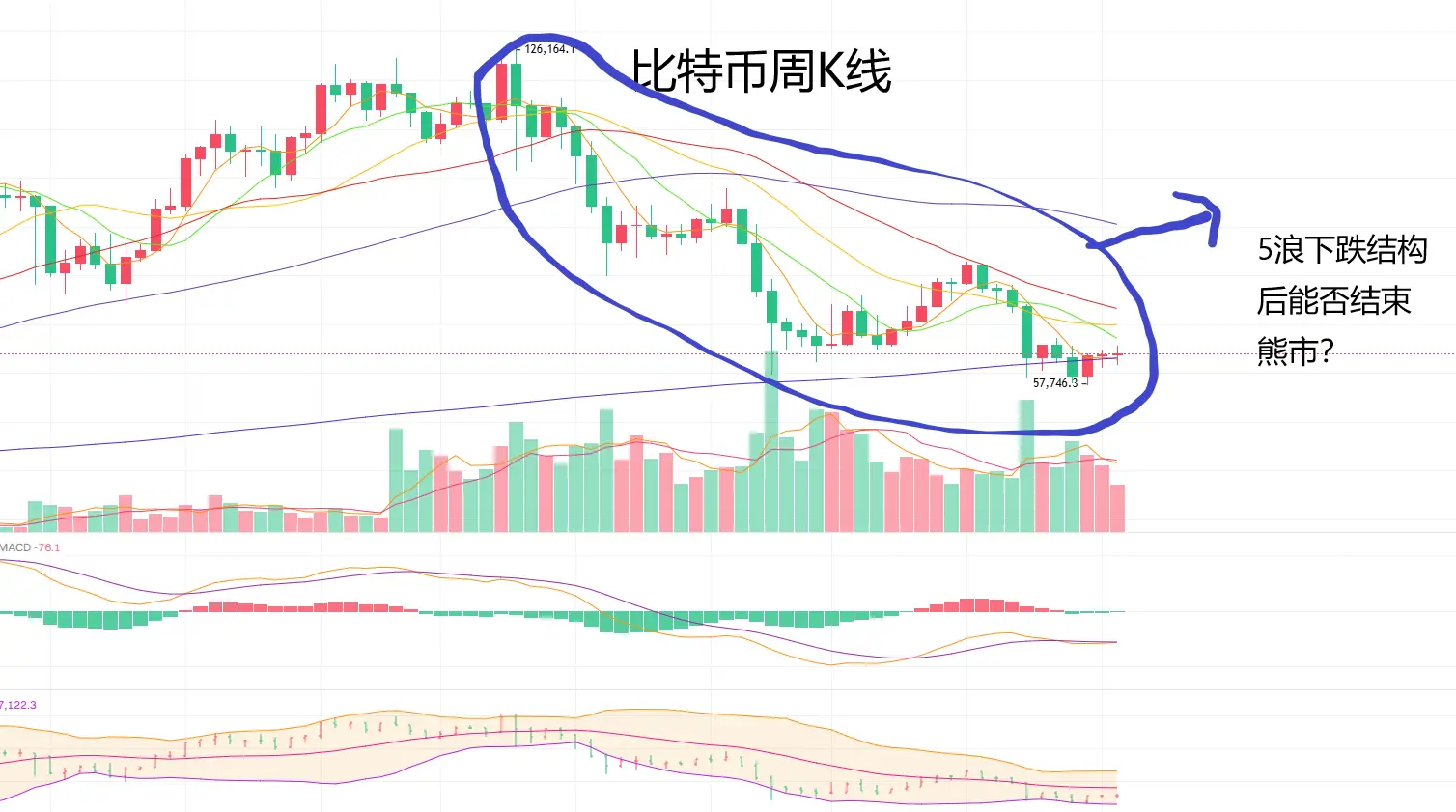
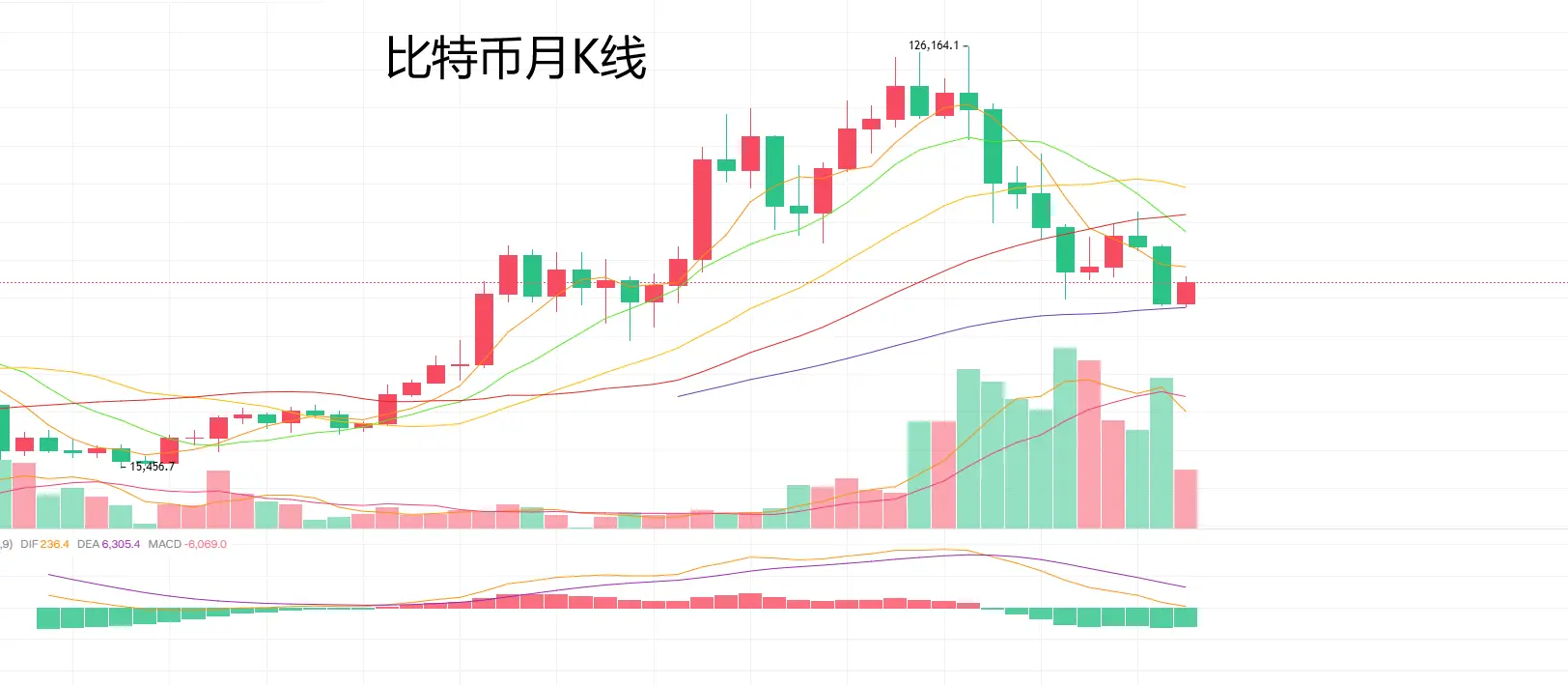
Why do I think this is a good entry point for a long-term long position?--After watching, don’t forget to stock up!
Fellow families who often follow the Little God of Fortune know that I previously kept saying that around 60K for Bitcoin was a long-term long entry point. Those who followed and went long have already been in small profit.
On Friday, Bitcoin saw another wave of downside, and many buddies again “panicked hard,” fearing a new round of decline. Today I’ll break down in detail why I choose to enter long-term positions around 60K. Wavering friends, come recharge your belief!
BTC-2.37%
ETH-1.80%
RWA0.00%
View Original
post-image
post-image
post-image
  • Reward
  • 11
  • Repost
  • Share
Sakura_3434:
2026 GOGOGO 👊
View More
#夏日创作营
In the past few days, Hong Kong stocks have performed okay.
So, as Hong Kong stocks rebound, is it a bounce or a full reversal?
First, the answer: I think, just like tech, it’s basically a rebound after a selloff from Wave A—not a reversal.
1. From the capital side
In Hong Kong stocks, the relative parties with pricing power—or that have a bigger impact on the price trend—are foreign investors.
Foreign investors account for roughly 60%–70% of Hong Kong stocks.
And among these foreign investors, there are two parts:
allocation capital and trading capital.
Of these, there is more capital
View Original
post-image
  • Reward
  • 1
  • Repost
  • Share
ThisIsTranslateContent::
Just go for it 👊
No more talk—has anyone seen Xiao Caishen’s article and ended up getting into DEXE? The spot has doubled overnight. Xiao Caishen’s work—if it’s released by him, it’s definitely high-quality 😎😏😏 “As long as you’re making money, that’s all that matters.” I want to think bigger and aim for 9.9—family, feel free to 💴💴💴#夏日创作营
DEXE152.15%
View Original
LittleGodOfWealthPlutus
#夏日创作营
After a massive pump, a 90% crash—can Dexe buy the dip?
Recently, BTC rebounded from low levels, and altcoin trading has also been colorful: first AKE surged 20x, and then BANK jumped more than 400%. But if we’re talking about the most shocking one, it has to be DEXE. If you only look at the first half of the year, it’s a textbook example of a “long-term bull” — it started at 1.5u and rose to $50 over six months. However, on July 13, the situation suddenly changed: DEXE suffered a “one-character execution slash”-style drop, falling more than 90% in just two days, with the low closing around $1.3. Many people are asking: “Has DEXE bottomed?” “Can it still be bought at a dip?” Today, the Little Caishen will take you through it:
I. Project basics
DeXe Network (DEXE) is a decentralized DAO governance infrastructure platform founded in 2017. The project focuses on providing a suite of tools for creating and managing DAOs (decentralized autonomous organizations). It runs through autonomous smart contracts, including tools for virtual currency allocation and automatic rebalancing, and eliminates the risk of transferring detailed information of digital wallets. Its core product, “DAO Studio,” supports creating DAOs without code.
1. Core positioning: DeXe is not a traditional social trading platform; it has evolved into a DAO governance infrastructure protocol. Through smart contract modules, it provides functions such as governance, treasury management, and delegated authorization for organizations, helping projects operate efficiently on-chain.
2. Technical features:
Multi-chain deployment: supports Ethereum (ERC-20) and BNB Chain (BEP-20)
Contract address: 0xde4EE8057785A7e8e800Db58F9784845A5C2Cbd6
Decentralized governance: on-chain decisions via the DeXe DAO
II. Tokenomics:
Supply structure:
Total supply: 96,504,599 DEXE (about 96.5% issued)
Circulating supply: about 46.7503 million DEXE (47.3% of total)
Circulating market cap: about $100 million
Token allocation ratios:
Foundation and ecosystem (53.5%): Foundation 36.5% + ecosystem partnerships 16% + liquidity fund 1%
Community incentives (25%): staking rewards 10% + Trading Academy & tournaments 10% + marketing 5%
Team (20%)
Public sale (1.5%)
Unlocking mechanism:
Public sale portion: 100% unlocked at TGE (token generation event)
Foundation: 12-month lock, then linear release over 48 months
Team: 6-month lock, then linear release over 24 months
Token utility:
Governance: DEXE token holders can vote on governance decisions for the network, and must hold DEXE to participate in the DAO.
Rewards: Traders earn commissions from strategy subscribers based on the success of their strategies. DeXe smart contracts take 30% of that funding to automatically buy back tokens from the market; one-third is burned, one-third is sent to the insurance vault, and one-third is distributed to DEXE holders.
Insurance: Users can choose to stake DEXE tokens worth up to 10% of their capital to hedge losses.
III. Market analysis:
👉 Price action characteristics:
DEXE has pulled back sharply from its all-time high and is currently at a relatively low level
The token has high volatility, with a swing of up to ±15% within 24 hours
FDV (fully diluted valuation) is close to circulating market cap, and selling pressure has basically been exhausted
👉 Trend analysis:
After experiencing continuous low-level consolidation today, DEXE’s price started to rebound. The low close was 1.292 and the high close was $2.94. Trading volume expanded in sync, with contract volume nearing $60 million. From the daily chart, there is still room to push higher. From the 15-minute chart, price is currently in a choppy uptrend, and there is no clear top signal yet.
IV. Capital and holder analysis
👉 Crash causes
Team wallet transfer: reportedly, team-related wallets transferred about 625,000 DEXE to Bn (worth about $6.2 million)
Liquidation cascade from leverage: large sell-offs triggered liquidations of leveraged positions
Market panic: fears of “insider trading” and “rug pull” have spread
Insufficient liquidity: the token’s liquidity on exchanges is relatively limited; large sell orders caused sharp price swings
👉 Holder structure
Total holders: about 50,220+ addresses
Bn holdings: reportedly about 2.71% of the supply (about 2.71 million DEXE)
Team wallets: recent large transfers have raised market concerns
👉 Capital flow analysis
Exchange inflows: in late July, there were large inflows to exchanges like Bn
New wallet growth: during the pump, created the fourth-highest day of new wallet count in history (161 wallets)
Whale activity: large holders show clear distribution signs near the ATH
👉 Chip distribution characteristics
The recent crash has caused chips to be severely trapped in the $20-$48 range
The current price range ($3-$5) has formed a new concentrated chip zone
High proportion of high-level chips means that any rebound will face massive sell pressure
V. Little Caishen’s investment advice—short to mid-term rebound, long-term hard to avoid going to zero
In the short term, with extremely oversold RSI and the possibility of a technical bounce after a large drop, there may be a short-term technical rebound opportunity. Current price is still far from the daily moving averages; the key resistance on the daily timeframe is around $10. If the price rebounds, the room for imagination is huge. It’s worth taking a short-term bet on a rebound, but make sure to set a stop loss. For those trading perps, control your leverage multiplier and position size, and try to keep holding—don’t short against the trend or enter/exit frequently.
In the long term, as a DAO project, DEXE lacks narrative imagination. The token’s value mainly depends on community enthusiasm. The earlier massive drop already created divisions within the community. For a DAO project, nothing is more terrifying than a collapse of belief. Combined with the fate of earlier hot “golden dog” tokens like SIREN, RAVE, LAB, which ultimately all ended up at zero, in the long run, $1.2 may not be DEXE’s bottom, and further downside is a high-probability event.
Trading strategy
For existing holders: set a stop loss below $2.50 to avoid another “one-character execution slash”
For potential buyers:
Aggressive strategy: try buying with a small position, stop loss at $2.50
Conservative strategy: wait for the price to stabilize above $4 and confirm the bottom has formed
Staggered strategy: place laddered buy orders at $4 and $3

repost-content-media
  • Reward
  • 9
  • Repost
  • Share
Venüs_:
To The Moon 🌕
View More
#夏日创作营
Bitcoin’s sluggish slide hasn’t stopped—why has the extreme shakeout’s open positions increased despite the bears dominating?
I. Macro and market background: Capital outflows tugged by mixed news
The core reason lies in a shifting macro environment and the exhaustion of incremental capital:
Geopolitical headlines are contradictory: Taking U.S. political developments as an example, the House and Senate are issuing inconsistent signals on legislation concerning the authority to conduct military actions toward Iran; on top of that, the ceasefire talks agreement was rejected. The macro
BTC-2.37%
View Original
post-image
ThisIsTranslateContent:
#夏日创作营 Bitcoin’s sluggish decline shows no sign of stopping—why has the extreme washout holding volume increased under the dominance of the bears?
I. Macro and market backdrop: capital outflow vs. contradictory headlines
The core reason lies in a volatile macro environment and the exhaustion of incremental capital:
Geopolitical headlines sending mixed signals: taking US political developments as an example, Congress releases inconsistent signals in a bill regarding powers for military action against Iran, and in addition, the situation-ending ceasefire agreement was rejected. The macro layer is filled with extreme uncertainty, causing both bulls and bears to hesitate.
Incremental capital being withdrawn: the overall capital base in the crypto market is currently relatively weak, with a large amount of liquidity being pulled into the US stock market. Without continuous inflows of OTC funds, it’s unrealistic to blindly expect a major upside one-way rebound.
Market sentiment hits a freezing point: due to prolonged narrow-range up-and-down wash trading, retail investors feel extremely uncomfortable. The Fear and Greed index across the whole network has officially fallen into an “extreme fear” phase around 20.
II. Price-volume analysis: the “undercurrent” behind the increase in open positions
On the chart, there’s a critically important contradiction—while the price keeps probing lower, the total open positions clearly rise during rebounds.
There is indeed bid support at the lows: when the price broke down and touched the 64,600 low, the market didn’t collapse quickly. Instead, alongside the synchronized increase in open positions, there was a rebound, indicating that some capital actively bought and absorbed at the low level.
Bulls are extremely passive: the most unfavorable detail for bulls is that although new positions appeared at the low and were retained, the trades didn’t transform into strong upward momentum. The high failed to effectively break through the prior selloff breakout zone. This means the newly added chips lack sustained upward attack power, and the market structure is still dominated by the bears.
III. Multi-timeframe technicals
Judging from moving averages, the Bollinger Bands, and momentum indicators, each timeframe shows different suppression and support characteristics:
1-hour – 4-hour lines (short-term under pressure): the 5-day and 7-day moving averages have already been fully broken down, and short-term rebound momentum has weakened rapidly. The 4-hour level is currently running along the lower Bollinger Band. The strong resistance concentration is at 65,200 – 65,500. If it cannot break upward effectively, the outlook is more likely to continue breaking down than to just trade sideways in place.
Daily timeframe (extreme compression and mid-term protection at the floor): the daily chart printed a bearish candle, and the price’s center of gravity keeps shifting downward. The Bollinger Bands’ upper and lower rails are in a severe “extreme compression” phase, with price tightly trapped in the narrow range of 64,300 to 65,500. Usually, when such long space keeps tightening, it signals that a new round of major one-way breakout is about to arrive. The 20-day moving average (around 64,300) is still providing a mid-term support floor that has held for three weeks.
Weekly timeframe (weak repair within a downtrend): from a bigger perspective, after the prior quick blow-off top at the high, it quickly fell back, swallowing the earlier upswing gains. Currently, the weekly chart is only a very weak rebound within the broader trend’s downward path, without changing the overarching pressure structure.
Core momentum indicators:
MACD: short-term is in a golden-cross repair below the zero axis, but the expansion in volume is limited. The 4-hour line still maintains a dead-cross configuration, and the counterattack structure has yet to materialize.
DMI – RSI: the DMI indicator shows bears dominate (bearish advantage). Meanwhile, the RSI also failed to return above the 50 strength/weakness dividing line across key timeframes, proving that bulls are passive across the board.
IV. Support and resistance levels
Strong resistance: 65,800, the extreme rebound pressure zone—a disaster area bulls cannot cross.
First resistance: 65,200 – 65,500, the intraday battleground between bulls and bears. If the 4-hour close can stand above this level, it can be viewed as a continuation of weak repair; if it meets resistance, the rebound is immediately considered over.
First support: 64,600 – 64,700, the core short-term defense area. The overlap zone of the prior low probe and the closing area—once broken, the rebound fails and downside risk increases.
Strong support: 64,100 – 64,300, the final mid-term line of defense. Corresponding to the daily and 4-hour channel support—if there’s a breakdown with a wick insertion, focus on whether price can quickly reclaim this level.
Respect the market and manage risk reasonably
In such an extreme sideways washout and a chop market where bulls and bears repeatedly get double-killed, trying to guess the top or bottom subjectively often brings unnecessary stop-loss burden. In the face of market uncertainty, traders should maintain a sense of敬畏之心 (respect/awe) and face normal pullbacks within the trading system. At this stage, staying in cash with a light position or strictly following the key boundaries—short at the top and long at the bottom—with stop-losses in place is the way to preserve strength during a washout and wait for the arrival of the bigger trend. $BTC
repost-content-media
  • Reward
  • 4
  • Repost
  • Share
Venüs_:
To The Moon 🌕
View More
#夏日创作营
In-depth analysis of this week’s gold market
I. Review of this week’s行情
This week, both domestic and international gold markets continued to trade in a range. London gold spot remained stable at around $4,064 per ounce, with minor fluctuations and a small intraday gain. In China, the Shanghai gold main contract and Gold T+D also followed the overseas market with a modest rise, while the trading-screen volatility remained limited. Specifically, in the beginning of the week, London gold spot held within a narrow range around $4,064 per ounce, as the market waited for clearer signals from
XAU0.39%
GLD0.09%
View Original
post-image
  • Reward
  • 10
  • Repost
  • Share
Venüs_:
To The Moon 🌕
View More
#夏日创作营
After a massive pump, a 90% crash—can Dexe buy the dip?
Recently, BTC rebounded from low levels, and altcoin trading has also been colorful: first AKE surged 20x, and then BANK jumped more than 400%. But if we’re talking about the most shocking one, it has to be DEXE. If you only look at the first half of the year, it’s a textbook example of a “long-term bull” — it started at 1.5u and rose to $50 over six months. However, on July 13, the situation suddenly changed: DEXE suffered a “one-character execution slash”-style drop, falling more than 90% in just two days, with the low closing a
DEXE152.15%
BTC-2.37%
AKE29.01%
ETH-1.80%
BNB-0.75%
View Original
post-image
  • Reward
  • 9
  • 1
  • Share
CryptoCircleRhinoBrother:
Go for it—👊
View More
#夏日创作营
One article to help you understand the truth behind the simultaneous rise of gold, crude oil, and the US dollar
Over the past two days, a rare phenomenon has actually shown up in the macro picture: gold, crude oil, and the US dollar are all rising together. You have to know that this year, for most of the time since the start of the US-Iran conflict in early March, crude oil and gold have basically acted like a seesaw.
The logic is: if geopolitical conflict breaks out, the Strait of Hormuz gets shut, oil prices rise, inflation goes up, and gold falls.
In the past two days, the US-Ira
XAUUSD0.08%
View Original
post-image
ThisIsTranslateContent:
#夏日创作营 Read this one article to understand why gold, crude oil, and the US dollar are all rising together behind the truth
Over the past two days, in macro terms, we’ve actually seen a rare phenomenon: gold, crude oil, and the US dollar are all rising together. You have to know that for most of this year—since the US-Iran conflict at the beginning of March—crude oil and gold have basically been like a seesaw.
The logic is: geopolitics escalates into war, the Strait of Hormuz is shut, oil prices rise, inflation rises, and gold falls.
But these past two days, the US-Iran conflict has become tense again. The United States carried out airstrikes on Iran for 12 straight days, and oil prices surged instantly to above $90. Normally, gold should fall. But strangely, while crude oil is rising, gold this time is rising along with crude oil too—giving everyone the feeling that gold’s safe-haven appeal is back. So, is everything really back?
First, the answer: this gold “rise in tandem” is indeed for hedging. But it’s not hedging against the risk from geopolitics; what it’s really hedging is debt risk. What this reflects is the market’s current concern about a credit crisis among sovereign states worldwide. To explain this clearly, you need to bring “US Treasuries” into the conversation.
In recent times, the price of US Treasuries has been steadily falling, and US Treasury yields have been surging. You should know that there’s a widely recognized indicator in the market for whether US Treasuries have risk—such as when the yield on 30-year US Treasuries stands above 5%. Or when the yield on 10-year US Treasuries reaches above 4.5%. The market will interpret either situation as US Treasury prices having fallen too much, and if left unaddressed, liquidity risk may follow. Simply put, those two indicators are basically warning signals.
So what’s the situation now? The warning lights are basically flashing non-stop. The yield on 30-year US Treasuries has stayed above 5% for 12 straight days. In 2024 so far, there have been 27 trading days where the 30-year Treasury yield was above 5%. You have to know that this is the longest continuous stretch in the nearly 20 years since the 2007 financial crisis.
Last year, during the China-US trade war and tariff war, yields on US Treasuries also spiked unusually. But every time last year when the 10-year Treasury yield hit 4.5% or was about to get there, Trump would Taco. But this year, Treasury yields have been surging like this, and Trump is still unmoved—carrying on as usual, wanting to strike whenever he wants. So, is it that Trump doesn’t want to?
No. The main reason is that the initiative in this war doesn’t even lie in Trump’s hands. He may want to Taco, but he simply can’t Taco. Today, the Strait of Hormuz is essentially a full-on “chicken game.” Whoever blinks first will have to give ground at the negotiating table afterward.
So right now, both sides are busy trying to see who can be tougher. Today you blow up my ship, tomorrow I’ll blow up your bridge. Today you blow up my bridge, tomorrow I’ll blow up your data center. That’s why Trump can’t Taco. This also means US Treasuries have to “stand firm on their own.” But the key is that if US Treasuries try to stand firm purely on their own, they can’t hold out. On one side, the bond issuance volume is still rising—for example, the US government keeps issuing new debt. US AI companies also keep issuing bonds to raise funds. But on the other side, the pool is limited, and the Federal Reserve is unwilling to cut rates, so money is being drained bit by bit. That’s why people worry about the sustainability of the bond market. The bond credit crisis is born this way.
When facing the credit crisis of US Treasuries, the question everyone asks is: are there any assets that aren’t tied to the creditworthiness of any sovereign state? After looking around, the only one left standing is gold. That’s why gold has been rising recently.
So the current rise in crude oil reflects concern about energy. Gold’s rise reflects concern about the credit crisis. When they rise together, it’s essentially “macro events happening to resonate at the same time,” creating a combined impact.
So someone might ask: what happens next?
Most likely, there will be differentiation.
Because whether it’s the US dollar, US Treasuries, or crude oil and gold, their rise and fall basically follow the same logic chain: war breaks out, oil prices are high, inflation surges, which lifts rate-hike expectations, leading to a stronger dollar, which pushes up US Treasury yields; the US Treasury credit crisis becomes too high, which leads to gold rising.
But war is full of variables. You have to know that Trump is forced to fight.
On one hand, the previous ceasefire memorandum didn’t define who the Strait of Hormuz belongs to or is managed by—this is the focus of later negotiations. If war happens now, it becomes bargaining leverage later.
On the other hand, if the US were to compromise easily without fighting, it would damage America’s overall strategic interests and voice in the Middle East. Even the hawks in the US stock market would think Trump is too soft. So yes, it should be fought—but it won’t be fought so fiercely that it costs America its entire fortunes and lives.
You can’t allow fighting to break US Treasuries and cause a systemic financial crisis in the US—otherwise it would be not worth it.
So how do you judge when it’s going to fight and when it won’t? It’s simple: look at oil prices. Around 70, it “calls for war.” Around 100, it “TACO.” So when oil prices are low, Trump goes all out. But when oil prices rise and inflation surges, it not only affects the midterm election, but also triggers concerns about internal financial risks as Treasury yields spike.
Therefore, a ceasefire and talks can happen at any time. And once the ceasefire happens, oil prices will fall.
Then will gold fall as well?
First, the answer: in the short term, it may; but in the medium to long term, it may not.
You have to know that the new Fed chair, Kevin Warsh, since taking office, has already achieved multiple goals through “rate hikes using words”:
1. In the short term, it temporarily raised US Treasuries, which in turn pushed up the US dollar.
2. It suppressed the bubble in US stocks, triggering deleveraging across global stock markets. But once it continues to show such toughness, the marginal effects may start to diminish.
So at the end-of-month Fed meeting, changes are likely. If the market finds hints of rate cuts from Kevin Warsh’s comments at the meeting, the US dollar index should retreat, and gold would likely rebound more easily. But if you really want gold to move more solidly, you need to wait until news of actual Fed rate cuts is firmly in place. $XAUUSD
repost-content-media
  • Reward
  • 10
  • Repost
  • Share
ThisIsTranslateContent::
DYOR 🤓
View More
#夏日创作营
Today’s Bitcoin Market Analysis
Bitcoin is currently trading at about $65,900, down slightly by around 0.3% over the past 24 hours, and up about 2.35% over the week. This month’s trend follows a “fall first, then rebound” pattern: in early July, it touched an approximately 21-month low near $57,950, then rebounded about 15% from the lows. It is now trading near the monthly high around $66,000. BTC fell about 20% cumulatively in June; July has recovered some of the losses, but it remains far below the highs from the beginning of the year.
The key catalyst behind the rebound over the pas
BTC-2.37%
SPX-3.77%
View Original
post-image
  • Reward
  • 12
  • 1
  • Share
Sakura_3434:
2026 GOGOGO 👊
View More
#夏日创作营
My first esports betting journey
Recently, Gate opened the Esports Peak Trading Season, and the prediction markets instantly became hot again! It’s said that Gate Exchange is now the business-volume largest partner among the cooperation channels with Polymarket. With the principle of trying everything “for a taste,” Xiao Cai Shen also tried his own first esports prediction order:
Because of my (fortunate—painful) experience betting on the World Cup, it’s safe to say that placing bets on esports matches is now a walk in the park. All you need is a few simple steps on Gate to place a be
View Original
post-image
post-image
  • Reward
  • 8
  • 1
  • Share
Sakura_3434:
2026 GOGOGO 👊
View More
#夏日创作营 TRUMP coin faces a life-or-death test
Did Trump personally sign a bill banning himself from issuing his own coin???
This is really interesting 😂
Trump just signed the moral provisions of the CLARITY Act, which clearly bans federal officials (including the president, vice president, and members of Congress) from issuing digital assets during their term.
The provision itself is very clear: “The president may not issue or sponsor digital assets.” It’s printed plainly on paper, not vague wording. Trump has already signed and agreed to it.
But the problem is—who does this clause directly
TRUMP-2.65%
View Original
post-image
ThisIsTranslateContent:
#夏日创作营 TRUMP coin faces a life-or-death showdown
Trump personally signed the bill—banning himself from issuing his own coin???
This gets really interesting😂
Trump just signed CLARITY’s moral provisions, which clearly prohibit federal officials (including the president, vice president, and members of Congress) from issuing digital assets during their term.
The clause itself is very clear: “The president may not issue or sponsor digital assets.” Black on white—no vague wording. Trump himself has already signed and agreed to it.
But the question is—who does this clause directly target? It targets his own TRUMP coin.
TRUMP coin fundamentals
Through a licensing agreement with CIC Digital LLC, TRUMP brought Trump about $635 million in revenue. Trump’s family’s total profits from crypto projects, Reuters estimates, are at least $2.3 billion. Now, a clause he himself signed will prohibit “the president from issuing coins.”
The impact
TRUMP coin has already fallen 97%. Dropping from roughly $73–$75 at launch to around $1.61 now, its market cap has slid from $15–$27 billion to $382 million. With nearly 1 million buyers, cumulative losses are about $3.81 billion.
The real game lies in enforcement power
The most exciting part isn’t over yet: who will enforce it?
The White House’s position: enforcement led by the Department of Justice (DOJ)
Democrats insist: state attorneys general should have independent enforcement authority
Maryland Senator Alsobrooks directly commented: “Enforcing the moral provisions by the Department of Justice? That’s not a serious proposal. If it’s written like that, I wouldn’t support the bill.”
This means two entirely different paths: if the enforcement power goes to the DOJ, and Trump controls the DOJ, the clause’s practical constraint could be significantly weakened.
If Democrats secure independent enforcement authority for state attorneys general, enforcement would be much stronger—many provisions’ real effect will depend on “who supervises the supervisor.”
Will TRUMP coin crash to zero?
“Zero” is unlikely, but a “crash” risk is definitely real. If the bill passes, TRUMP coin’s legal risk is in two areas:
The sitting president can no longer continue issuing, sponsoring, or accessing new revenue through licensing agreements; and whether TRUMP coin could be pursued for having been issued by the sitting president. But TRUMP coin has already fallen 97%, and the market may have already priced in part of that.
Policy risks
Polymarket puts the probability at about 48%. The market believes the odds of passage are less than half. The biggest variable isn’t the bill itself, but the enforcement mechanism.
If enforcement is led by the DOJ and Trump controls the DOJ, the clause’s practical constraint may be discounted. If Democrats succeed in winning independent enforcement authority for state attorneys general, enforcement would be much stronger. After the CLARITY bill passes, TRUMP coin is more likely to not go “to zero,” but to become “stagnant”—losing the value of endorsement from the sitting president and turning into a regular, historical Meme coin.
The biggest risk isn’t a price crash, but liquidity drying up and exchanges delisting. If major exchanges delist TRUMP coin for compliance reasons, that would be the real “to zero.” This isn’t a price issue—it’s a survival issue. $TRUMP
repost-content-media
  • Reward
  • 8
  • Repost
  • Share
MrFlower_XingChen:
To The Moon 🌕
View More
#夏日创作营
The CLARITY Act has reached a critical crossroads—latest developments and what passage could mean for crypto
On July 17, 2025, the U.S. House passed the Digital Asset Market Clarity Act (CLARITY Act) by an overwhelming margin of 294 votes to 134, like a sudden thunderclap that jolted the entire crypto world. Yet ten months later, the bill is still struggling through the sharp edge of the Senate. Where does it stand right now? Which step is it stuck on? And once it’s passed, what impact will it have on the crypto market? Little Lucky Coin is here to chat with you about it today:
1. Whe
MEME-0.46%
WLFI0.97%
View Original
post-image
  • Reward
  • 17
  • Repost
  • Share
MrFlower_XingChen:
To The Moon 🌕
View More
#夏日创作营
Bitcoin ETF sees five straight days of inflows! First since April—how high can this rebound go?
In late July, while everyone was still stuck in the afterglow of the World Cup, smart money quietly shifted direction. On July 20, US spot Bitcoin ETFs recorded about $227 million in net inflow in a single day—this is the fifth consecutive trading day with positive fund flows, and the first time since late April. Over the five days, total net inflows pulled in about $727 million. After June’s record-breaking capital exodus, this is the longest stretch of sustained buying. The total assets u
ETH-0.61%
BLK1.77%
BTC-0.97%
NAS100-1.50%
XAUUSD0.08%
View Original
post-image
  • Reward
  • 16
  • 1
  • Share
MrFlower_XingChen:
To The Moon 🌕
View More
#夏日创作营
Korean stocks have been falling nonstop—only one step away from a technical bear market. Can SK Hynix still be bought?
After Gate launched trading for US and Korean stocks, stock trading has gotten hot. Many people have taken part in speculation on stocks like Micron, SanDisk, and Nvidia. And the one everyone has been trading the most recently is SK Hynix (according to observations by “Xiao Caishen” across major livestream rooms). That’s because the KOSPI index has been swinging a lot recently, and the profit space for going long or short SK Hynix can be imagined to be huge. Today, Xia
SK Hynix-8.33%
SKHY-8.74%
SNDK-10.96%
NVDA-0.83%
View Original
post-image
  • Reward
  • 9
  • Repost
  • Share
Sakura_3434:
To The Moon 🌕
View More
#广场预测世界杯赢40000U
At the 2026 World Cup final held on-site in the US, Canada, and Mexico, New York’s Citi Field hosted a cross-industry extravaganza. Many major figures from the political, technology, and business sectors gathered at the venue to watch the match, drawing widespread attention.
Some netizens took photos showing Jack Ma wearing casual clothes and appearing at the World Cup final. He was chatting casually with friends while watching from the stands, looking discreet and at ease. Also in attendance watching together with him was Yang Yuanqing, Chairman of Lenovo Group.
In the on-sit
View Original
post-image
post-image
post-image
  • Reward
  • 9
  • Repost
  • Share
Crypto_Buzz_with_Alex:
To The Moon 🌕
View More
#广场预测世界杯赢40000U
FIFA made $9 billion, but it’s hard for the host country to break even—who is the real winner of this World Cup?
How FIFA turned the World Cup into a money-printing machine
The role that is “guaranteed to profit with no losses” in this World Cup is the International Federation of Association Football (FIFA). For the four-year cycle from 2023 to 2026, total revenue is expected to reach $13 billion, a 72% surge compared with the previous edition in Qatar. For the 2026 event alone, same-year receipts are already close to $8.9 billion, while total operating costs are only $3.8 bi
View Original
post-image
  • Reward
  • 12
  • 1
  • Share
Crypto_Buzz_with_Alex:
LFG 🔥
View More
#广场预测世界杯赢40000U
The 2026 World Cup in the US, Canada, and Mexico has come to an end. FIFA is expected to rake in $9 billion in revenue
The largest World Cup in history in terms of scale in the US, Canada, and Mexico wrapped up on Sunday (July 19 local time). The Spain team beat Argentina 1-0 in extra time to claim the highest honor in international football, the tournament’s once-every-four-years title.
In stoppage time, Argentina’s Enzo Fernández was shown a second yellow card for fouling Spain defender Pau Cubarsí, leaving Argentina with only 10 players on the pitch. Ferran Torres of Spain
View Original
post-image
  • Reward
  • 9
  • 2
  • Share
Crypto_Buzz_with_Alex:
Ape In 🚀
View More
#广场预测世界杯赢40000U
World Cup recap · Data section|104 matches, 308 goals, $3 billion in ticket revenue…
When the final whistle blew, the football feast of this summer officially came to an end. Over 39 days and 104 battles, some reached the summit, others bid farewell. This is the twilight of veterans and the dawn of newcomers. Cristiano Ronaldo and Neymar left with regrets, while Messi and Mbappé kept roaring forward. Haaland and Wozniak surged into the spotlight, and young faces like Lamine Yamal and Bellingham heralded the arrival of a new era. Forty-eight teams faced off: in the Argentina–En
View Original
post-image
  • Reward
  • 6
  • Repost
  • Share
Crypto_Buzz_with_Alex:
2026 GOGOGO 👊
View More
#广场预测世界杯赢40000U
Big moments of the 23rd FIFA World Cup in 2026
From June 12 to July 20, the month-long 23rd FIFA Men’s World Cup concluded successfully. A total of 48 countries scored 307 goals across 104 matches, averaging 2.98 goals per game.
This World Cup is the highest-ever average goals per game since 1958, greatly setting a new record for total goals in a single World Cup.
A total of 1 billion people worldwide watched the live broadcasts across various platforms. In the end, the 2010 World Cup champions Spain won the title again with a record of 14 goals scored and 1 goal conceded. Cap
View Original
ThisIsTranslateContent:
#广场预测世界杯赢40000U Key Highlights of the 23rd FIFA World Cup (US, Canada & Mexico) in 2026
From June 12 to July 20, the month-long 23rd FIFA Men’s World Cup has come to a successful end. A total of 48 countries scored 307 goals across 104 matches, averaging 2.98 goals per match.
This World Cup is the highest average goals per game since 1958, dramatically refreshing the all-time record for total goals in a single edition.
Across the world, 1 billion people streamed the live broadcasts through various platforms. In the end, Spain—the champion of the 2010 World Cup—won the title again with a record of 14 goals and 1 goal conceded. Captain Rodri won the Ballon d’Or (best player of the tournament), goalkeeper Unai Simón won the Golden Glove (best goalkeeper), and Kubasci won the Best Young Player award.
The Spanish squad’s 26 players averaged 24.7 years old. Eleven players are under 23, and only three are over 30, including Yamal (18), Kubasci (19), Gavi (20), and Pedri (21). Their possession-based technical play and team-coordination spirit were on full display throughout the tournament. After the quarterfinals, with the exception of defending champions Argentina, all teams remaining were European—once again validating the saying that “by the time it’s the final stages, the World Cup turns into a European Championship.” After their match against England, Argentina faced punishment from FIFA due to disputes among fans over the ownership of the “Malvinas Islands.”
Among European teams, Turkey and the Czech Republic finished bottom of their groups and failed to advance. The four-star Germany, in a penalty shootout, suffered an upset loss to Paraguay. Last edition’s runner-up Netherlands drew Morocco in 120 minutes, then collapsed in their penalty mindset and were eliminated in the round of 32.
Mid-tier European sides Sweden, Austria, and Bosnia and Herzegovina advanced smoothly from the group stage and made it to the first round of the knockout stage, but they all fell to non-European teams and were eliminated in the round of 32. Traditional powerhouses Italy and Denmark were eliminated directly in the World Cup qualifiers and did not reach this edition’s finals. The biggest dark horse this tournament was Cape Verde, an African island nation, which for the first time in history reached the World Cup finals. Placed in the same group as the champions Spain, they drew all three group matches, finished with zero losses, and successfully edged out Uruguay to qualify for the round of 16. The entire team had a solid defense; against Spain they were never outmatched. They are the only team to avoid losing to either the champion or the runner-up in regulation time, creating an epic chapter in the history of small-nation football.
Paraguay, the second dark horse, had only a 19.5% predicted probability of advancing to the round of 16 before the tournament. In the round of 16, they overturned four-time champions Germany in a penalty shootout, producing the biggest upset of the tournament’s start. Relying on fierce, hard-nosed defense to wear down the giants, they returned to the second round of knockout play for the first time in many years.
Norway returned to the World Cup knockout stage after 28 years. In the round of 16, they completed a 2-1 comeback victory over Brazil, the tournament’s big favorite to win the title. Haaland scored twice to finish the epic turnaround. They then knocked out Côte d’Ivoire and surged into the quarterfinals, breaking the myth of South American powerhouse teams being unbeaten—and becoming a disruptor for the next generation of European teams.
Switzerland returned to the World Cup knockout stage after 72 years. They reached the quarterfinals by eliminating Colombia on penalties, breaking a curse of more than 70 years of missing the last eight. Goalkeeper Kobel made multiple crucial saves to turn the tide.
In Africa, Morocco carried forward the strong momentum from last edition’s final four. They topped their group by finishing ahead of Brazil to secure second place in the group, entrenched their defensive counterattack system, and consistently reached deep into the knockout stage for two consecutive editions.
The topic “Before the US team’s round of 16 match against Belgium, Trump and Infantino made a phone call” surged to the hot search. Valarin Balogun clattered and injured the ankle of a Bosnia and Herzegovina player, and was shown a red card—then the ban was executed on a delayed basis for one year, triggering strong protests. The US team ultimately still lost 1-4 and were eliminated. Among it all, frequent public statements highlighting individualism and freedom of speech repeatedly topped the hot search.
In Portugal, Francisco Conceição (Little Conceição) drew 1-1 with Democratic Congo in the first match. Ronaldo failed to score throughout the game, and large numbers of fans accused teammates of not passing to him. When asked during the pre-match press conference, he said: “Ronaldo’s scoring ability is incomparable, but we have no obligation, and no need, to specifically pass the ball to him. I will only pass to the teammate who is in the open space at the moment, and who has the best position. Ronaldo is here to help the team, just like everyone else.” After the Norwegian forward Andreas Schjelderup (Sarolt) eliminated Brazil 2-1 in the round of 16, he said in an interview: “He (Haaland) is basically a monster—universally recognized as a world-class top forward. Put simply, if you pass the ball to him, that’s enough—you know in your heart he will score. No matter the quality of the pass, he can still finish. It’s our good fortune to have him on our team.”
The award presenters at this World Cup included: Trump (U.S. President), Infantino (FIFA President), the Canadian Prime Minister Karney, Mexican President Shinbaum, King Felipe VI of Spain, and football legend Ronaldo. Before the ceremony, Ronaldo handed the trophy of Hercules to Trump. The trophy was placed in the middle of the entrance at MetLife Stadium (New York New Jersey Stadium), but when the two teams entered the field, they inherited the “curse” that no one wanted to touch. Trump and Infantino jointly handed the trophy to Spain captain Rodri. Rodri lifted the trophy and celebrated with his teammates.
At the awards ceremony, 39-year-old veteran Messi was clearly crestfallen. He played all eight matches in full (seven starts, and the final played the full 120 minutes), totaling 650 minutes on the pitch. Throughout the tournament he received no yellow cards and no red cards. He scored 8 goals and provided 4 assists, directly creating 12 goals in the tournament. Before the final, he recorded goals/assists in every match. He took a total of 35 shots, 18 on target, missed 2 penalty kicks, made 26 key passes, created 8 excellent scoring chances (the most in the tournament), completed 24 successful take-ons, with a take-on success rate of 68.6%. He made 315 total passes, of which 258 were successful, for a pass success rate of 81.4%.
Messi won the Silver Boot at this World Cup. He was named man of the match multiple times in single games. Over six World Cups he totaled 21 goals and 12 assists. He became the all-time top assister at World Cups and the all-time leader in appearances with 34 matches. Argentina ultimately finished as runners-up, losing 0-1 to Spain in the final.
repost-content-media
  • Reward
  • 8
  • Repost
  • Share
Crypto_Buzz_with_Alex:
To The Moon 🌕
View More
#夏日创作营
Why I say Bitcoin is in the late stage of a bear market: volatility is down 50%, and dense “historical bottom” signals are appearing
Since July 2026, on-chain data and market structure have been rapidly releasing a key question: how much downside momentum does Bitcoin still have? On July 12, Real Vision’s chief analyst Jamie Coutts explicitly pointed out that a halving in volatility marks the market shifting from panic selling to bottoming and consolidation. When miners begin large-scale exits, the Fear and Greed Index falls to 11, yet ETF capital quietly returns—behind these seemingly
BTC-2.37%
View Original
post-image
  • Reward
  • 10
  • Repost
  • Share
Crypto_Buzz_with_Alex:
To The Moon 🌕
View More
#夏日创作营
After Bitcoin breaks above $65k, can it still be bought? -- A deep dive into the long/short positioning and liquidation data of top exchange whales in 2026
After last Friday’s drop, over the weekend and today, BTC’s “Big Cake” has rebounded again. The price broke above $64,595 (during the intraday session it briefly tested the $65,000 psychological round-number level). Amid a frenzy of long-side celebration, many cross-border investors have raised questions: after Bitcoin breaks above $65k, can it still be bought? At this point, is entering the market a high-level “bag-holding” trade,
BTC-2.39%
View Original
post-image
  • Reward
  • 14
  • Repost
  • Share
Crypto_Buzz_with_Alex:
To The Moon 🌕
View More
#广场预测世界杯赢40000U
Thoughts after the Little God of Wealth World Cup—Can China’s national men’s soccer team make it onto the World Cup stage 4 years from now? (Conclusion of the World Cup prediction event)
The World Cup, grand and thrilling, has finally come to an end. Spain lifted the trophy, and Messi’s final performance failed to deliver the feat of defending the title—leaving people to lament. Over this past month-plus, I’ve been happy every day sharing with my family members my World Cup predictions and news. But once the excitement fades, I can’t shake the feeling that something is missi
View Original
post-image
post-image
post-image
  • Reward
  • 9
  • 1
  • Share
MrFlower_XingChen:
To The Moon 🌕
View More
  • Pinned